Cut Downtime by Blasting Heavy Equipment Where It Sits
Hauling an excavator to a blast shop can cost you days. Bringing the rig to your yard gets machines prepped, coated and back to work fast.
The short version
- Hauling heavy equipment to a blast shop burns days in transport, queue time and lowboy fees before any work starts.
- A mobile rig blasts and coats excavators, loaders and trailers right where they sit, so the machine never leaves your yard or job site.
- Same-visit prep and coating means surfaces get sealed before Gulf salt air and humidity flash-rust the bare steel.
- On-site work scales to whole construction and ag fleets, knocking out unit after unit without a string of round trips.
- Less downtime means more billable hours on the machine and a tighter, more predictable maintenance window.
Why does hauling iron to a shop cost you more than blasting?
The blasting itself is rarely the slow part. The downtime hides in everything around it. To get an excavator or wheel loader into a fixed shop, you have to schedule a lowboy or roll-off, load it, drive it across Lee or Collier County, wait your turn in the shop's queue, then reverse the whole trip once the coating cures. That can be two or three days of a machine sitting idle before it earns another dollar.
For dealers and contractors, idle iron is the expensive kind of iron. Every day a track machine is on a trailer instead of in the dirt is a day of lost billable hours, plus the hard cost of transport and a driver. Multiply that across a fleet and the math gets ugly fast.
Mobile commercial blasting flips the model: the rig comes to you. The work still gets done right, but the machine never leaves your yard, so you cut the transport leg entirely and keep control of your own schedule.
How does on-site blasting actually work in your yard?
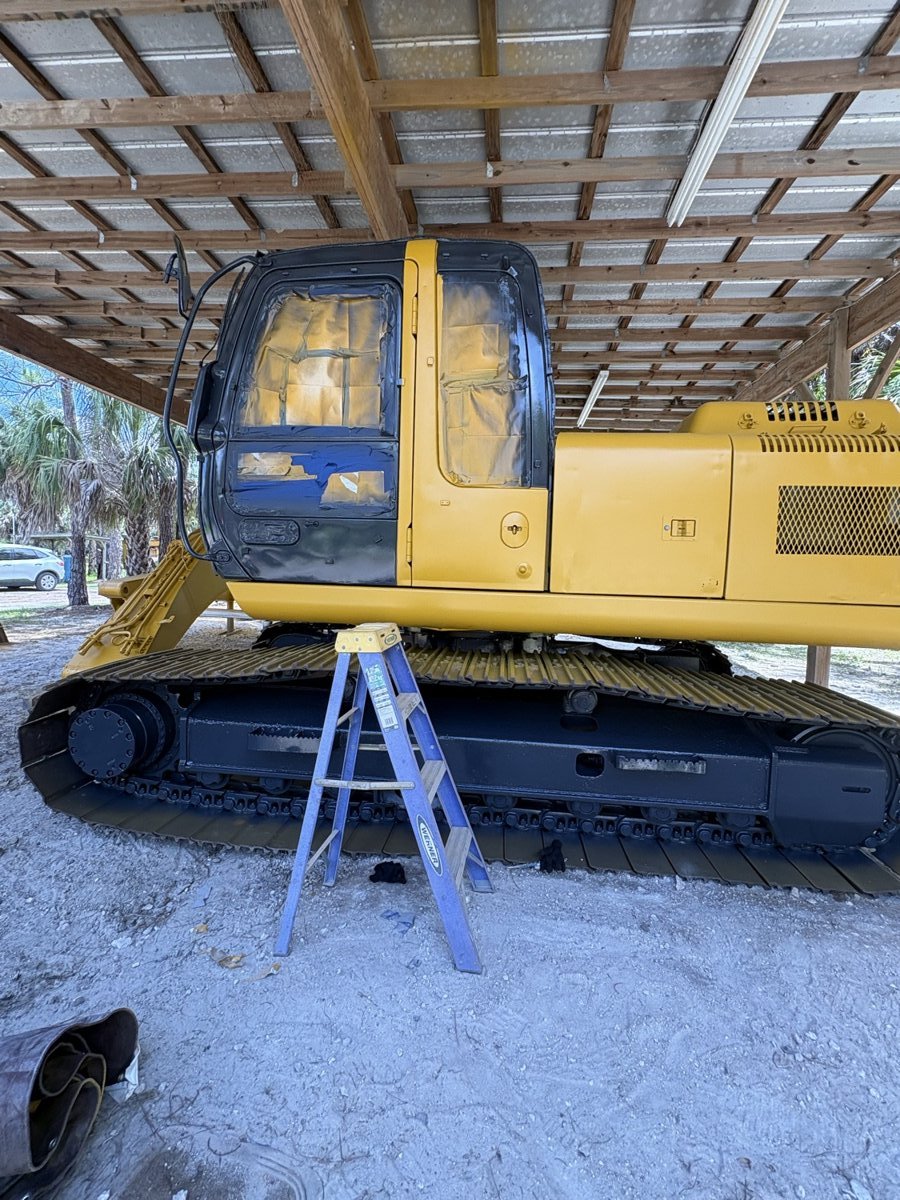
We bring a self-contained setup to your location, whether that's a contractor's yard in Golden Gate, a job site in Estero, or an equipment lot in Fort Myers. The crew masks off cylinders, glass, decals, hydraulics and anything else that shouldn't see abrasive, then blasts the target surfaces down to clean, profiled steel.
Media is matched to the job. Recycled crushed glass and garnet cut fast on heavy structural steel, while softer media like soda or a dustless water-injected process is the call when you need less dust and a gentler touch around sensitive components. The goal is the right surface profile for whatever coating comes next, not just bare metal.
Because the machine stays put, there's no loading, no transit risk, and no waiting in someone else's line. You point us at the units that need work and we move down the row.
Why blast and coat in the same visit?
In Southwest Florida, bare steel is on a clock. Gulf salt air and humidity will start flashing rust on a freshly blasted surface within hours, sometimes faster on a muggy summer afternoon. If you blast in a shop on Monday and don't get primer on until the unit is back in your yard, you may be coating over light corrosion before the job even starts.
The advantage of a mobile crew that preps and coats is timing. We can blast a section, check the profile, and lay down primer or the spec coating while the steel is still clean. That tight window is exactly what protects the work.
- Blast to remove old paint, rust and scale and set the profile.
- Prep by cleaning and masking so the coating bonds the way it should.
- Coat with the right primer or finish before the salt air gets a foothold.
It's the same "Blast it. Prep it. Coat it." approach we bring to rust removal on any heavy steel.
What kinds of equipment get blasted on-site?
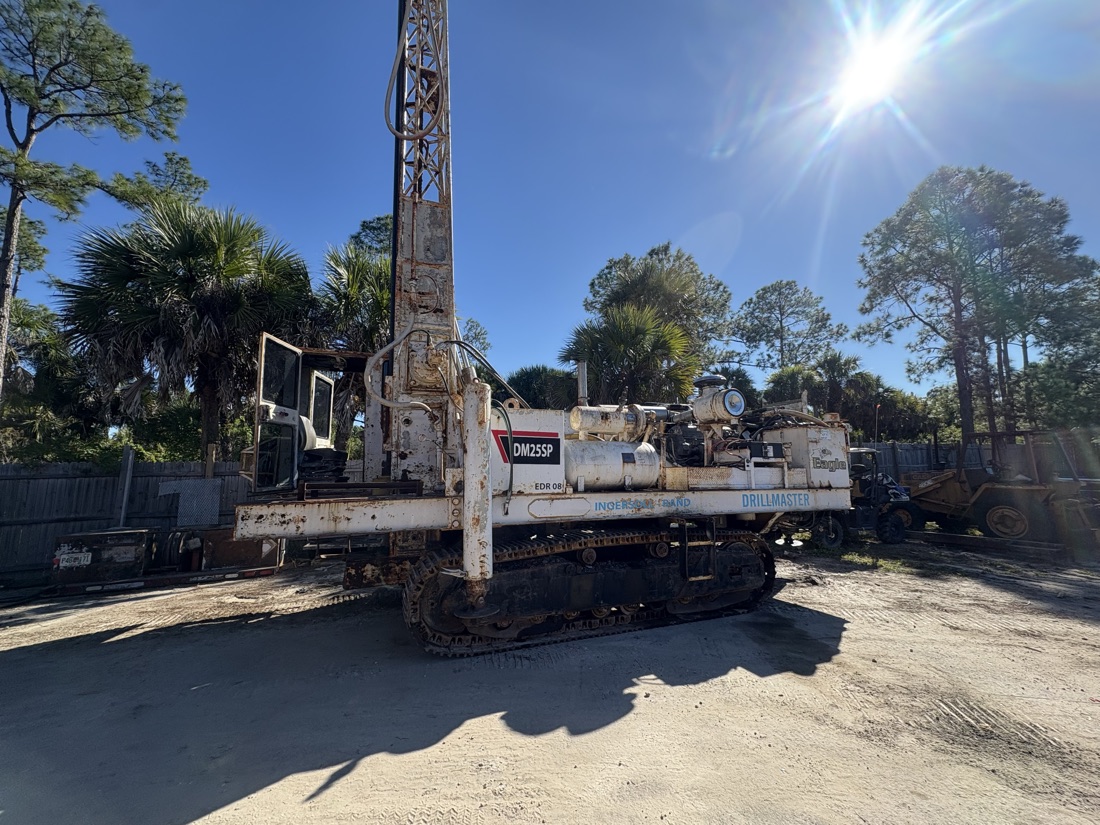
Just about anything that's a pain to move is a good candidate for coming to it instead. We work on excavators, wheel and skid-steer loaders, backhoes, dozers, graders and compact track loaders, plus the trailers, dump bodies and frames that haul them around.
Agricultural fleets fit the same pattern. Tractors, implements, sprayers and grain equipment all take a beating and rust where they're parked, and trailering a row of them to a shop is its own logistics headache. Blasting them in place keeps the operation running.
Beyond rolling stock, we handle structural steel, tanks, railings and other fixed assets that genuinely can't be moved. If you're restoring a string of trailers, our writeup on fleet trailer restoration in SWFL walks through that workflow, and the structural steel prep and surface profile guide covers what "clean" really means for load-bearing steel.
How does on-site blasting scale across a whole fleet?
One-off repairs are easy. The real savings show up when you've got ten machines that all need attention. Hauling each one to a shop means ten round trips, ten queue waits and ten coordination calls. On-site, the crew sets up once and works straight down the line.
That's a better fit for how construction and ag operations actually run. You can stage units by priority, keep the ones you need today in service, and feed us the rest as your schedule allows. Nothing leaves the property, so your dispatcher always knows where every asset is.
It also makes maintenance planning more predictable. Instead of a machine disappearing for an unknown number of days, you get a defined window on your own turf. For a deeper look at getting surfaces ready for the finish system, see our industrial coating prep guide, and if you run a busy shop, dustless blasting for business covers keeping the mess down on active sites.
What drives the cost of on-site equipment blasting?
There's no flat price, because no two fleets are alike. What it takes to blast and coat your equipment depends on the work in front of us, not a line on a menu. A few of the big factors:
- Surface area and condition — a lightly oxidized loader is faster than a dozer caked in old, flaking paint and heavy scale.
- Media and method — aggressive crushed glass, garnet, soda or a dustless process each suit different surfaces and budgets.
- Coating spec — a simple primer is different from a full multi-coat system.
- Number of units and access — a tight cluster of machines in one yard is more efficient than scattered, hard-to-reach assets.
The honest answer is that it varies, which is why we come look first. A free on-site estimate lets us see the iron, talk through the coating you want, and give you real numbers. You can reach out for an estimate or browse the full list of services to see what we cover.