Why dustless blasting keeps your operation running
The wet process knocks down airborne dust and shrinks containment, so a crew can strip and prep right next to the work you can't shut down.
The short version
- Dustless blasting mixes water with abrasive, so most of the dust falls to the ground instead of drifting across your yard or shop.
- Less airborne dust means lighter containment, which keeps adjacent equipment, inventory, and crews working while we blast.
- Doing it on-site removes the cost and downtime of trucking heavy equipment or steel off to a blasting facility.
- The wet film also slows flash rust on bare steel, giving you a real window to coat before corrosion sets in.
- It works on steel, aluminum, concrete, and coatings, and we prep and coat, not just strip.
What does dustless blasting actually do differently?
Dustless blasting, sometimes called wet or vapor blasting, introduces water into the abrasive stream. Instead of dry media and old coating flying off as a fine cloud, the water weighs those particles down so most of it drops to the ground within a few feet of the surface. You still get the cutting power of the abrasive, you just lose the billowing dust plume that comes with traditional dry sandblasting.
That single change has big consequences on a working site. Dry blasting can throw fine dust dozens of feet, coating cars, inventory, HVAC intakes, and anyone standing nearby. The wet process keeps the work zone tight and visible, which is exactly what a business needs when the blasting has to happen in a busy yard or near a production line.
It is one tool in a bigger kit. For a full rundown of where it fits, see our dustless blasting overview and the broader services we run across Southwest Florida.
How does less dust mean less downtime for you?
Containment is usually the hidden cost of any blasting job. With dry media, you often have to wrap an area in plastic, shut down neighboring operations, and protect everything sensitive before a nozzle ever fires. That setup takes time, and the shutdown around it can cost more than the blasting itself.
Because dustless blasting drops most of the debris at the source, the containment footprint shrinks. We can frequently work in one corner of a yard or shop while your crews keep moving a reasonable distance away. There is still cleanup and we still take sensible precautions, but you are not tarping off the whole building to strip one piece of equipment.
- Smaller exclusion zone means adjacent bays and lanes stay usable.
- Faster setup and teardown than full dry-blast containment.
- Less drift onto inventory, vehicles, and air handling.
The same logic is why we favor coming to you for on-site heavy-equipment work rather than hauling machines away.
Why blast on-site instead of shipping it out?
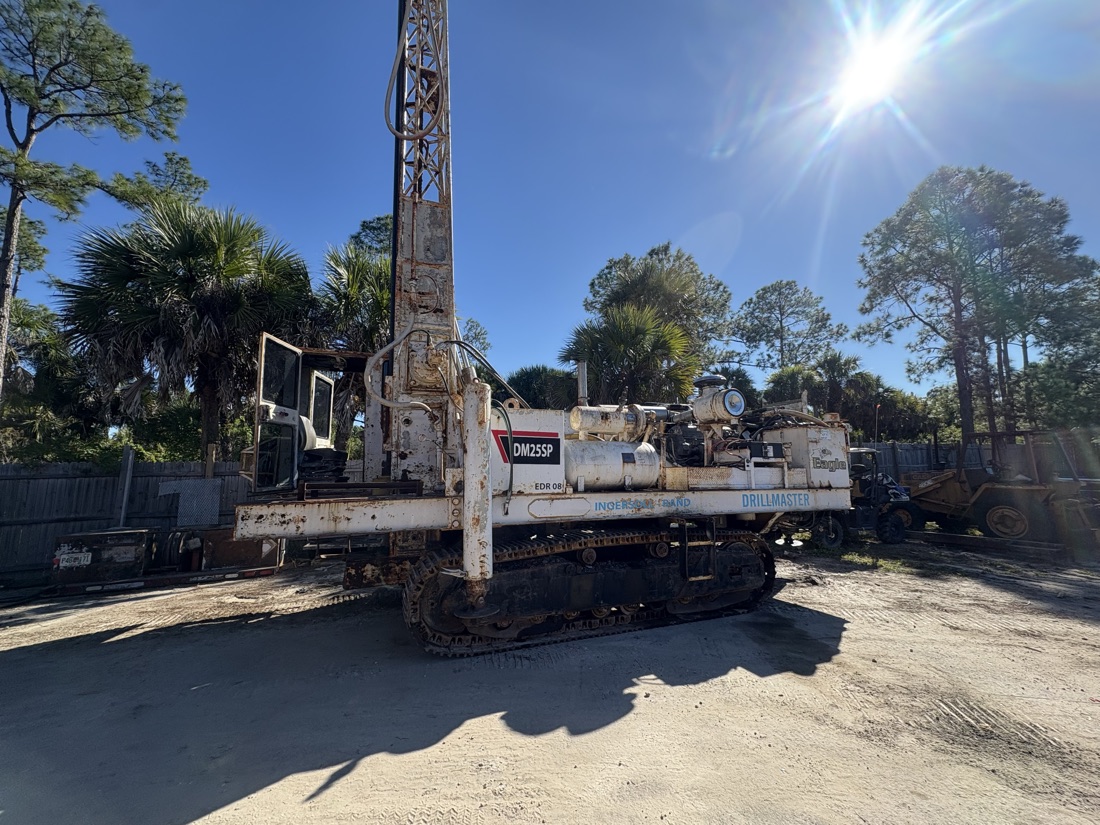
Sending a frame, a trailer, or a piece of structural steel off to a blast facility sounds simple until you add up the logistics. You pay to load it, truck it, store it, and truck it back, and the asset is out of service the entire time. For anything large or bolted into place, shipping it out may not even be an option.
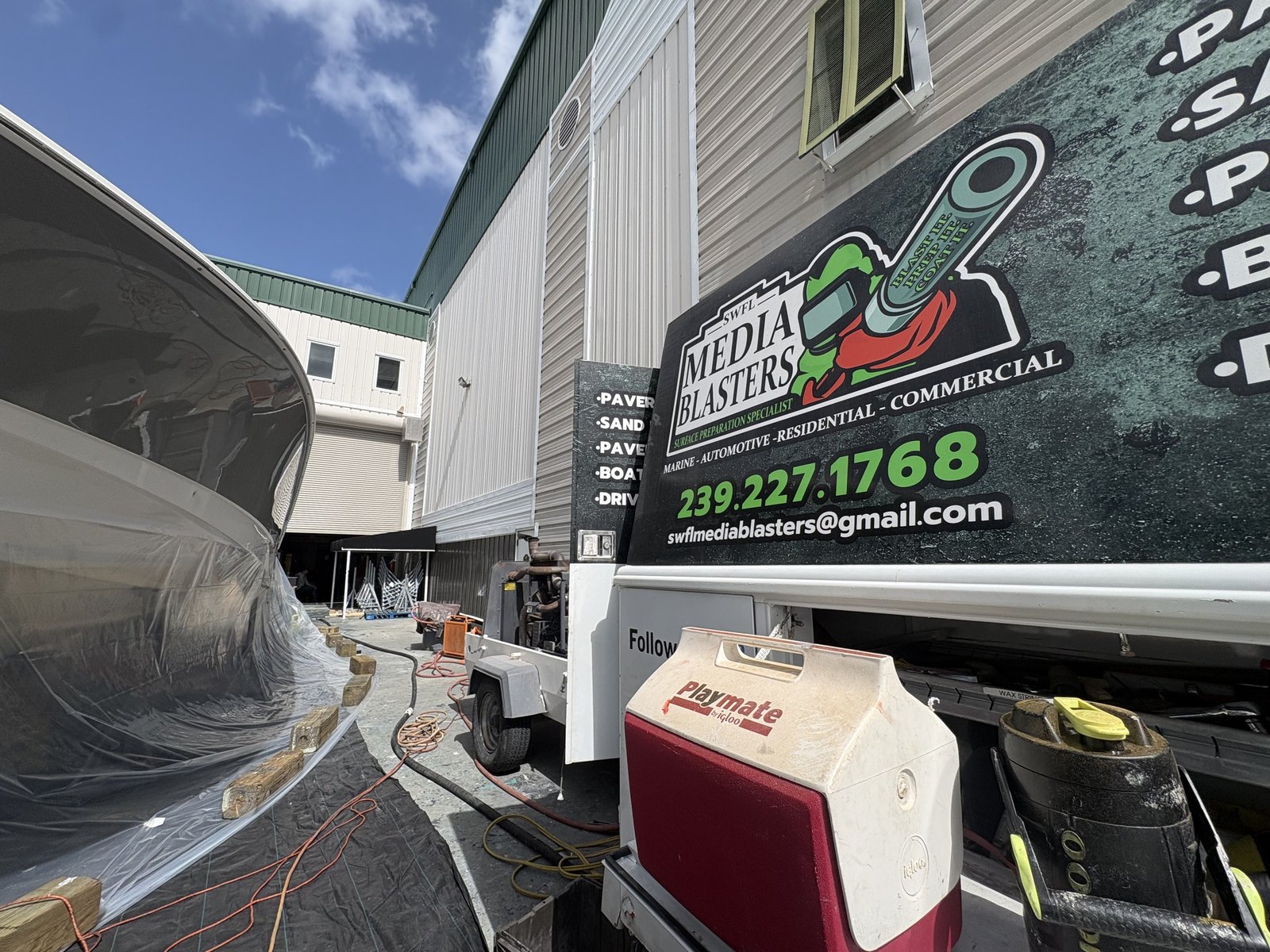
Mobile dustless blasting flips that. We bring the rig to your shop, marina, boatyard, or job site anywhere from Naples and Marco Island up through Fort Myers and Cape Coral. The equipment gets prepped where it sits, and you skip the transport bill and the days of downtime that ride along with it.
That matters a lot in Southwest Florida, where Gulf salt air and humidity are constantly working on bare and failing metal. The faster you can strip and recoat without moving the asset, the less corrosion gets a head start. See where we cover on our service area page or the Fort Myers hub.
Does the wet process cause flash rust?
It is a fair question, because bare steel plus water plus humid coastal air is the classic recipe for flash rust. The honest answer is that any blasting on steel can flash if it sits too long before coating, and dustless is no exception. The difference is how it is managed.
A rust inhibitor is typically added to the water, which buys a working window before light surface oxidation appears. Some specs welcome a tight, controlled flash because it can leave a clean, uniform surface to coat over; others require a holding inhibitor or a final dry pass. The right call depends on the coating system and the job.
What does not change is the plan: we sequence the blasting so the surface gets coated inside that window rather than left to sit overnight. If you want the deeper version, our industrial coating prep guide walks through flash rust, profile, and timing, and our rust removal page covers existing corrosion.
What materials and surfaces is it good for?
Dustless blasting is versatile, which is part of why businesses lean on it. The water in the stream actually helps protect thinner substrates from the heat and warping that aggressive dry blasting can cause, so it is well suited to a range of metals and surfaces.
- Steel for structural members, equipment bodies, and frames headed for coating.
- Aluminum, where lower heat and the right abrasive help avoid distortion on thinner panels.
- Concrete and pavers, including coating, sealer, and paint removal on commercial slabs and decks.
- Failing coatings on a wide range of equipment, where the goal is a sound surface to recoat.
Media choice still matters. Recycled glass, garnet, soda, and other abrasives each leave a different surface profile, and we match the media to the substrate and the coating. For lighter touch work, our soda blasting page explains where that fits, and structural steel prep and surface profile gets its own detail.
Does dustless blasting work for a whole fleet?
It does, and the math gets better the more units you have. Trailers, service trucks, and equipment all share the same enemy in Southwest Florida: salt, water, and time eating at undercarriages, frames, and beds. Stripping them properly is the difference between a coating that lasts and one that bubbles off in a season.
Because we work on-site and keep dust controlled, we can move through multiple units in a yard without shutting the whole operation down or scattering grit across your other assets. You stage the units, we blast and prep them in sequence, and your downtime is measured in the units actually being worked rather than the entire fleet.
The point is not just to take the old finish off. It is to leave a clean, properly profiled surface that the new coating can actually grip.
For the full approach to multi-unit work, see fleet and trailer restoration, or our commercial blasting services overview.
Why does prep matter as much as the blast?
Blasting is only step one. A surface can look perfectly clean and still fail a coating if the profile is wrong, the flash rust is not handled, or it gets contaminated before the first coat goes on. That is why we treat blasting, prep, and coating as one continuous job instead of three disconnected ones.
On a commercial site that means controlling the surface profile to match the coating manufacturer's spec, managing the window between blasting and coating, and keeping the prepped surface clean. Get those right and the coating bonds and lasts. Get them wrong and you are paying to do it again next year, which is the opposite of the savings dustless blasting is supposed to deliver.
This is the whole reason businesses call us rather than just renting a blaster: we blast it, prep it, and coat it. If you want to talk through a specific piece of equipment or a yard full of them, reach out through our contact page for a free on-site estimate.