Cloudy, Peeling Paver Sealer? Here's How to Strip It and Start Fresh
Why old sealer turns white, why blasting beats harsh strippers, and how to reseal pavers so the finish actually lasts in Gulf-coast heat and humidity.
The short version
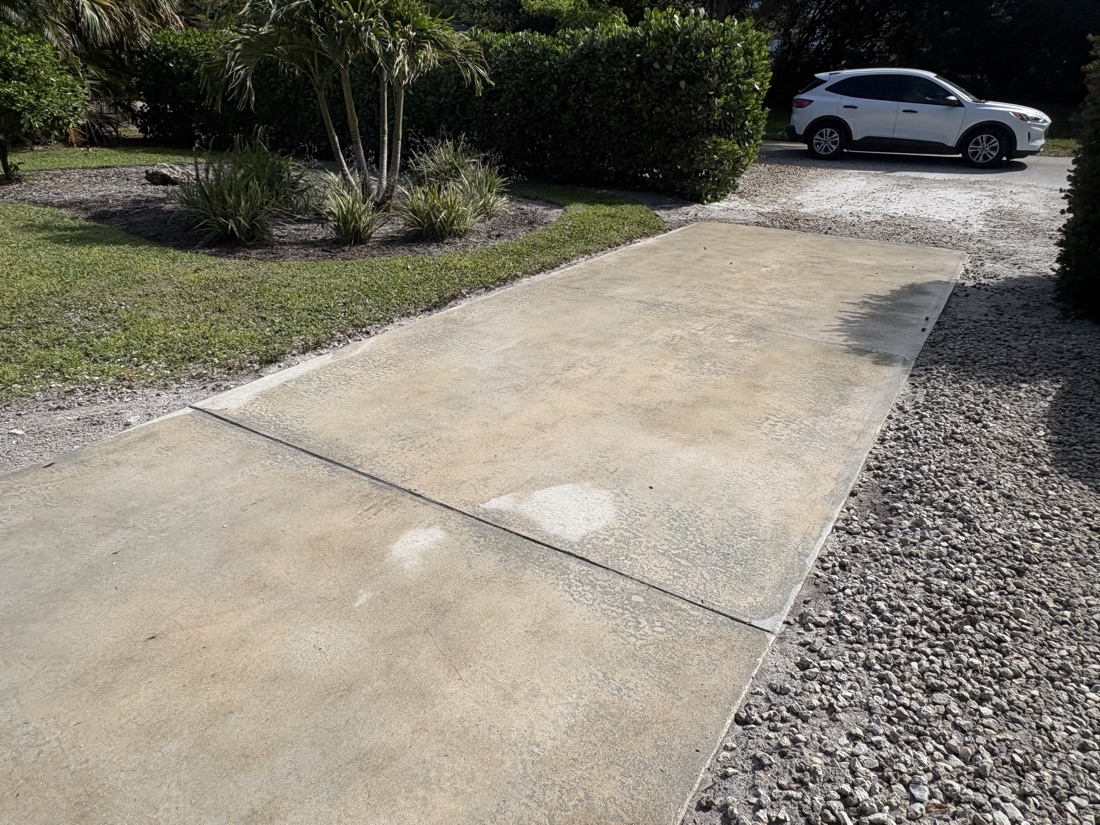
- Cloudy or white pavers usually mean moisture got trapped under a film-forming sealer — not dirty pavers.
- Chemical strippers soften sealer but often leave residue deep in the joints and the stone's pores.
- Media blasting lifts failed sealer evenly without soaking the slab in solvents, leaving a clean profile to recoat.
- Let pavers dry fully and pick the right sealer type before you reseal, or the haze comes right back.
- In our humid Gulf climate, a clean, dry surface is the single biggest factor in how long the new finish lasts.
Why does paver sealer turn cloudy or white?
That milky, hazy look almost never means your pavers are dirty — it means the sealer on top of them has failed. Most cloudiness comes from trapped moisture. When a film-forming (topical) sealer is applied over damp pavers, or when ground moisture wicks up from below and can't escape through the coating, water gets caught between the stone and the sealer film. That trapped water scatters light, and you see white blush, fog, or a streaky milk-glass finish.
Other common culprits: applying sealer too thick, layering a new coat over an old one that never bonded, or sealing in our brutal afternoon humidity when the surface looked dry but wasn't. Once that film clouds, you can't "wipe" it clear — the haze lives inside the coating itself.
Here in Southwest Florida the problem is amplified. High water tables, daily summer downpours, and constant humidity around pool decks and lanais mean pavers are rarely bone-dry. Sealing over that moisture is the number-one reason driveways and patios from Naples to Cape Coral go cloudy within a season or two.
Why media blasting beats chemical strippers
The instinct is to reach for a chemical paver sealer stripper, and on a small patch it can work. But on a full driveway or lanai, solvents have real downsides. They soften the old sealer rather than removing it, so you still have to scrub and pressure-rinse the gummy residue out — and that residue loves to hide in the sand joints and the porous face of the stone. Miss any of it and your new coat won't bond, leaving you right back where you started.
Strippers are also messy and aggressive. The runoff carries solvent across your lawn, pool deck, and storm drains, and the fumes are no fun in an enclosed lanai. Multiple applications are often needed for thick or layered sealer.
Media blasting takes a different path. A controlled stream of media — recycled glass, soda, or another abrasive matched to the surface — lifts the failed sealer mechanically and evenly, without soaking the slab in chemicals. You get a clean, uniform surface in one pass, with far less liquid waste. See how we approach paver sealer removal and the broader residential blasting we handle.
Dustless and soda blasting: which is right for pavers?
"Blasting" isn't one thing. The media and method matter, and good operators match them to the surface so you strip the coating without chewing up the stone underneath.
- Dustless blasting introduces water into the abrasive stream, which knocks down airborne dust dramatically. That's a big deal on a residential driveway or a screened lanai where you don't want a cloud drifting onto the house, cars, or pool.
- Soda blasting uses sodium bicarbonate — a softer media that's gentle on softer substrates and great for lifting coatings without aggressive etching.
- Recycled/crushed glass cuts faster and is a common, eco-friendlier choice for tougher, built-up sealer.
For most paver work the goal is the same: remove the sealer and any haze, open the pores back up, and leave a consistent profile that's ready to accept a fresh coat. You can read more about our dustless blasting and soda blasting options, and for sealer-free concrete jobs the same logic applies to pressure washing versus media blasting a driveway.
Can't I just pressure wash the old sealer off?
A pressure washer is great for dirt, algae, and loose grime, and it's an important step in any restoration. But on its own it usually can't strip cured sealer. Film-forming sealers are designed to resist water — that's their whole job — so blasting them with a wand mostly cleans the surface without removing the failed coating or clearing the cloudiness baked into it.
Crank the pressure up high enough to actually bite the sealer and you risk a new set of problems: blowing the sand out of your joints, etching or pitting the paver faces, and leaving wand stripes across the patio. You can end up damaging the pavers while still leaving sealer behind.
That's the gap media blasting fills. It removes the coating evenly and controllably, then a wash-down clears the residue. For full restorations — driveways, patios, and pool decks — see how this plays into bringing back a pool deck or lanai with blasting, or our general sandblasting work.
How to reseal pavers the right way
Stripping is only half the job. Reseal correctly and the finish stays clear for years; rush it and the haze comes right back. A few non-negotiables:
- Get the surface truly clean. All old sealer, residue, dirt, algae, and efflorescence (that white mineral powder) need to be gone first.
- Let it dry — really dry. Pavers should be fully cured and dry through, not just dry on top. In humid SWFL that can mean several dry days, not a few hours. Sealing over hidden moisture is what causes cloudiness in the first place.
- Re-sand the joints if needed before sealing, especially if you're using a sealer that locks the joint sand in place.
- Pick the right sealer for the look you want — a natural "matte" penetrating sealer versus a "wet look" glossy film — and apply thin, even coats per the manufacturer's directions.
Choosing the sealer and timing the application around our weather is where most DIY jobs go sideways. If you'd rather not gamble, we can strip and prep the surface so it's ready for a flawless reseal. Start with a free on-site look — reach out through our contact page or ask us anything on the FAQ.
What does it cost to strip and reseal pavers?
There's no honest flat price, because the work varies a lot from job to job. What drives the cost is the square footage, how many layers of old sealer are on there, how stubborn and built-up that sealer is, the condition and type of paver, and access — a tight courtyard or a screened lanai takes more care than an open driveway.
Whether the project is strip-only or strip-and-reseal matters too, along with how much re-sanding and edge detail is involved. A lightly hazed patio is a very different job from a driveway with three failed coats baked on under the Gulf sun.
The right way to get a real number is a quick on-site estimate, where we can see the pavers, test how the sealer is behaving, and recommend the right media and method. We serve homeowners across our full service area, including Naples, Marco Island, and Cape Coral. Call or text us and we'll come take a look.