Pressure Washing or Media Blasting Your Driveway: Which One Do You Actually Need?
A power wash and a blast rig do very different jobs. Here is how to tell which one your Southwest Florida driveway calls for.
The short version
- Pressure washing rinses the surface; media blasting cuts into it to remove coatings, sealer, and deep-set stains.
- If grime comes back after a rinse or the surface is sticky or peeling, water alone won't fix it.
- Failed or yellowed paver sealer, driveway paint, and rust or oil that soaked in are blasting jobs, not washing jobs.
- Blasting media and pressure are dialed to the surface so pavers, concrete, and brick aren't chewed up.
- Not sure which you need? A quick on-site look settles it fast and there's no charge for the estimate.
What's the real difference between pressure washing and media blasting?
They sound similar, but they solve different problems. Pressure washing throws water at a surface to rinse off what's loosely sitting on top of it: dirt, pollen, algae, light mildew, that gray film that builds up on concrete in our humidity. It's a cleaning tool. Once a surface is rinsed clean, a power wash does its job well.
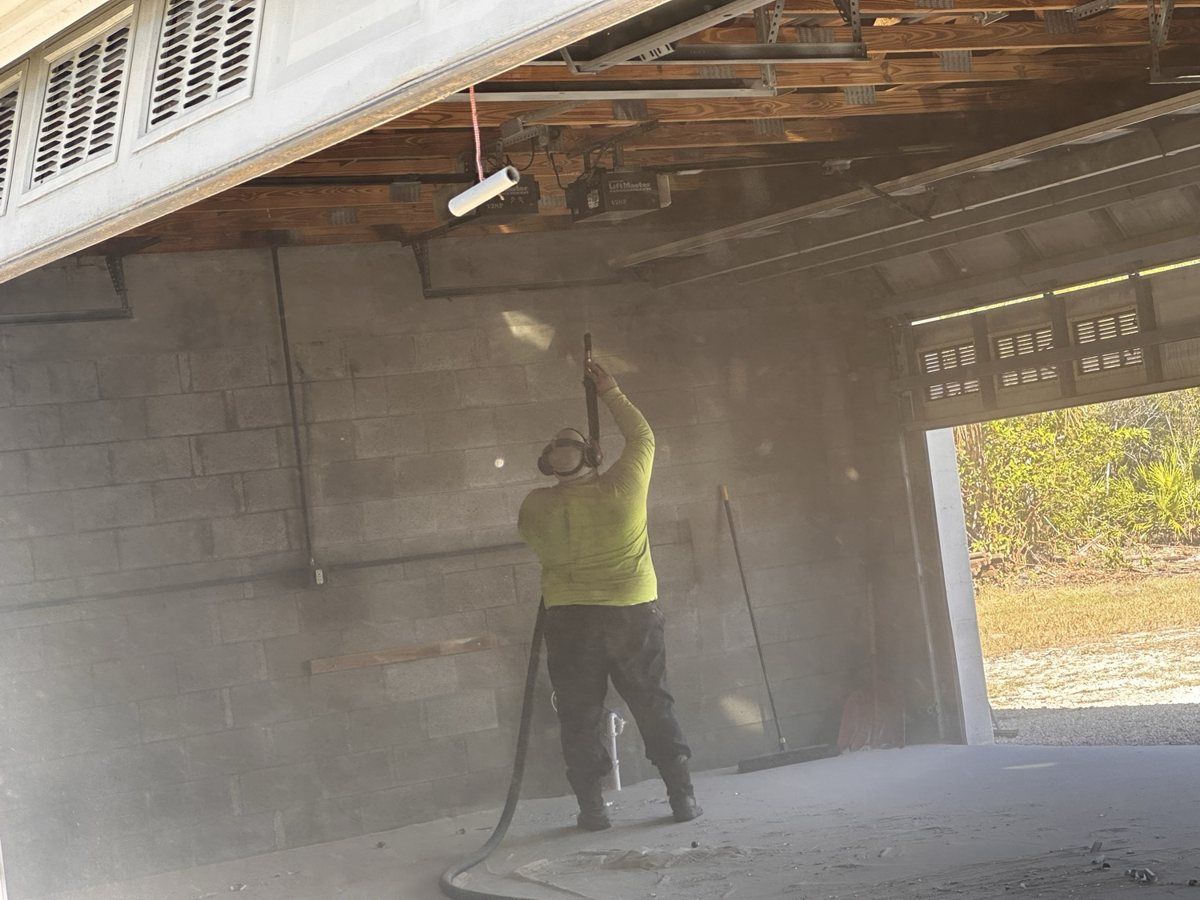
Media blasting is a prep and removal tool. Instead of water, it propels an abrasive media, soda, recycled crushed glass, garnet, and others, against the surface to physically cut a bonded layer off. That's how you take off old paver sealer, driveway paint, thinset, or a stain that has soaked into the pores of the concrete. Water can't lift what's chemically or mechanically bonded; an abrasive can. The short version: washing removes what's on the surface, blasting removes what's become part of the surface. Figuring out which bucket your driveway falls into is the whole game.
When is a pressure wash all your driveway needs?
Plenty of Southwest Florida driveways just need a good rinse. Reach for pressure washing when the problem is surface-level and recent. Good candidates include:
- Algae, mildew, and that green-black film from Gulf humidity and shade from your lanai or palms.
- Pollen, dust, and general road grime that's dulled the look but isn't soaked in.
- Fresh spills, drink, food, light dirt, caught before they set.
- Routine maintenance on bare, unsealed concrete or pavers that are otherwise in good shape.
A simple test: wet a small area and scrub it by hand. If the stain lifts and the surface comes back looking right, washing will handle the rest. If you're mostly fighting biological growth or seasonal buildup, a power wash is the cheaper, faster, correct call, and you can always reseal afterward. Save the blast rig for jobs where water has already proven it can't keep up.
What signs mean you've moved past washing and into blasting?
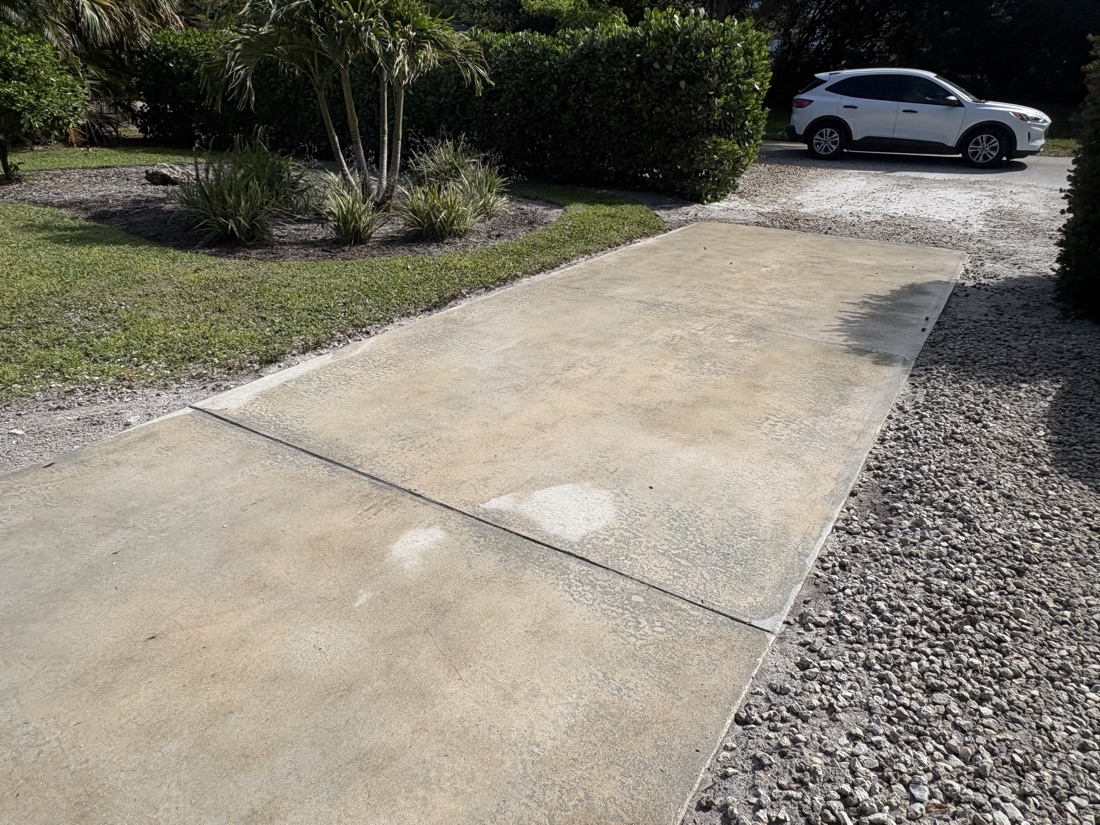
Here's the frustrating pattern most homeowners hit: you pressure wash the driveway, it looks great for a day, and then the same blotches, haze, or sticky patches come right back. That's the surface telling you the problem is bonded, not loose. Watch for these tells:
- Yellowed, hazy, or peeling sealer on pavers, water beads or flakes instead of soaking in.
- Paint or epoxy, overspray, old garage-floor coating, striping, that water just glances off.
- Oil, transmission fluid, or rust stains that have darkened the concrete from within.
- A blotchy, uneven finish after washing, a classic sign of failed sealer.
Any of these means you need to remove a layer, not rinse one. That's a media blasting job. For sealer specifically, walk through how to remove old paver sealer and our paver sealer removal service to see what the process actually looks like before you commit.
Won't blasting damage my pavers or concrete?
It's a fair worry, and the answer comes down to matching the media and pressure to the surface. Blasting isn't one aggressive setting; it's a dial. Soda blasting is gentle enough for delicate surfaces and lifts coatings without chewing up the substrate underneath. Recycled crushed glass and garnet hit harder for stubborn paint or heavy buildup. A crew that knows the work reads the surface first, paver vs. stamped concrete vs. broom-finish slab, and sets up accordingly.
Done right, blasting actually protects your investment compared to the alternatives. Cranking a pressure washer to 4,000 PSI to fight bonded sealer can etch concrete and blow joint sand out of paver gaps, leaving a worse mess. Aggressive chemical strippers can stain and seep. Properly dialed blasting removes the failed layer and leaves a clean, sound surface ready to reseal or coat. If you want the same care applied to a pool deck, see how we approach restoring a pool deck or lanai.
How do the costs really compare?
Pressure washing is almost always the cheaper line item, it's faster, uses less equipment, and there's nothing to haul away. So if a wash genuinely solves your problem, that's where your money should go. The mistake is paying to wash a driveway over and over when the real issue is bonded sealer or paint that washing will never touch.
What drives a blasting price up or down? It varies with the size of the driveway, what's coming off (light sealer vs. layered paint vs. soaked-in oil), the surface type, how much edge and detail work is involved, and access for the rig. Because every driveway is different, we don't post a flat price list, a sealer-stripping job on a 600-square-foot paver apron isn't the same as a stained three-car slab. The honest move is a quick on-site look. For a deeper breakdown of the variables, read our paver sealer removal cost guide, then grab a free estimate so you're comparing real numbers, not guesses.
What does the right driveway job look like start to finish?
Whichever route fits, the goal is the same: a clean, sound surface you can protect for years. A typical sealer-stripping or paint-removal job runs roughly like this:
- Walk the driveway. We confirm whether you need washing, blasting, or a mix, and which media suits the surface.
- Contain and prep. Cars, plants, and edges get protected; dustless and soda methods keep mess down on residential sites.
- Blast or wash. The bonded layer comes off evenly, no missed blotches, no chewed-up pavers.
- Clean up and inspect. Spent media and debris are cleared so you're left with a bare, even surface.
- Reseal or coat. A freshly stripped driveway is the perfect canvas for new sealer or a fresh coating.
Because we don't just blast, we prep and coat, you can hand off the whole sequence instead of juggling vendors. That matters here, where salt air and sun are hard on every outdoor surface. Want the bigger picture? Browse our full services or our residential blasting work across Naples, Marco Island, and the Cape.