How to Prep a Hull for New Antifouling That Actually Lasts
Strip to a clean profile, fair the gelcoat, lay a proper barrier coat, then bottom paint — here's why a clean substrate makes the whole system last.
The short version
- Antifouling only performs as well as what's under it — a clean, sound substrate is the whole game.
- Blasting strips years of failed paint, blisters, and contamination down to gelcoat or metal in one controlled pass.
- A barrier coat is your moisture shield; skip it and you invite osmotic blistering down the road.
- Surface profile matters: too smooth and paint won't grip, too aggressive and you've cut into gelcoat.
- In Gulf waters, a properly prepped bottom holds its coating and keeps growth off far longer.
Why does prep decide how long bottom paint lasts?
Here's the part most people miss: antifouling paint is only as good as the surface it bonds to. You can buy the priciest multi-season ablative on the shelf, but if it's going down over chalky old paint, contamination, or a moisture-loaded laminate, it will peel, sheet off, or blister long before its rated life. The coating doesn't fail on its own — the bond underneath fails.
A clean, sound substrate gives the new system something real to grab. That means stripping back the accumulated layers, exposing solid gelcoat or bare metal, and giving the paint a consistent surface to key into. When the foundation is right, every coat above it does its job: the barrier shields, the antifouling sheds growth, and the whole stack stays put through a Southwest Florida season.
This is exactly why we treat marine blasting as step one of a coating job, not a separate service. Strip it correctly and the rest of the work lasts. For a sense of timing, see how often you actually need to redo bottom paint.
How does blasting strip the hull back to a clean profile?
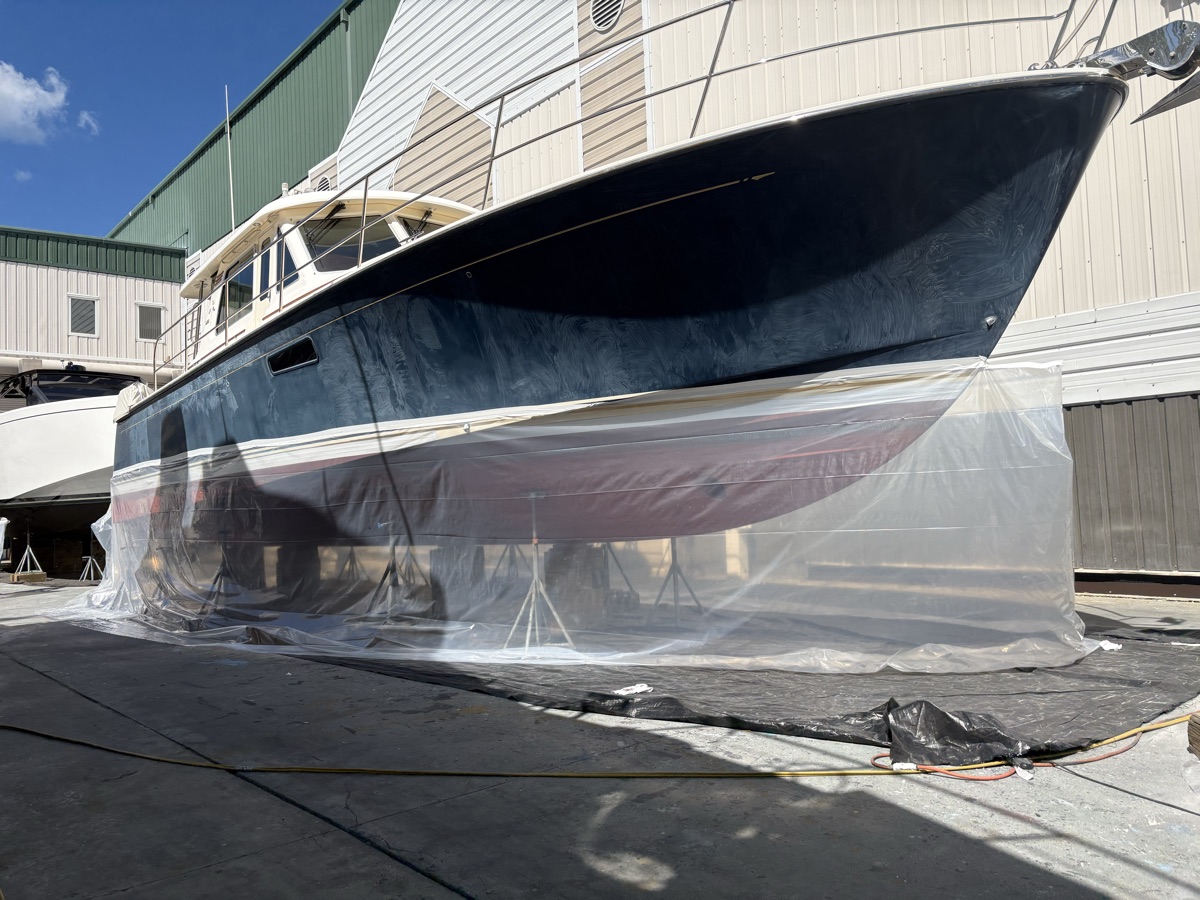
Sanding and scraping an old bottom is slow, dusty, and uneven — and it rarely gets you back to a true clean surface. Media blasting does it in one controlled pass. We dial the media and pressure to the substrate so we lift years of failed antifouling, primer, and any contamination without chewing into the laminate underneath.
The media choice depends on the boat. Softer media like soda or recycled crushed glass strips paint from a fiberglass hull while staying gentle on gelcoat; more aggressive media is reserved for steel or heavy buildup. If you're weighing options, our breakdown of soda versus sandblasting on a boat hull walks through the trade-offs.
- Even removal — no high spots of old paint left behind to fail later.
- Clean substrate — back to gelcoat or bare metal, ready to inspect.
- Controlled profile — the surface texture the new system needs to grip.
We run dustless blasting on most marine work, which knocks down dust and traps spent media — a real advantage in a marina or boatyard.
What gets inspected and faired once the hull is bare?
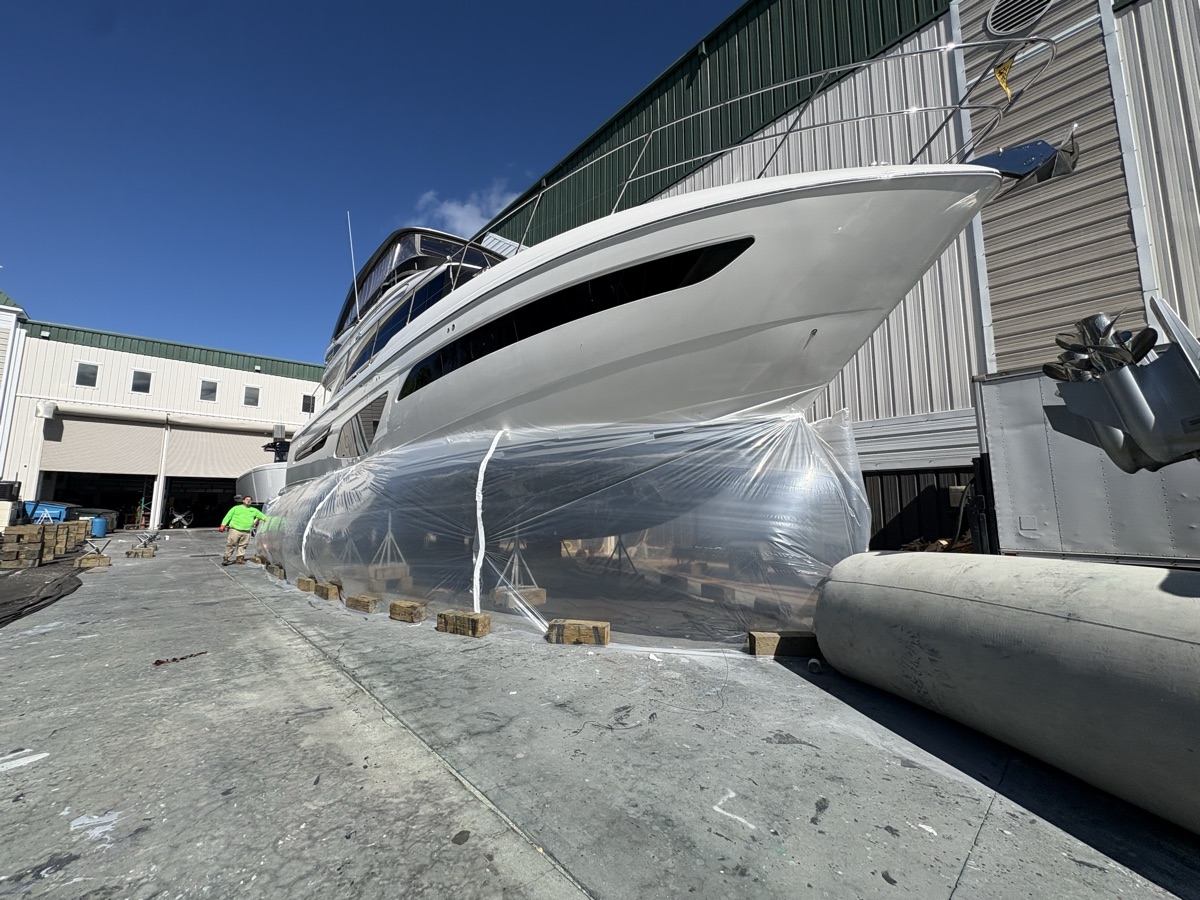
Stripping the bottom is also the only time you get a clear look at the hull's true condition. With the old coatings gone, blisters, voids, gouges, and any moisture in the laminate are right there in the open. On a fiberglass boat, osmotic blisters show up as raised bubbles in the gelcoat; on metal, you're looking for pitting and corrosion that needs to be addressed before anything goes back on.
If the laminate is wet, it has to dry before coating — sealing moisture under a barrier coat is a recipe for failure. From there we grind out and fill any blisters or damage, then fair the surface so it's smooth and consistent. A fair hull isn't just cosmetic; it gives the barrier and antifouling a uniform base and helps the boat run clean through the water.
Not sure whether your bottom is due for a full strip? The signs your bottom paint needs removal are usually visible from the dock.
Why is the barrier coat the step you can't skip?
The barrier coat is the unsung hero of a long-lasting bottom. It's an epoxy layer that goes on between the bare substrate and the antifouling, and its whole job is to block water from migrating into the laminate. On a fiberglass hull, that's your defense against osmotic blistering — the slow water intrusion that turns into those gelcoat bubbles. Skip the barrier and you're betting against the Gulf.
A proper barrier coat is built up in multiple coats to the manufacturer's spec film thickness — one thin pass doesn't do it. Timing matters too: each coat goes on within the recoat window so the layers chemically bond into one continuous shield rather than just stacking up.
Think of it this way: antifouling fights growth on the outside, but the barrier coat protects the boat itself. One keeps the hull clean; the other keeps it sound.
Because we blast and coat in-house, the bare hull goes straight into barrier coat while it's clean and dry — no waiting around for contamination to settle back on the surface.
How does the new antifouling go on for best results?
With a faired substrate and cured barrier coat in place, the antifouling is the straightforward part — as long as it goes on right. The two broad families are hard (modified-epoxy) paints, which stay put and can be burnished, and ablative (self-polishing) paints, which wear away slowly to keep exposing fresh biocide. The right pick depends on how the boat is used, how often it runs, and whether it sits at a slip or gets hauled seasonally.
- Mind the recoat window — antifouling often must go on over the barrier coat within a set time so it bonds chemically.
- Build the right film thickness — usually two coats, with extra at the waterline and leading edges that wear first.
- Match the paint to the boat — slip-kept hulls in warm Gulf water foul fast and benefit from a stronger system.
Warm, nutrient-rich Southwest Florida water grows things in a hurry, so a clean foundation under fresh paint pays off all season. See the full scope on our marine blasting and coating page, or browse other services we bring to the yard.
Why have one crew blast, prep, and coat?
A hull restoration is a chain, and every link depends on the one before it. When the strip, the fairing, the barrier coat, and the antifouling are handled by separate hands on separate days, you get gaps — a bare hull left to pick up dock dust, a barrier coat that misses its recoat window, paint going on before the laminate is truly dry. Each handoff is a chance for the system to fail early.
We handle the whole sequence so the timing stays tight and the surface stays clean from strip to final coat. We're a mobile outfit too, so we bring the rig to the boatyard, marina, or your driveway in Naples, Marco Island, Bonita Springs, Fort Myers, or Cape Coral.
Curious what a strip costs before you commit? Our notes on boat bottom paint removal cost in SWFL cover the factors, and a free on-site look is the fastest way to a real number — start at our contact page.