What does it cost to strip the bottom paint off your boat?
The honest answer is "it depends" — here are the factors that move the number up or down, and how a free on-site look gets you a real figure.
The short version
- There is no flat price — cost scales with hull length, how many paint layers are stacked on, access to the boatyard, and the condition of the gelcoat underneath.
- Soda and dustless media are gentler on gelcoat than aggressive abrasives, which protects the hull and can lower rework cost down the line.
- Heavy buildup of old antifouling, blisters, or fairing repairs add time and therefore cost compared with a clean single-layer hull.
- The fastest way to a real number is a free on-site estimate where the crew can see your hull, not a phone guess.
- Stripping is only step one — a proper price should account for prep before new antifouling goes on.
Why isn't there one flat price for stripping a hull?
Every boat that gets hauled in Southwest Florida is a little different, so a single sticker price would either overcharge the easy jobs or underbid the hard ones. The work is priced by what the hull actually demands: how big it is, how much old coating is stacked on it, how easy it is to get a rig and crew around it, and what shape the surface is in once the paint starts coming off.
That's why a careful outfit won't quote a firm number over the phone. A 22-foot center console with one season of ablative paint is a very different job from a 40-foot cruiser carrying a decade of built-up bottom paint. Both are routine for us, but they don't cost the same.
The good news: the factors below are predictable. Once someone who does this every day looks at your boat — at the yard or wherever it's blocked up — they can give you a real figure fast. Start with our marine blasting page if you want the overview first.
How much does hull length and size drive the cost?
Length is the biggest single lever, but it's really about surface area — the square footage of bottom below the waterline. A longer hull has more area to cover, and a deeper-draft or wider-beam boat has even more than its length alone suggests. A sailboat with a full keel hides a lot of surface most people forget about.
So two 30-footers can land in different spots: a shallow, flat-bottomed bay boat shows less wetted area than a deep-V or a keelboat of the same length. When you ask around for ballpark pricing, the honest version is always "per foot, give or take, depending on the hull shape."
- Small skiffs and bay boats — least surface area, quickest turnaround.
- Mid-size center consoles and cruisers — the sweet spot for most SW Florida owners.
- Larger cruisers, cats, and keelboats — more area, more time, higher total.
Whatever the size, the media still matters — see how we handle dustless blasting to keep the work clean at the yard.
Do extra layers of old paint really add up?
Yes — and this is where a lot of owners are surprised. Bottom paint isn't one coat; it's years of antifouling applied season after season, sometimes a dozen layers deep. A hull that's been repainted every year for a decade without ever being stripped is carrying a thick, brittle stack that takes far longer to remove than a fresh single coat.
The type of paint matters too. Soft ablative coatings behave differently than hard modified-epoxy antifoulings, and old layers can hide barrier coats, primer, and the occasional surprise underneath. More material to remove means more time, and time is what you're paying for.
If you don't actually know how many layers are down there, that's normal — the crew can read it as the first patches come off, and the estimate accounts for it.
Curious how often you should be redoing it in the first place? We break that down in how often to redo boat bottom paint.
How does boatyard access change the number?
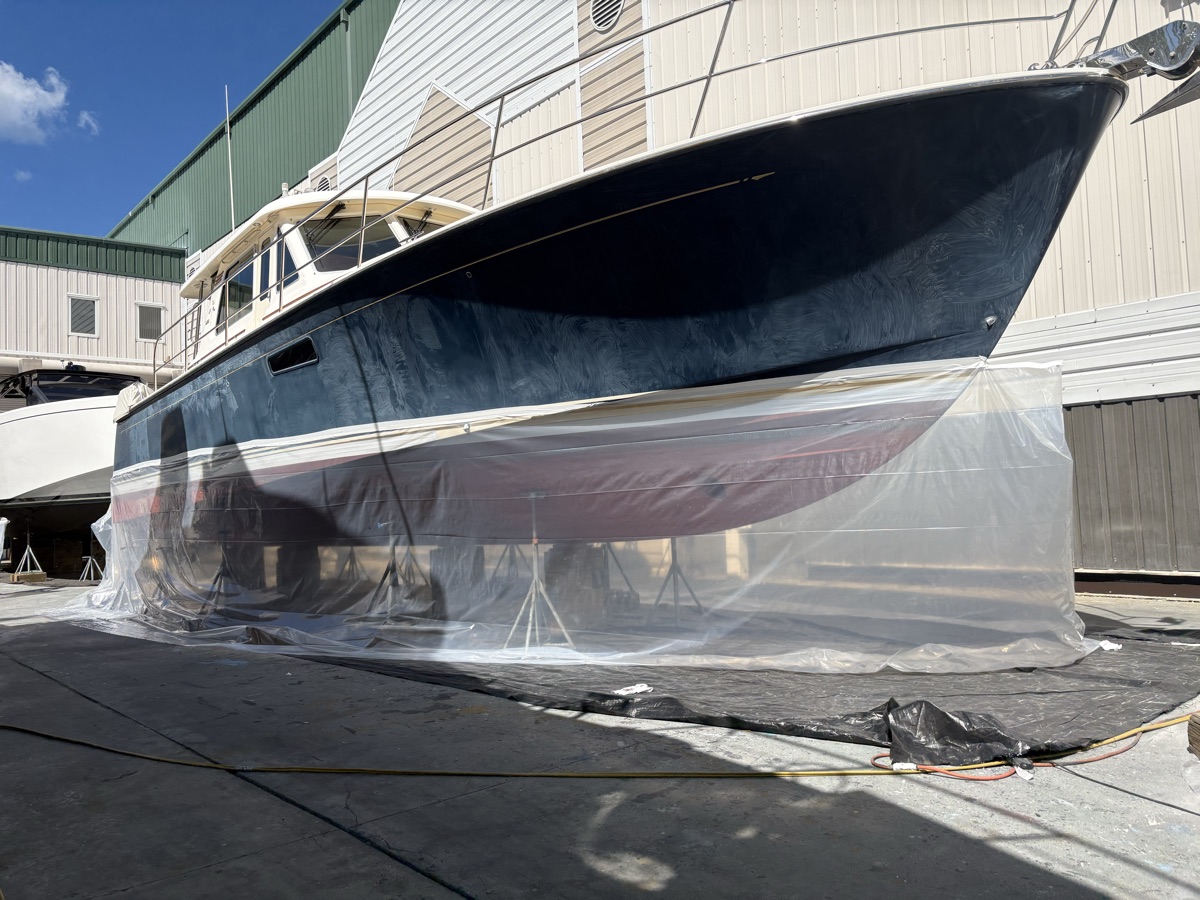
Where and how your boat is blocked up affects the job more than people expect. A hull on stands in an open SW Florida boatyard with room to work all the way around is the easy case. Tight spaces, low overhead, boats packed close together, or a vessel still on a trailer with limited clearance all slow the crew down and can mean more careful containment.
Because we're a mobile operation, we bring the rig to where your boat already is — at the yard, the marina, or wherever it's hauled. That saves you the hassle of moving it, but the working conditions at that spot still factor into the time it takes.
- Open, well-spaced blocking = fastest, most predictable.
- Crowded yards or limited overhead = more setup and masking.
- Containment needs near the water = extra care to protect the Gulf and neighbors.
None of this is a deal-breaker — it's just why an on-site look beats a phone quote.
What about the condition of the gelcoat underneath?
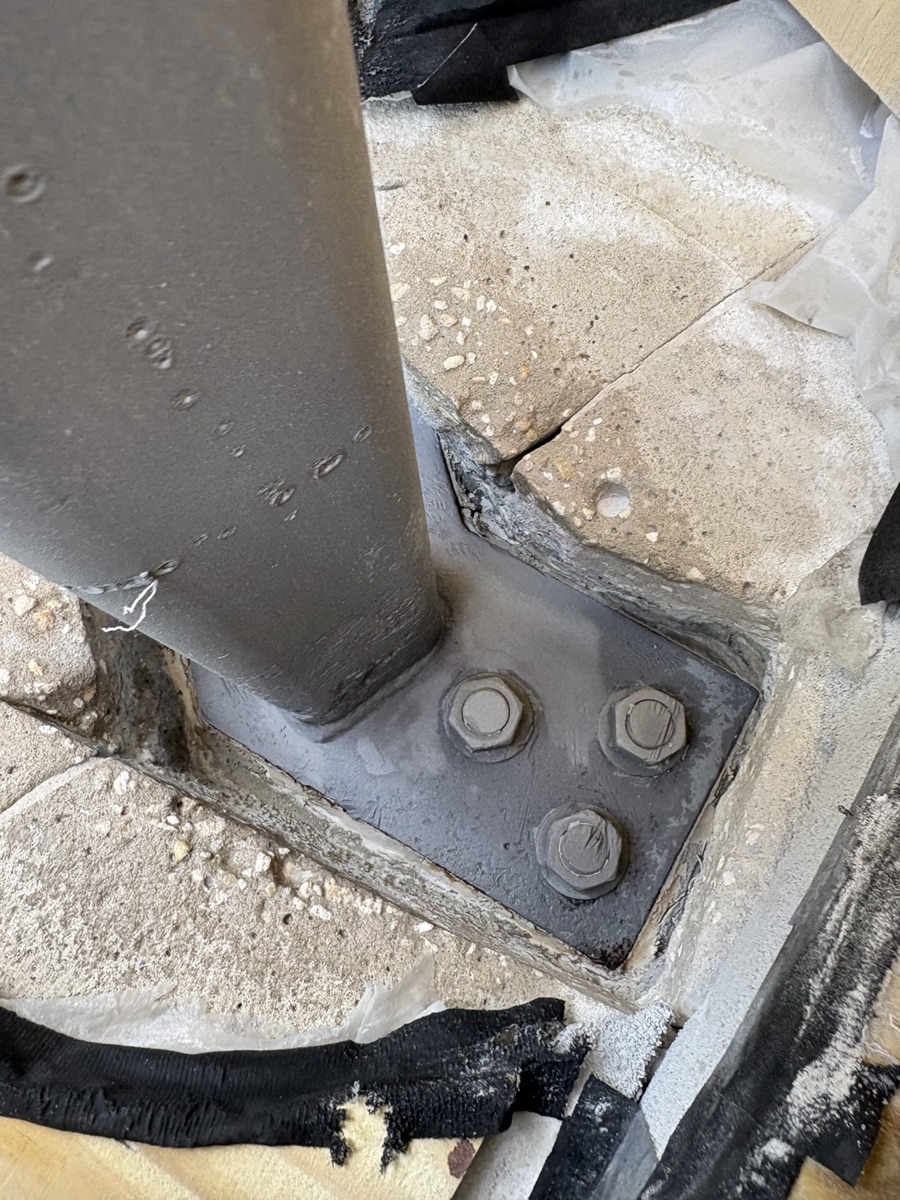
Stripping the paint is only half the story. What's under it shapes both the method and the price. A sound gelcoat hull is straightforward. But Gulf salt air and warm water are hard on boats, and what comes to light during removal can include osmotic blisters, old fairing repairs, gouges, or thin spots in the gelcoat that need attention before any new coating goes on.
This is also why media choice matters. Aggressive abrasives can chew into gelcoat and create extra repair work; gentler approaches like soda or recycled-glass dustless blasting lift the antifouling while being kinder to the substrate. We dig into that trade-off in soda vs. sandblasting a boat hull.
If you've noticed flaking, peeling sheets, or paint that won't hold, those are signals worth acting on — see the signs your bottom paint needs removal before it gets worse and more expensive.
Why should the quote include prep, not just blasting?
Here's the part that separates a real price from a cheap one: removal and prep should be quoted together. Once the old paint is off, the hull has to be cleaned, any blisters or dings addressed, and the surface brought to the right profile so the next antifouling system actually bonds and lasts. Skip that and you'll be back at the yard sooner than you'd like.
We don't just blast — we prep and coat. That means the conversation about cost naturally folds in what happens after the paint comes off, so you're comparing apples to apples instead of getting blindsided by add-ons later. For the full menu, see our services overview.
Want to understand what good prep looks like before new paint? Read how we prep a hull for new antifouling. It's the step that protects everything you just paid for.
How do you get a real number for your boat?
The shortest path is a free on-site estimate. We come to where your boat is hauled — Naples, Marco Island, Bonita Springs, Estero, Fort Myers, Cape Coral, or Golden Gate — look at the hull, the layers, the access, and the condition, and give you a figure based on what's actually there instead of a guess.
It costs nothing and there's no pressure. You'll know what the job involves, which method fits your hull, and what to expect when it's time to recoat. Reach out through our contact page or call or text the crew, and we'll line up a look at your boat.
If you're weighing whether to strip at all this season versus touch up, the on-site visit is also the best moment to ask — we'll tell you straight.