How Often Should You Repaint Your Boat Bottom in Warm Gulf Water?
Antifouling does not last forever, and Southwest Florida's warm, salty water can shorten its life. Here is how to time your next bottom job.
The short version
- Most boats in SW Florida want fresh bottom paint every 1 to 3 years, with warm Gulf water pushing many toward the shorter end.
- Paint type matters: ablatives wear away and need recoating, while hard paints can build up and eventually need stripping.
- Warm water, slips with low circulation, and boats that sit unused all speed up fouling and shorten paint life.
- Watch for heavy slime, barnacles returning fast, bare patches, and a thick paint stack as your cues to repaint.
- When old paint is failing or stacked too deep, blasting it to a clean profile beats painting over a bad base.
How often do most boats need new bottom paint?
There is no single number, but a useful rule of thumb for our area is somewhere between one and three years. A lot of Southwest Florida boats land closer to the one-to-two-year mark because the water here is warm nearly year-round, and warm water is where marine growth thrives.
Your real interval depends on a handful of things: the type of antifouling you used, how the boat is stored, how often you run it, and the water it lives in. A trailered boat that gets rinsed after each trip is a very different case than a hull sitting in a quiet canal slip in Cape Coral all summer. Both can need paint, just on different clocks.
The honest answer is that you let the hull tell you. Intervals are a starting point, but the condition of the paint and the speed at which fouling returns are what actually decide it. If you are not sure where your boat falls, a quick look during a haul-out at a local yard usually settles it. Learn more about hull prep on our marine blasting page.
Why does warm Gulf water shorten paint life here?
Marine fouling, the slime, weed, and shellfish that colonize a hull, loves warm, nutrient-rich water. The Gulf around Naples, Marco Island, and Fort Myers stays warm enough through much of the year that growth almost never gets a true cold-weather break. That means antifouling is working hard for more months than it would up north.
Salt and humidity add to the picture. Constant exposure to salt water keeps biocides leaching, and a boat that splashes in spring may have its paint largely spent by the following season. Brackish canal and river spots can be even tougher, since some of the worst soft growth shows up where fresh and salt water mix.
A few local factors that tend to shorten paint life:
- Warm water year-round keeping fouling organisms active and breeding.
- Low-circulation slips in canals and marinas where water sits still.
- Long idle stretches, since a moving boat sloughs off growth while a parked one collects it.
None of this means paint fails overnight. It just means the SW Florida clock runs a little faster, and planning around that saves you from a fouled bottom mid-season.
Does the type of bottom paint change the schedule?
Yes, and this is one of the biggest variables. The two broad families are ablative (self-polishing) and hard (modified-epoxy) paints, and they age in opposite ways.
Ablatives are designed to wear away slowly as the boat moves through the water, constantly exposing fresh biocide. When the paint is worn thin, you simply add another coat or two, often without heavy sanding. That makes them friendly for recoating, though boats that sit a lot may not polish off enough to stay fresh.
Hard paints cure to a tougher film that holds up well to scrubbing and trailering, which many faster or frequently hauled boats prefer. The trade-off is that they do not wear away, so coat after coat builds a thick, brittle stack over the years. Eventually that buildup cracks, sheds, or just gets too deep to paint over.
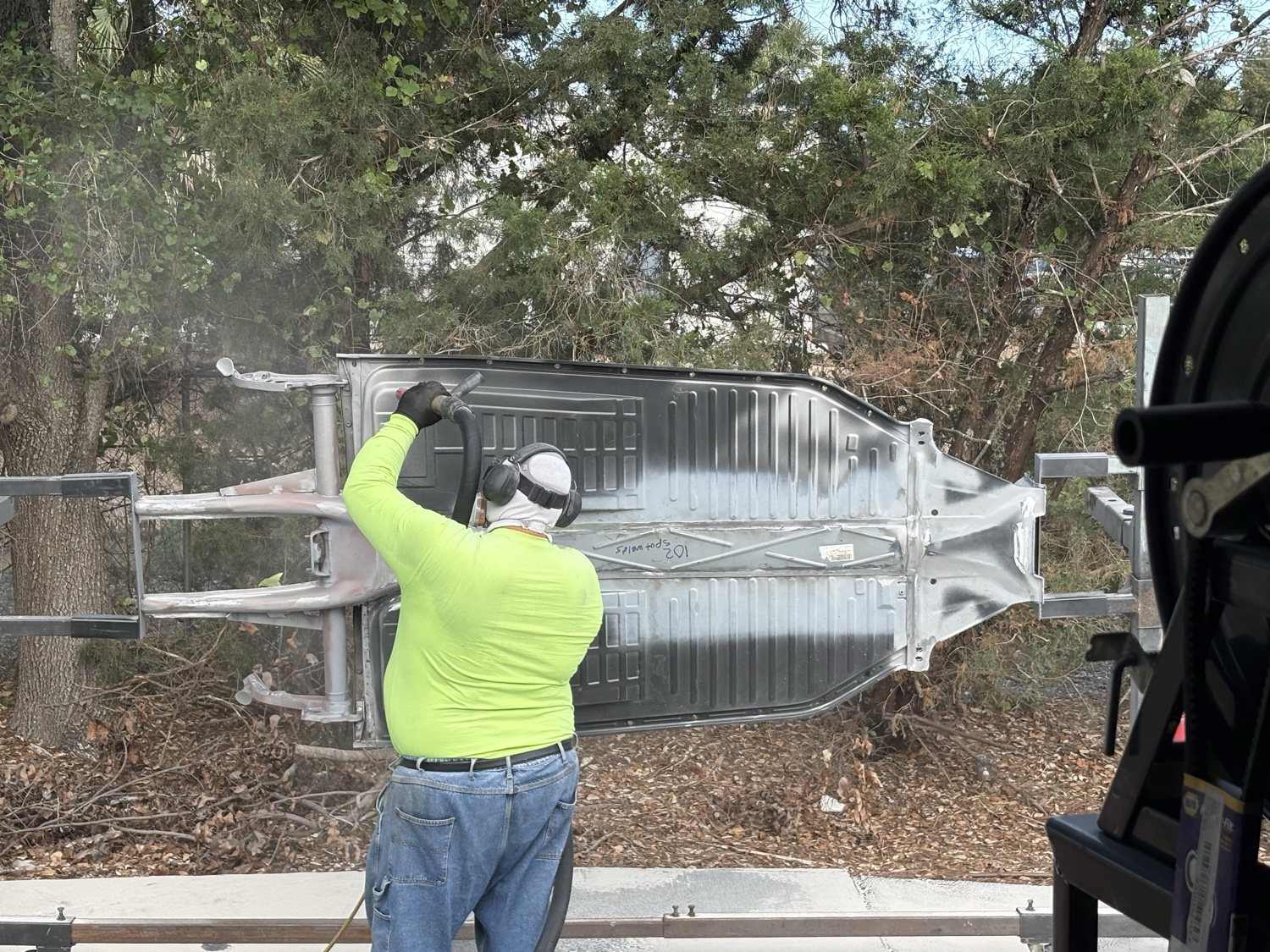
So the schedule is partly about your paint: ablatives get topped up more casually, while hard paints run fine for a while and then need a full reset. When buildup or failure shows up, removing the old coating down to a sound surface, often with soda blasting or another media, gives the new paint the clean base it needs.
What are the signs it is time to repaint?
You do not have to guess. A hull gives clear signals when its antifouling is losing the fight. The most obvious is fouling that comes back fast, if you are scrubbing slime or knocking off barnacles only weeks after a cleaning, the paint is no longer doing its job.
Other tells to look for at haul-out:
- Bare or thin patches where you can see primer or gelcoat through the paint.
- Heavy slime or weed that returns quickly after a dive cleaning.
- Barnacles and hard growth taking hold on running gear and the hull.
- Chalky, faded color on ablatives, a sign the active layer is nearly spent.
- Cracking or flaking on hard paint that has stacked up too thick.
Performance is another clue. A fouled bottom drags, so if the boat feels sluggish or burns more fuel to hold speed, growth may be the culprit. For a deeper checklist, see our companion piece on the signs your bottom paint needs removal. When you spot several of these at once, it is time to plan a bottom job rather than another quick scrub.
When should you strip instead of just recoating?
Adding a fresh coat works great when the existing paint is sound and not too thick. But there is a point where painting over the old stuff only buys a short window before problems return. That is when stripping the hull back to a clean, sound surface makes more sense.
Strip the bottom when you see real paint buildup, multiple seasons of hard paint stacked into a brittle shell, or widespread cracking, peeling, and poor adhesion. A new coat over a failing base will fail right along with it. Switching paint chemistries, or going back to a bare-hull barrier system, is another common reason to remove everything first.
Media blasting is the cleanest way to get there. Soda and other dustless or recycled-media methods can lift years of antifouling while protecting the gelcoat underneath, leaving the right profile for new paint to grab. Our boat bottom paint removal service handles exactly this, and the sibling article on prepping a hull for new antifouling walks through what comes next. The goal is simple: start the next paint cycle on a base you can trust.
How can you stretch the time between bottom jobs?
You cannot beat warm Gulf water, but a little upkeep meaningfully extends paint life. The single best habit is using the boat. A hull that moves regularly sheds soft growth before it gets a foothold, while a boat that sits collects fouling fast no matter how good the paint is.
Between haul-outs, gentle dive cleanings keep slime in check, just go easy so you are wiping growth off rather than scrubbing away expensive biocide. Choosing the right paint for how you actually use the boat helps too; an ablative suits a slip-kept cruiser, while a hard paint may fit a trailered or high-speed boat better.
A few practical moves:
- Run the boat often, or at least move it in the slip when you can.
- Schedule light, careful cleanings instead of rare heavy scrubs.
- Match paint type and coat count to your storage and usage.
- Get a clean, properly profiled surface at the start of each cycle.
When the time does come, the quality of the prep underneath your new paint matters as much as the paint itself. A solid foundation is what makes the next interval go the distance. Reach out through our contact page for a free on-site look at your hull.