Should you blast or chemically strip your classic car's body?
A plain-English look at media blasting versus acid dipping for restoration prep, and how to protect thin sheet metal in the process.
The short version
- Media blasting strips paint, filler, and rust in one pass and leaves a clean, even profile ready to coat.
- Chemical dipping can leave acid trapped in seams and box sections that bleeds back out and ruins fresh paint later.
- Blasting gives you instant control over media, pressure, and angle, so you can adjust panel by panel.
- On thin sheet metal the answer isn't "don't blast" — it's softer media, lower pressure, and a crew that knows the limits.
- A clean blasted surface with the right profile is what lets primer, epoxy, or powder coat actually grip.
What are your two real options for stripping a classic body?
When a classic car comes in down to bare metal, restorers usually weigh two paths: chemical stripping and media blasting. Chemical stripping covers everything from brush-on paint strippers to full acid or alkaline dipping, where the whole shell is lowered into tanks that eat paint, filler, sealant, and rust off every surface at once. Media blasting fires an abrasive — soda, recycled glass, garnet, or traditional sand — at the surface to knock coatings and corrosion loose mechanically.
Both get you to bare steel. The difference is in what they leave behind and how much control you have along the way. Dipping is hands-off and uniform but irreversible once the panel is in the tank. Blasting is hands-on, so a good operator can read each panel as they go and back off the second something changes. For a restoration where originality and a clean foundation matter, that control is a big deal. Our automotive blasting work is built around exactly that kind of careful, panel-by-panel prep.
Why does media blasting usually win on speed?
Chemical dipping has a lot of hidden time built in. The shell often has to travel to a facility with the tanks, sit through soak cycles, get neutralized, rinsed, and dried — and the clock keeps running between each step. Brush-on strippers are slower still: you coat, wait, scrape, and repeat, panel after panel, and rust underneath the paint barely budges.
Blasting collapses those steps. In a single pass the abrasive removes old paint, body filler, primer, and surface rust together, and you walk away with bare, ready-to-coat metal. There's no waiting on chemistry to react and no second trip to a dip tank across the state.
That speed matters even more in Southwest Florida. Once steel is bare in our Gulf salt air and humidity, flash rust can start within hours. Getting from stripped to coated quickly is half the battle, and a mobile crew that can blast on site — then hand the panel straight to rust removal touch-up and primer — keeps that window short.
What's the problem with trapped chemicals?
This is the issue that sinks more dip jobs than any other. A car body is full of places acid loves to hide: rocker panels, frame rails, pinch welds, seams, spot-welded box sections, and the inside of doors and quarters. Even with a thorough neutralizing rinse, it's very hard to flush every cavity completely.
Whatever acid stays behind doesn't sit still. Months later it weeps back out through seams and weld lines, lifts fresh paint from underneath, and starts new rust in spots you can't reach to fix. Restorers call it acid bleed-back, and it usually shows up long after the car is painted and back together.
Media blasting has nothing to trap. The abrasive does its work and falls away, so there's no chemistry lurking inside the body waiting to ruin a fresh finish.
That's a core reason we lean on dry methods for bodywork. If you want the full rundown of what good prep looks like before topcoat, see our guide to surface prep before powder coat or paint.
How does blasting give you an even surface profile?
Coatings don't grip a glassy-smooth surface well. They need a microscopic texture — the "profile" or anchor pattern — for primer, epoxy, or powder to bite into. Blasting creates that profile as it strips, so the panel comes off the gun already prepped to bond.
Just as important, a steady operator can keep that profile consistent across the whole car. Chemical dipping leaves metal clean but slick, which often means scuffing every panel by hand afterward to give the paint something to hold — extra labor that's easy to do unevenly. With blasting you skip that step and get a uniform anchor pattern in one go.
- One operation: strip and profile happen together.
- Consistent texture: the same anchor pattern panel to panel.
- Better adhesion: primer and topcoat lock in instead of sitting on slick metal.
Profile depth is also tunable by media and pressure, so the prep can be matched to whatever coating goes on next — paint, epoxy primer, or powder coat.
Won't blasting warp thin sheet metal?
This is the fear that pushes a lot of owners toward dipping, and it's a fair one. Aggressive media at high pressure on a flat, thin panel can build up heat and stress that leaves the metal oil-canned or warped. But the honest answer isn't "never blast thin steel" — it's "blast it correctly."
Warping comes from too much energy in one place, not from blasting itself. The fix is softer media, lower pressure, a wider standoff distance, and constant movement so heat never concentrates. Soda blasting, for example, is gentle enough to strip paint off a fender without touching the steel underneath, which is why it's a favorite for delicate panels. For tougher rust, a finer abrasive worked at moderate pressure does the job without abusing the metal.
Crew experience is the real safeguard. Knowing when to switch media, drop pressure, or move to a less aggressive method on a thin roof skin versus a thick frame rail is the difference between a clean restoration and a ruined panel.
Which media is right for thin restoration panels?
Media choice is where a restoration is won or lost. Different abrasives hit with very different force, and matching the media to the panel keeps you fast on the heavy stuff and gentle on the fragile stuff.
- Soda: very mild; lifts paint and light surface rust while leaving thin sheet metal essentially untouched. Great for body panels and chrome trim areas.
- Recycled (crushed) glass: a moderate all-rounder that cuts paint and rust faster than soda but is still kinder than sand on thinner steel.
- Garnet: a harder, sharper abrasive for heavier rust and thicker steel — better suited to frames and suspension than to a fender skin.
Most classic-car jobs use more than one. A crew might soda-blast the body, step up to glass for stubborn rust scale, and save the aggressive media for the frame and undercarriage. If you're curious how the metal itself changes the plan, our piece on blasting aluminum vs steel digs into why the same panel material isn't always treated the same way.
Does blasting prep the car for paint and coatings too?
Stripping is only half the work. The reason media blasting fits a restoration so well is that it flows straight into coating. The same crew that takes the body to bare metal can profile it, knock down any remaining rust, and lay down protective primer before flash rust ever gets a foothold — no shipping the shell back from a dip tank and praying it stays dry in transit.
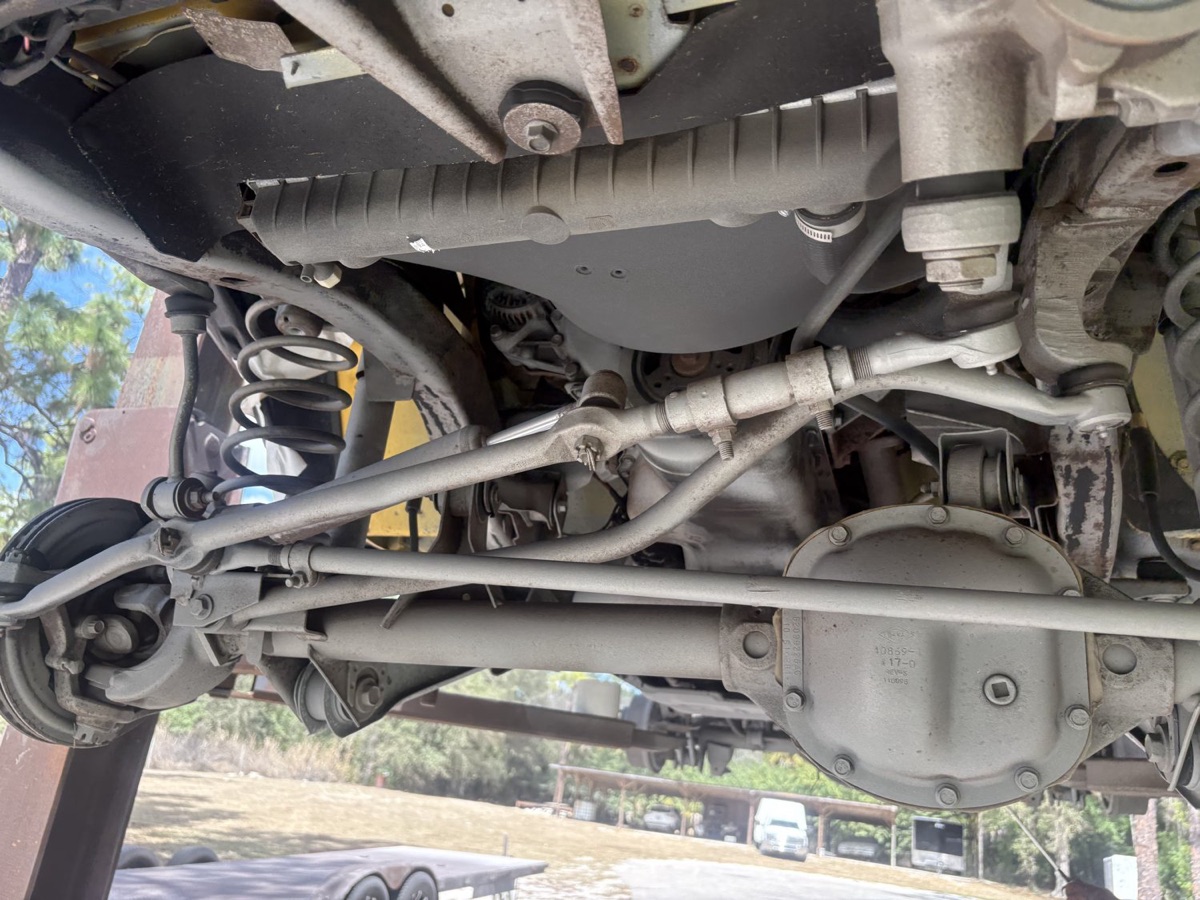
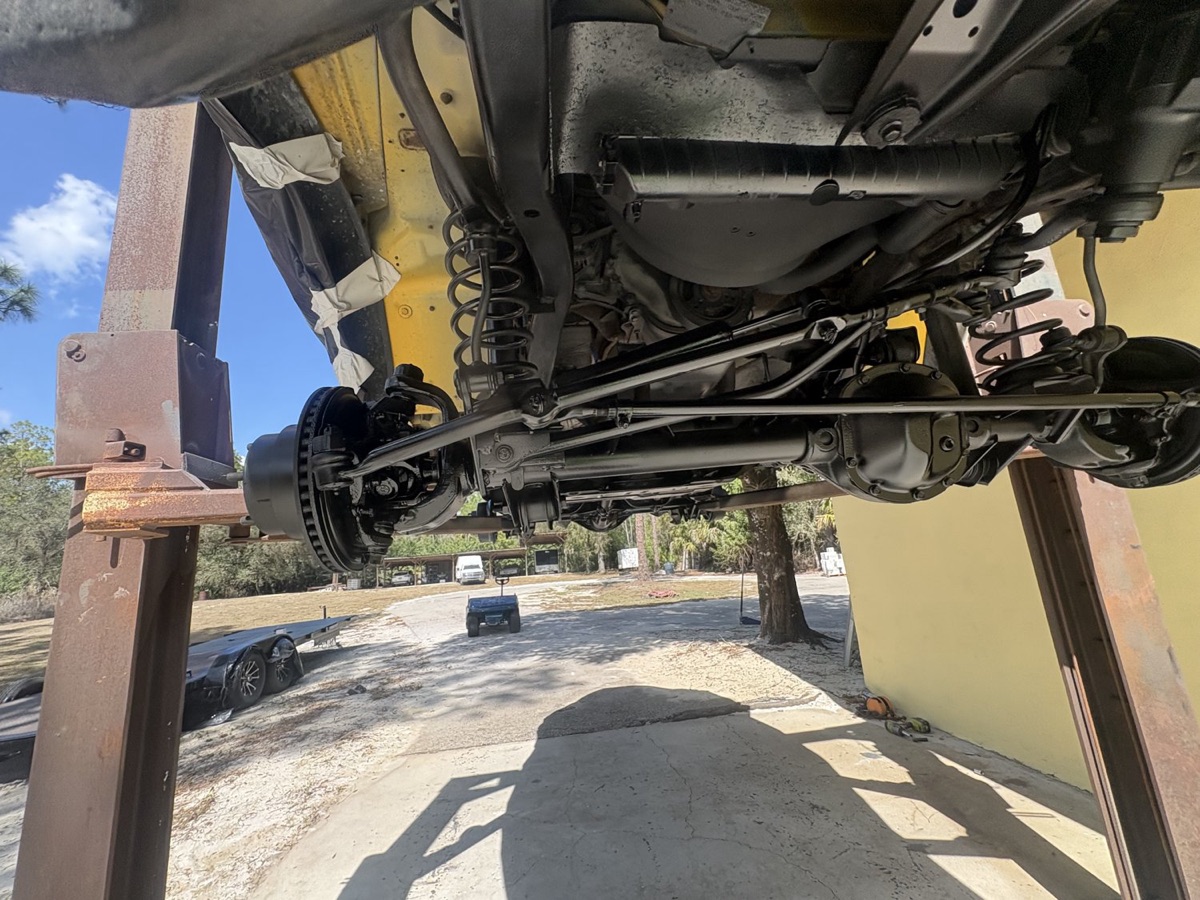
That matters most on the structural pieces. Frames, suspension arms, and undercarriages take the worst of the road and the salt, so they deserve a real coating system, not just a quick rattle-can pass. If you want a sense of how a chassis job actually runs start to finish, read about what to expect when we blast a car frame, or see the broader automotive blasting overview.
The short version: blast, prep, coat — handled together — is what keeps a finished classic looking right and protected against Southwest Florida's corrosive, humid climate for the long haul.