Why Surface Prep Decides Whether Your Finish Lasts
Powder coat and paint are only as good as the metal underneath. Here's why blasting first is the part you can't skip.
The short version
- A coating can only grip the surface it's applied to — clean, profiled metal makes it last; contamination makes it fail.
- Blasting does two jobs at once: it strips old finish and rust, and it cuts a microscopic profile (anchor pattern) for the coating to bite into.
- Invisible contaminants — oil, salt, mill scale, moisture — are the quiet killers of an otherwise good paint or powder-coat job.
- The right media and profile depend on the metal: aluminum and steel are not treated the same way.
- In Southwest Florida's salt air, skipping prep means rust creeps back under the coating fast — prep is cheaper than redoing it.
What does surface prep actually do for a coating?
Powder coat and paint don't soak into metal — they sit on top of it and grip the surface they're sprayed onto. That means the finish is only as good as what's underneath it. If the metal is dirty, rusty, or dead-smooth, the coating has nothing to hold, and it lets go later as flaking, blistering, or peeling.
Good surface prep solves two problems at once. First, it removes everything that doesn't belong — old paint, rust, mill scale, oils, and corrosion. Second, it gives the bare metal a uniform texture for the new coating to mechanically lock into. A clean, properly textured surface is what turns a coating from a temporary cover-up into a finish that lasts for years.
This is the part that gets skipped most often, and it's also the part that decides everything. You can use the best powder or marine-grade paint money can buy, but if the prep is wrong, the result will still fail. That's why our automotive blasting work starts with the metal, not the finish.
Why is adhesion the whole ballgame?
Adhesion is just a plain word for how well a coating sticks. With powder coat and most industrial paints, adhesion is mostly mechanical — the finish grabs onto the tiny peaks and valleys in the metal, almost like Velcro at a microscopic level. Spray that same coating onto a slick, polished, or greasy surface and there's nothing to grab, so it sheds the first time the part flexes, gets chipped, or sees water.
When adhesion fails, you usually don't notice right away. The part looks great leaving the shop. Then months later moisture works its way to a weak spot, the coating lifts at the edge, and corrosion spreads underneath where you can't see it until the finish is bubbling. By then the only fix is to strip it and start over.
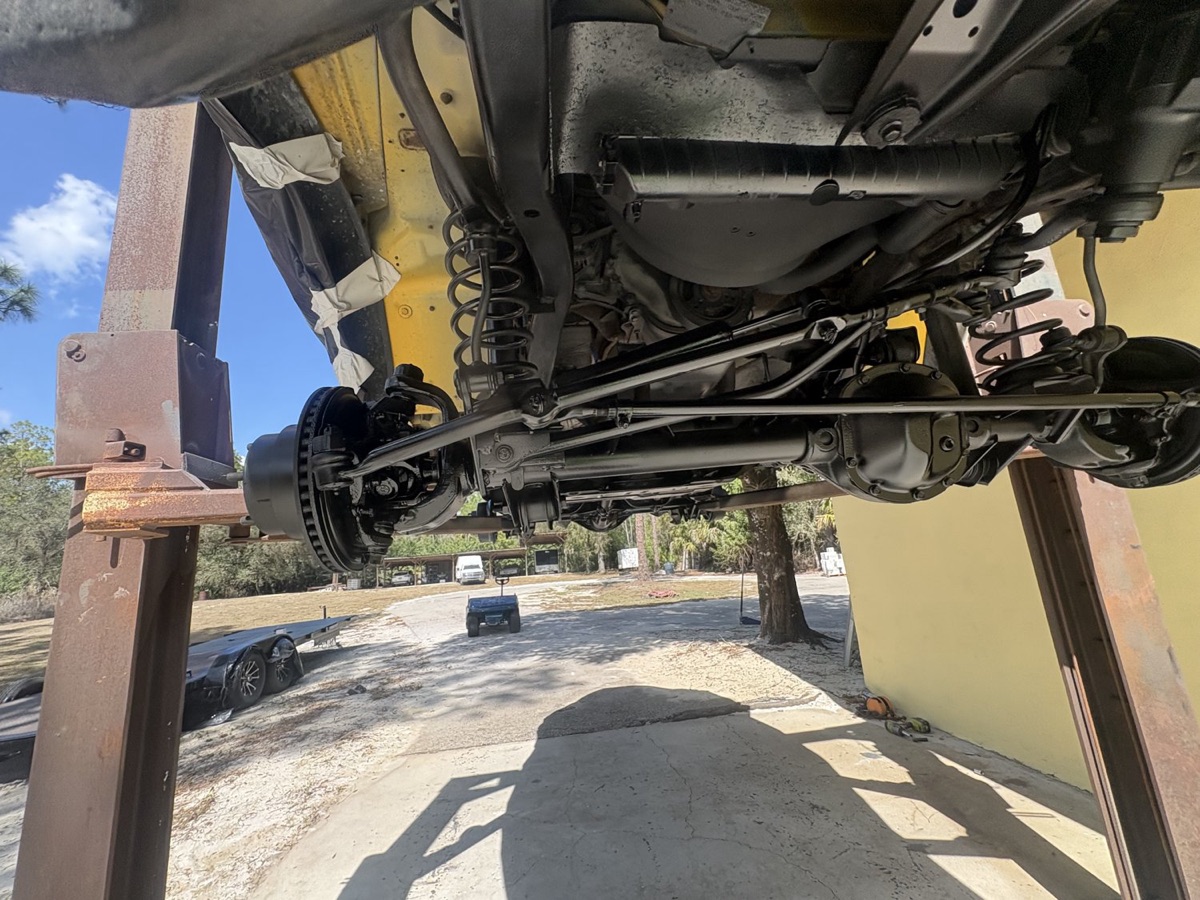
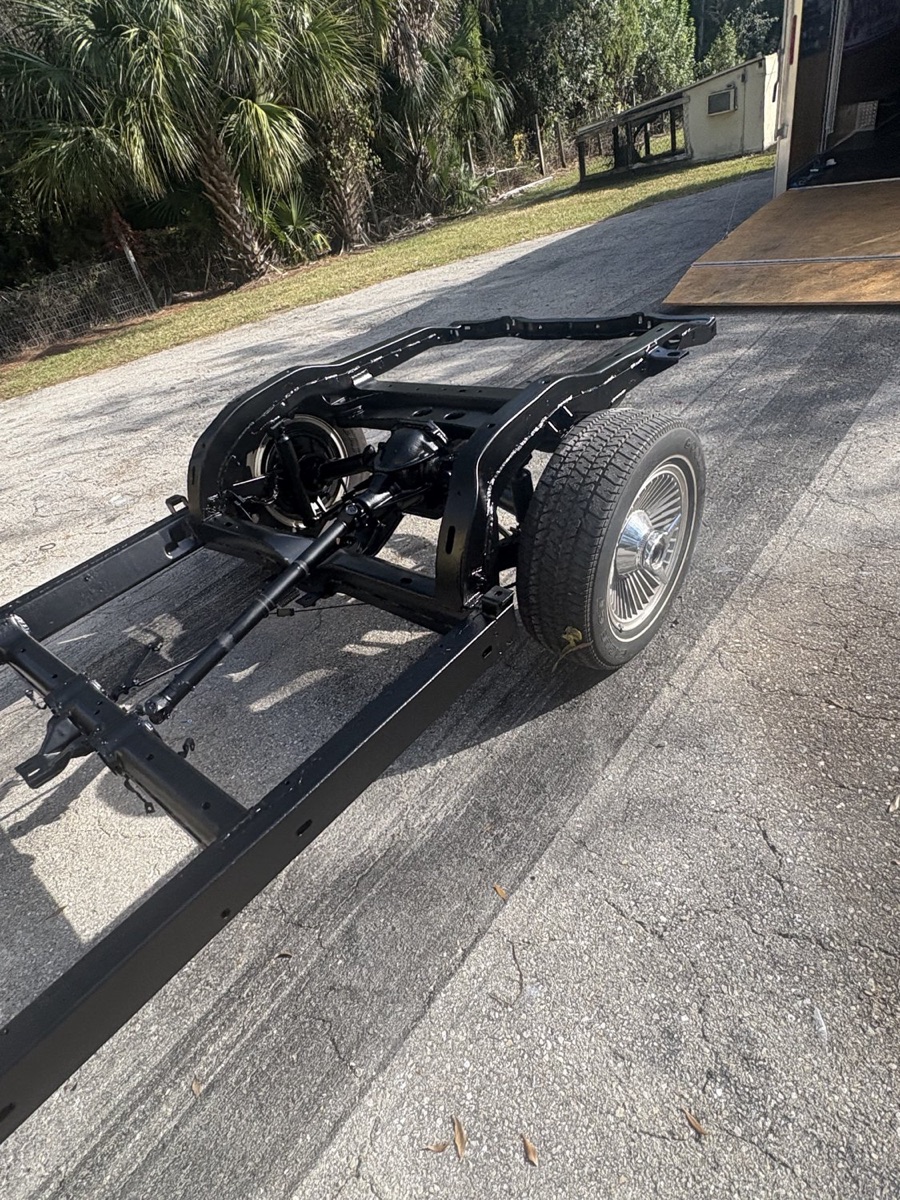
Blasting builds adhesion in on purpose by creating a consistent surface for the coating to key into across the entire part — not just the easy flat areas, but corners, weld seams, and recesses too. For more on how this plays out on a vehicle, see what to expect when we blast a car frame.
What is surface profile, and why does it matter?
Surface profile — also called the anchor pattern — is the microscopic roughness blasting leaves behind, measured by the height between the peaks and valleys in the metal. Too shallow and the coating doesn't have enough to grab. Too aggressive and you can leave peaks that poke up through a thin coating, or use up more material than you need to cover them.
The right profile depends on what's going on top. A thin powder coat wants a different anchor pattern than a thick-build epoxy primer. Coating manufacturers actually publish a recommended profile range for their products, and matching it is part of doing the job correctly. This is why the media and the air pressure aren't one-size-fits-all.
- Media type — crushed glass, garnet, aluminum oxide, and soda all cut differently and leave different profiles.
- Particle size and pressure — control how deep and how uniform the anchor pattern comes out.
- The base metal — thin sheet, cast parts, and heavy structural steel each respond differently.
Dialing this in is a judgment call that comes from doing the work, which is part of what our full blasting and coating services cover.
Which contaminants quietly ruin a finish?
Some of the worst enemies of a coating are the ones you can't see. You can hand a shop a part that looks perfectly clean and still have it covered in things that will wreck adhesion. The big ones are oil and grease, soluble salts, mill scale, flash rust, and trapped moisture.
Salt is a special problem here in Southwest Florida. Gulf salt air settles onto everything, and on a hauled boat or a truck that lives near the coast, salt works its way into pits and seams. If you blast and coat right over soluble salt, it draws moisture through the finish later and lifts it from underneath — a failure that looks exactly like bad prep even when the profile was fine. That's why coastal parts often need a wash-down and sometimes a salt test before coating, not just a blast.
Mill scale is another sneaky one. It's the bluish-grey layer that forms on hot-rolled steel, and it looks solid, but it's loosely bonded and will eventually flake off and take your coating with it. Blasting strips all of this back to clean, bright metal. On rust-eaten parts, that same process is the heart of our rust removal work.
Does the metal change how we prep it?
Yes — a lot. Steel and aluminum look similar once they're bare, but they don't behave the same under blast media or under a coating, and treating them identically is a common way to get a bad result.
Steel is forgiving and tough. It takes an aggressive media and a deep profile without much worry, and a sharp anchor pattern actually helps protective coatings perform. Aluminum is softer and thinner-skinned. Hit it with the wrong media or too much pressure and you can warp thin panels, embed media particles, or blow right through. Aluminum also re-forms an oxide layer almost instantly once it's bare, so the window between blasting and coating is tighter.
The goal is the same on both — clean metal with the right profile — but the media, the pressure, and the timing change to get there.
Cast parts, galvanized steel, and stainless each add their own wrinkles too. We dig into the steel-versus-aluminum side of this in blasting aluminum vs steel, and on coastal trucks and trailers it's worth reading our notes on rust removal in coastal Florida.
Is blasting better than sanding or chemical stripping?
For prep that has to last, blasting has real advantages over hand-sanding or chemical strippers. Sanding can knock back a flat panel, but it struggles to reach corners, threads, weld seams, and the rough texture inside cast parts — and it polishes the surface rather than profiling it, which can actually hurt adhesion. Chemical strippers can lift old paint, but they don't remove rust or scale, they leave residue that has to be neutralized, and they create a mess to dispose of.
Blasting reaches everywhere the media can fly and does the stripping and the profiling in one pass. It gets into the geometry that sanders can't and leaves a uniform, coating-ready surface across the whole part. For restoration work especially, the comparison is worth understanding — see classic car blasting vs chemical stripping.
The flip side is that blasting has to be matched to the job. The wrong media on thin metal can do harm, which is exactly why the right setup matters and why it pays to have the crew that preps the surface be the one that understands what's going on top of it.
Why have the same crew blast and coat?
Prep and finish are really one job split into steps, and a lot of coating failures happen in the handoff between them. When a part gets blasted in one place and coated somewhere else, time passes — and on bare steel and aluminum, time means flash rust and fresh oxide. A surface that was perfect on Tuesday can need re-prepping by Thursday.
When the same crew handles both, the part goes from clean metal to coating inside the right window, the profile is matched to the finish going on, and nobody is guessing about what was done to the surface. That control is the difference between a finish that holds and one that comes back. It's the whole idea behind blast it, prep it, coat it as one continuous process rather than three separate favors.
This applies whether it's a powder-coated truck frame, a repainted piece of heavy equipment, or a structural steel component. If you've got a part that needs a finish that actually lasts, the smartest first step is a free on-site look — start at our contact page or learn more about how we approach automotive and restoration blasting.