What Really Happens When You Media-Blast a Car or Truck Frame
From bare-metal results to pits, welds and the coating clock — here's the honest rundown before your frame hits the nozzle.
The short version
- Blasting strips a frame to clean bare metal far faster and more evenly than a wire wheel or chemical stripper.
- Abrasive reaches into pits, seams and around welds where hand tools simply can't go.
- Bare steel flash-rusts in hours down here, so the plan is to blast and coat on the same cycle.
- Media choice matters: aggressive grit for heavy rust, gentler media to protect thin or original metal.
- Mobile blasting brings the rig to your garage or shop, so the frame never has to leave.
Why blast a frame instead of grinding or stripping it?
A car or truck frame is full of box sections, gussets, spring perches and weld seams. A wire wheel can knock the loose scale off the flat faces, but it can't follow the metal into every corner — and chemical strippers tend to gum up, run, and leave residue you have to neutralize. Blasting solves both problems at once. A stream of abrasive scours the whole surface evenly, top and bottom, inside the lips of a C-channel and right up to the edge of every weld.
The other big win is speed and honesty. When the rust and old paint come off, you can finally see the frame — thin spots, hidden pinholes, prior repairs. That's worth a lot before you commit to a coating or a build. If you're weighing your options, our automotive blasting page walks through the common jobs, and if you're restoring something special, blasting versus chemical stripping is a useful side-by-side.
What does a blasted frame actually look like?
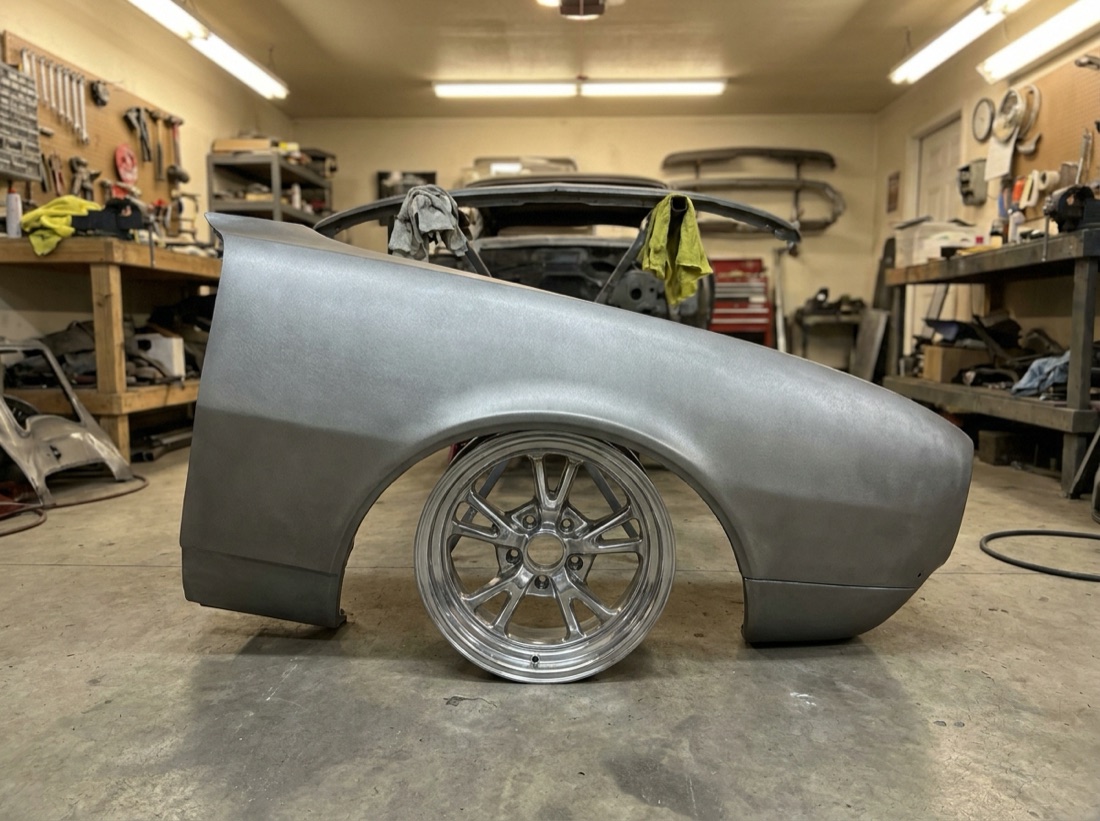
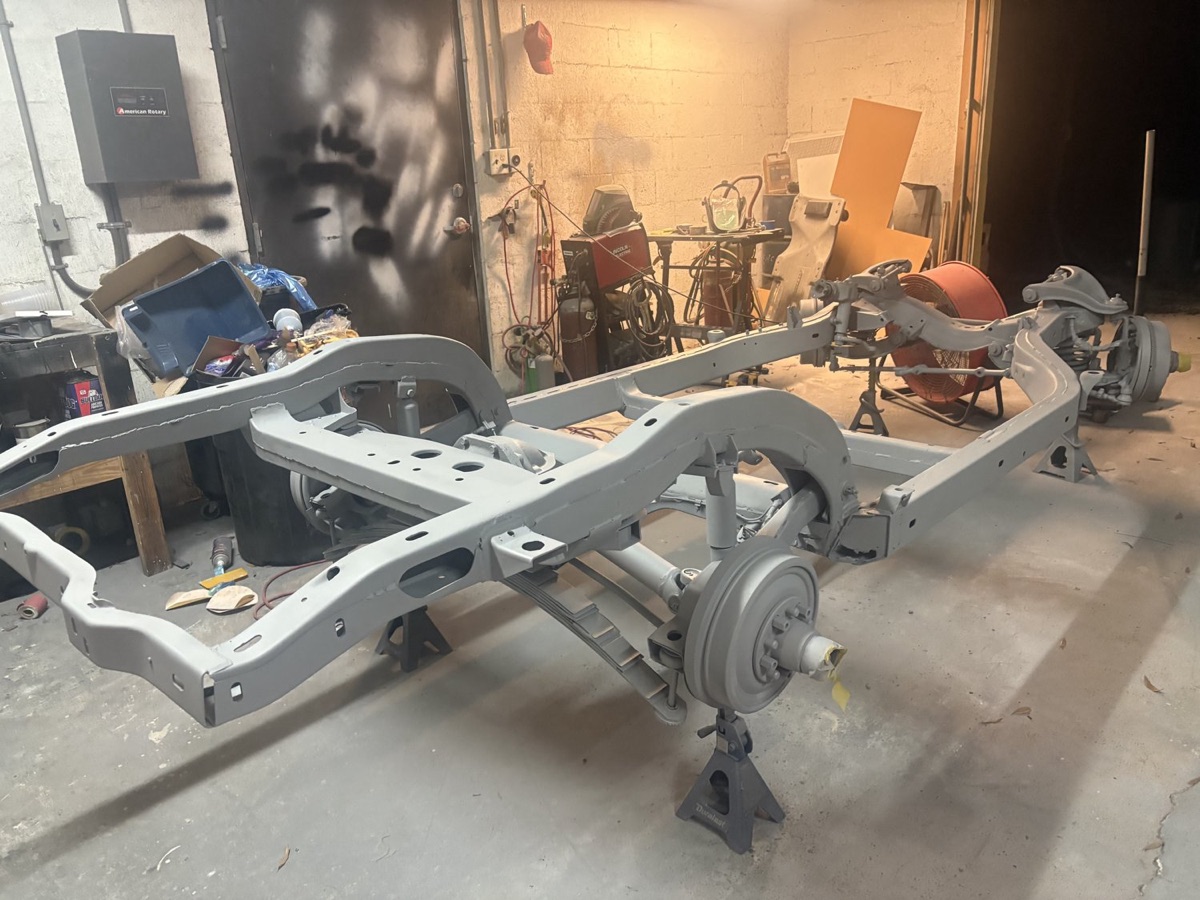
Done right, it comes off as clean, uniform bare metal with a slightly textured, matte-gray finish. That texture isn't a flaw — it's the surface profile, the tiny peaks and valleys the abrasive leaves behind. Coatings love it, because that profile gives primer, powder or paint something to mechanically grip.
Steel frames come out a light pewter gray; aluminum components come out a softer, brighter satin. (The two metals behave differently under the nozzle, which is why we treat them separately — there's more on that in blasting aluminum versus steel.) What you should not see is shiny patches next to dull ones, or stubborn dark rings — that's a sign the surface wasn't taken all the way down. A properly blasted frame reads the same everywhere, so the coating that follows behaves the same everywhere.
Can blasting really clean out pits and weld seams?
This is where blasting earns its keep. Rust doesn't sit politely on the surface — it burrows into pits and creeps under old coatings, especially along welds and inside crevices where moisture collects. Hand tools ride right over those low spots. Abrasive, because it's carried on air and bounces into recesses, digs down into the bottom of a pit and lifts the corrosion out of the seam.
It's worth being realistic, though. Blasting removes the rust product and exposes clean metal at the base of each pit; it can't put metal back. Deep pitting will still look pitted — just clean and stable instead of active and growing. That's actually the goal: stop the corrosion, get a sound surface, then decide whether to fill, coat, or leave the patina. For heavily corroded coastal frames, our rust removal approach and this read on rust on trucks and trailers in coastal Florida go deeper.
Why do you have to coat a frame so quickly after?
Here's the part people underestimate, especially in Southwest Florida. The second you strip steel to bare metal, the clock starts. Fresh steel is chemically hungry, and our Gulf air — warm, humid, and carrying salt off the water — is about the most aggressive environment you can hand it. A freshly blasted frame can start showing a light haze of flash rust within hours, sometimes faster if it's a muggy summer afternoon.
Flash rust isn't catastrophic, but it undoes part of the clean surface you just paid for and can compromise coating adhesion. So the smart workflow is to blast and coat in the same window — blast a section or the whole frame, then get primer, epoxy or your powder-coat prep onto that bare metal before the air gets to it. If you want the full picture of that handoff, see surface prep before powder coat or paint.
Which media is right for a frame?
There's no single "frame media." The right abrasive depends on the metal, its thickness, and how bad the corrosion is. A heavy, thick-walled truck frame buried in scale can take an aggressive grit that cuts fast. A thin floor support, a delicate bracket, or original sheet you want to preserve calls for a gentler touch so you don't warp or over-profile it.
- Recycled/crushed glass and garnet — common for steel frames; they cut rust and mill scale efficiently and leave a good profile for coating.
- Soda — far gentler, non-etching; useful around thin metal, aluminum, or when you want to strip without changing the surface much (see soda blasting).
- Dustless blasting — wets the abrasive to cut dust and helps hold off flash rust a little longer, handy on bigger jobs (more on dustless blasting).
Part of doing this well is matching the media to the part in front of us, not running one setting across the whole vehicle.
How does mobile frame blasting work?
For most frame jobs we bring the rig to you — your garage, your shop, the boatyard, wherever the project lives — so a heavy or half-built frame never has to be trailered somewhere and back. The crew sets up containment to keep abrasive controlled, blasts the frame down to clean metal, and depending on the job can move straight into prep and coating on site. We cover Naples and the surrounding area, including Marco Island, Bonita Springs, Estero, Fort Myers and Cape Coral.
What we'll want to know up front is straightforward: is the frame on or off the vehicle, steel or aluminum, how heavy the rust is, and what coating you're planning. That tells us the media, the setup, and the realistic timeline. Every frame is a little different, so the honest answer on scope and price comes from putting eyes on it — that's what the free on-site estimate is for. When you're ready, reach out and we'll take a look.