Why Salt Air Rusts Your Trailer and Truck Frame Faster Here
Gulf humidity and road salt drive corrosion deep into pitted steel, where chemicals and grinding can't reach. Blasting can.
The short version
- Salt air plus near-constant humidity keeps bare steel wet enough to rust around the clock here, not just after a storm.
- Rust hides in pits, seams and box sections where wire wheels, flap discs and chemical strippers simply can't reach.
- Media blasting reaches into the pits, strips every face at once, and leaves a clean profile ready for primer or coating.
- Catching frame and trailer rust early is far cheaper than waiting until a crossmember or flange is eaten through.
- Mobile blasting means the rig comes to your driveway, marina or shop, so you don't trailer a half-stripped frame across town.
Why does coastal Florida rust steel so fast?
Rust is just iron reacting with oxygen and water. Speed it up with salt and heat, and you get Southwest Florida. The Gulf throws a fine salt mist into the air that settles on everything, and salt is hygroscopic, meaning it pulls moisture out of the air and holds it against bare metal. So your trailer frame or truck undercarriage stays damp long after the last rain has dried off.
Add our humidity. On a typical Naples morning the dew point sits high enough that steel sweats overnight, every night. That thin, salty film is basically a battery sitting on your frame, and corrosion runs around the clock instead of just after a storm.
Trailers get it worst. Boat trailers back into brackish ramps from Marco Island to Fort Myers, then drive home coated in salt water. Utility and equipment trailers sit outside in the weather year round. By the time you see orange bubbling under the paint, the steel underneath has usually been working on it for a while.
Where does rust actually hide on a frame or trailer?
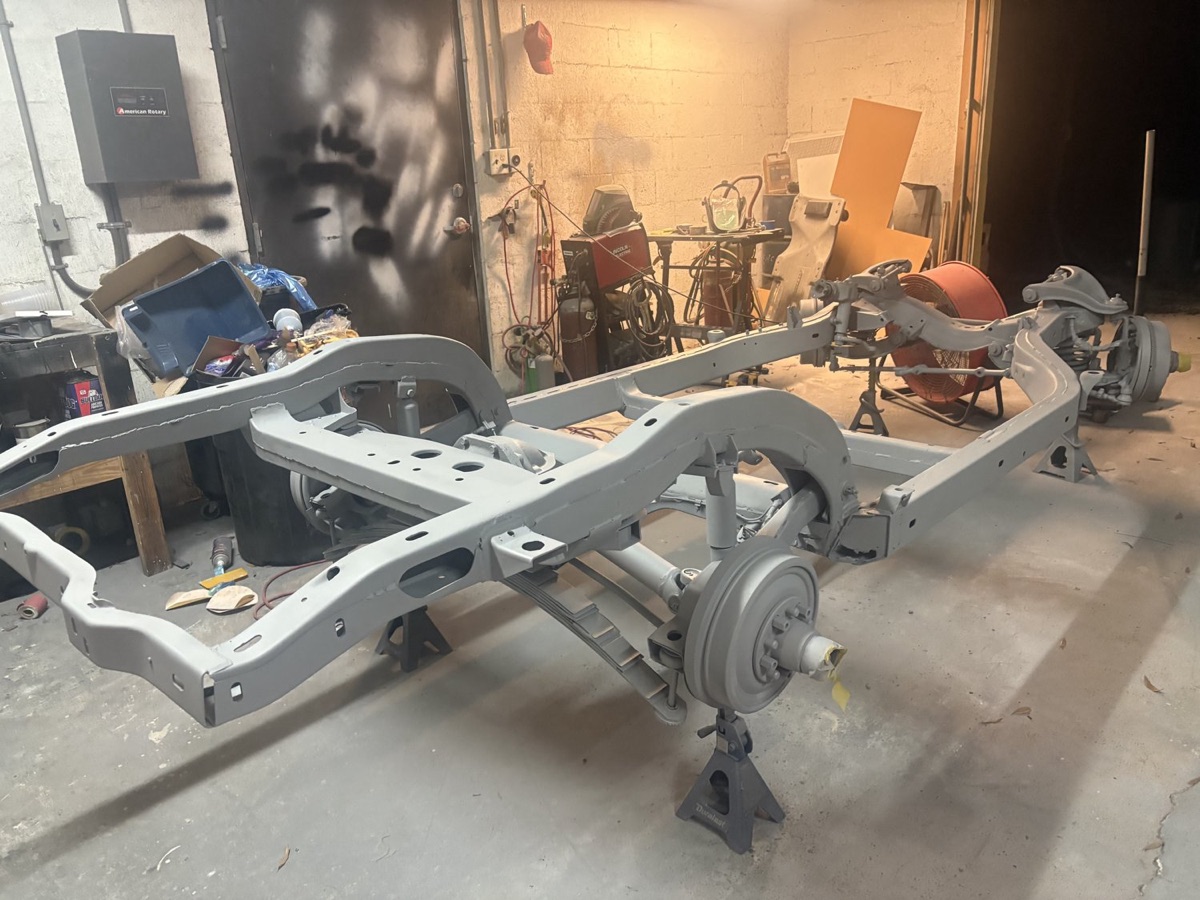
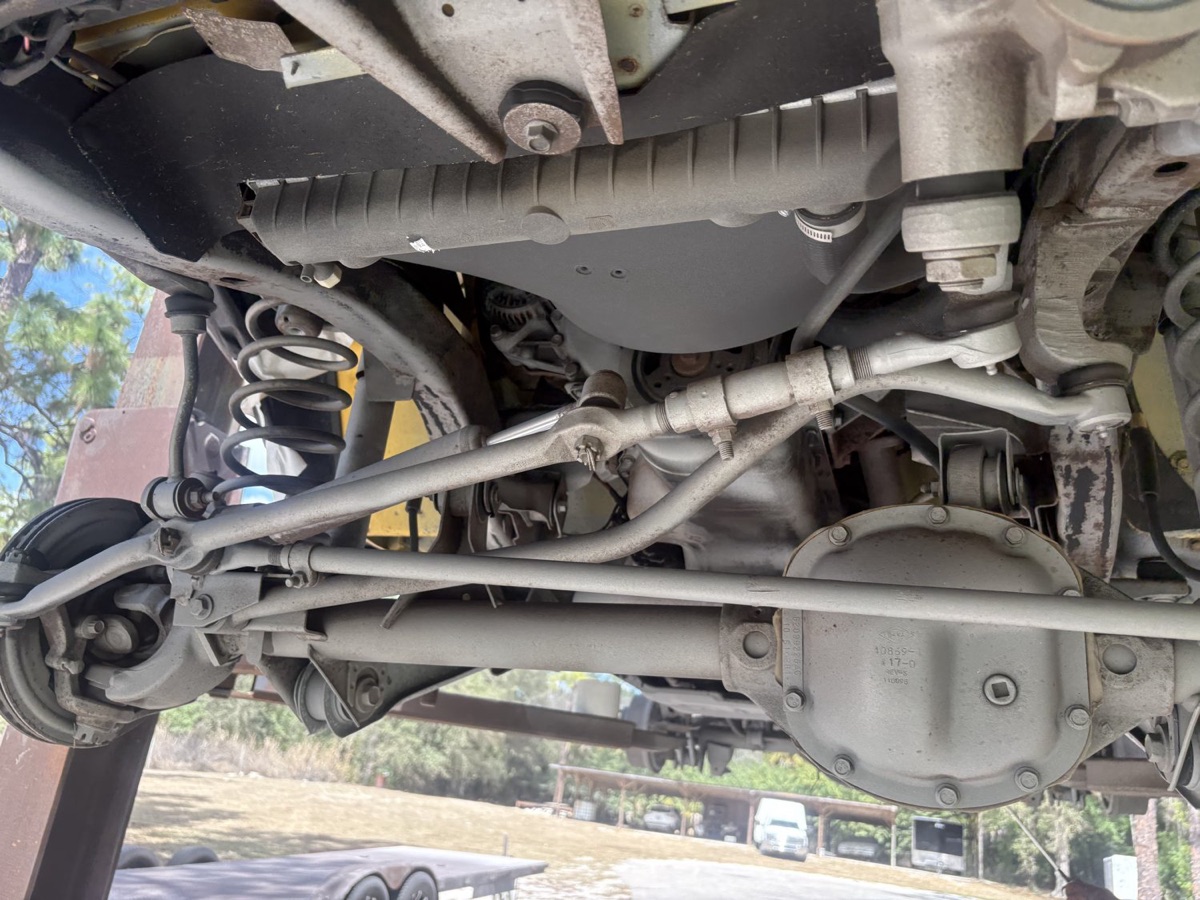
The rust you can see is rarely the whole story. Corrosion loves the spots you can't get a tool into, and a truck or trailer frame is full of them:
- Box-section rails and crossmembers — closed tubes that trap salty moisture inside, rusting from the cavity outward.
- Seams, gussets and welds — overlapping plates wick water into a tight gap that never dries.
- Around fasteners — bolt heads, U-bolts and bracket flanges hold a damp pocket against the steel.
- Pitted surfaces — once rust starts, it digs craters, and fresh corrosion hides down inside each pit.
That last one matters most. Surface scale wipes off easily, but the rust packed into a pit is what keeps the corrosion alive. Smooth a frame over the top of it and you've sealed active rust under your new paint. For a closer look at how the steel itself behaves, see our rust removal service and the rundown on blasting aluminum versus steel.
Why do wire wheels and chemicals miss the worst of it?
The usual DIY toolkit looks like it's working, but it mostly polishes the high spots. A wire wheel or flap disc rides across the surface and burnishes the top of the steel. It can't drop into a pit, so it skates over the active rust at the bottom and even smears metal across the opening, hiding it. Get aggressive with a grinder and you start removing good steel and gouging the frame.
Chemical rust converters and acids have a different problem. They need to actually contact and fully neutralize the rust to work, and inside a deep pit or a tight seam the chemical can't penetrate evenly or rinse out clean. Leftover residue and unconverted rust sit there under your primer. On a complex frame with hundreds of nooks, getting consistent coverage by hand is nearly impossible.
Both methods also leave the surface either too smooth or contaminated for a coating to grip well. Good adhesion needs a clean, uniform surface profile, and that's exactly what hand tools and chemicals struggle to deliver across a whole chassis.
How does media blasting pull rust out of the pits?
Blasting works because it isn't a tool dragged across the surface, it's thousands of media particles fired at it from every angle. The abrasive drives straight down into pits, seams and corners and lifts the rust out from the bottom, not just off the top. Where a wire wheel sees a flat surface, blast media sees the real, cratered shape of the steel and cleans all of it.
It strips every face at once, too. Tilt the nozzle and you reach the inside flange of a C-channel, the back of a bracket, the underside of a crossmember, areas you'd never get square with a grinder. The result is bright, bare metal with a uniform texture, called the surface profile, that gives primer and coatings something to bite into.
Blasting removes the rust and creates the anchor pattern in one pass, which is why it's the standard prep before quality coatings.
Media choice matters. Recycled glass and garnet cut rust and scale efficiently on steel, while gentler approaches like soda blasting or dustless blasting suit thinner panels and heat-sensitive work. We match the media to the metal, and you can read more in what to expect when we blast a car frame.
Why blast it now instead of waiting?
Rust doesn't pause. Every season you leave active corrosion in a frame, it eats deeper into the steel, and on a structural member that's not just cosmetic. A pitted trailer tongue, a thinning crossmember or a rotted spring hanger can become a safety issue, and replacing structural steel costs far more than cleaning and recoating sound metal would have.
The math is simple here in the salt belt. Strip a frame back to clean steel and get a real coating on it while the metal still has its thickness, and you stop the clock. Wait until you can poke a screwdriver through a rail, and you're into fabrication and welding instead of prep and paint.
Cost depends on the size of the piece, how heavy the corrosion is, the media we use and how much disassembly the job needs, so the honest answer is that it varies. The best way to know is a quick look in person. We'll come to your truck or trailer and walk you through what we see at a free on-site estimate.
What happens after the rust is gone?
Bare blasted steel is clean, but it's also defenseless. Fresh metal with no oxide layer will flash-rust in our humidity surprisingly fast, sometimes within hours, so the window between blasting and coating is tight. That's the whole point of prepping and coating as one process rather than two separate trips.
That's also why we don't just blast and leave. We blast, then prime or coat while the surface is still clean and properly profiled, so the corrosion you paid to remove doesn't come right back. Matching the coating to the use, whether it's a chassis paint, an epoxy primer or powder-coat prep, is half the job.
If your end goal is powder coat or a topcoat, the prep standard goes up a notch, and our guide to surface prep before powder coat or paint covers it. Either way, the principle holds: pull the rust out properly, then protect the steel before the Gulf air gets another shot at it.