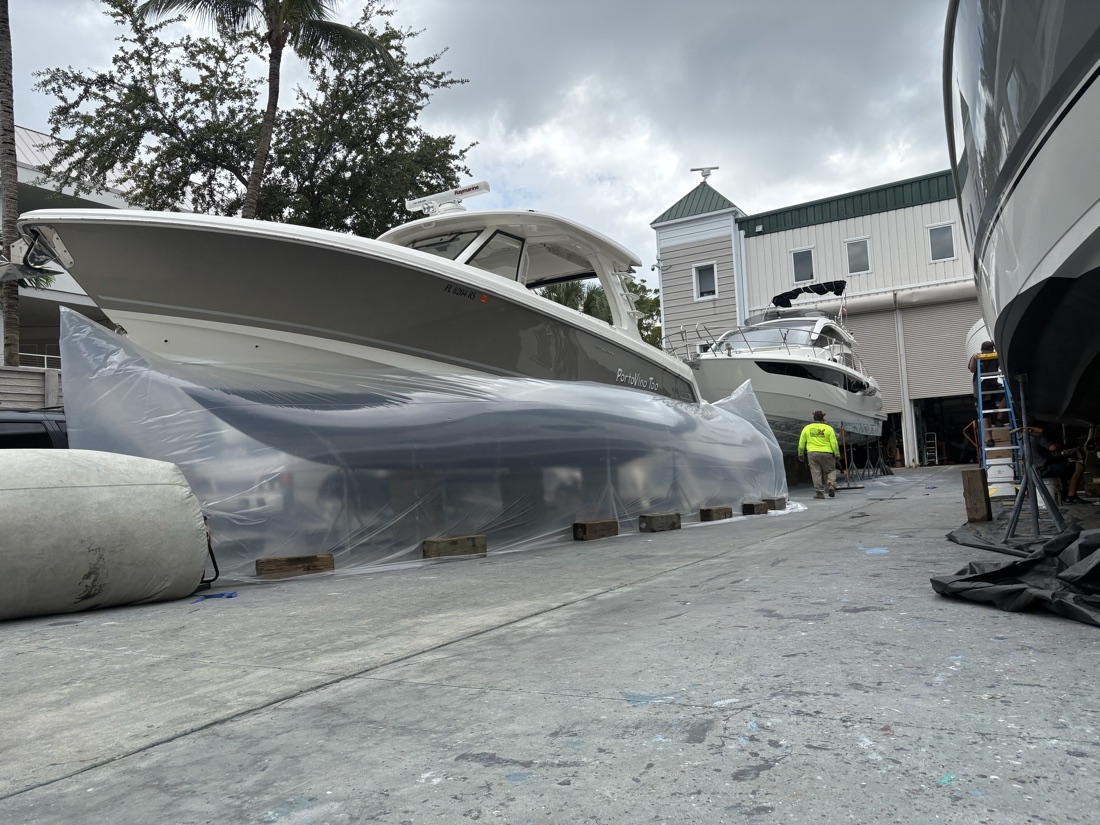
Caloosahatchee slips, Gulf-access docks and dry storage all stack antifouling on a hull fast. We blast every layer off at your boatyard, marina or driveway and hand the boat back fair, clean and ready for barrier coat.
SWFL Media Blasters strips built-up bottom paint off boats all over Fort Myers, from Legacy Harbour and the downtown river district out to Iona, McGregor and Fort Myers Shores. Boats here live a double life: brackish Caloosahatchee water upriver, open salt through San Carlos Bay downriver. Hulls pick up freshwater growth and hard saltwater growth both, and the antifouling gets recoated season after season until it is thick, brittle and shedding. We blast the whole stack off at your boatyard, marina, dry storage lot or driveway and leave clean, sound gelcoat behind. Call or text (239) 227-1768 for a free on-site estimate.
Fort Myers boats fight on two fronts. Upriver on the Caloosahatchee, toward Fort Myers Shores and the Orange River, the water runs brackish and grows slime, grass and a soft film that keeps coming back. Run downriver and out through San Carlos Bay and the same hull sits in real salt, where barnacles set hard and leave calcium behind when they let go. A boat that works both ends of the river collects both problems.
The usual answer is another coat of antifouling every season, and that works until it does not. Each coat goes over the last, the stack turns thick and brittle, and eventually it sheets off in patches and takes the fresh paint with it. Sanding and touching up buys a few months. Stripping the bottom back to gelcoat resets it, and blasting gets there without weeks of hand work. If you are trying to figure out whether you are due, start with how often bottom paint should be redone.

Nobody knows how many coats are on a hull until the blasting starts. Boats that have changed hands a few times around Fort Myers often carry paint from several owners, hard and soft antifouling mixed together, an old barrier coat buried underneath, sometimes a patch of filler nobody mentioned at the sale. We take it off in controlled passes and watch the surface change as the layers come away.
What is underneath is the whole point. With the bottom bare, blisters, voids, soft spots and old repairs are visible instead of guessed at. If the laminate needs to dry, or a shop needs to grind and fair, this is the condition it has to be in first. If it is sound, you have an evenly profiled surface that primer and barrier coat grip. Either way you stop paying to paint over a problem. See the signs bottom paint needs to come off and the rest of our marine blasting work.
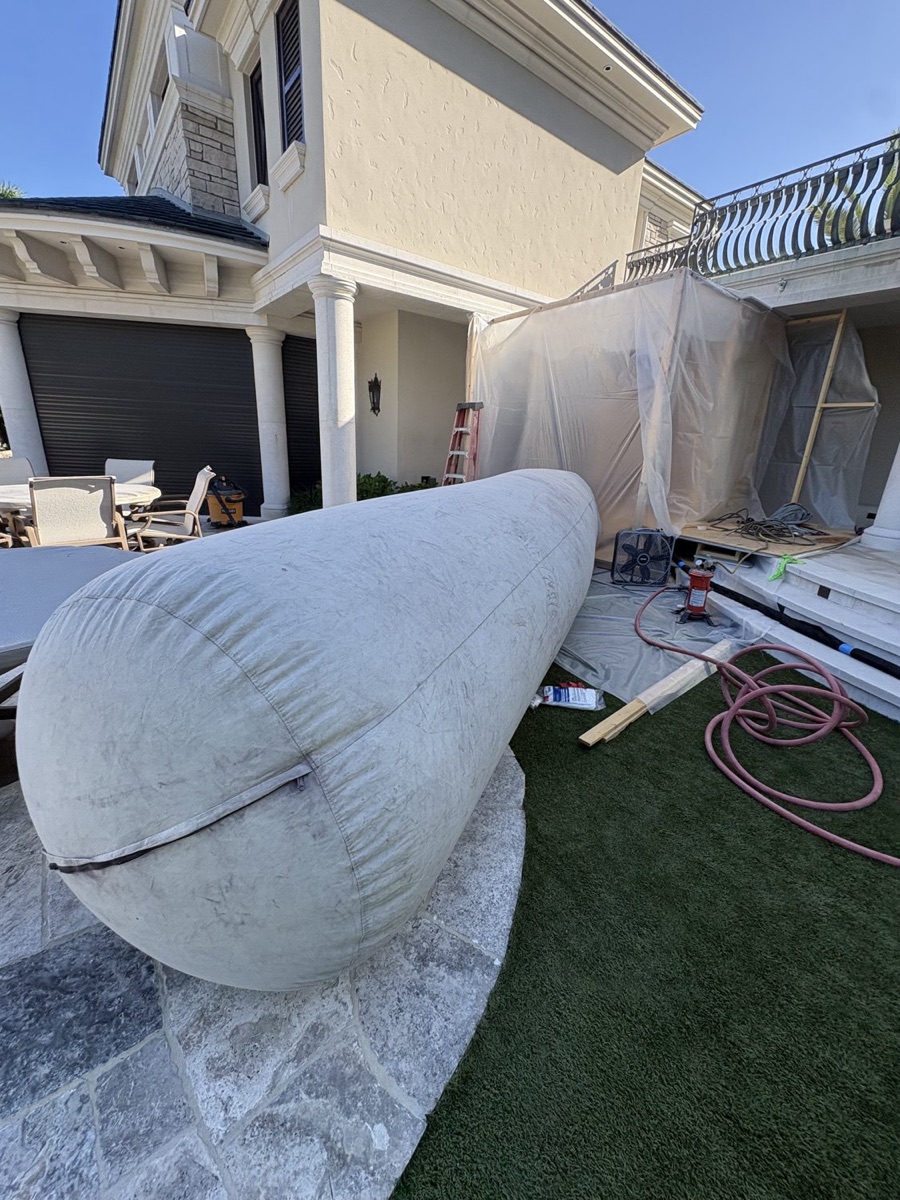
The rig comes to the boat. That means Fort Myers boatyards and marinas along the river, dry storage racks and lots, commercial yards, and plenty of private driveways and canal-side backyards on the Iona and McGregor side of town. What we need is the boat hauled and blocked safely on stands or sitting on its trailer, room to set up around it, and clearance to reach the full bottom.
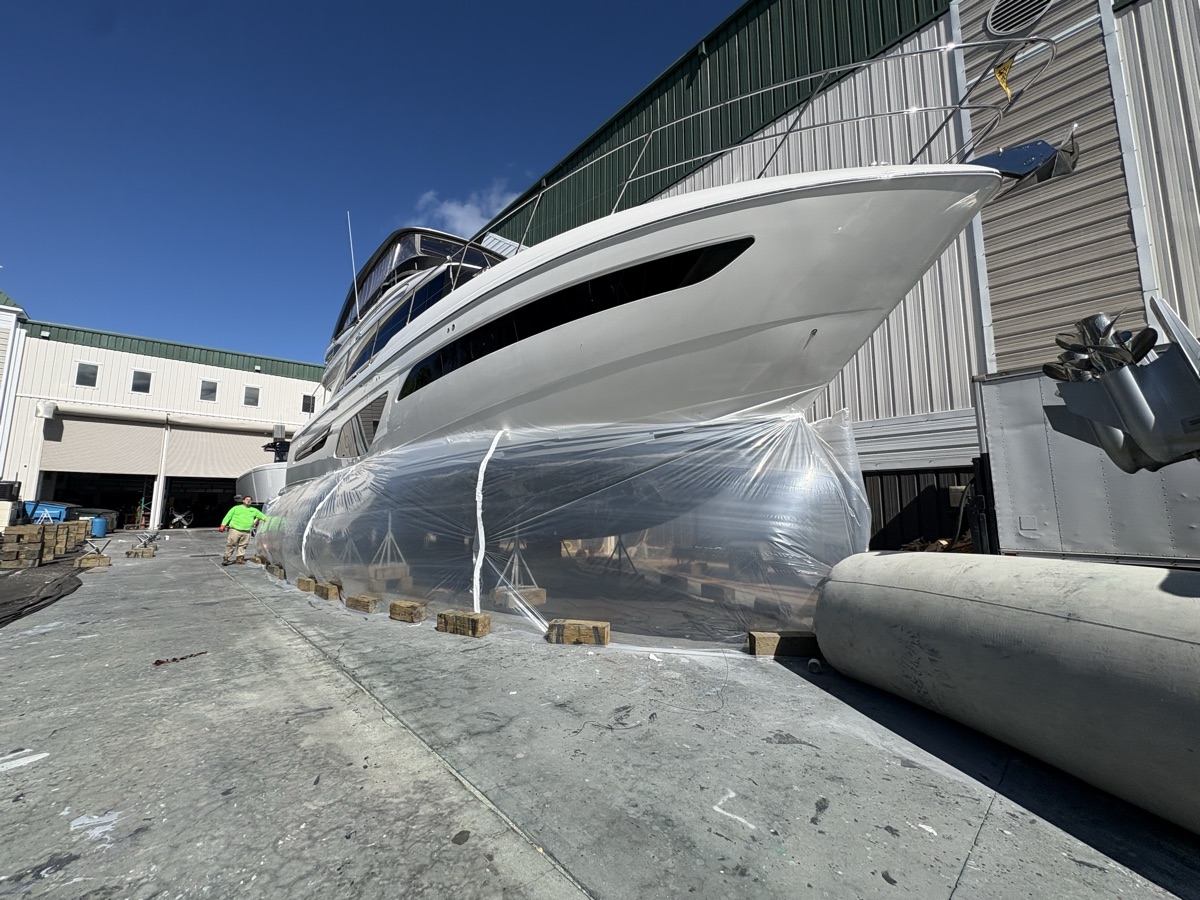
Yards have rules and neighbors have opinions, so containment is part of the job. We mask and drape the boot stripe, hardware and topsides, tarp the ground to catch spent media, and clean the work area before we leave. Where dust has to stay tight, next to boats on stands or an open shop bay, we run dustless wet blasting, which traps most of the dust and keeps the surface cool at the same time. Everything else we handle around town is on the Fort Myers page.

Fort Myers is the commercial hub of the region, and the boats reflect that. Alongside the weekend center consoles there are larger cruisers and motor yachts kept on the river, charter boats, and rugged aluminum and steel hulls that work for a living. A longer waterline means more square footage, more running gear pockets, more hardware to mask, and usually a deeper stack of paint underneath all of it.
The media changes with the substrate. Fiberglass and gelcoat get softer, controlled media such as crushed glass, or soda blasting when a surface calls for the gentlest option we run. Aluminum and steel take a harder cut with pressure set to suit the plate. Boats move around down here, so if yours lives in one place and gets hauled in another, tell us where it will be sitting. We do the same work for owners over in Cape Coral.
Bare is a stage, not a finish. Once the bottom is clean it wants a barrier coat and then fresh antifouling, so it helps to have your paint crew lined up rather than leaving a stripped hull sitting. Blast it, prep it, coat it is the whole idea, and we can carry it through or hand it back bare and ready for your yard to finish. Either way you get a fair surface with a real profile instead of a sanded-slick hull that paint slides off. Prepping a hull for new antifouling covers what comes next.
While the boat is out, the metal around it is usually due too. Trailer frames, axles and brackets rust from the inside out in coastal salt, and lift beams and cradles chalk and scale in the same air. Those are easy add-ons while we are already set up: see rust removal. What sets the size of a bottom job is hull length, layer buildup, substrate, access at the site, and whether you want coating after.
Based in Naples and mobile across Southwest Florida — we bring the rig to your home, marina, yard or job site. Call or text (239) 227-1768.
Yes. We are fully mobile and the rig comes to the boat: Fort Myers boatyards and marinas on the river, dry storage racks and lots, commercial yards, or your own driveway or canal-side backyard. The boat needs to be hauled and blocked safely on stands or sitting on its trailer, with room to work around the full bottom. Call or text (239) 227-1768 and tell us where it will be sitting.
Not when the media and the pressure are matched to the hull. For fiberglass and gelcoat we run softer, controlled media such as crushed glass, and we drop to soda or dustless wet blasting when a surface calls for the gentlest touch. The abrasive lifts paint rather than cutting laminate, and the process runs cool. Heavy sanding burns through gelcoat in a hurry, and chemical strippers soak in.
It changes what is on the bottom, not whether it has to come off. Brackish Caloosahatchee water grows slime, grass and soft film. Salt through San Carlos Bay sets hard barnacles that leave calcium behind. Boats working both ends collect both, and the antifouling keeps stacking either way. Blasting takes the whole history off in one pass.
All of them. We do not stop at a number, we blast until the bottom is uniformly back to clean, sound gelcoat. A hull repainted every season for years, or one carrying paint from two or three previous owners, takes more passes than a bottom with a couple of seasons on it. Buildup is one of the main things that sizes the job.
Yes. Fort Myers has plenty of larger cruisers, motor yachts, charter boats and working aluminum and steel hulls. Same approach, with media and pressure set for the substrate. A longer waterline means more surface, more running gear pockets and more hardware to mask, so it is a bigger job, not a different one. Tell us the length and the layup.
Usually. Trailer frames, axles and brackets rust hard in coastal salt, and lift beams and cradles chalk and scale in the same air. If the boat is off the trailer, or the lift is reachable, that metal is a straightforward add-on while we are already set up, and we can prime and coat it before we leave. See rust removal.
Call or text (239) 227-1768 with the boat, the length, roughly how many seasons of paint are on it, and which yard, marina or driveway it will be sitting in. We come look and give you a free on-site estimate. Scope comes down to hull size, buildup, substrate, access, containment, and whether you want coating after.
Free on-site estimates at Fort Myers boatyards, marinas, dry storage and private docks. Call or text (239) 227-1768 and we will bring the rig to the boat.
Tell us a little about the job and we'll get right back to you.
Thanks — we'll be in touch shortly to set up your free estimate.