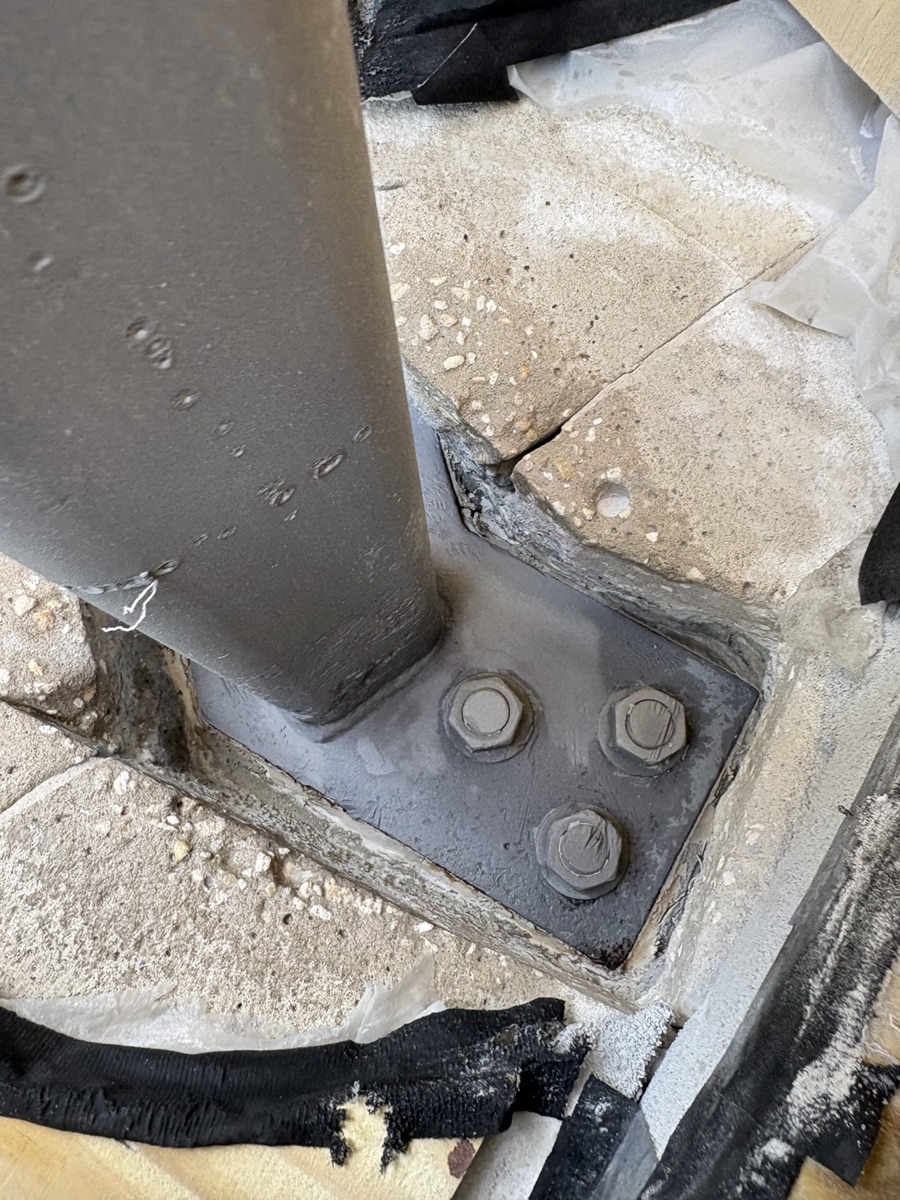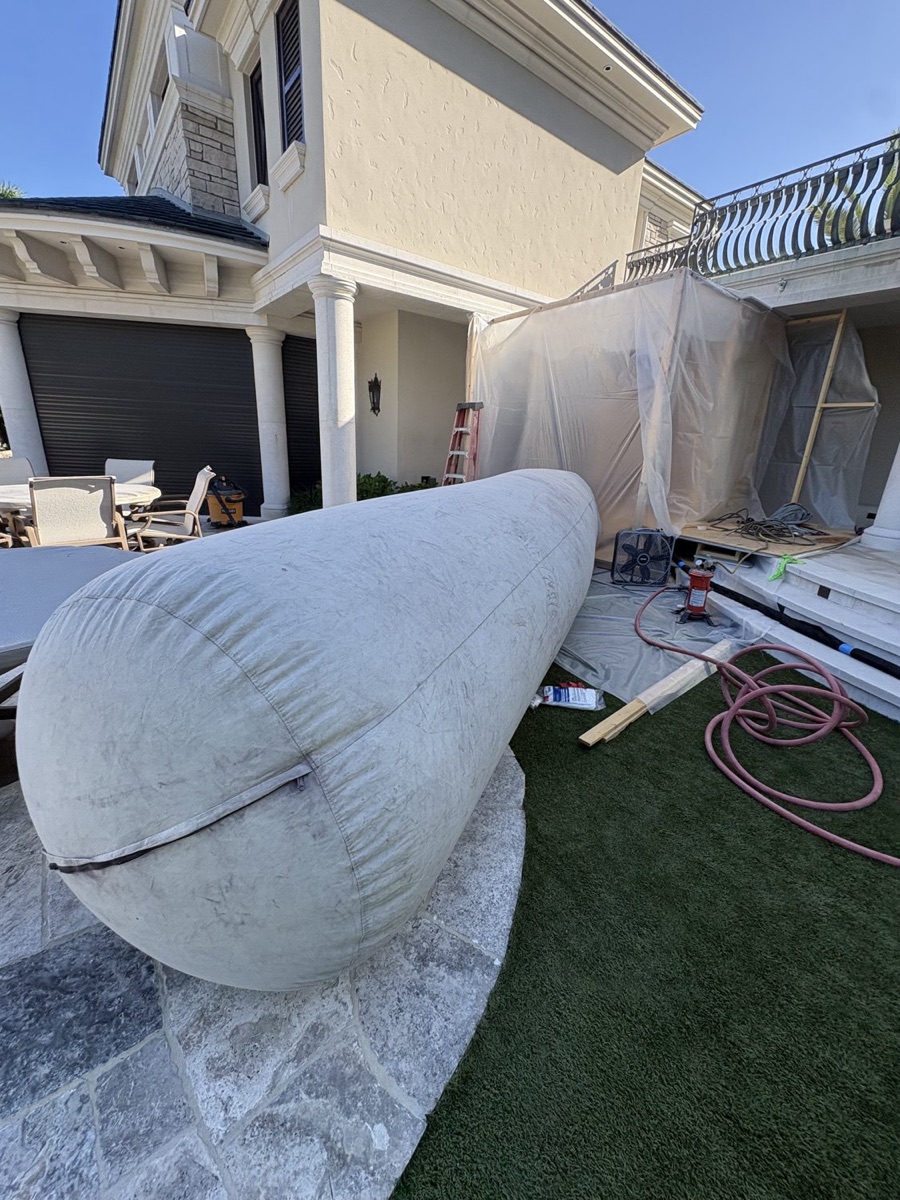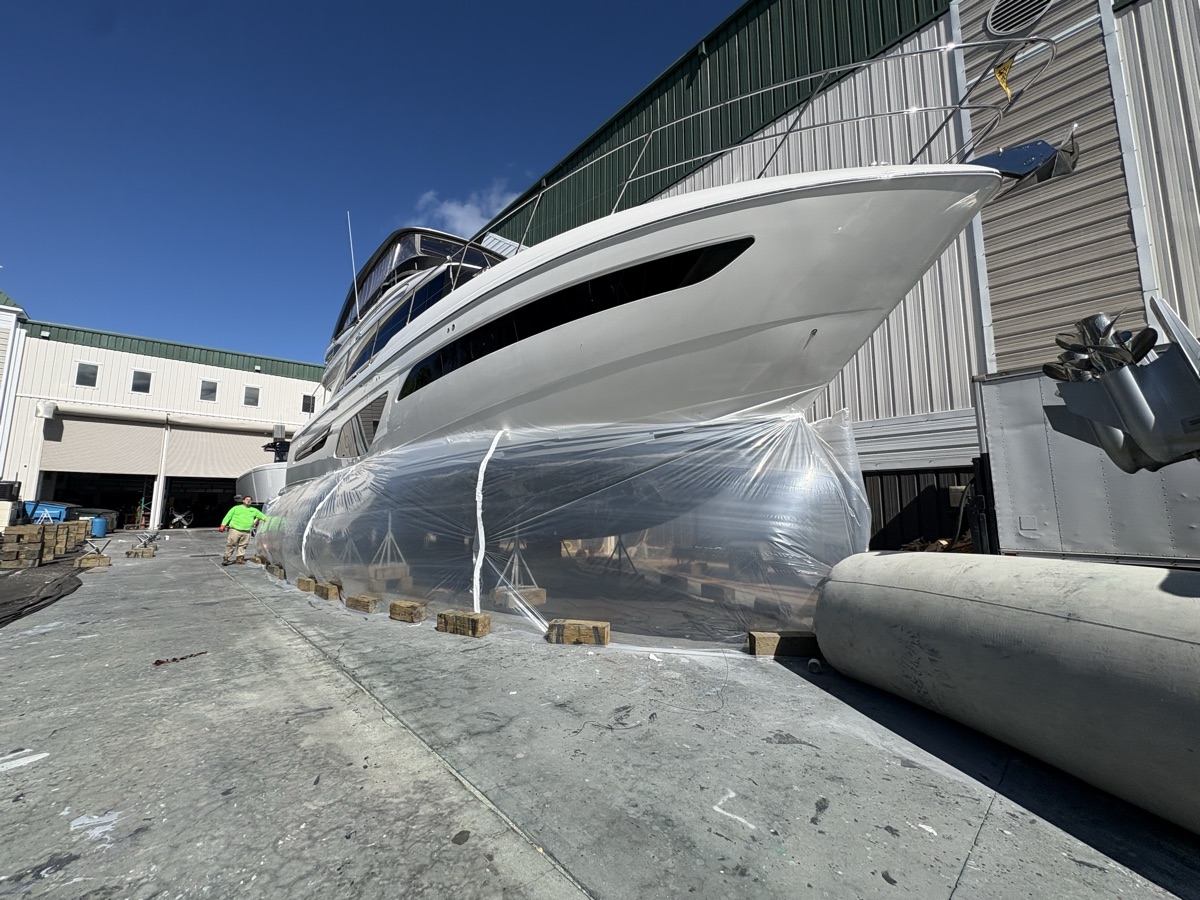
On Marco Island the boat sits behind the house in warm salt water all year, and the bottom shows it. We blast years of stacked antifouling and hard growth back to clean gelcoat, on-site at the yard, the lift or the driveway.
SWFL Media Blasters strips boat bottoms on Marco Island, where hulls almost never come out of the water. On a canal island the boat lives behind the house on a lift or in a slip, warm salt water works on it every month of the year, and the fix each season is another coat of antifouling rolled over the last one. A few seasons in, the bottom is a thick, brittle stack that chips, drags and hides whatever the laminate is doing underneath. We blast all of it off, back to clean gelcoat, at your yard or at your seawall. Licensed and insured, fully mobile since 2015, free on-site estimates. Call or text (239) 227-1768.
Marco Island is the largest of the Ten Thousand Islands, and it is cut through with miles of saltwater canals, nearly all of them lined with seawall and private docks. That layout is the whole story for bottom paint. Boats here live in the water behind the house instead of on a trailer in a garage, so the hull never gets a dry season. Warm salt water in the canals, the Marco River and Factory Bay keeps barnacles, slime and grass working on the bottom year round.
The usual answer is fresh antifouling every season, rolled straight over whatever is already down there. That works until it does not. The stack gets thick and brittle, loses its grip at the bottom of the pile, and starts sheeting off in chips that take the new coat with them. At that point sanding is chasing the problem instead of fixing it. Taking the whole stack back to gelcoat is what puts you on a known surface again, and our boat bottom paint removal page covers that process in full.

The reason to blast instead of sand is control. We match the media and the pressure to your hull so the abrasive lifts paint and leaves the gelcoat under it alone. For fiberglass we lean on crushed recycled glass and baking soda, and we run dustless (wet) blasting when the job wants a cooler surface and less airborne dust. Soda in particular is gentle enough for thin skins and delicate areas where a hard media would be a mistake. If your hull has you nervous, read up on soda blasting first.
Blasting also reaches what a sander cannot: the keel, the strut pockets, around through hulls and transducers, and the tight corners at the running gear. The bottom comes off uniform instead of scalloped, which is exactly what a barrier coat wants to grip. Boot stripe, topsides, hardware and anything else staying put gets masked before the first pass.
Paint hides things. Once the bottom is bare, blisters, voids, old repairs, soft spots and moisture staining are out in the open where you or your surveyor can read them. If you have been chasing bubbles that keep popping through a fresh bottom job, or a Marco Island boat that has quietly gotten slower and thirstier, a stripped hull usually tells you why.
If there is osmotic blistering, bare gelcoat is step one of any honest repair. We can open the affected areas so the laminate has a chance to dry, and your repair shop grinds, fills and fairs from a surface it can actually see. We will tell you what we find. We will not tell you it is nothing so the job moves faster.
Everything on Marco arrives over a bridge, whether it comes across Collier Boulevard from the north or in through Goodland, and a mobile crew plans around that. We bring the rig, the media and the containment to the boat. If it is hauled out and blocked at a yard, we work it there and stay inside the yard's rules. If it is up on a lift behind the house, we look at whether the whole bottom can be reached safely with the boat out of the water, and we are straight with you when the answer is that it needs to come out.
Island lots are tight. Driveways are short, houses sit close on both sides, and plenty of properties are gated or inside an association where dust, noise and work hours matter to somebody. We contain the work area, keep media and paint chips out of the canal and off the neighbor's dock, and sweep up the spent media before we leave. The Marco Island page covers everything else we handle on the island.

A stripped bottom is a starting point, not a finished job, and bare gelcoat is not meant to sit. Most owners go straight into a barrier coat system and then fresh antifouling, so the window between blasting and priming is worth planning before we show up. If your yard or your painter is handling the coating, we hand off a clean, uniformly profiled surface and get out of their way. If you would rather not run two crews, we prep and coat as well. That is the whole idea behind blast it, prep it, coat it.
Scheduling is the other Marco Island wrinkle. The boat is out of the water while all of this happens, so the haul-out slot, the blast date and the painter's calendar want to line up. Tell us who else is involved when you call. For background, see prepping a hull for new antifouling and how often to redo bottom paint.
Based in Naples and mobile across Southwest Florida — we bring the rig to your home, marina, yard or job site. Call or text (239) 227-1768.
We come to you. We are fully mobile out of Naples and run the rig down Collier Boulevard and over the bridge. We work at boatyards, marinas, storage lots and private canal-front property on the island. As long as the boat is blocked safely on stands, on a trailer or reachable on the lift, the equipment comes to the boat. Tell us where it sits when you call (239) 227-1768.
Sometimes. It depends on whether the whole bottom can be reached safely with the boat up, how much room there is between the hull and the seawall, and whether the work can be contained over the water. Some lifts give us room and some do not. We would rather look at it than promise it over the phone, which is why the estimate is free.
Not when the media and the pressure are matched to the hull. We use gelcoat-safe media such as crushed recycled glass or baking soda, and dustless (wet) blasting where we want the surface cooler. That is gentler than heavy hand sanding, which burns through gelcoat in a hurry, and it does not soak into the laminate the way chemical strippers can. See marine blasting for how we approach different hulls.
Yes. Barnacles, slime, grass and the calcium scale they leave behind come off with the paint. In warm Marco canal water that growth is constant, and a pressure wash at haul-out rarely takes the scale with it. Blasting brings the whole bottom to one uniformly clean surface instead of leaving hard spots that telegraph through the next coat.
Then you know about them, which is the point. Blasting exposes blisters, voids and old repairs that paint was covering up. We can open the affected areas so the laminate can dry out and your repair shop can grind, fill and fair before anything new goes on. Blisters are not a reason to skip stripping. They are usually the reason the last bottom job did not hold.
Either way works. Plenty of owners already have a yard or a painter lined up, and we hand off a clean, profiled, primer-ready bottom for them. If you would rather not juggle two outfits, we prep and coat as well, so the same crew that strips it carries it through. Say which one you want when you call.
Free on-site estimate. What drives a bottom job is hull length and material, how many layers are stacked on there, how much hard growth came up with it, how tight the access is, how much containment the location needs and whether you want coating after the strip. Photos help start the conversation, but we would rather see the boat. Call or text (239) 227-1768.
Free on-site estimates anywhere on the island, from the boatyard to your own seawall. Call or text (239) 227-1768 and we will bring the rig over the bridge.
Tell us a little about the job and we'll get right back to you.
Thanks — we'll be in touch shortly to set up your free estimate.