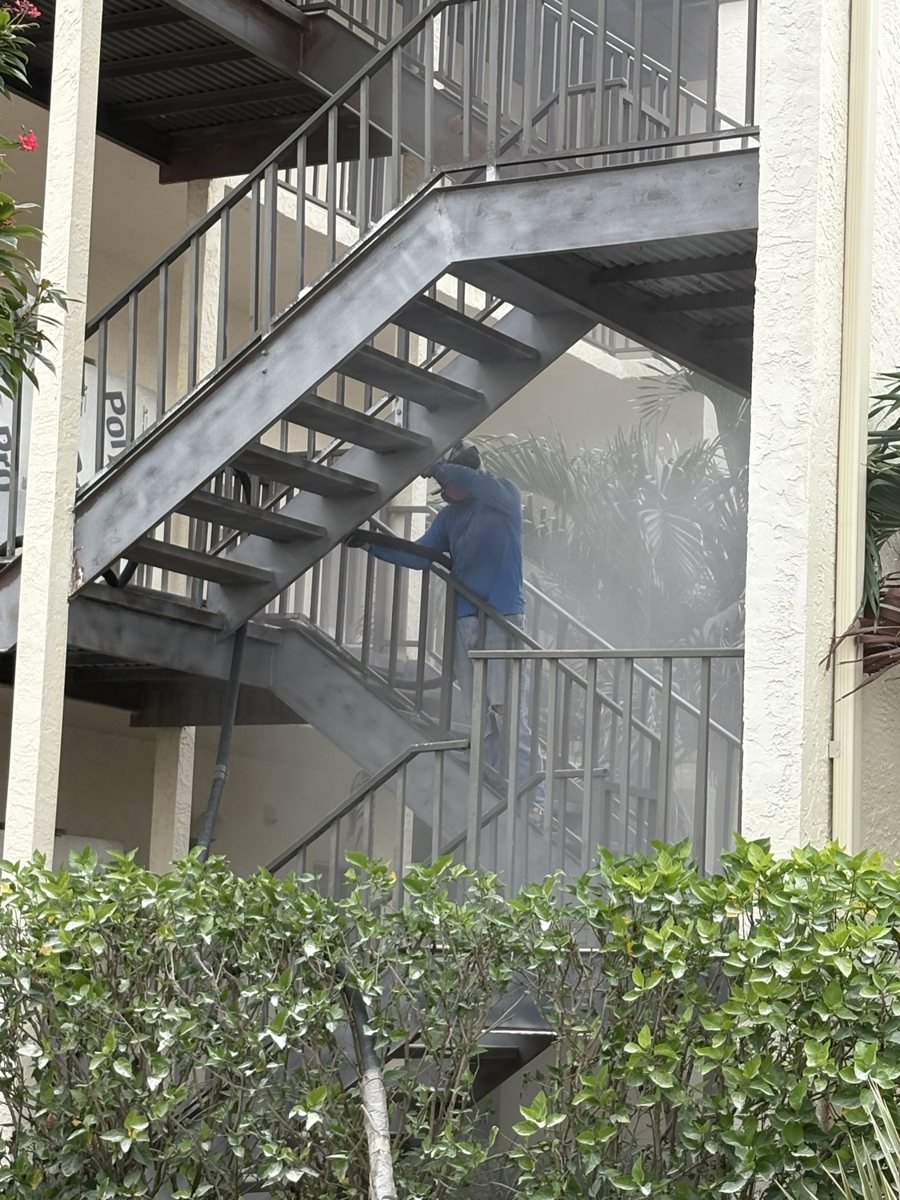
Retail and office frontage along US 41, contractor yards off Corkscrew Road, shared metal inside the master-planned neighborhoods. The rig comes to the property, the failed coating comes off, and the surface can go back out coated the same visit.
SWFL Media Blasters is a fully mobile operation, and that matters more on commercial work in Estero than on anything else we do. A business cannot put a loader on a lowboy, pull a stair tower out of service or unbolt a run of railing and wait on a shop queue. We bring the blast rig to the address instead: a building along US 41, a yard east of I-75 off Corkscrew Road, a service bay, or the shared metal inside a master-planned community. Failed coatings, corrosion and old finishes come off, the surface gets the profile the next system needs, and we can carry it straight through to a coated finish. Licensed and insured. Call or text (239) 227-1768.
Most of Estero went up from the 1990s forward, so a lot of the commercial stock here is younger than what you find in older parts of Lee and Collier County. Owners and property managers sometimes read that as a pass on corrosion. It is not. Estero Bay is close enough that salt rides in on the breeze, humidity runs high most of the year, and afternoon storms keep painted steel wet long after the rain quits. A coating system rated for a dry inland climate ages on a different schedule out here.
The failures show up in the same places every time: welds, fastener heads, base plates, cut edges, and any joint where two pieces of metal trap water between them. Paint lifts from underneath rather than wearing off the top, so by the time a manager can see rust bleeding through, the film has already lost its grip across a wider area than the stain suggests.
Recoating over that buys a season and hides the problem for the next person. Blasting ends it, because the corrosion product leaves with the old coating and the new system lands on sound material. If corrosion is the whole issue, rust removal in Estero goes deeper on how far it has to be chased.
Commercial jobs live or die on logistics, not on blasting technique. A shopping center along US 41 has customers parking twenty feet from the work. An office building has tenants with windows. A community amenity area has residents walking past. So the first conversation is never about media, it is about where the truck parks, what gets tarped, which hours are yours and which hours are ours, and how the area looks when we leave.
We control the work area before anything gets pressurized: sheeting and screening around the piece, protection over glass, vehicles, landscaping and finished surfaces, and spent media collected rather than left to wander across a parking lot. Where dust is the main constraint, wet dustless blasting in Estero knocks the airborne portion down hard and keeps heat out of thinner metal at the same time.
Scheduling is part of the estimate, not an afterthought. Early mornings, evenings, weekends, or a phased plan where one stairwell or one elevation is handled at a time so the property never fully loses access. Tell us your operating pattern at the walkthrough and the sequence gets built around it.

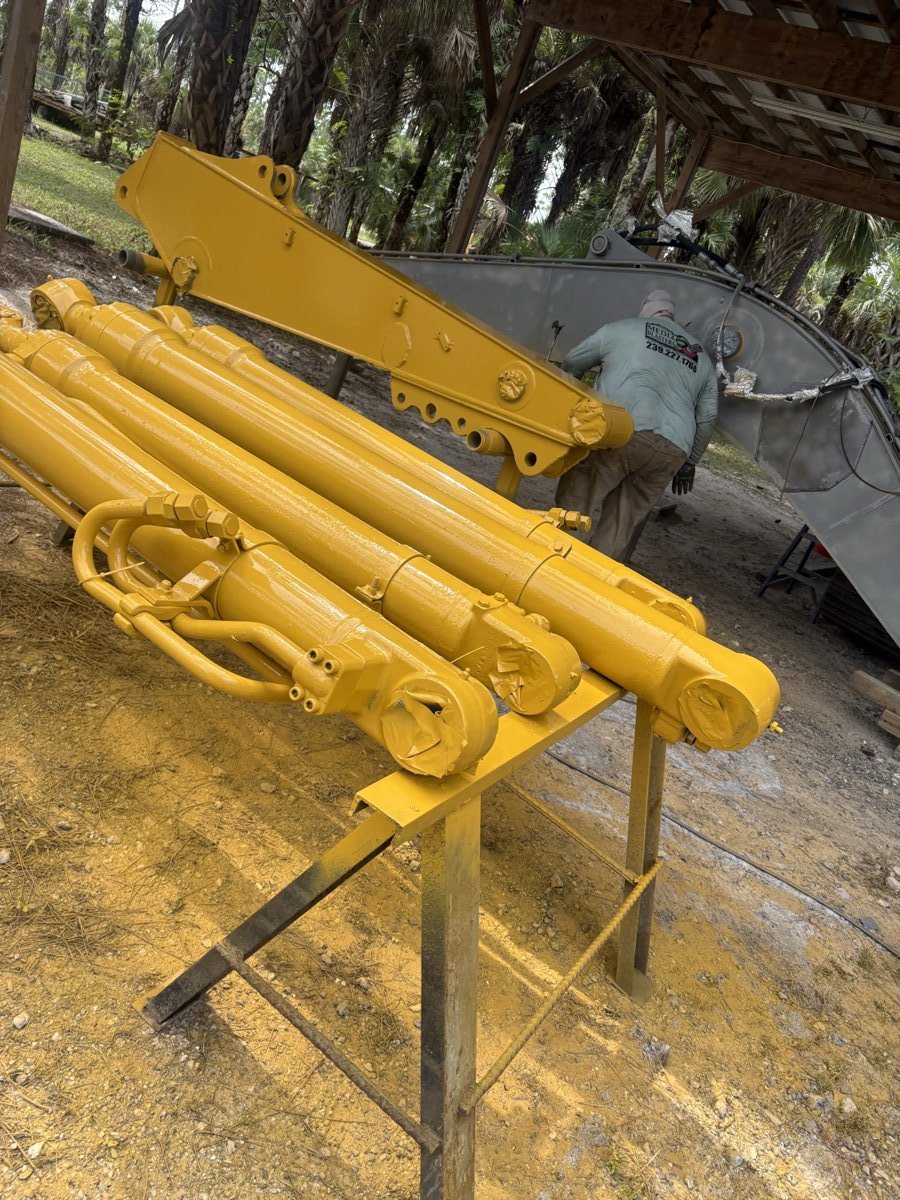
Contractors, landscape operations, marine services and trades running out of yards near Corkscrew Road and the I-75 interchange all hit the same wall with machine refinishing. The unit has to be stripped, and hauling it out means paying for the work plus the days it is not earning. Blasting on site removes the second half of that bill entirely.
Excavators, skid steers, loaders, buckets, booms, attachments, trailers, dump beds, box trucks, service bodies, tanks and frames all get the same treatment: strip the failed coating and the rust under it, leave a clean and consistent profile, then coat it before Florida humidity has time to put a flash of oxide back on bare steel. Fleets usually get staged a unit or two at a time so the rest of the yard keeps working.
The reasoning behind keeping machines on the property while they get prepped is laid out in on-site blasting and equipment downtime, and fleet and trailer restoration covers what the process looks like across multiple units.
New construction and build-out work has a different clock than maintenance work. Steel that arrives with mill scale, shop primer damage, weld spatter or a few weeks of weather on it needs to be brought to a known condition before anybody sprays a finish coat over it. Guessing at that step is where coating warranties quietly die.
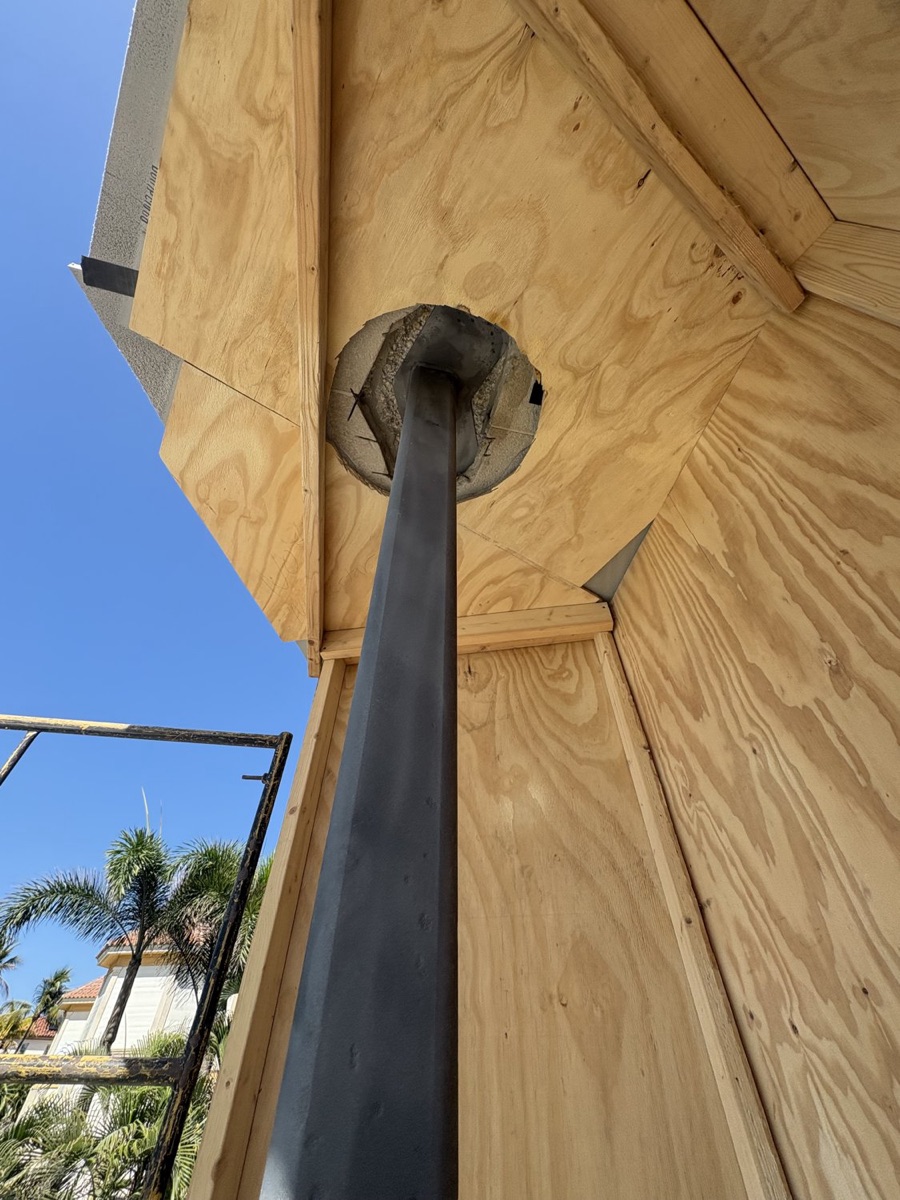
Blasting is how the surface gets standardized. Scale, shipping rust and contamination come off, and the profile left behind is what gives a high build or industrial coating something mechanical to hold. Columns, beams, embeds, handrail, stair stringers, mezzanines, canopy frames and equipment platforms all take it. The general logic of profile and why it matters is covered in structural steel prep and surface profile, and the broader system view is in the industrial coating prep guide.
Because the rig is mobile, the steel does not have to be prepped somewhere else and trucked in clean, which is usually the moment it stops being clean. It gets done on the site where it will live.

Blasting is half of what this company does. The other half is the coating that goes on afterward, and on commercial work the gap between those two steps is a real risk. Bare steel in a coastal climate does not stay bare and bright for long, so the sequence we prefer is strip, inspect, then coat inside the same window while the surface is still in the condition the blast left it.
You are not locked into that. Plenty of property managers and general contractors have their own painter, their own spec, or a warranty that dictates the product. In that case we hand the piece back clean, profiled and ready, and time the work so their crew can follow us closely. Say which way you want it at the walkthrough so the day gets planned correctly.
As for the number: there is no way to price commercial blasting honestly from a phone call. Square footage, how many coating layers are stacked up, how stubborn they are, substrate condition, access, how much containment the surroundings demand and whether coating follows all move it. That is what the walkthrough is for, and our cost and buying guide explains the factors before you ever talk to us. Estero walkthroughs are free, and so is the written estimate that follows. Compare notes with what we do in the next town south on the Bonita Springs commercial page.
Based in Naples and mobile across Southwest Florida — we bring the rig to your home, marina, yard or job site. Call or text (239) 227-1768.
We come to you. The blast rig, media, containment and air are all on the truck, which is the entire reason mobile blasting exists for commercial customers. Equipment stays in your yard, structural steel stays on the site, and building metal stays attached to the building. Nothing gets loaded, hauled, queued at a shop and hauled back. Call or text (239) 227-1768 and we will walk the property with you.
Less than most people expect, because containment is set up before anything is pressurized. We sheet and screen the work zone, cover glass, vehicles, landscaping and finished surfaces nearby, and collect spent media instead of letting it scatter. Where dust control is the top priority, wet dustless blasting traps most of it at the nozzle. Cleanup is part of the job, not an add-on you have to ask for.
Yes, and that is common on retail and office properties. Early mornings, evenings and weekends all work, and larger jobs can be phased so only one elevation, stairwell or section of the lot is out of service at a time. Tell us your operating pattern during the walkthrough and the sequence gets built around it rather than the other way around.
Crushed recycled glass and garnet handle the aggressive work: heavy coating buildup, scale and corrosion on structural steel, equipment and fleet metal. Baking soda goes on the gentler jobs where the substrate is thin, delicate or intricate. Wet dustless blasting is the choice when airborne dust or heat needs to stay down. Which one shows up on your job depends on the surface, and we settle that when we look at it.
Either. We are a blasting and coatings operation, so the normal path is strip, inspect, then coat while the surface is still fresh. If you carry your own coating spec or your own painter, we hand it back bare, profiled and ready, and time our work so their crew can follow closely. Bare steel in this climate should not sit for long, so that hand-off gets scheduled deliberately.
It is when it is set up properly, which is why containment, screening and surface protection come before pressure. Older coatings can carry material you do not want drifting around a property, so those jobs get tighter containment and controlled cleanup as a matter of course. This is professional work with professional equipment and protective gear, not something to hand to a maintenance tech with a rented pot.
There is no honest phone answer, and we will not invent one. What moves a commercial quote is the surface area, how many coating layers are stacked on and how stubborn they are, substrate condition, access, how much containment the surroundings require, and whether you want coating applied afterward. Our cost guide breaks those factors down. Then we walk the property, put eyes on it and put a real number in writing. That visit is free.
We will walk the lot, the yard or the building with you and put an honest number in writing. Free on-site estimate, call or text (239) 227-1768.
Tell us a little about the job and we'll get right back to you.
Thanks — we'll be in touch shortly to set up your free estimate.