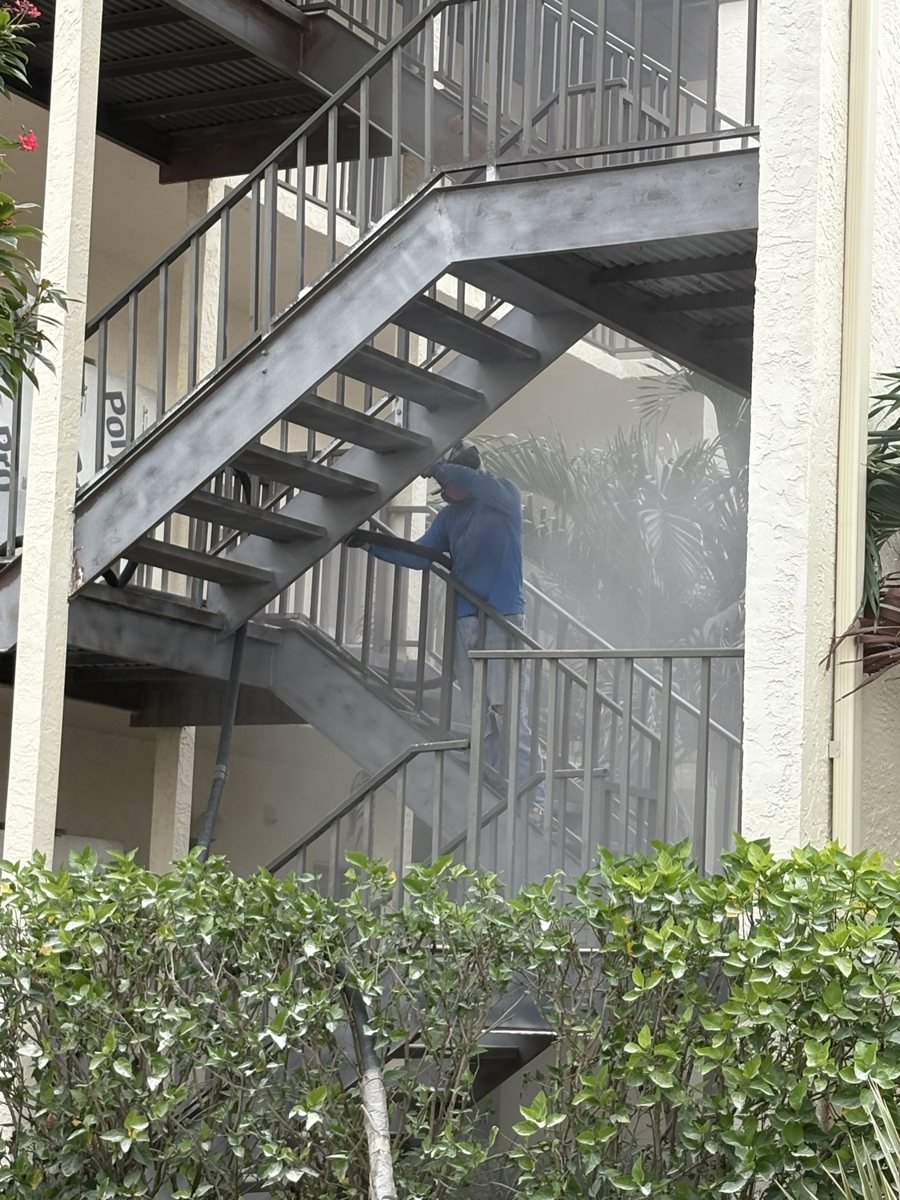
Water rides with the abrasive, so the cloud falls near the work instead of drifting onto a screen cage, a pool or the neighbor's car. On a master-planned Estero street, that is usually what decides whether the job can happen at your address at all.
SWFL Media Blasters runs the wet dustless setup all over Estero, where houses sit close together, screen cages are everywhere and there is usually a pool a few steps from whatever needs stripping. Dustless simply means the abrasive is carried in water rather than dry air. The fines that open blasting would throw across the block get weighted down at the nozzle, and the surface stays near ambient temperature while it strips. On a paver motor court between two neighbors, or inside a garage that is still full, that is the difference between a job that happens at the house and one that does not. Call or text (239) 227-1768.
Start with the geometry, because it decides the method. A typical Estero property puts a paver driveway right against the house, a screened lanai and pool cage off the back, a pool inside it, landscaping and irrigation heads around the edges, and a neighbor close enough that their lanai screens face yours. Add an association that reasonably expects contractors not to coat the street in anything.
Dry open blasting throws a plume. Outdoors on an acreage lot that is manageable. Between two houses on a master-planned street it becomes somebody else's problem, and screens hold fines like a filter. Putting water in the stream changes where the debris goes: it falls heavy and local instead of riding the breeze, which keeps the mess inside the area we tarped rather than three yards over.
That is why the wet setup is usually the sensible answer on an Estero lot. It is not a marketing preference, it is what the geometry allows. The service page for the method across the region is dustless blasting, and the dry, higher production version of the same work is sandblasting in Estero.
Dust suppression is what the name sells. Heat control is what saves thin material. Friction between an abrasive and a surface builds temperature fast, especially on light gauge aluminum, thin steel sheet and any large flat face with nothing behind it. Heat is what makes a panel oil can, distort and hold a wave that no coating hides.
A wet stream carries that heat away as it works, so the metal stays close to ambient from the first pass to the last. It is the reason the same rig that cuts scale off a steel gate post can be trusted on a lanai frame or an outboard bracket without warping it. The abrasive still has to be matched to the substrate on top of that, and pressure still comes down for soft material rather than sitting on one setting all day.
Water is also not magic. It does not turn blasting into an indoor chore, it does not eliminate masking, and there is still spent media on the ground to recover afterward. What it removes is the cloud. Dustless vs sand vs soda blasting puts the three approaches next to each other, and the gentlest option of all is on the soda blasting page.
A dustless setup is the right answer when the surroundings are the constraint, when the substrate is thin or heat sensitive, or when the work is happening inside a building that is still furnished. Screened cages, waterfront and canal-side backyards, occupied garages, storefront metal on a corridor with cars parked under it: all of that argues for water.
It is the wrong answer in a few places, and pretending otherwise is how surfaces get damaged. Bare steel comes out of a wet process damp, which in this humidity means flash rust will start on its own unless the coating step is already planned. Some interior wood and porous material would rather not take on moisture. A few heavy industrial coatings come off faster and cleaner dry, with containment handled by tarps and screening instead.
We will tell you which one your job is at the estimate, in Estero or anywhere else we work, rather than selling one method for every surface. If corrosion is what you are actually fighting, rust removal in Estero is the better starting point, and is media blasting safe for my surface covers the question most people are really asking.
Outdoors it is the aluminum and steel that Estero weather picks apart first. Pool cage and lanai framing that has chalked, pitted and streaked. Railings, gates, fence panels and hinges bleeding rust at the welds and fasteners. Hurricane shutter tracks, light poles, equipment stands, cart and trailer frames. Salt reaches all of it from Estero Bay whether or not the property touches water, and the humidity gives it something to work with year round.
Indoors, the wet setup makes it reasonable to strip things that cannot leave the room they are in. Garage and workshop beams, block walls, exposed framing, a project frame on stands, structural steel inside a building that is still standing and still occupied. The debris stays heavy and local instead of settling on everything anyone owns.
On the water side of Estero, near the river and the back bay, dustless earns its place a third way: it keeps chips and spent media dropping where we can collect them rather than drifting toward open water while a hull is being stripped. That work is covered on marine blasting in Estero, and the rest of what we do around town is on the Estero page.

What the wet rig needs on site is modest: somewhere for the truck within hose reach of the work, room to move around the piece, water available, and a path that does not cross something fragile. If the property is gated, send the contractor procedure and any hours the association enforces when you call, so nothing gets discovered at the guard house with a loaded truck.
Before anything runs, what is staying gets protected. Cages, screens, pool surfaces, pavers, vehicles, AC units and landscaping are tarped, screened or masked, and we plan where rebound lands rather than finding out. When the work is finished, spent media and coating debris are swept, bagged and hauled off instead of being rinsed toward a drain, a lake bank or the neighbor's pavers.
Then there is the surface itself, clean, uniformly profiled and slightly damp. If it is steel and you want it protected, the coating goes on during the same visit while the profile is fresh. If another trade is finishing it, have them ready. The estimate turns on the size of the surface, the substrate, how many coatings are stacked on it, how far corrosion has traveled, how much containment the location requires and whether we coat it afterward. We come look first, and that look is free. Call or text (239) 227-1768.
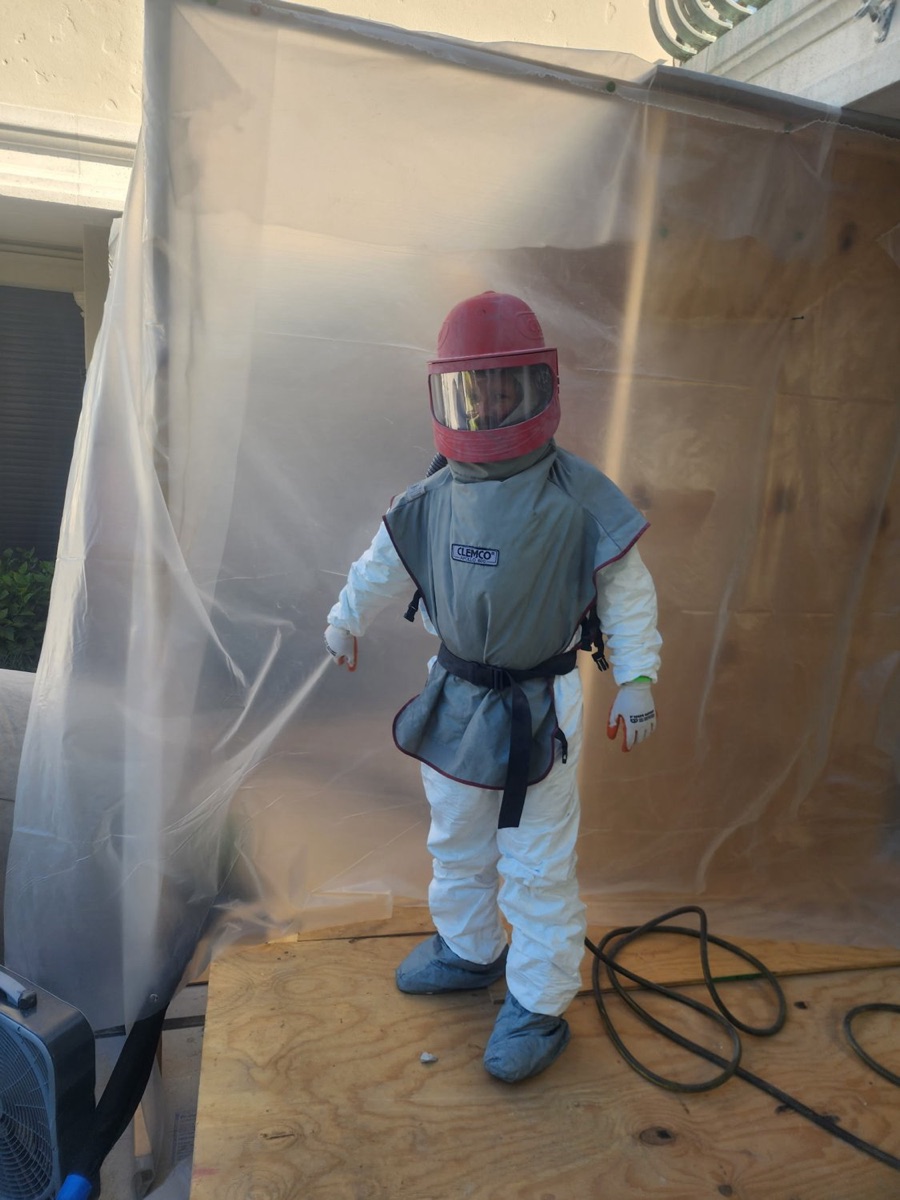
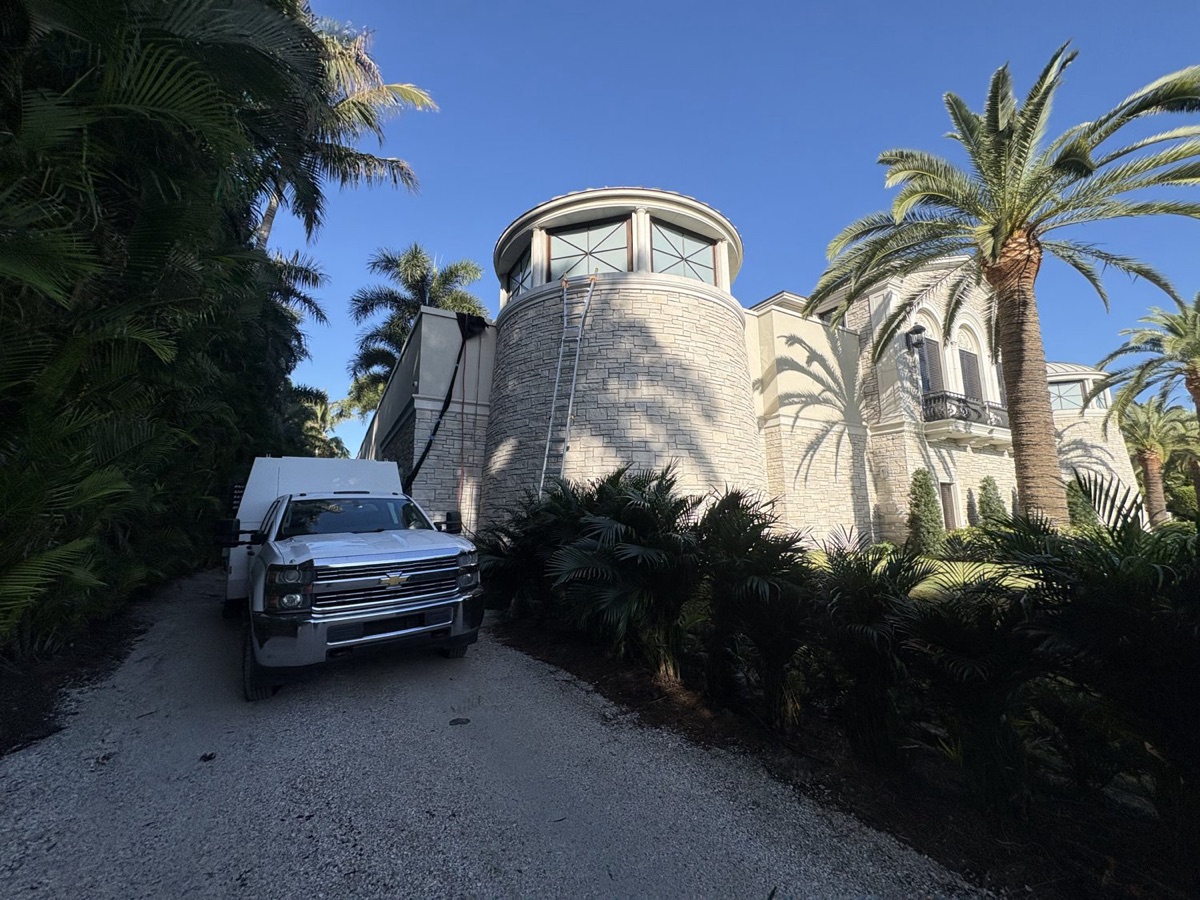
Based in Naples and mobile across Southwest Florida — we bring the rig to your home, marina, yard or job site. Call or text (239) 227-1768.
It is a large reduction, not a vacuum. Carrying the abrasive in water pulls most of the airborne fines down at the nozzle rather than letting them drift onto screens, pools and parked cars. There is still a contained work area, still masking, and still spent media to sweep and haul away at the end. What you avoid is the plume that dry open blasting puts over the whole street, which on an Estero lot is the part that matters.
The volume is not what people picture, and the plan accounts for it. Pools, screens, pavers, vehicles and plantings are covered or masked before we start, and we keep the stream aimed at the surface being stripped. Spent media and coating debris are collected rather than rinsed away, so nothing gets flushed toward a drain, a lake bank or your neighbor. If something nearby cannot be protected properly, we say so before the day rather than after.
Often yes, and it is one of the strongest arguments for the wet setup, since debris stays heavy and local instead of coating everything in the building. Beams, block walls, framing, structural steel and project pieces can be stripped in place. It still means masking off the space and protecting what stays. We look at the room first, because ventilation, what is stored in there and what the surface is made of all change the plan.
Bare steel in Estero air starts to bloom a light flash rust on its own, wet process or dry, so the sequence gets planned before we start. Where we are coating the piece, protection goes on during the same visit and the metal never gets the chance to bloom. Where you are taking it away bare, have your painter or powder coater ready for it. Aluminum, concrete, pavers and wood are far more forgiving about a wait.
Yes, when the pressure and media are matched to thin aluminum, which is exactly what the cool wet stream is good at. Heat is what warps light gauge metal, and a wet stream carries heat off as it strips. We test in a spot that will not show, work the framing rather than the screen, and mask what stays. If a frame is corroded through rather than just chalked, we will tell you that blasting is not going to give it back.
Only if it is a surprise. Communities here each handle contractor access their own way, with visitor lists, codes, work hours and rules about where a truck can stage. Send us whatever your management requires when you call and the schedule gets built around it. We are licensed and insured, and we will put the surfaces, the media and the containment plan in writing if a board or property manager asks for it.
The estimate is free and it happens on site, because quoting this from a photo is guesswork. What moves it is the size of the surface, what the surface is made of, how many coatings are stacked on it, how far corrosion has gone underneath, how tight the access is, how much containment the location needs and whether you want it coated afterward. Call or text (239) 227-1768 and we will come look.
The rig comes to the driveway, the lanai, the garage or the dock, and the dust stays where the work is. Call or text (239) 227-1768 for a free on-site estimate in Estero.
Tell us a little about the job and we'll get right back to you.
Thanks — we'll be in touch shortly to set up your free estimate.