SWFL Media Blasters
Mobile media blasting & sandblasting — we come to youNaples & all of Southwest Florida
Mon–Sat 8a–6p(239) 227-1768
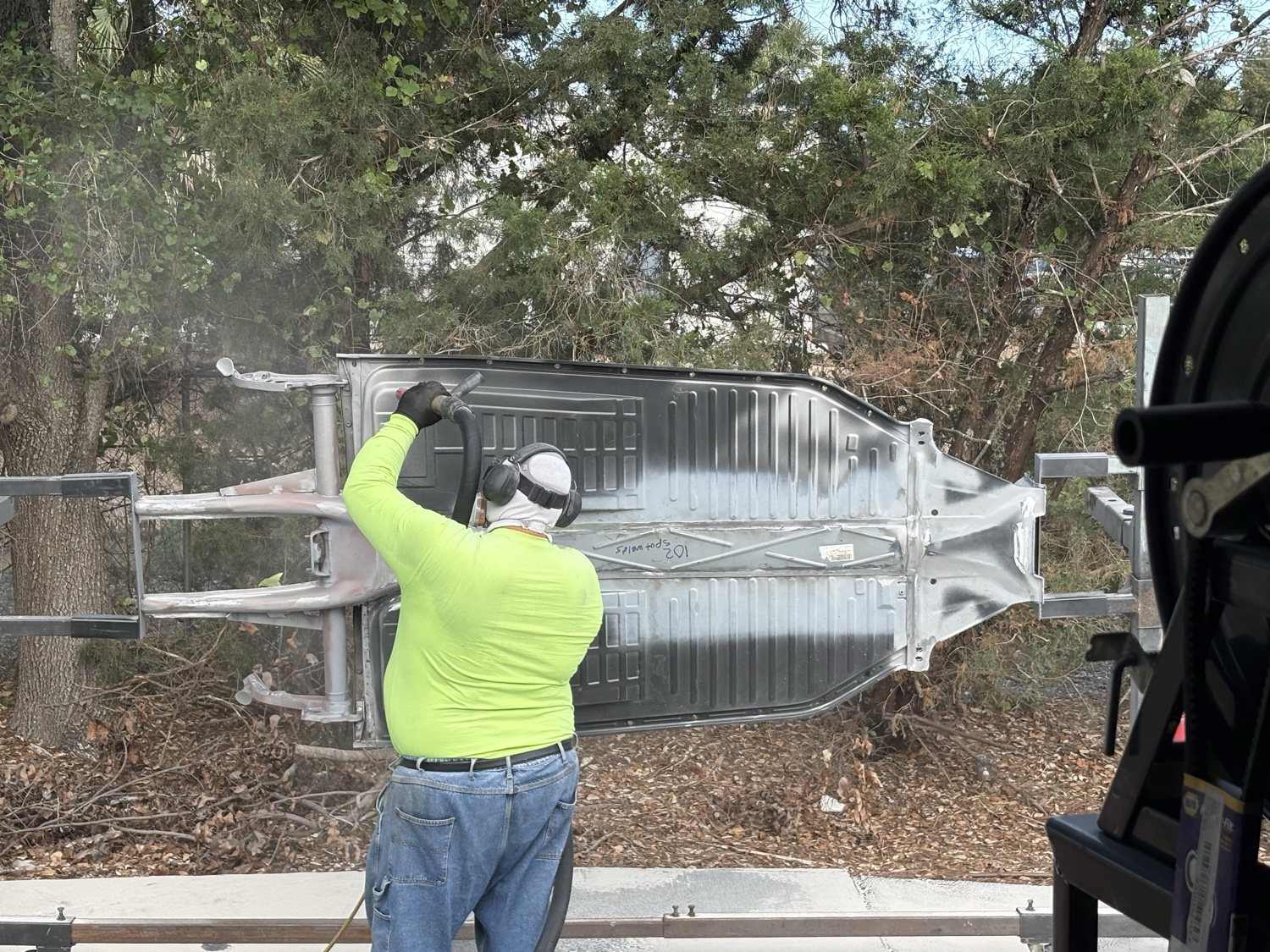
Crew media blasting a vehicle frame outdoors, dust rising off the metal
Sandblasting · Estero, FL

Mobile Sandblasting Across Estero, Florida

Two questions decide the job before the compressor ever runs: what the piece is made of, and what is stuck to it. In Estero the answers swing from paver brick to gelcoat to a scaled trailer frame, and the abrasive has to swing with them.

(239) 227-1768Text us
Glass, garnet, soda, dustlessPavers, cages, hulls, steelThe rig comes to youFree on-site estimate
SWFL Media Blasters brings the blast rig to Estero addresses, from the gated streets off Corkscrew Road and Ben Hill Griffin Parkway to the older lots near the Estero River and the storefronts along US 41. Sandblasting is the word everybody types, so it is the word we answer to, but true sand is only one thing on the truck. Crushed recycled glass, garnet, baking soda and a wet dustless stream each leave the nozzle for a different reason, and choosing correctly is the whole difference between a surface that comes back clean and one that gets ruined. We strip it, and we can coat it before we pull off site. Call or text (239) 227-1768.

The material picks the abrasive, every time

Before anything gets pointed at a surface, two questions matter more than the equipment does: what is this piece made of, and what is stuck to it. A steel trailer tongue with scale lifting off it and an aluminum cage frame with chalked factory finish can look like the same errand from the driveway. They are not remotely the same job. One wants weight behind the abrasive. The other wants the softest thing that will still break the coating loose.

Crushed recycled glass is the everyday pick for cutting paint and rust off steel, and it is recycled material rather than mined sand. Garnet is heavier and hits harder, which is what deep scale and structural steel ask for. Baking soda sits at the soft end and belongs on gelcoat, thin aluminum, intricate castings, wood and finished detail, because it lifts a coating without cutting the material underneath. Sand still has work that suits it. The wet dustless stream carries water with the abrasive, so airborne dust drops near the nozzle and the panel never gets hot.

We test in a spot that will not show before we commit to a whole surface, and if something should not be blasted at all, you get told that instead of getting billed for it. The method sits on our sandblasting page, and choosing the right blast media lines the options up side by side.

  • Crushed recycled glass
  • Garnet for heavy scale
  • Soda for gelcoat and detail
  • Sand where it still fits
  • Test patch before the surface

What an Estero property hands us

Estero filled in mostly from the 1990s forward, so the housing stock is young by Southwest Florida standards and the outdoor package is consistent: paver driveways and walks, screened lanais, pool cages, aluminum railings and gates, travertine decks. That changes what an abrasive is actually cutting through. In an older coastal town the work is usually decades of stacked paint. Here it is far more often one finish that gave up.

What makes it give up is not a mystery. Salt air pushes inland off Estero Bay and settles on anything left outside, humidity keeps a film of moisture on it to work with, and rust starts at fasteners, hinges, welds and cut edges where water sits. Sun and summer storms cook paver and travertine sealer until it ambers, clouds and flakes. Sealing over a hazed surface locks the haze in permanently, which is why the sealer has to come off rather than get buried.

The water side of Estero runs through the river out into the back bay, so the boats here collect growth and stacked bottom paint on their own schedule while the trailers under them scale from the inside of the frame tube outward. Everything we cover around town is on the Estero page, and the driveway and pool deck version of this is paver sealer removal.

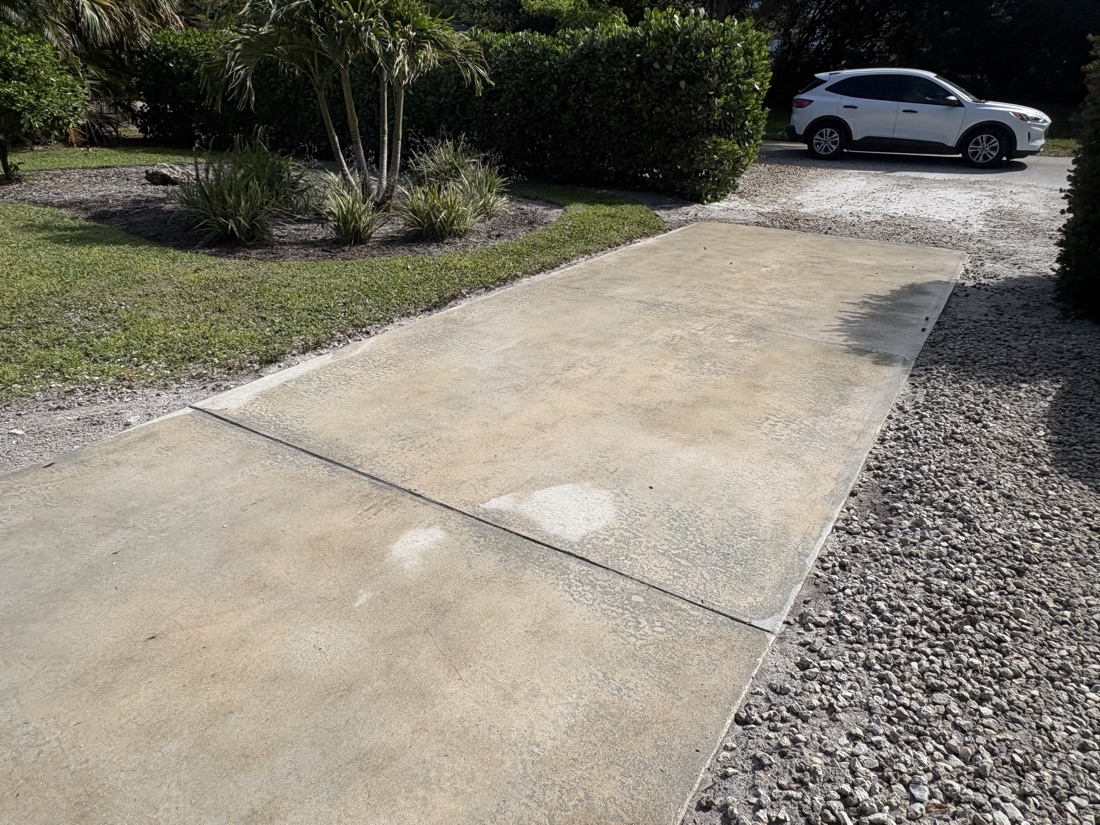
Concrete driveway surface in Southwest Florida

The same rig pointed at very different things

Sandblasting is one search term covering work that has almost nothing in common past the physics. On the water it is hulls, bottom paint, running gear and lift steel, which we handle as marine blasting in Estero. In a garage it is frames, undercarriages, suspension parts and wheels taken back to bare metal, which is automotive blasting. Around the house it is pavers, travertine, concrete, block, cage framing and railings. Along US 41, Corkscrew Road and the corridor near I-75 it is equipment, fleet metal, structural steel, stairwells, canopies and bollards.

Pressure, nozzle distance, angle and abrasive all change the second the material changes. A setup that is correct on a trailer frame will open the pores of a travertine deck and leave it looking sugary. A setup gentle enough for gelcoat will barely scratch heavy scale. That is why the estimate happens in person, with eyes on the surface.

When the location argues for water in the stream, which on a tight Estero lot with a screen cage nearby it often does, the job moves to dustless blasting in Estero. When corrosion rather than coating is the real problem, it becomes rust removal. Same crew, same truck, different plan.
  • Hulls, gear and trailers
  • Frames and undercarriages
  • Pavers, travertine, concrete
  • Cage frames and railings
  • Structural and fleet steel

What you get back is a profile, and a clock

Blasting does two things at once. It removes what is on the surface, and it leaves behind a fine texture in the material underneath. That texture is not a side effect, it is the reason to blast instead of sand or chemically strip. Coatings grip a profiled surface mechanically and slide off a polished one, so primer, paint, powder and antifouling all behave better on metal that was blasted than on metal that was scuffed.

The clock is the part people underestimate in this climate. Bare steel sitting open in salt air begins blooming a light flash rust on its own, and a frame left uncovered over a long weekend gives back part of what the blasting bought. Aluminum, concrete, pavers and wood are far more relaxed about waiting. Steel is not.

So the coating question gets settled at the estimate rather than after the fact. We can hand a piece back bare and ready for your painter, powder coater or boatyard, or carry it straight through to a finished coated surface while the profile is clean and dry. If another trade is spraying it, tell us the product so the profile suits what is going over it. Surface prep before powder coat or paint covers that handoff in detail.

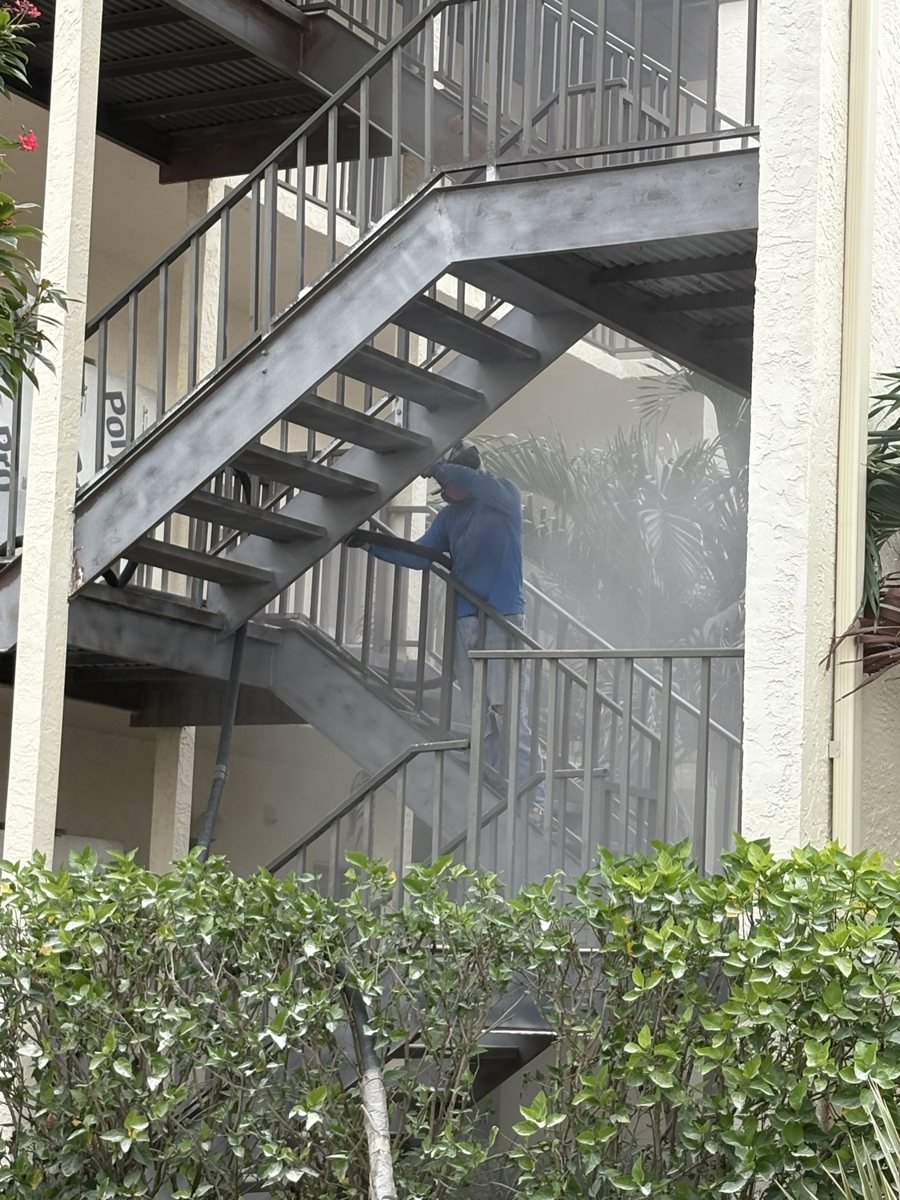
Steel stairwell being media blasted on-site

Getting a rig onto an Estero lot

Access shapes an Estero day more than the blasting does. Grandezza, West Bay Club, Shadow Wood, The Brooks, Corkscrew Shores and Verdana Village each run gates their own way, with visitor lists, contractor hours and opinions about where a work truck may sit. None of that is a problem when we hear it while quoting, and all of it is a problem when we learn it at the guard house. Send the gate procedure with your address.

Then there is the lot itself. Some Estero homes give us a long paver drive and all the staging room anyone could want. Others put the work on a narrow motor court with a screen cage on one side and the neighbor's wall on the other, which is precisely where the wet setup and heavier masking earn their keep. Commercial addresses along US 41 and Corkscrew Road usually mean working around business hours and customer parking instead of a gate.

What we need from you is short: a way in, a place for the truck within hose reach, a clear path to the work, water and power. What moves the estimate is the size and count of what is being stripped, how many layers are on it, how far corrosion has traveled underneath, how much containment the location demands, and whether coating follows. We look before we quote, and looking is free. Call or text (239) 227-1768.

  • Gate procedure sent ahead
  • Room to stage the truck
  • Water and power on site
  • Cage, pool and pavers masked
  • Spent media picked up
Where we work

Find us & our service area

Based in Naples and mobile across Southwest Florida — we bring the rig to your home, marina, yard or job site. Call or text (239) 227-1768.

Questions

Good to know

Sometimes, where the surface suits it, but the abrasive is chosen per job. On this coast that usually means crushed recycled glass or garnet for paint and rust on steel, baking soda for gelcoat, aluminum, wood and intricate parts, and a wet dustless stream when dust or heat has to stay down. Everybody searches for sandblasting, so that is the name on the page. The trade term is abrasive or media blasting, and the media is what protects the material under the coating.

Not with the right setup, and that is most of the skill. Brick pavers and travertine are soft compared to steel, so an aggressive abrasive at high pressure will open the surface and leave it looking sugary. We drop pressure, change media and test in an inconspicuous area before committing to the field. The goal is failed sealer off and the stone or brick back to its own color and texture. See paver sealer removal.

Yes, and it is routine when it is planned. Tell us the community, which entrance you want the truck at, whether we need to be on a visitor list or have a code, and any hours your association enforces. We are licensed and insured, and we will put the surfaces, the abrasive and the containment plan in writing if a board or property manager wants something to review.

Newer construction means fewer layers, not fewer failures. On an Estero home the problem is usually a single coating that quit: sealer that ambered on the pavers, factory finish chalking on cage framing, rust weeping out of fasteners on a railing or a gate. Blasting takes exactly that layer off and leaves clean profiled material behind, and it moves considerably faster than hand sanding an entire lanai.

Less than the mental picture, because containment is planned before the first pass. The area gets tarped and masked, we plan where rebound lands, and near screens, pools, cars and landscaping we run the wet setup so fines drop at the nozzle instead of drifting across a property line. Spent media and debris are swept and hauled off rather than left in the grass or rinsed toward a drain.

Either way, your call. Blast it, prep it, coat it is the order we work in, and coating is the optional last step. We can leave a piece bare and ready for another trade, or apply protection during the same visit while the profile is fresh. In Estero air, bare steel is the one substrate where waiting costs you something, so decide that at the estimate rather than afterward.

We quote after we look, never before, because the same square of surface can be an easy afternoon or a long day. The factors are size and piece count, what is coming off and how many layers of it there are, how far rust has gone under the finish, how tight the access and containment are, and whether coating follows the strip. On-site estimates are free. Call or text (239) 227-1768 and we will come see it.

Explore more

Related services

Get started

Paint, rust or clouded sealer to strip in Estero?

We bring the rig through the gate to your driveway, lanai, garage or jobsite. Call or text (239) 227-1768 for a free on-site estimate anywhere in Estero.

(239) 227-1768Text us
Call Text us