How do pros pick the right blast media?
The media you blast with decides whether a surface comes out clean and ready to coat or chewed up and warped. Here's how the choice gets made.
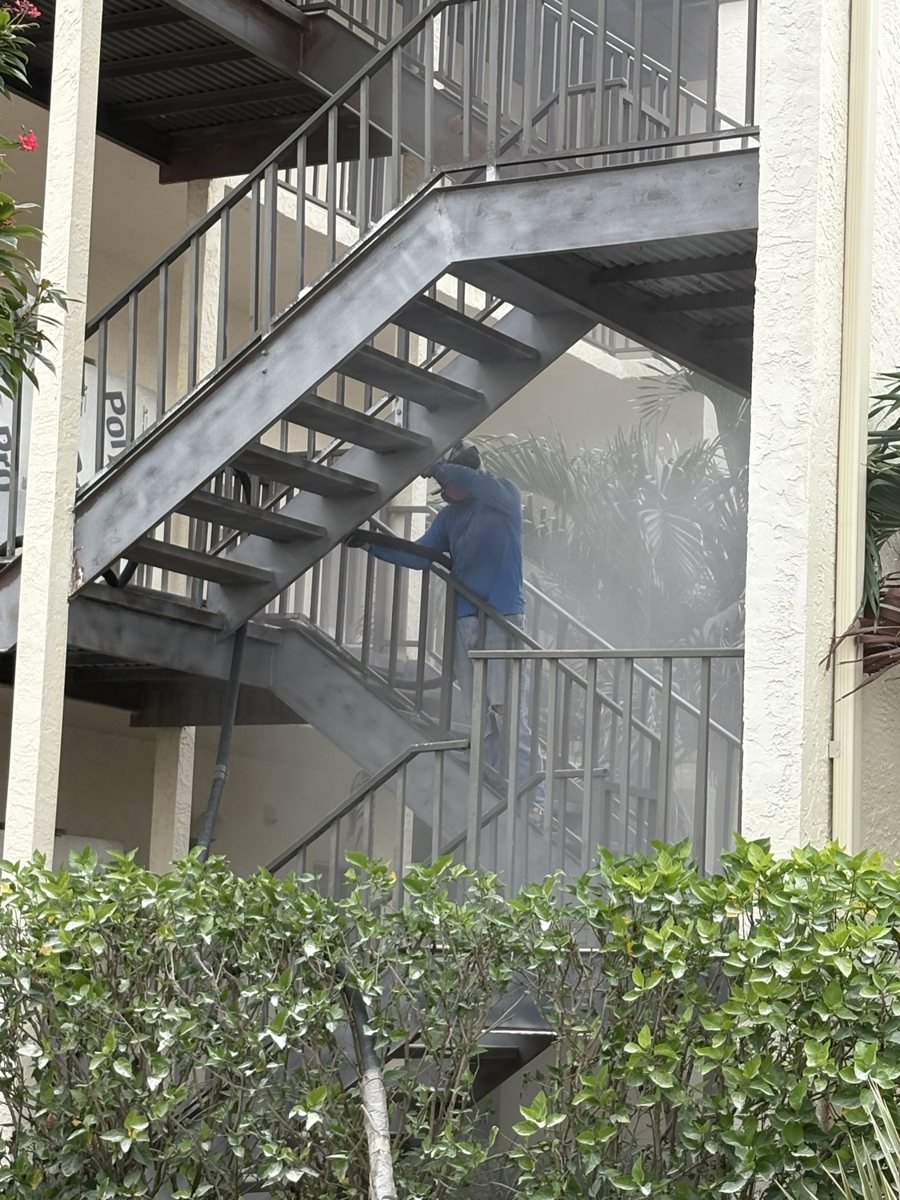
The short version
- There's no single best media. The right one depends on the base material, what's coming off, and the finish you need underneath.
- Soft media like soda strip coatings without cutting the surface; harder media like garnet and crushed glass remove rust and add bite for paint.
- Aluminum, fiberglass and thin steel need gentler abrasives than thick structural steel to avoid warping or gouging.
- Surface profile, the tiny tooth left behind, is what lets a new coating actually grab and last in Gulf salt air.
Why does the media choice matter so much?
People tend to think of blasting as one thing, but the abrasive doing the work changes everything about the result. The same nozzle and the same air pressure will give you wildly different outcomes depending on whether you're throwing soft baking soda or sharp mineral garnet at a surface. Pick wrong and you either leave coating behind or eat into the material you were trying to save.
Three questions drive every choice we make: what's the base material, what are we trying to remove, and what has to happen next? A boat hull bound for fresh antifouling has different needs than a rusted trailer frame headed for powder coat. Getting those answers right up front is most of the job. That's also why we look at the piece in person before we quote anything across our full range of services, instead of guessing from a phone description.
What are the common blast media and where do they shine?
Each abrasive has a personality. Here's the short version of the ones we reach for most:
- Sodium bicarbonate (soda): very soft and water-soluble. It lifts paint, grease and gelcoat oxidation without cutting the substrate. Great on aluminum, fiberglass, engine bays and anywhere you want clean but not aggressive.
- Recycled (crushed) glass: made from post-consumer bottles, sharp and light. Strips coatings and surface rust while leaving a decent profile, and it's silica-free, which matters for safety.
- Garnet: a dense, hard mineral that cuts fast and digs into heavy rust and mill scale on steel. It leaves an excellent anchor pattern for industrial coatings.
- Steel grit/shot, walnut shell, plastic: specialty picks for specific jobs, from deep descaling to delicate restoration.
Not sure which category your project falls into? Our overview of media blasting walks through the basics before you get into the weeds on abrasives.
How does the base material narrow it down?
The substrate is the first filter, because some materials simply can't take an aggressive abrasive. Aluminum, thin sheet metal and fiberglass are easy to warp, dish or gouge. Throw hard garnet at a thin car panel and you'll heat it up and distort it. That's why softer media like soda and finer recycled glass earn their keep on automotive work and marine surfaces.
Thick structural steel is the opposite story. A heavy I-beam or a steel piling shrugs off aggressive media, and you actually want the bite to clear mill scale and pitted rust. Garnet or a coarser glass moves fast there without harm. We get this question constantly, so we wrote up a fuller answer on whether media blasting is safe for your surface. The honest rule of thumb: match the hardness of the abrasive to the toughness of the part, never the other way around.
How aggressive does the job actually need to be?
Removal difficulty is the next dial we turn. Light jobs, think a single layer of failing paint, chalky oxidation, or a thin scale, don't need a heavy hand. A softer or finer media gets it done and protects the surface. Heavy jobs, like decades of layered coatings, thick scale, or deep pitted corrosion, call for something with real cutting power.
Two ways to control aggression: change the media, or change the setup. Coarser, denser abrasive cuts harder. So does higher air pressure and standoff distance. Often we'll dial in a combination, a moderate media at moderate pressure, to clean efficiently without overdoing it. For coatings-heavy removal we lean on harder abrasives; for gentle cleanup, soda shines.
The goal is never to remove the most material. It's to remove exactly what's failing and stop there.
If dust and cleanup are a concern at your home or marina, our dustless blasting option pairs water with the abrasive to keep things tidy.
What finish and surface profile does your coating need?
This is the step most people forget, and it's the one that decides whether a new coating lasts. Blasting doesn't just clean, it leaves a microscopic texture called the surface profile, or anchor pattern. That tiny tooth is what gives paint, powder coat or antifouling something to mechanically grip. Too smooth and the coating peels; too rough and you waste paint filling valleys.
Different coatings want different profiles. Heavy industrial epoxies on steel like a deep, coarse anchor, so a sharp media like garnet fits. A primer on an automotive panel needs a finer, more uniform profile. And if a part is just going to stay bare aluminum or get a clear coat, you may want it clean with minimal profile, which is where soda earns its place. Because we don't just blast, we prep and coat, we choose the media with the finish already in mind. There's no point creating a profile your topcoat can't use.
Does Southwest Florida change the equation?
It does, more than most people expect. Gulf salt air and year-round humidity are brutal on bare metal. A steel surface left blasted and uncoated can flash-rust in hours here, well before a coating ever goes on. That timing pressure shapes how we sequence a job, blasting and coating in a tight window so corrosion never gets a foothold.
Local realities steer the media too. Boats hauled at area yards for bottom-paint removal need media gentle enough to spare the gelcoat. Paver driveways and pool-deck lanais coated in old sealer or paint respond to a different approach than structural steel. Whether we're working a job in Naples, Marco Island, Bonita Springs, Estero, Fort Myers or Cape Coral, the salt-and-humidity factor is always part of the plan. The right media plus the right timing is what makes a coating survive the SWFL climate.
How do you figure out the right media for your project?
You don't have to. That's our job. When we look at a piece, we read the base material, test how stubborn the existing coating or rust is, and confirm what's going on top. From there the media practically picks itself. Often a quick test spot in an inconspicuous area tells us everything, the abrasive lifts the coating cleanly and leaves the profile we're after, or we adjust.
Because we run a mobile rig, we bring the right setup to you, at the marina, the job site, or your driveway, rather than asking you to haul a heavy frame or a hull across town. If you'd like a recommendation tailored to your exact part, the simplest path is a free on-site estimate. We'll tell you straight what media we'd use and why, and what finish you can expect underneath. You can also weigh the trade-offs in our take on mobile versus shop blasting.