Why bringing the blasting rig to you beats hauling it to a shop
For boats, heavy equipment and big surfaces in Southwest Florida, on-site blasting usually wins on time, cost and convenience. Here's the honest comparison.
The short version
- Mobile blasting brings the equipment to your boat, machine or job site, so you skip hauling, trailering and downtime.
- Big, heavy or hard-to-move items, hulls, excavators, structural steel, are where on-site wins clearest.
- A good mobile crew blasts AND coats in one visit, so prepped steel gets primed before SW Florida salt air can flash-rust it.
- Dustless and contained methods let crews work cleanly at marinas, driveways and lanais without trashing the area.
- Shop work still makes sense for small, easily transported parts; for everything else, the rig coming to you is faster.
What's the real difference between mobile and shop blasting?
The blasting itself, propelling an abrasive at a surface to strip paint, rust, gelcoat or coatings, is the same physics either way. What changes is where the work happens and who does the moving. With shop blasting, you transport the item to a fixed facility. With mobile blasting, a self-contained rig, compressor, abrasive, recovery gear, comes to your boat, equipment or property.
That single distinction drives almost everything else: cost, timeline, and how much hassle lands on you. A small bracket or a set of wheels is easy to drop off. A 32-foot hull on a lift, a loaded excavator, or 40 feet of structural steel is a different story. If you're new to the process, our overview of what media blasting actually is covers the fundamentals before you weigh the two delivery models.
For most Southwest Florida work, the question isn't which method blasts better, it's which one fits the object and the job site. See the full lineup on our services page.
Why does on-site win for boats and marine work?
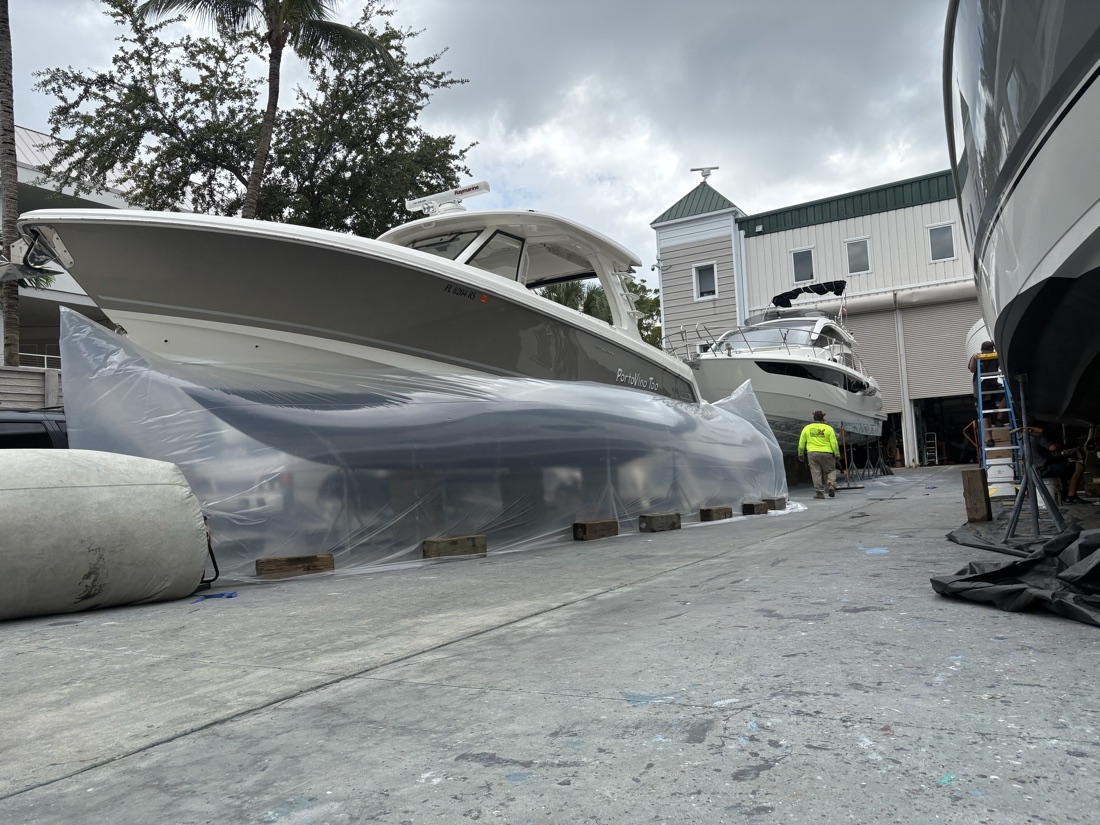
Boats are the clearest case. Once a hull is on a lift or on the hard at a local yard, moving it again means a haul-out, a trailer, road permits for anything wide, and a return trip. Every one of those steps adds cost and days. A mobile crew sets up right at the slip or in the boatyard and gets to work, which is exactly how marine blasting is meant to run.
It also protects the boat. Soda and other gentle media can strip bottom paint without chewing into gelcoat or thinning a fiberglass laminate, and doing it dockside means less handling and fewer chances to ding a finished hull. For built-up antifouling, our boat bottom paint removal approach takes it back to a sound, paintable surface in place.
There's a Gulf-air angle too. Bare or freshly profiled surfaces start reacting with salt and humidity fast. Blasting at the yard lets the crew prep and re-coat in the same window, before corrosion gets a head start.
How does mobile blasting handle heavy equipment?
Excavators, loaders, dump trailers, trommels and farm gear share a problem: they're heavy, they're awkward, and hauling them eats fuel, lowboy rental and operator time. Loading a 20-ton machine onto a trailer to drive it to a shop and back rarely pencils out. Bringing the rig to the equipment yard or job site almost always does.
On-site also means the machine keeps earning. A crew can work around your schedule, blast the frame, undercarriage, bucket or boom, and hand it back ready for primer instead of parking it on a trailer for a week. That's the core of our commercial blasting work across Fort Myers and Cape Coral job sites.
- No transport: skip the lowboy, permits and round-trip drive.
- Less downtime: the asset stays where it works.
- Blast and coat together: bare steel gets protected before it flashes.
For rust-eaten frames and undercarriages specifically, see rust removal.
What about big surfaces, driveways, decks and steel?
Some surfaces simply can't go to a shop, your paver driveway, pool-deck lanai, structural steel on a building, or a steel dock frame. By definition this work is mobile or it doesn't happen. The advantage is that the same crew can strip old sealer, paint or coating and prep the surface for whatever goes on next, in one mobilization.
Pavers and concrete around SW Florida pools take a beating from sun, chlorine and foot traffic, and old sealer yellows and peels. Stripping it cleanly is the first step to a fresh finish, which is what paver and driveway sealer removal is built for. Picking the right abrasive matters here; soft media for delicate surfaces, more aggressive media for heavy steel, as we break down in choosing the right blast media.
It's worth confirming a method suits your material before anyone fires up a nozzle. Our guide on whether media blasting is safe for your surface walks through profiles, substrates and what to avoid.
Is on-site blasting actually clean enough for my property?
A fair worry. Old-school open sandblasting throws grit and dust everywhere, which is a non-starter at a marina, in a driveway, or beside a neighbor's screened lanai. Modern mobile crews get around that with containment and cleaner methods.
Dustless blasting introduces water into the stream, which knocks down airborne dust dramatically and keeps the work area far tidier. Crews also use tarps, screens and recovery to capture spent media and debris. For the right jobs, soda blasting is gentle enough to use on or near finished surfaces. If you want the trade-offs between methods, our comparison of dustless vs sand vs soda blasting lays it out plainly.
The goal is simple: leave your boat, equipment or property cleaner than open blasting ever could, with the surrounding area protected the whole time.
A tidy job site isn't a bonus in Southwest Florida, it's the difference between a marina or HOA letting the work happen at all.
When does taking it to a shop still make sense?
We won't pretend mobile is always the answer. If an item is small, easy to transport and you can spare it for a few days, dropping it off can be perfectly reasonable, think a single wheel set, a small bracket, or loose parts that fit in a truck bed.
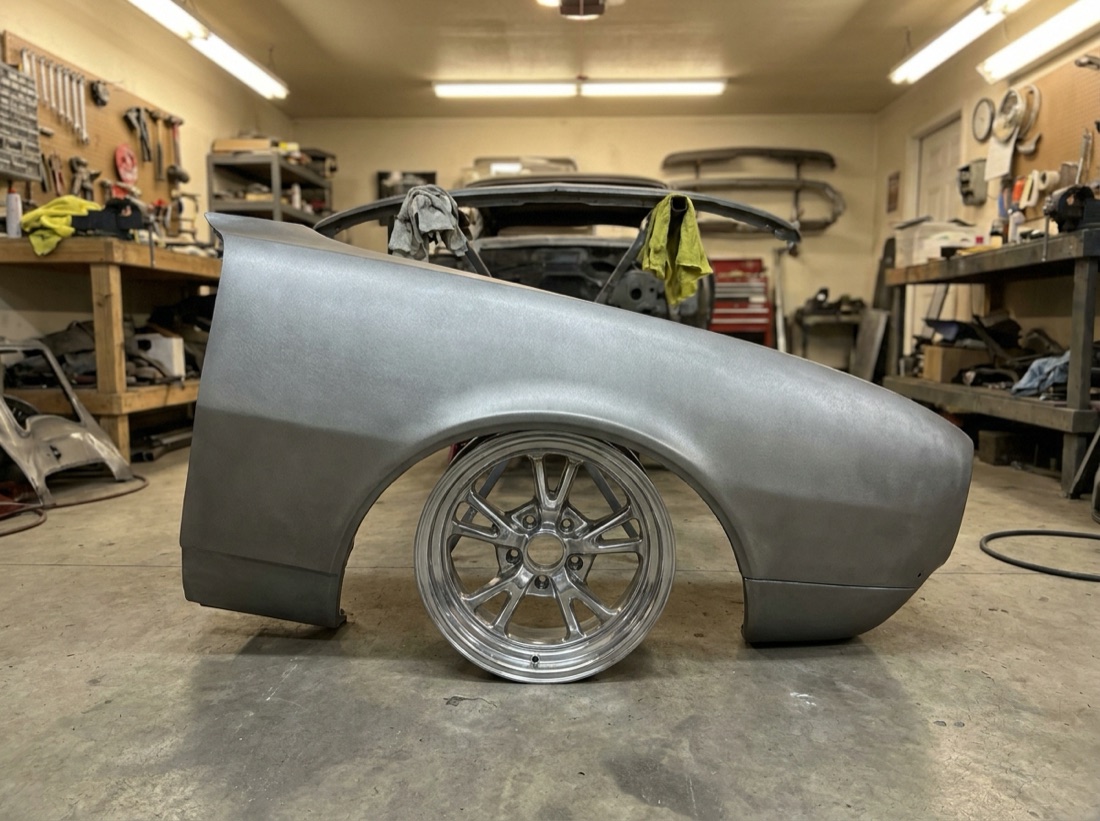
The math flips the moment transport gets expensive or risky. A boat already on a lift, a machine that's a hassle to load, a surface bolted to the ground, or anything where downtime costs you money, those favor the rig coming to you. Salt air seals it: the faster you can go from bare metal to coated, the better, and on-site lets one crew handle automotive frames and undercarriages or a hull from strip to primer without a second trip.
The honest rule of thumb: if it's easy to move and you're not in a rush, a shop is fine. For nearly everything else in our service area, mobile blasting saves time, money and headaches.