Media Blasting Explained: How It Works and When to Use It
A homeowner-friendly look at how compressed air plus abrasive strips coatings to clean substrate, and when blasting beats sanding or chemicals.
The short version
- Media blasting fires abrasive at a surface with compressed air to strip paint, rust, gelcoat and coatings down to clean substrate.
- Swapping the media (soda, glass, garnet and more) changes how aggressive the job is, so it matches the surface.
- It removes coatings from contours and tight spots far faster and more evenly than hand-sanding.
- The real value is the clean, profiled surface it leaves behind so new paint or coating actually bonds and lasts.
- Done right it's the prep step that makes everything coated afterward hold up in Southwest Florida's salt air.
So what exactly is media blasting?
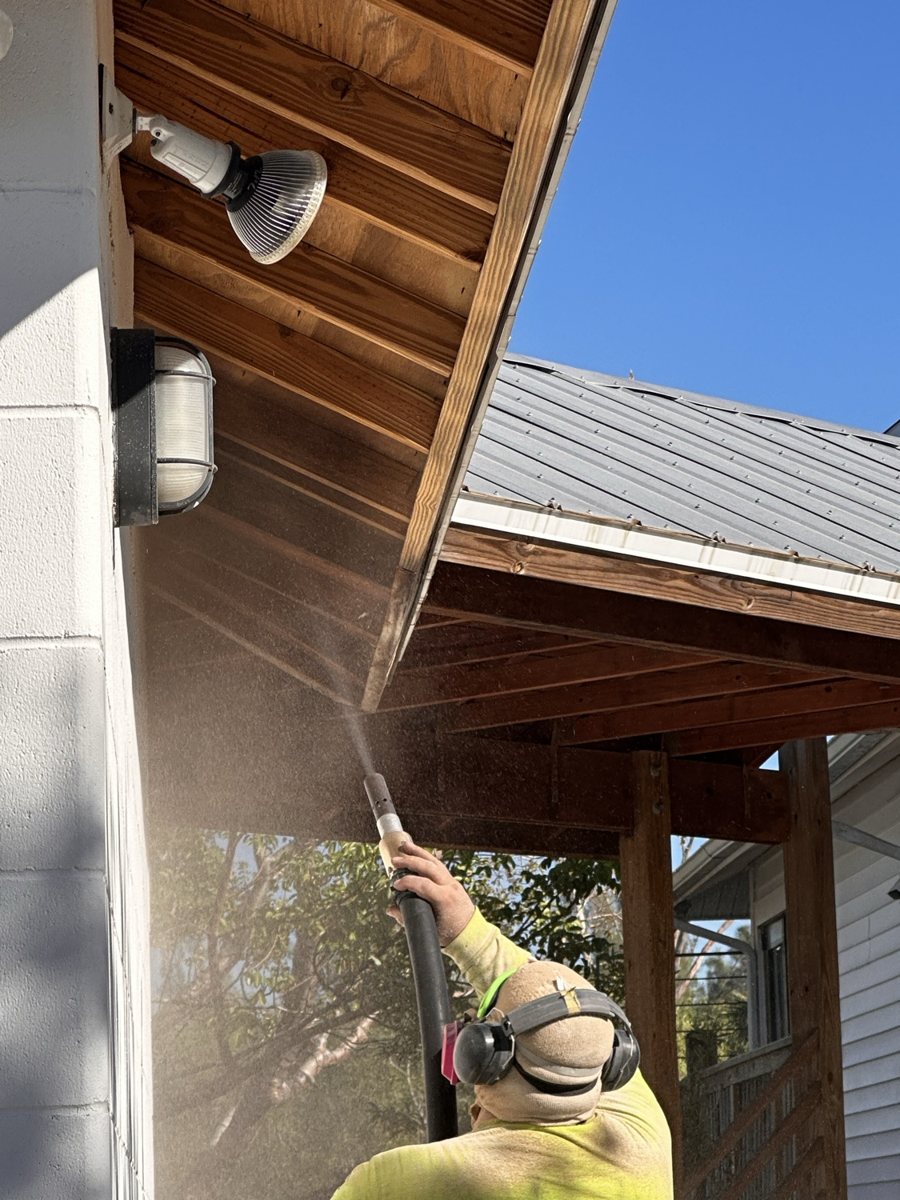
Media blasting is a fast, controlled way to remove paint, rust, gelcoat, scale and old coatings from a surface using compressed air and an abrasive. A compressor pushes a high-volume stream of air through a hose, the abrasive (the "media") is fed into that stream, and the mix exits a nozzle at the work surface. Thousands of tiny particles hit the substrate every second and chip away whatever is sitting on top of it.
You'll hear it called sandblasting, abrasive blasting or just "blasting." They all describe the same basic idea, but the word "media" is the important part: the abrasive isn't always sand. The crew picks the media to suit the job, which is what makes blasting so flexible across boats, frames, equipment and concrete.
The goal isn't only to strip something off. It's to leave behind a clean, sound surface that's ready for the next step, whether that's paint, powder-coat or antifouling. That's why we frame our work as blast it, prep it, coat it rather than just blasting alone.
How does compressed air and abrasive actually strip a surface?
Think of each grain of media as a tiny chisel. When a grain hits at speed, its sharp edges fracture and lift the coating away while the kinetic energy knocks loose rust and contamination. Because the stream covers a wide area and follows curves, it strips evenly across shapes that a sanding pad would skip over.
Two things you can dial in are the air pressure and the media itself. More pressure and a harder, sharper abrasive cut faster and more aggressively. Lower pressure and a softer media are gentler, which matters on thin metal or fiberglass. Some setups also introduce water at the nozzle to knock down dust, often called dustless blasting.
A side benefit on metal is the surface profile, sometimes called the anchor pattern. Blasting leaves a microscopically rough texture that gives the next coating something to grab. We dig into the trade-offs between abrasives in choosing the right blast media if you want the deeper version.
What kinds of media are used, and why does it matter?
The media is matched to the surface and the result you want. Picking the wrong one can be too slow, or worse, it can damage the substrate. Here are common choices:
- Sand and mineral abrasives are aggressive and well suited to heavy rust and structural steel.
- Crushed (recycled) glass is sharp and fast on steel and many coatings, with no free silica.
- Garnet is a dense, reusable abrasive that cuts cleanly and leaves a consistent profile.
- Baking soda is soft and water-soluble, gentle enough for delicate work like soda blasting on aluminum or fiberglass.
- Plastic and other soft media strip coatings while sparing the substrate underneath.
Harder, sharper media remove material faster but are less forgiving. Softer media protect thin or sensitive surfaces but work more slowly. For a side-by-side breakdown of the most-asked-about options, see dustless vs sand vs soda blasting.
When should you choose blasting over sanding or chemicals?
Hand-sanding and grinding work fine on small, flat areas, but they're slow, they load up with paint, and they struggle on contours, weld seams, fasteners and tight corners. Chemical strippers can soften coatings, yet they're messy, they need dwell time and neutralizing, and they leave residue you have to clean off before painting.
Blasting shines when you have a lot of surface, complex shapes, layered or stubborn coatings, or rust that needs to come back to clean metal. It strips and profiles in one pass and reaches places a pad can't. On a boat hull, for example, blasting pulls years of bottom paint off the contours far faster and more evenly than sanding.
That said, blasting isn't right for every material or every situation. The smart move is matching the method and media to the substrate, which we cover in is media blasting safe for my surface.
What can media blasting be used on?
The same core process adapts to a huge range of jobs by changing the media and pressure. Around Southwest Florida we see it used constantly because salt air and humidity are hard on metal and finishes. Common uses include:
- Marine: hull prep and boat bottom-paint removal on boats hauled at local yards.
- Automotive: car and truck frames, undercarriages and rust removal ahead of powder-coat or paint.
- Heavy equipment: on-site stripping of machinery and trailers.
- Residential: paver and driveway sealer or paint stripping, plus pool-deck and lanai surfaces.
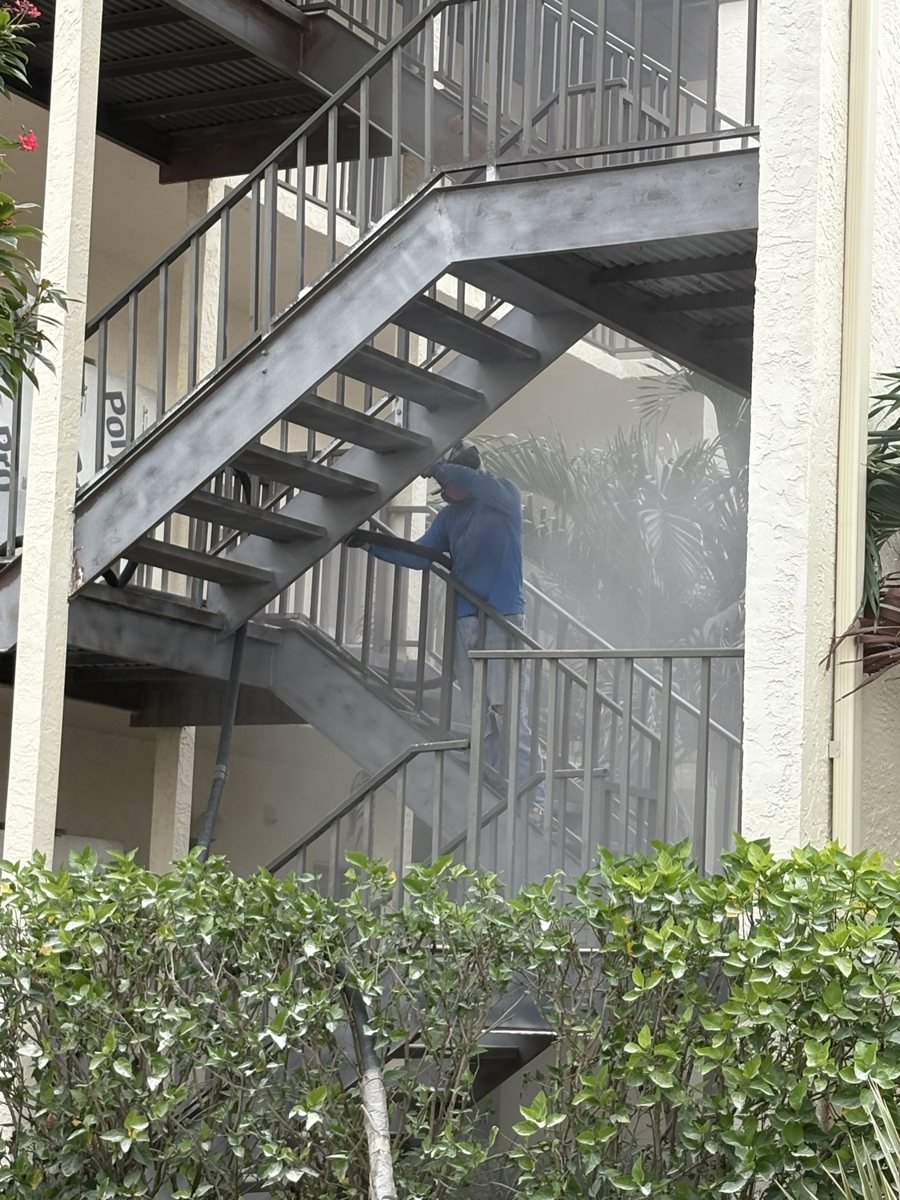
- Commercial and structural: steel beams, railings and fabrications.
Because the gear is mobile, the rig comes to the home, marina or job site rather than the project going to a shop. If you're weighing the logistics, mobile vs shop blasting walks through when each makes sense.
Why the prep and coating step is the whole point
Stripping a surface is only half the work. A coating is only as good as what it's applied to, and a freshly blasted surface is the ideal canvas: clean, contaminant-free and profiled so the new finish can mechanically bond. Skip the prep and even premium paint can peel, blister or rust through early.
Timing matters too. Bare metal starts to flash-rust quickly in humid, salty Gulf air, so the gap between blasting and coating should be tight. That's a big reason it helps to have a crew that blasts and coats, instead of handing you a stripped part and wishing you luck.
The blast prepares the surface; the coating protects it. Do both well and the finish lasts.
If you're not sure which approach fits your project, the simplest path is a free on-site look so the crew can match the method, media and coating to your surface. You can reach out through our contact page or browse the full list of services to see what's possible.