Dustless, Sandblasting, or Soda Blasting: Which One Does Your Job Need?
Three blasting methods, three very different jobs. Here's how they actually differ and how to pick the right one for your project in Southwest Florida.
The short version
- Dustless blasting wets the media to knock down airborne dust, so it's the cleanest choice on populated or sensitive job sites.
- Traditional sandblasting is the heavy hitter: fast and aggressive on steel and concrete, but it throws a lot of dust.
- Soda blasting is the gentle one, stripping coatings without cutting the surface underneath, which makes it great for aluminum and gelcoat.
- The right method depends on your substrate, the coating you're removing, and how much dust the site can tolerate.
- On most jobs the real win is doing it right the first time, then prepping and coating before the salt air gets to bare metal.
What do these three methods actually have in common?
All three are forms of abrasive blasting: compressed air drives a stream of media against a surface to strip off paint, rust, coatings, or contamination. The differences come down to what media you use, whether water is in the mix, and how hard the media hits. That combination decides how fast the work goes, how much dust flies, and how the surface looks when you're done.
The names get used loosely, which trips people up. "Sandblasting" has become a catch-all term for any dry abrasive blasting, even though true silica sand is rarely the actual media anymore. "Dustless" describes a wet process rather than a specific abrasive. "Soda" names the media itself. So you're really comparing two dials, dry versus wet, and gentle versus aggressive, more than three sealed-off categories.
The good news is that a capable crew runs all of them and matches the method to the job. If you want the full picture of how abrasive prep works, start with our overview of what media blasting is, then come back here to compare your options across our range of services.
How does traditional sandblasting work and where does it shine?
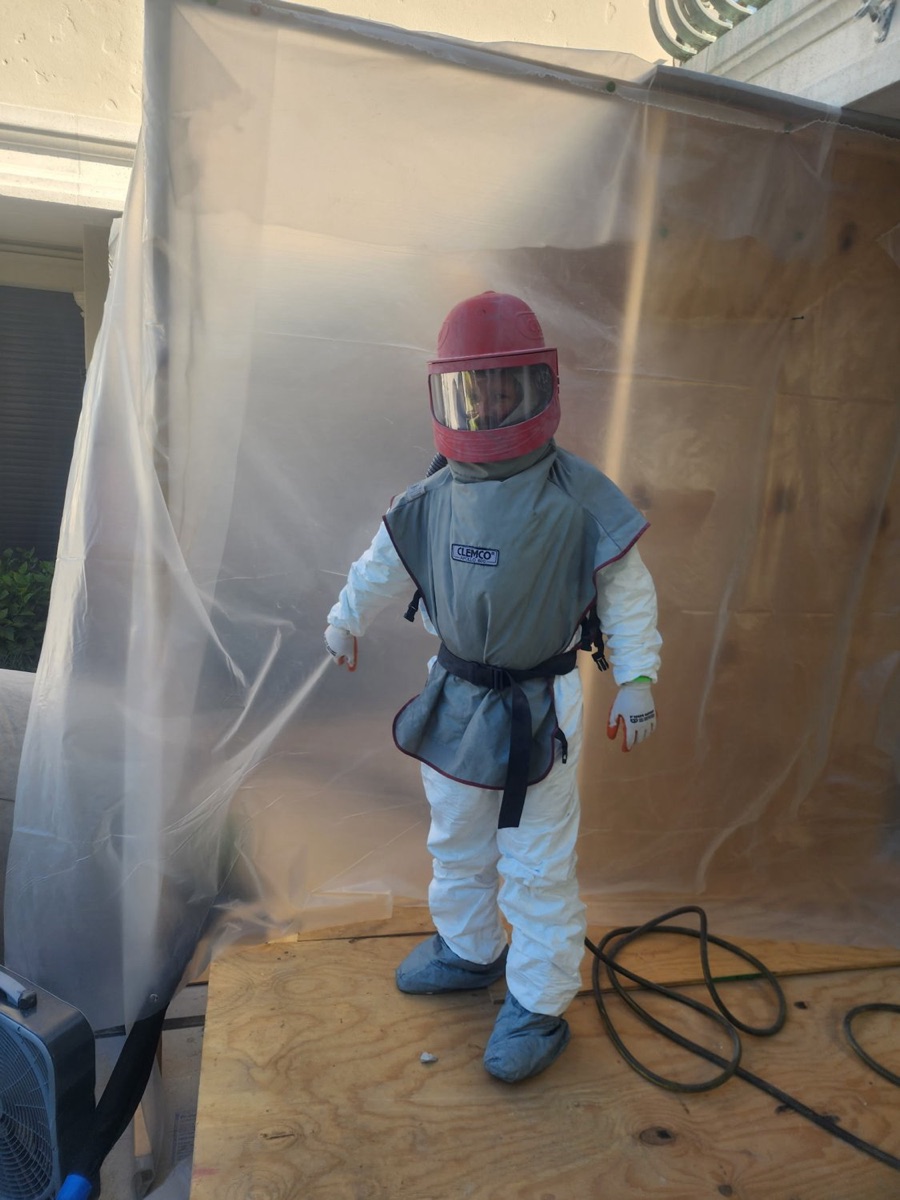
Traditional dry blasting fires abrasive at high pressure straight at the surface. Despite the name, modern crews usually run recycled crushed glass, garnet, coal slag, or aluminum oxide rather than silica sand, which carries serious health risks. The media is hard and angular, so it cuts fast and leaves a defined surface profile, that microscopic toothy texture that lets primer and coatings grip and stay put.
This is the heavy hitter. When you've got thick mill scale, layered industrial paint, or rust pitted into steel, dry blasting clears it quickly. It's the go-to for structural steel, heavy equipment, trailers, and concrete where you need a profile for a new coating system.
The trade-off is dust. Dry blasting throws a lot of it, so it needs containment, distance from neighbors, and the right respiratory protection. It can also warp thin sheet metal if the operator leans on it too hard. See where it fits in choosing the right blast media and on our sandblasting page.
How does dustless blasting keep things clean?
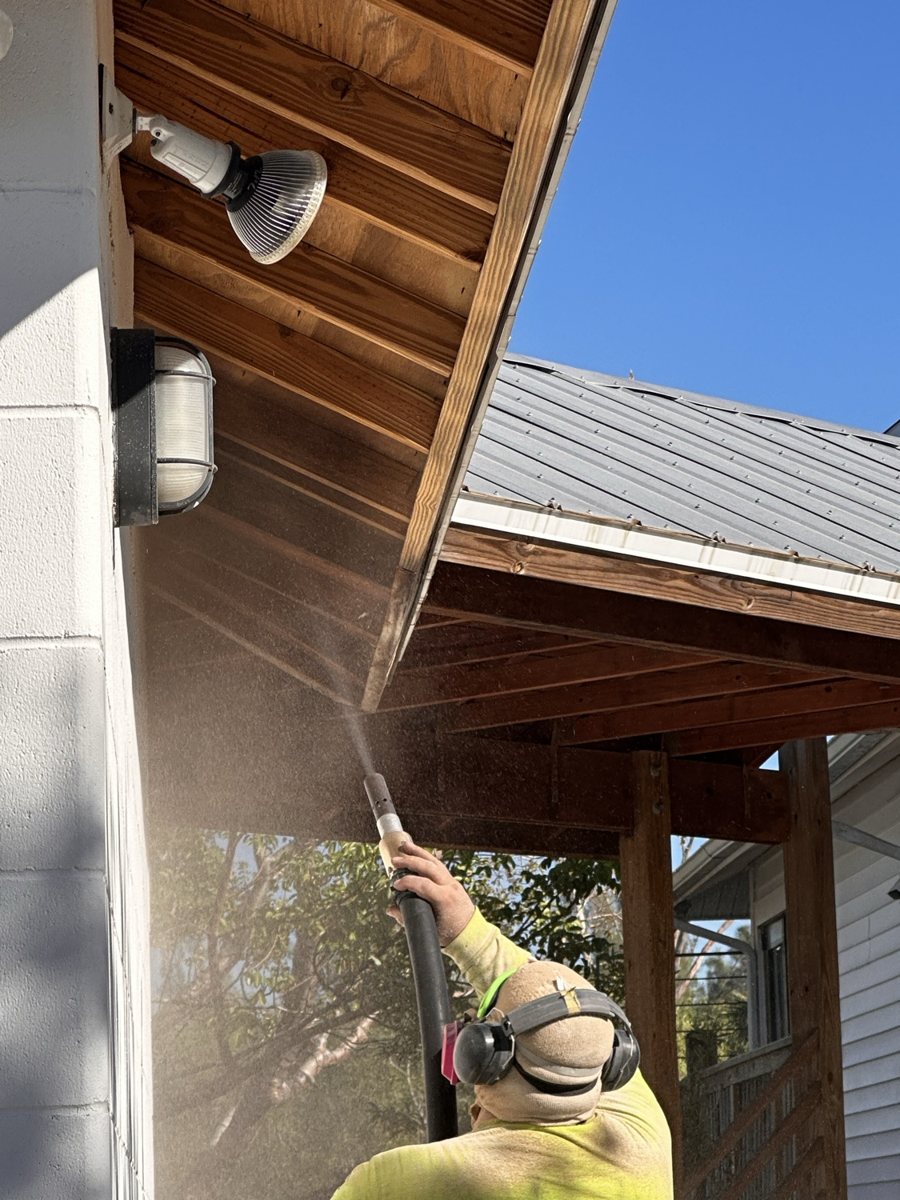
Dustless blasting, sometimes called wet or vapor blasting, mixes water with the abrasive right at the nozzle or in the blast pot. That water does two things: it adds mass to each particle so the stream actually cuts harder than people expect, and it traps the fine dust that dry blasting sends airborne. Instead of a dust cloud, you get a contained spray and wet debris that falls close to the work.
That makes it the smart pick on sites where dust is a problem, occupied buildings, driveways and pool decks, marina slips, or anywhere close to neighbors and landscaping. It cuts down on cleanup and keeps fine particulate out of the air.
- Less airborne dust for populated or sensitive areas
- Cooler cutting, with less heat distortion on metal
- Good aggression on rust, antifouling, and coatings
One note for bare steel in our climate: a wet surface needs a flash-rust inhibitor and prompt priming, because Gulf humidity will start corrosion fast. Learn more on our dustless blasting page.
Why is soda blasting the gentle option?
Soda blasting uses sodium bicarbonate, a specially graded baking soda, as the abrasive. The crystals are friable, meaning they shatter on impact and release their energy by breaking apart rather than gouging the surface. The result is a method that lifts paint, grease, and light corrosion without cutting into the material underneath.
That softness is the whole point. Soda is the choice for substrates you can't afford to profile or warp: aluminum boat hulls and outdrives, fiberglass and gelcoat, classic car body panels, chrome, brick, and wood. It also leaves a residue that resists flash rust for a short window, which is handy on steel between blasting and priming. Because it's water-soluble, soda is gentle on many surfaces, though it must be rinsed thoroughly and kept off plants.
The catch is that soda doesn't leave much of a profile, so if a surface needs strong tooth for a heavy coating, soda alone may not be enough. It's also slower on heavy rust. We dig into substrate safety in is media blasting safe for my surface, and you can read more on our soda blasting page.
Which method is best for which job?
Here's the short version, matched to the kind of work we see across Naples, Marco Island, Cape Coral, and Fort Myers.
- Boat bottoms and hulls: soda or dustless for fiberglass and aluminum, where you want the antifouling gone without chewing the gelcoat. See boat bottom paint removal.
- Heavy equipment and structural steel: dry blasting for speed and a solid profile before industrial coatings.
- Car and truck frames, undercarriages: soda or careful dustless to strip rust without warping thin metal, then straight into rust removal and coating prep.
- Paver driveways and pool decks: dustless to control dust around the home and landscaping, ideal for paver sealer removal.
The honest answer is that the best method depends on three things: your substrate, the coating you're removing, and how much dust the site can take. That's exactly the call we make on a free on-site look. And remember, blasting is only step one, doing the prep and the coating right afterward is what protects bare metal from salt air.
Does mobile blasting change which method I can use?
Not really, and that's the point. A well-equipped mobile rig can run dry, dustless, or soda blasting right where your boat, equipment, or driveway sits, so you're not limited to one method just because the work has to happen on site. We bring the compressor, the media, and the containment to the marina, the boatyard, the job site, or your driveway.
What mobile work does change is logistics. We think about wind direction, drainage, where debris and water will go, and how close we are to neighbors and plants, then pick the method and containment that fit. For a delicate hull in a tight slip, that often means soda or dustless. For steel out in the open, dry blasting may be fine.
If you're weighing on-site against hauling something to a shop, read mobile vs shop blasting. When you're ready, reach out for a free estimate and we'll recommend the right method for your specific surface.