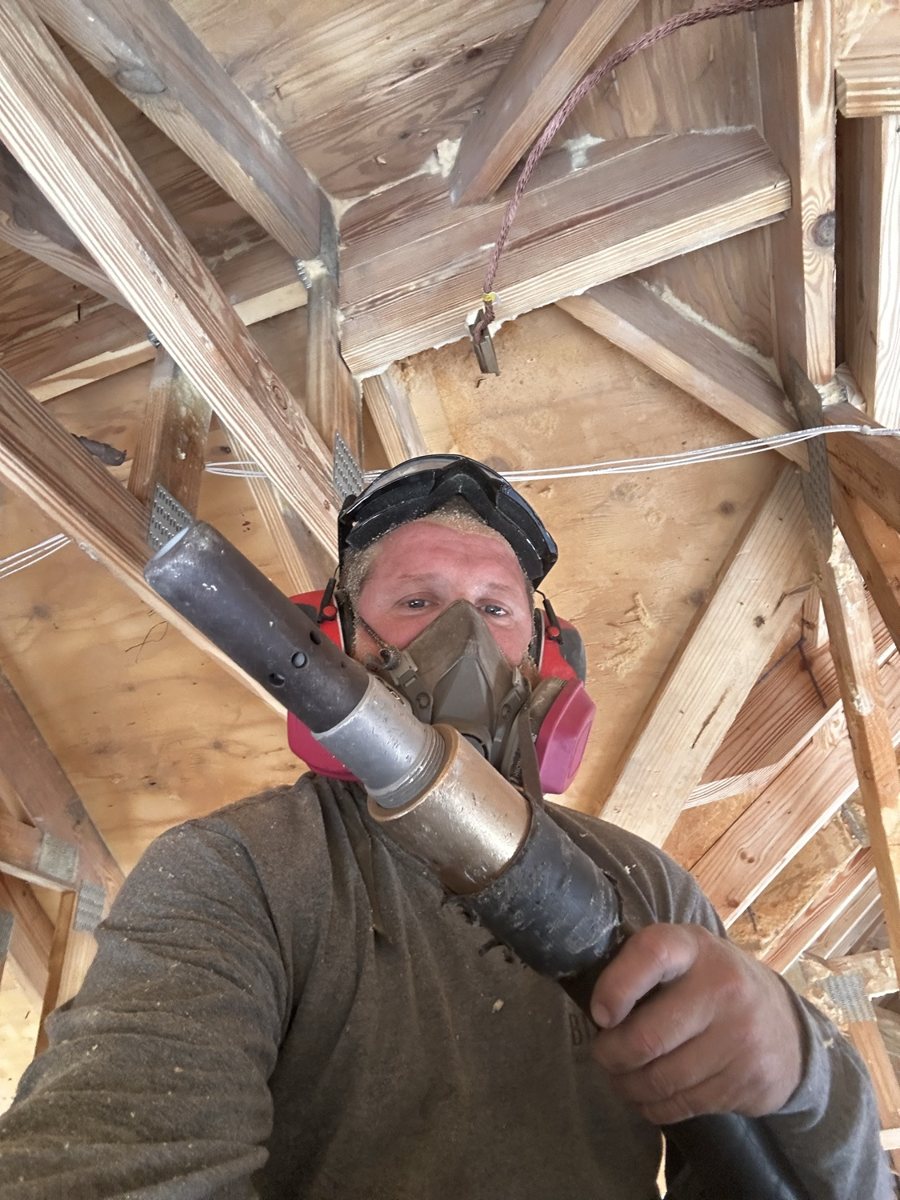
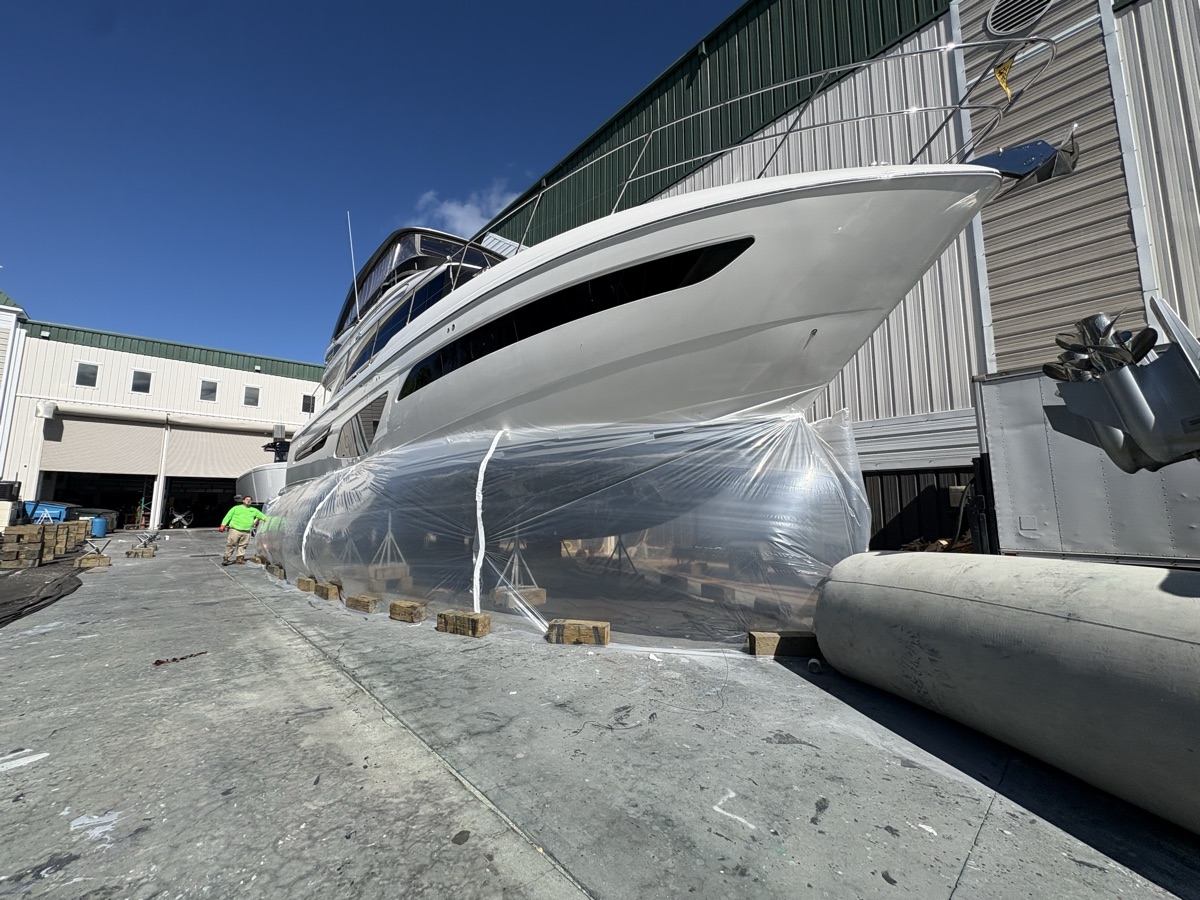
Naples Bay, the Gordon River and the canals behind Royal Harbor and Aqualane Shores keep hulls, running gear and lift hardware under a constant salt load. We bring the rig to the boat, strip it clean, and coat it if you want it coated.
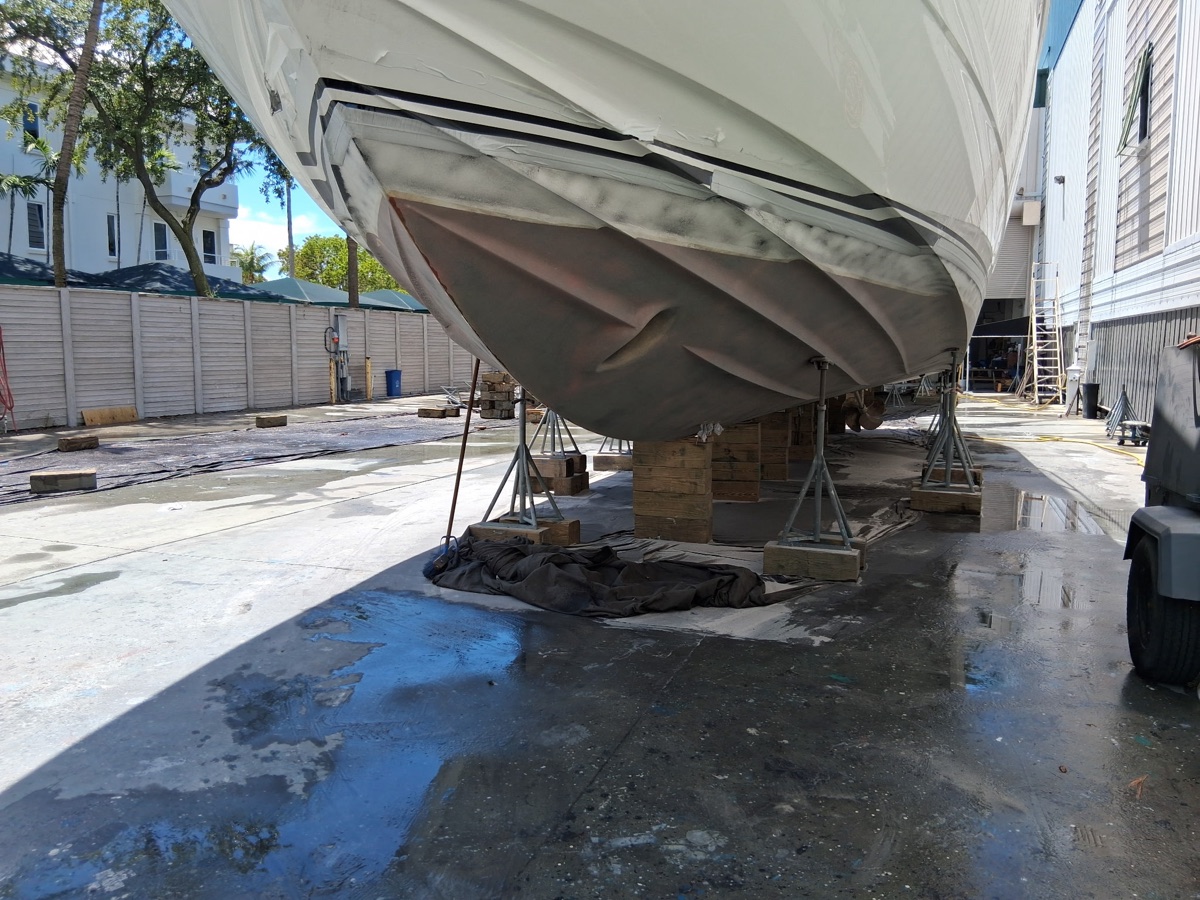
Marine blasting is not one job, it is a family of them. On the hull we are usually taking off failed antifouling, growth, or a coating that chalked and let go, and leaving sound gelcoat behind. Above the waterline it might be repaint prep, a rub rail area, or a tender that has gone dull and stained. Below it, running gear is its own problem: struts, shafts, rudders, trim tabs and props collect scale and tired barrier coat that a scraper will never clean up evenly.
Then there is everything that is not the boat. Trailers, lift beams, cradles, davit posts, outriggers, T-top frames, deck hardware, aluminum brackets and stainless rails all live in the same salt and fail in the same order. If it is staged in one place, it can go on one visit.
The service in general is covered on the marine blasting page, and the way we work the rest of the city is on the Naples page.
The honest answer to what media we run is that it depends on the material, and gelcoat and steel are nowhere near the same thing. Gelcoat is a thin, brittle skin over laminate. It gets soft media and low pressure, because the goal is to remove the coating and stop, not to cut into the boat. Baking soda is the gentle end of that, and wet or dustless setups keep friction heat out of the laminate, which matters in Naples heat when a dark hull has been sitting in the sun since morning.
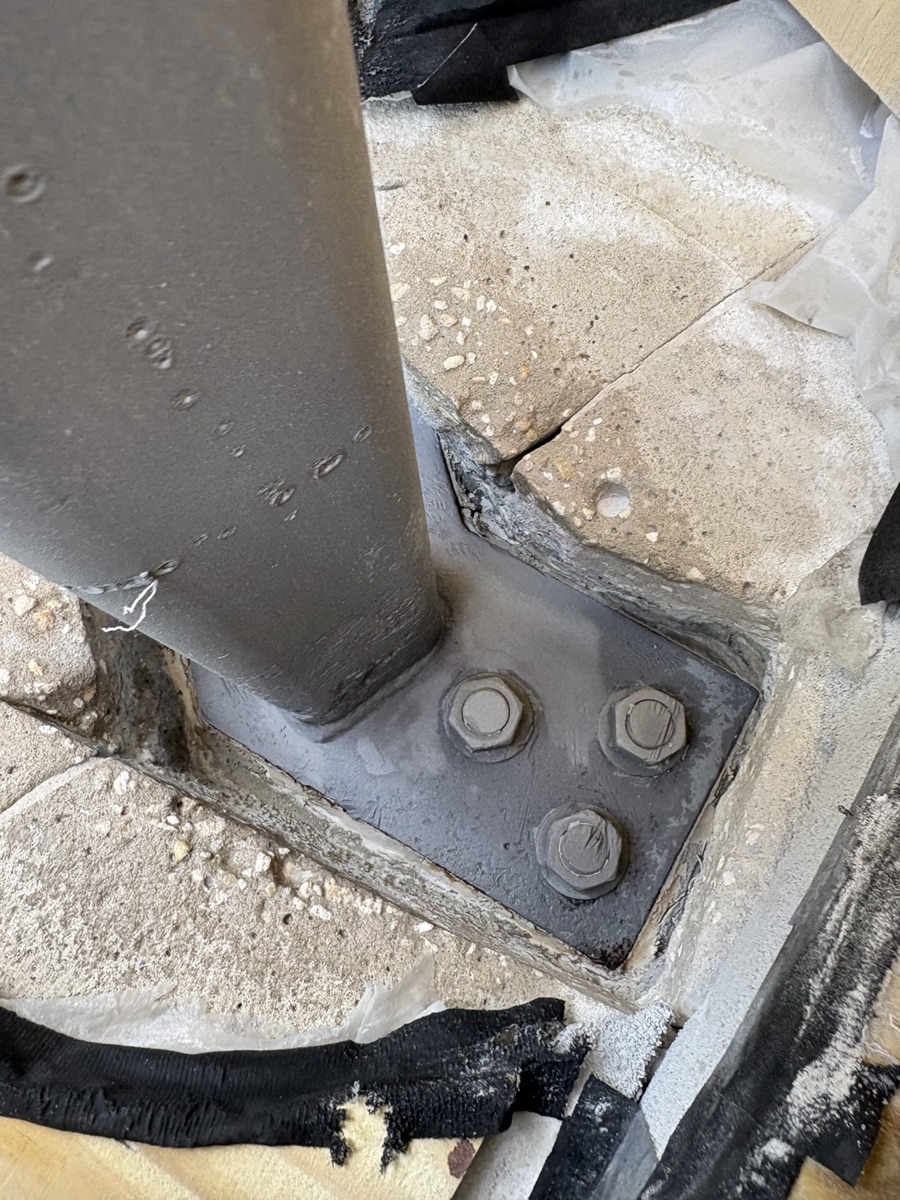
Steel is the opposite. Trailer frames, lift beams and cradles want crushed recycled glass or garnet, something with enough edge to cut rust and mill scale and leave a real profile for primer. Aluminum sits in between. It is soft, it work hardens, and hitting it too hard leaves a stretched, rippled surface, so it gets a lighter touch than steel and a closer eye than gelcoat.
We test an out of the way spot on your boat before committing to the whole surface. There is more on the material difference in blasting aluminum versus steel, and the gentle option is explained on the soda blasting page.

People use the two terms as if they mean the same thing. They overlap, but the job is different. Stripping bottom paint is a specific job below the waterline: seasons of stacked antifouling come off until the hull is back to clean gelcoat, and then it takes a barrier coat before fresh paint. It is driven by how many layers are on there and how hard they have gotten.
Marine blasting is the wider category. Topsides, the trailer, the gear, the aluminum, the lift, anything on a boat that needs a coating removed or a surface prepared. A boat can need both at once, because the same haul out that gets the bottom done is the easiest time to hit the running gear and the trailer while everything is already accessible.
If the bottom is the reason you are calling, the detail lives on bottom paint removal in Naples. If you are not sure which one you need, describe what you are looking at and we will tell you straight.

The boat gets washed. The steel holding it up usually does not. Trailer frames go first at the crossmembers and the fender brackets, where salt water sits after a ramp launch and never fully drains. Lift beams, cradle frames, davit posts and cable hardware sit in salt air over salt water full time, and their paint tends to fail at the welds and the fasteners before anything else looks wrong.
Blasting that steel back to clean metal lets you actually see what you have. Sound steel with surface rust comes back looking new. Steel that has scaled or thinned shows itself the moment the paint is gone, which is the point of doing this before you coat rather than after.
Aluminum lift components get a lighter setup that cleans and profiles without stretching the surface. Bare steel does not stay bare long in this climate, so plan the coating as part of the same job rather than a separate one. More on cutting rust off mounted and structural steel is on the rust removal page.
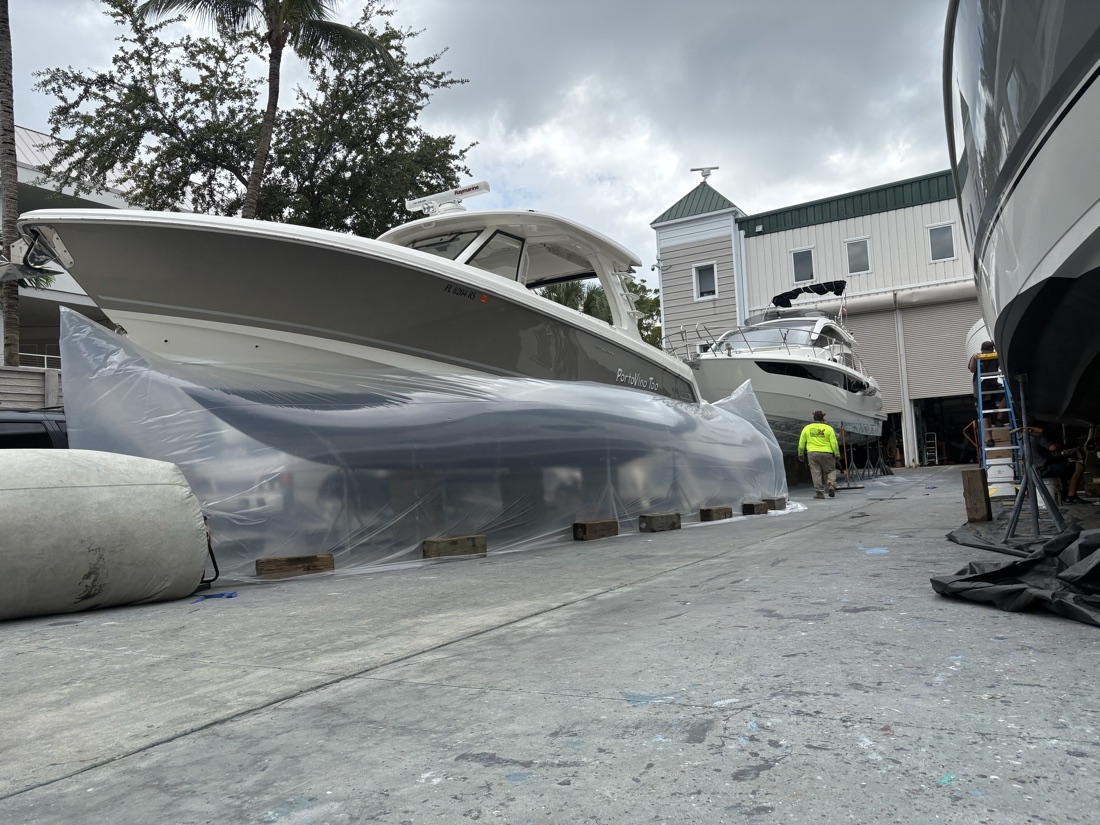
Boats in Naples do not all live in the same place, so the setup changes with the address. A canal home in Royal Harbor or Aqualane Shores usually means working off a seawall or a lift in the backyard, with a neighbor's dock close on both sides and limited room to swing hose. A house on one of the Gordon River canals may have space to pull a trailer around back. The boatyard and dry storage corridor near the river is a different rhythm again, with yard rules, stands and blocking already set.
What we need is the same in all three: the hull out of the water and supported, room to bring the truck and hose within reach, and clearance to work around the surface. If you are at a yard or a rack facility, tell us who runs it and what their contractor requirements are so we can line up with them ahead of the day. On a canal lot we contain the work area and collect spent media instead of letting it wash toward the water.
Deciding between hauling it somewhere and having us come to the house? Mobile versus shop blasting lays out the trade offs.

Based in Naples and mobile across Southwest Florida — we bring the rig to your home, marina, yard or job site. Call or text (239) 227-1768.
Often yes, and it is one of the reasons the rig is mobile. The hull has to be out of the water and steady, with enough clearance around it for us to reach the surface and work. On a canal lot we tarp and contain the area under the boat so spent media and debris get collected rather than ending up in the water. If the lift does not give us the room to do it safely, we will say so and talk through hauling it instead.
Not when the media and the pressure are matched to it. Gelcoat is thin and brittle compared to the paint sitting on it, so the work is about removing the soft layer and stopping there. We test an inconspicuous spot first, then run controlled passes. Baking soda is the gentle option, and wet dustless blasting keeps friction heat out of the laminate on a hot day.
Bottom paint removal is the specific job below the waterline: stacked antifouling comes off until the hull is back to sound gelcoat, ready for barrier coat. Marine blasting is the wider category and covers topsides, running gear, trailers, aluminum, lift and davit hardware, and anything else on the boat that needs a coating removed. Both often happen on the same haul out, since the boat is already out of the water. See bottom paint removal in Naples.
Yes, with a much lighter setup than we would use on steel. Aluminum is soft and it work hardens, so too much pressure or too aggressive a media leaves a stretched, rippled surface that shows under any finish. We drop the pressure, choose a softer media and test first. Lift components, brackets, T-top frames and outriggers all get that treatment. There is more in blasting aluminum versus steel.
Yes, and it is worth doing while the boat is already off. Trailer frames rust at the crossmembers and fender brackets where salt water sits after a launch, and lift beams, cradles and davit hardware fail at the welds and fasteners first. Blasting takes the paint and rust off so you can judge the real condition of the steel before you coat it. Stage it all in one spot and it can go on a single visit.
The boat out of the water and supported on stands, blocks or its trailer, room to get the truck and hose reasonably close, and clear access around the area being blasted. If the boat is at a yard, marina or dry storage facility in Naples, let us know who manages it and what their contractor rules are ahead of time. We bring the rest, contain the work area, and clean up spent media before we leave.
It depends on what we are blasting and how bad it is: the size of the hull or the piece, the material, how many coats are on it, how hard those coats have gotten, how tight the access is at the dock or the yard, and whether you want the surface coated afterward or handed back bare. That is why we look at it in person instead of guessing. Call or text (239) 227-1768 for a free on-site estimate.
We come to the dock, the lift, the boatyard or the driveway anywhere in Naples. Call or text (239) 227-1768 for a free on-site estimate.
Tell us a little about the job and we'll get right back to you.
Thanks — we'll be in touch shortly to set up your free estimate.