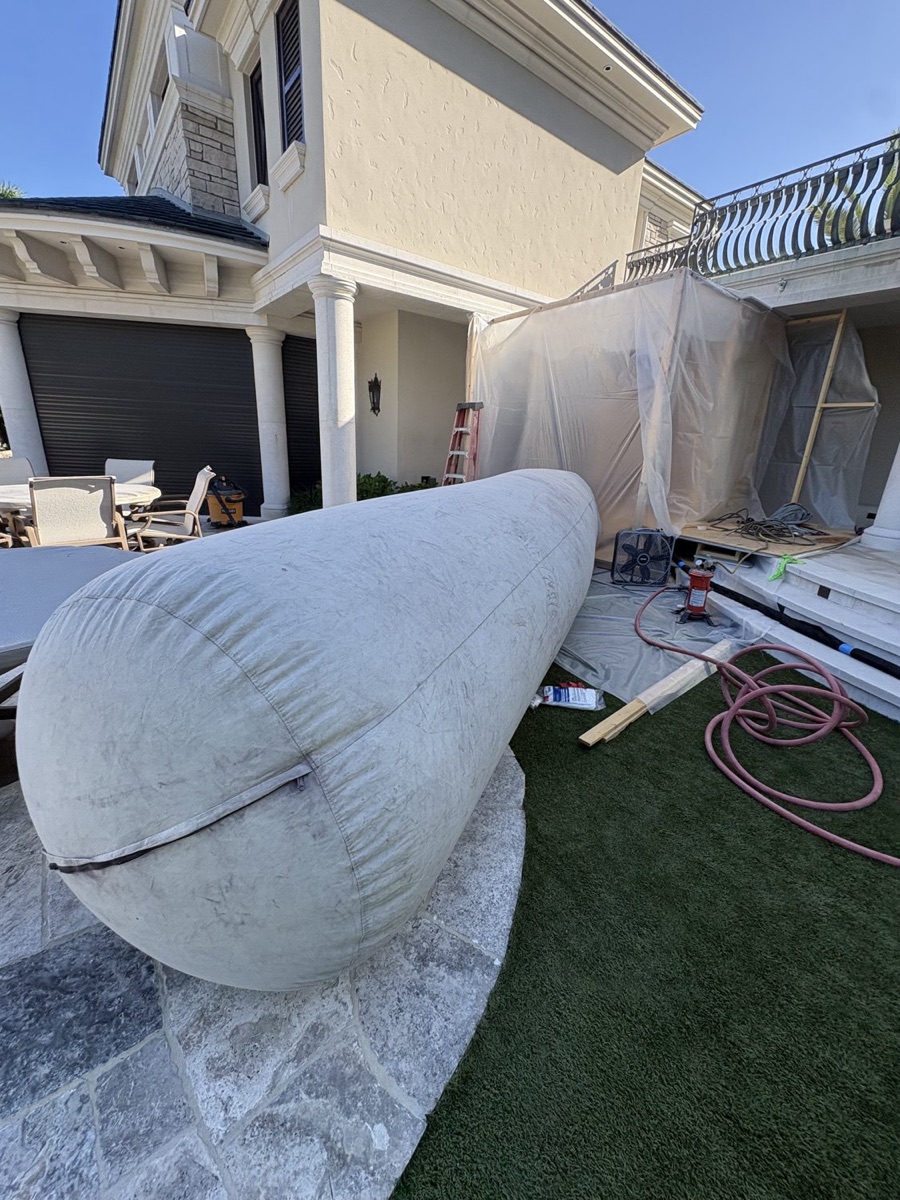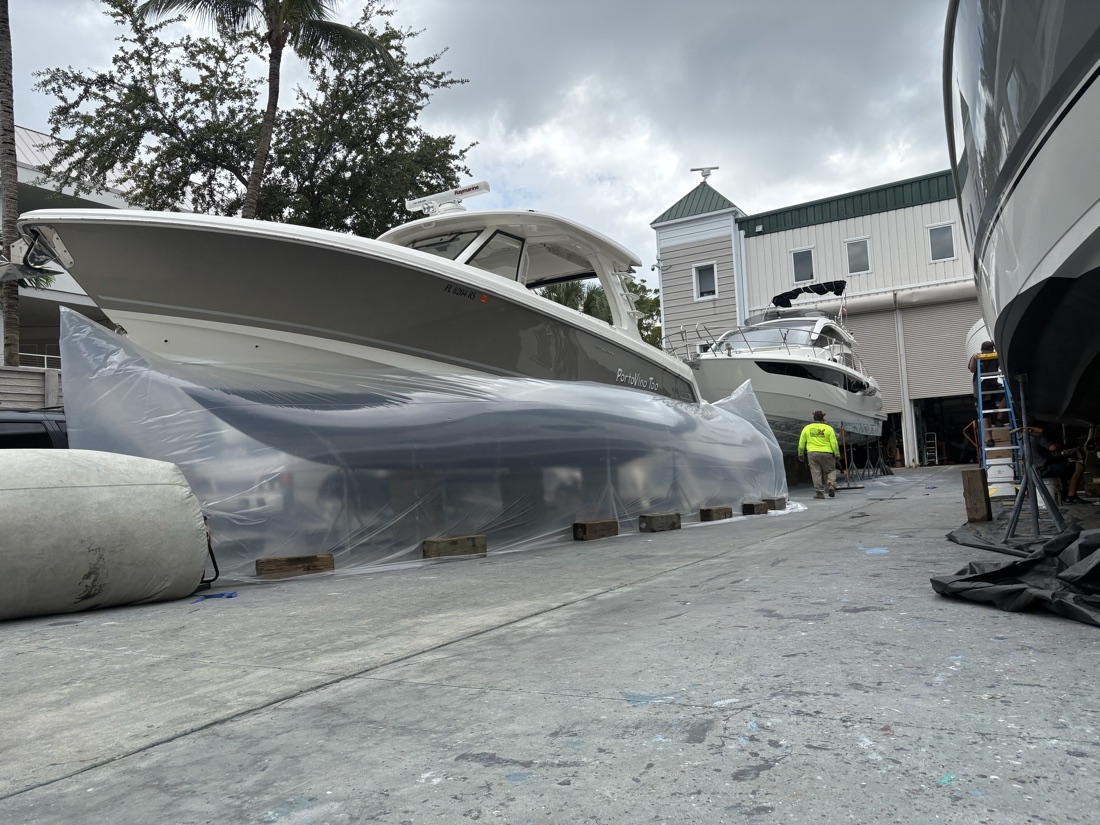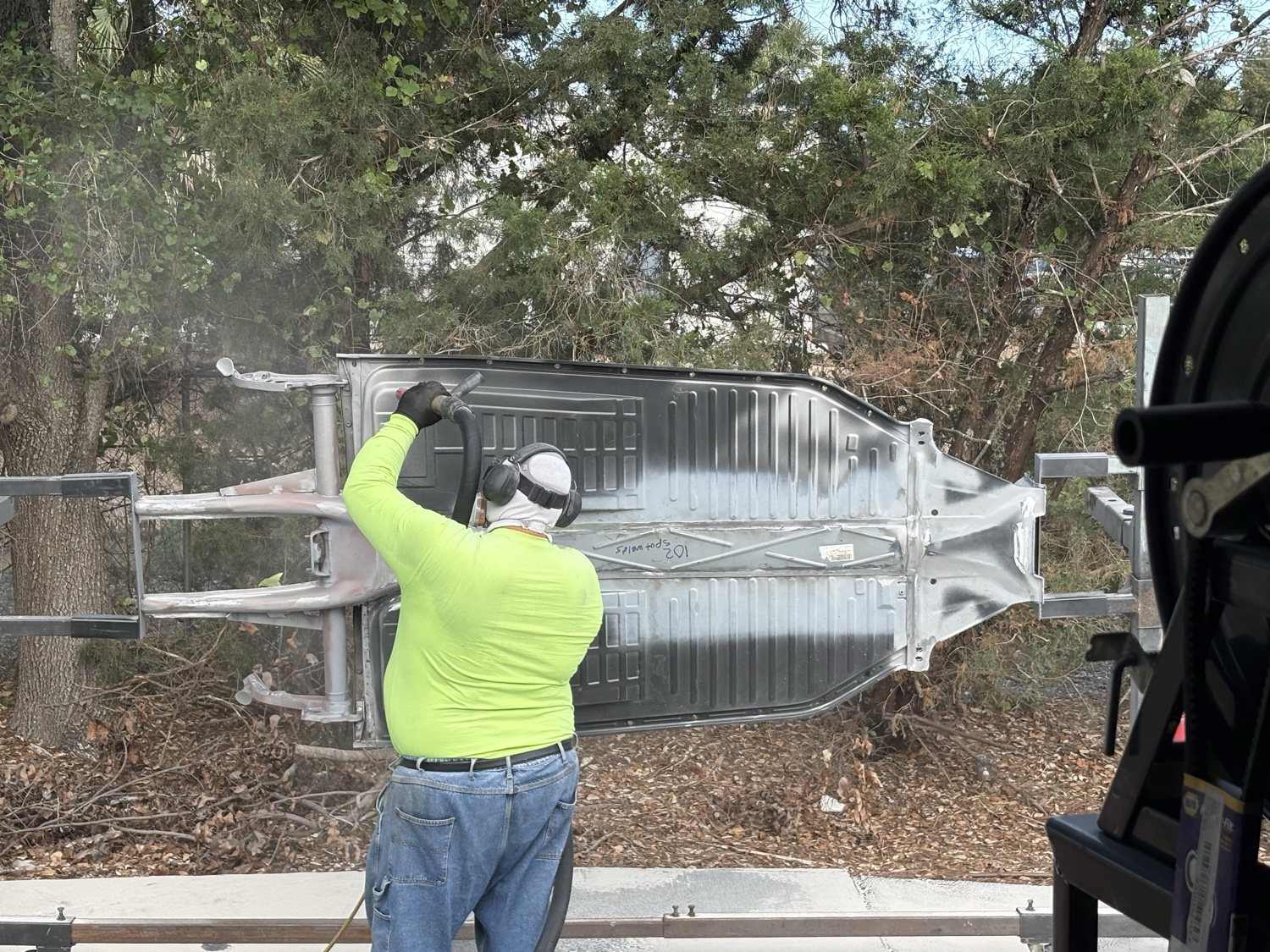
Layered antifouling comes off clean and cool, without gouging the gelcoat underneath. We bring the rig to your Naples boatyard, dry storage rack, lift or private dock on Naples Bay, and hand the hull back ready for barrier coat and fresh paint.
Warm water grows barnacles, slime and weed faster than an ablative coat can shed them, and the water around Naples is warm nearly year round. The fix most owners reach for is another coat. Then another. After enough seasons the bottom is carrying a stack of antifouling, and the paint starts failing against itself instead of against the water.
You can usually see it before a diver tells you. The bottom looks cracked and alligatored. Old colors peek through in patches where the top coats have let go. New paint lifts away in sheets rather than wearing down evenly, and growth returns sooner after every haul. At that point another coat is money spent on a foundation that is already releasing.
Stripping resets the whole thing. We take the bottom down to clean gelcoat so the next system starts on sound substrate instead of a pile of tired paint. Not sure you are there yet? Read the signs your bottom paint needs to come off, or call and describe what you are seeing.

Every owner asks the same question first: will this eat my gelcoat. It will not, when the media and the pressure are matched to the hull in front of us. Bottom paint is soft compared to gelcoat, and the entire job is about removing the soft layers and stopping there. We start on an out of the way spot, dial in the setup, look at the result, then work the hull in controlled passes.
We run crushed recycled glass and garnet where the buildup is thick and hard, baking soda where the surface is delicate or the layers are thin, and wet dustless blasting when we want to hold heat down and keep the yard clean. Wet is often the right answer on a hull, because it cuts multi season buildup without letting friction heat build in the laminate.
Compare the approaches in soda versus sandblasting a boat hull, or see how we handle the rest of the boat on the marine blasting page.

Naples boats do not all live in the same place, so there is no single setup. Plenty of hulls come out along the Bayshore and Bayview boatyard and dry storage corridor off the Gordon River, where the rack houses and haul out yards sit. Others ride a lift behind a house off Naples Bay or up one of the canals. Some arrive on a trailer and park in a driveway off Airport-Pulling or 41.
Wherever it is, the rig travels to the boat. What we need is simple: the hull blocked, on stands or on its trailer, room to get the truck and hose reasonably close, and clearance to work around the bottom. If the boat is at a yard or a storage facility, tell us who runs it and what their contractor rules are so we can line up with them ahead of the day.
We contain the work area and clean up the spent media and debris before we leave. More on how we cover the city is on the Naples service page.
A stripped bottom is not a finished bottom. Once the antifouling is off, the gelcoat needs to dry and the hull needs a barrier coat before new paint goes on. That sequence is what keeps moisture out of the laminate and gives the new system something to hold. We leave the surface clean and evenly worked so whoever coats it starts from the best condition possible. Most Naples yards and painters want exactly that: dry, bare and consistent.
From there you have two options. Take it back bare and ready, and let your yard or your painter carry it forward. Or have us prep it and coat it, because blasting is only half of what we do. Say which you want at the estimate so the day gets planned around it.
If you are lining up the next steps, prepping a hull for new antifouling walks through the order of operations, and our boat bottom paint removal page covers the service in general.
Naples runs on a season. The city fills up from late fall into spring, boats get used hard, and the yards are busiest right when everyone wants the bottom done. Summer is quieter and it is often the easier stretch to take a boat out of service. We work year round either way, and we fit the job to your haul out rather than the other way around.
What drives the size of the job: hull length, how many coats are stacked on, how hard those coats are, the shape of the running gear, whether there is a boot stripe or lettering to protect, how tight the access is at the yard or the dock, and whether you want us to coat it afterward. We look at all of that in person before quoting anything. We do not price a hull we have not seen.
Call or text (239) 227-1768 and we will come look. Boat kept on Marco instead? See bottom paint removal on Marco Island.
Based in Naples and mobile across Southwest Florida — we bring the rig to your home, marina, yard or job site. Call or text (239) 227-1768.
We come to the boat. The rig is fully mobile, so it travels to the boatyard, the dry storage facility, your lift or dock on Naples Bay, or your driveway if the boat is on a trailer. The hull needs to be out of the water and supported on stands, blocks or its trailer. Everything else we bring with us.
Not when the media and pressure are matched to the hull. Bottom paint is much softer than gelcoat, so the work is about taking the soft layers off and stopping. We test an inconspicuous spot first, then run controlled passes. On delicate or thin coatings we drop to baking soda, and wet dustless blasting keeps heat out of the laminate entirely.
Cracked or alligatored paint, old colors showing through in patches, fresh paint sheeting off instead of wearing evenly, and growth coming back sooner every season. Those all say the stack has failed against itself. There is more detail in signs your bottom paint needs removal and how often bottom paint should be redone.
Anywhere in the city. The boatyard and dry storage corridor off the Gordon River and Bayshore, private docks and lifts on Naples Bay and the canals, homes in Old Naples, Aqualane Shores, Port Royal, Park Shore, the Moorings and Coquina Sands, and trailered boats anywhere off 41 or Airport-Pulling.
Crushed recycled glass and garnet for thick, hard buildup, baking soda where the surface needs a gentler touch, and wet dustless blasting when heat and dust control matter. We choose after seeing the hull, not before. See soda blasting for how the gentle option behaves.
Either one. We can hand the hull back bare, clean and ready for your yard or painter to barrier coat and paint, or we can carry it through and coat it ourselves. Blasting is the prep half of what we do and coating is the other half. Tell us which you want when we do the estimate so the schedule fits.
It depends on hull length, how many layers are stacked up, how hard they are, access at the yard or dock, and whether coating follows the strip. That is why we look at the boat before quoting. Call or text (239) 227-1768 for a free on-site estimate, and see what drives bottom paint removal cost in SWFL.
We come to your yard, lift, dock or driveway anywhere in Naples. Call or text (239) 227-1768 for a free on-site estimate.
Tell us a little about the job and we'll get right back to you.
Thanks — we'll be in touch shortly to set up your free estimate.