SWFL Media Blasters
Mobile media blasting & sandblasting — we come to youNaples & all of Southwest Florida
Mon–Sat 8a–6p(239) 227-1768
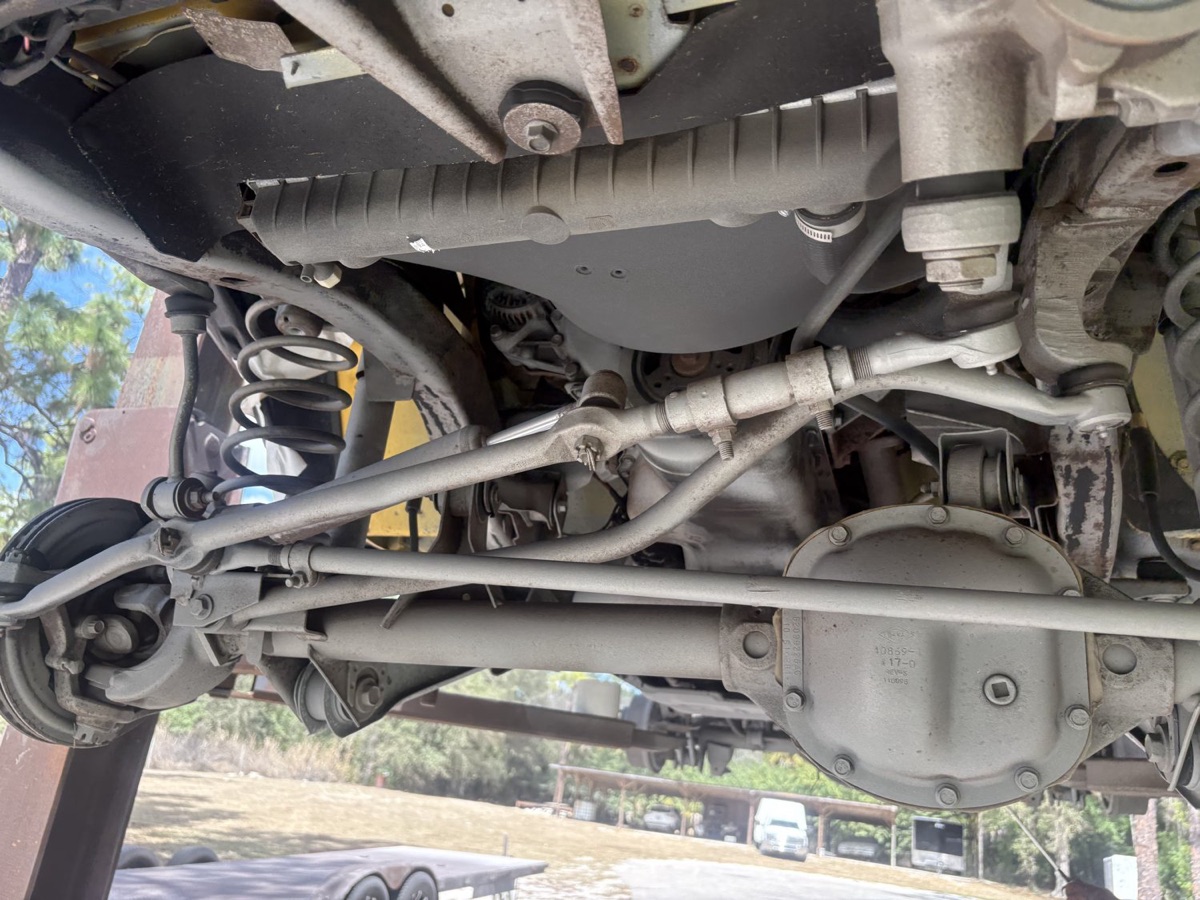
Vehicle undercarriage and suspension components after service
Rust Removal · Bonita Springs, FL

Bonita Springs Rust Removal for Metal That Lives Outside

Salt arrives from the beach side and the bay side, and outdoor metal in Bonita Springs never fully dries out. We take corrosion out of the pits it hides in and leave a surface the next coating can hold onto.

(239) 227-1768Text us
Corrosion out of the pitTrailers, gates, dock steelProfile a coating can gripFree on-site estimate

SWFL Media Blasters handles rust removal in Bonita Springs, a town with the Gulf on one side of it and Estero Bay behind. Rust here is not a housekeeping problem, it is metal turning into something else, and the reaction runs deeper than the surface you can see. Every piece of steel and aluminum living outdoors in Bonita Springs is on the same schedule: coating fails at an edge or a fastener, moisture and chloride get underneath, and the corrosion works outward from there under the paint. We open it up, drive the oxide out of the pits, and leave metal a coating can actually bond to. Call or text (239) 227-1768.

Where rust shows up first on a Bonita Springs property

Walk a lot here and the list writes itself. Out back, on the canals and the water that feeds toward Estero Bay, it is lift frames, cables, motor mounts, davits, cleats, piling caps and ladder brackets. Trailers parked beside the house rust from the inside of the crossmembers out. Along the sides and the front it is gates, fence panels, driveway hardware, mailbox posts, light poles and the steel in a railing or a stair stringer.

Closer to the house, the aluminum takes its own kind of damage: cage and lanai frames chalk white and pit, screen door frames pull apart at the corners, and pool equipment stands scale under their feet. Hurricane shutter tracks and anchor hardware corrode quietly and are usually noticed the week somebody needs them to slide.

None of that is unusual for the location, and none of it is a sign anybody neglected the property. It is what happens when salt air and year round humidity get a full time shift at a piece of metal. The service in general is on the rust removal page, and everything else we bring to town is on the Bonita Springs page.
  • Lift frames, cables, davits
  • Trailer frames and hardware
  • Gates, fences, railings
  • Cage and lanai aluminum
  • Shutter tracks and anchors

Why the last coat of paint did not hold

The usual repair is to knock the loose material off with a wire wheel or a flap disc, wipe it down and paint it. That fails for a mechanical reason rather than a lack of effort. Corrosion does not spread evenly across a surface, it drills. Pitting goes narrow and deep, and a disc rides the tops of those pits without ever touching the floor of them. A wire wheel is worse in one specific way: it burnishes, so the oxide left behind gets polished down into the low spots where you can no longer see it.

Paint then goes over the top and bridges each pit like a lid, sealing chloride, moisture and oxidized iron into a pocket. That pocket has everything the reaction needs and, in this climate, warmth to run on all year. Iron oxide takes up more room than the steel it replaced, so pressure builds under the film until it lifts, and the blisters and rust bleed come back through a finish that looked perfect the day it was applied.

Converters and encapsulators run into the same wall. They work by reaching and reacting with the corrosion that is present, and the material at the bottom of a deep pit is exactly the material you cannot guarantee they touched.

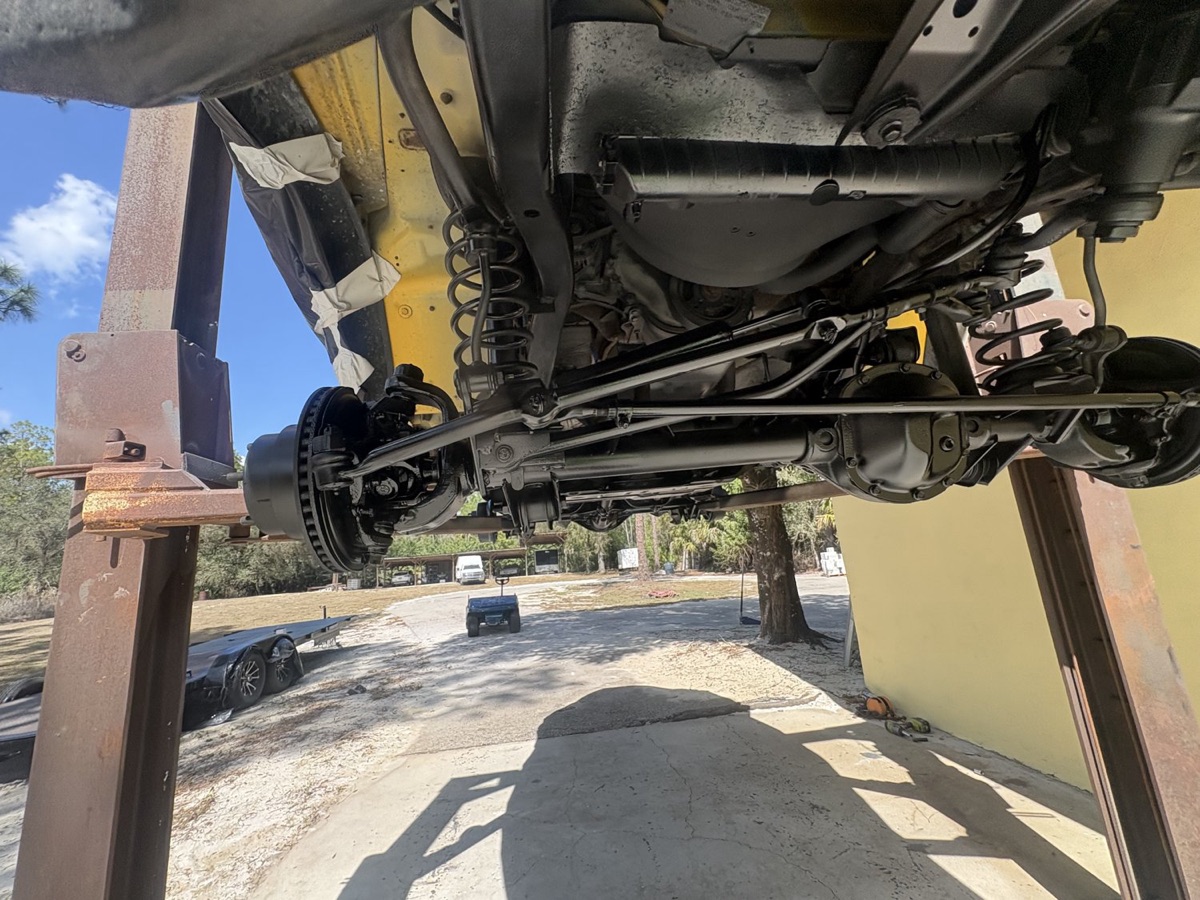
Undercarriage blasted free of rust and scale

Cutting it out: media, pressure and the profile left behind

Abrasive blasting works because the particles enter the pit instead of skating across the opening. They arrive fast, at an angle, strike the walls and the floor, and drive the oxide back out. That is the mechanical difference between blasting and every hand method, and it is why blasting is a repair while sanding is a postponement.

What we load depends on what is in front of us. Crushed recycled glass is the general purpose cutter for failed coatings and moderate corrosion. Garnet is heavier and hits harder, which is what thick scale and structural steel call for. Baking soda is the gentle option for delicate, intricate or decorative pieces where no aggressive profile is wanted. Sand has its place on the heavy end. The wet dustless setup comes out for thin metal, aluminum and any address where a dust cloud would be a problem, and in a Bonita Springs neighborhood with houses close together it frequently is.

What is left behind is bare metal with an anchor profile on it: a fine peak and valley texture the next coating grips mechanically. Depth gets matched to the product going over it, which is the subject of surface prep before powder coat or paint. When the dust question is the deciding factor, see dustless blasting in Bonita Springs.

  • Crushed recycled glass
  • Garnet for heavy scale
  • Baking soda on delicate parts
  • Wet dustless on thin metal
  • Profile matched to the coating

Getting to the metal: gates, canal yards and tight setups

Most of what corrodes is bolted to something that is not moving. A lift frame belongs to the seawall, a gate belongs to the drive, a railing belongs to the stairs, and a shutter track belongs to the wall. That is the argument for a mobile rig in one sentence: the work has to happen where the metal already is.

Bonita Springs makes its own demands about how that happens. Gated communities such as Bonita Bay, Pelican Landing and Palmira handle contractor clearance their own way and set expectations about hours and staging, so we would rather hear the rules while quoting than at the gatehouse. Backyards on the canals put the work a few feet from open water, which means containment gets built before anything is stripped, and spent media and coating debris get collected, bagged and hauled off rather than rinsed toward the seawall. Paver drives, pool decks, cages and landscaping get tarped and masked on the way in.

What we need from you is access for the truck, room to work around the piece, water on site and a heads up about anything fragile nearby. Heavier structural work is covered under sandblasting in Bonita Springs, and commercial steel and equipment on commercial blasting.

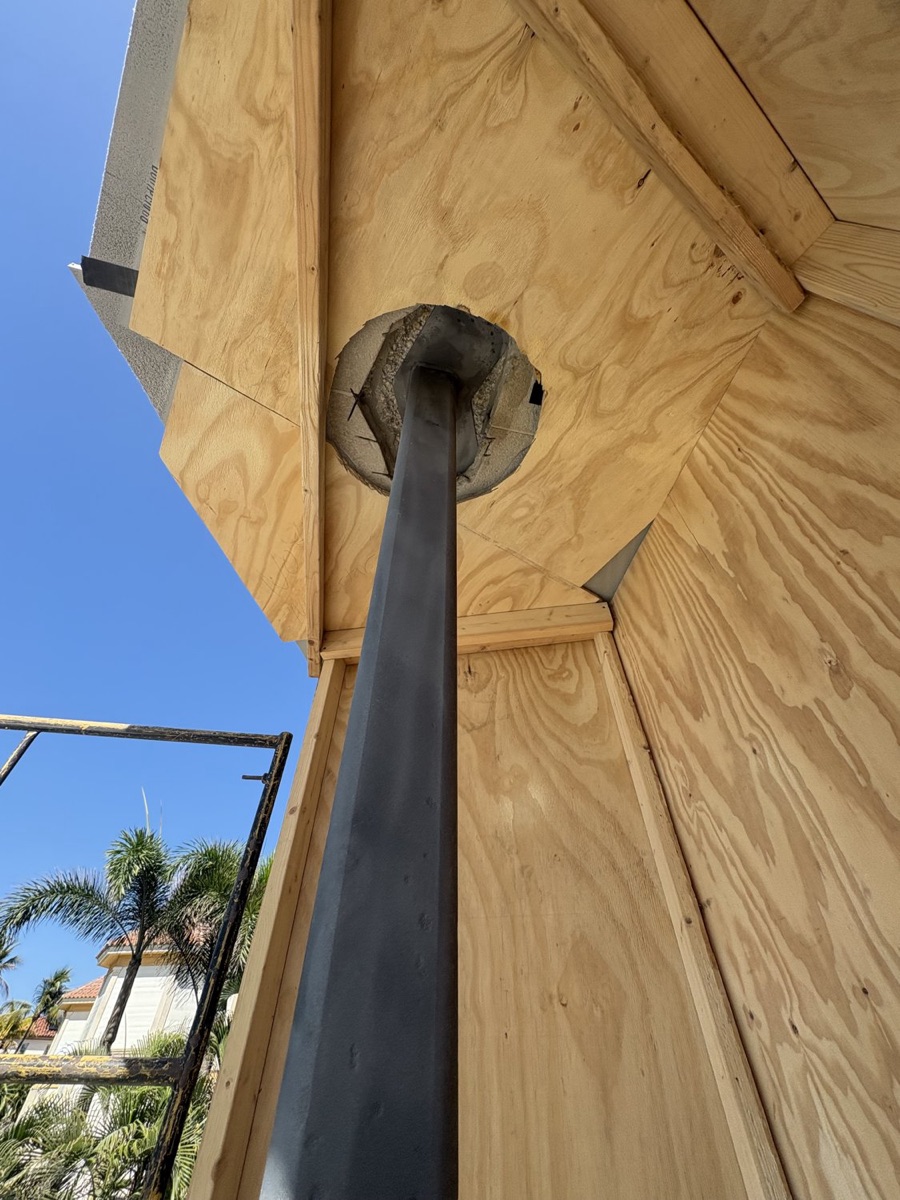
Structural steel column blasted to a clean profile

The honest limit, and the clock that starts after

Blasting removes corrosion. It does not give back the metal that corrosion already consumed. A badly pitted trailer tongue comes out clean, sound and ready for coating, and it stays pitted, because those craters are missing steel and no process refills them. Sometimes the strip uncovers a hole that scale had been holding together, and at that point the right call is a welder or a fabricator instead of a can of primer. We would rather tell you that with the piece in front of us than let a fresh finish hide it for a year.

The other limit is time. Freshly cleaned steel starts to bloom a light flash rust on its own, and warm humid Bonita Springs air moves that along quickly. It is not a flaw in the blasting, it is bare steel behaving the way bare steel behaves. That is why the coating gets planned next to the blasting rather than scheduled as a separate project for later.

Two honest ways to run it. Take it back bare and ready, which works when your painter, powder coater or fabricator is standing by. Or have us prep and coat it during the same visit so protection goes on while the surface is still clean. For a look at the same problem one town south, see rust removal in Naples, and for vehicles specifically, automotive blasting in Bonita Springs.

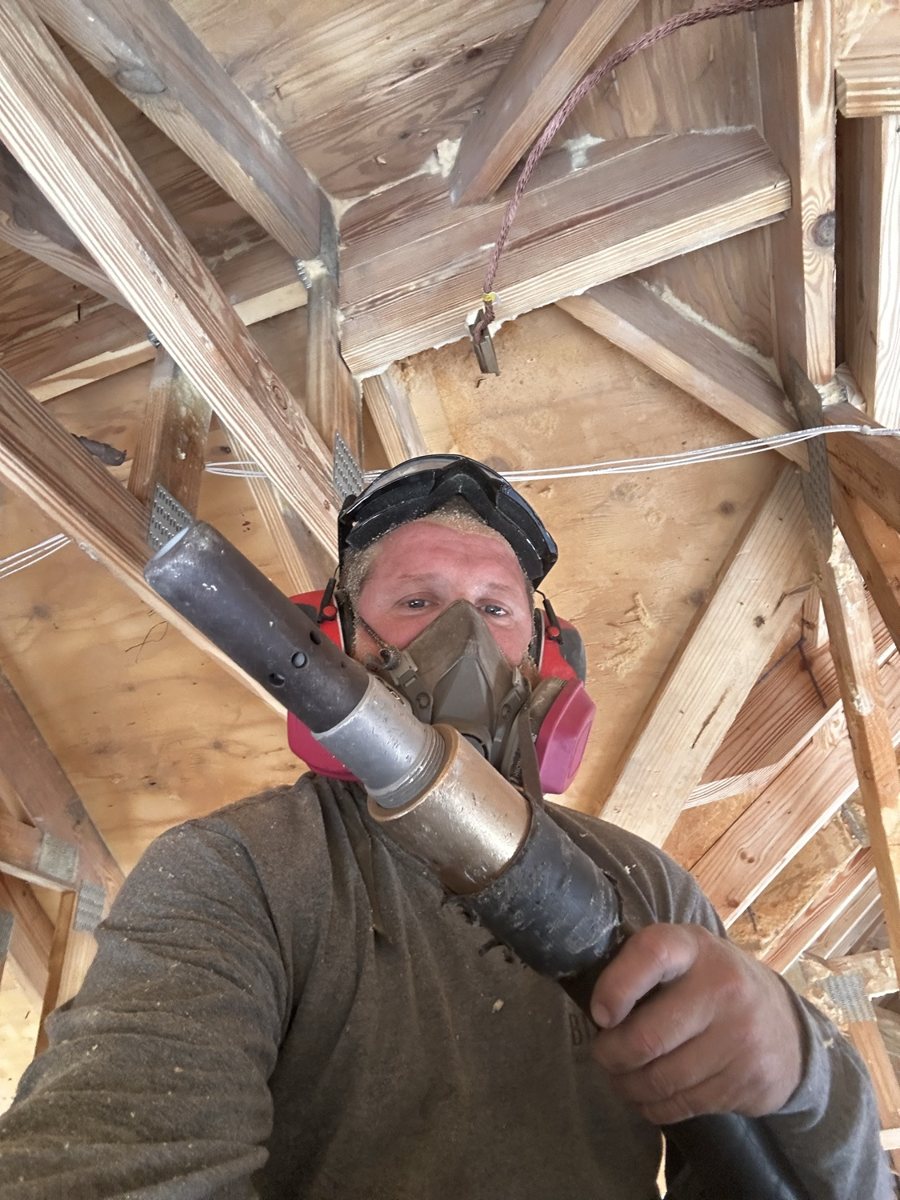
SWFL Media Blasters technician holding a soda-blasting wand inside a wood-framed roof structure
Where we work

Find us & our service area

Based in Naples and mobile across Southwest Florida — we bring the rig to your home, marina, yard or job site. Call or text (239) 227-1768.

Questions

Good to know

The dividing line is section, not appearance. If the steel still has its thickness, blasting takes the corrosion out and coating protects what is left, even when the surface stays visibly pitted afterward. If the material has thinned to the point that it flexes, crumbles at an edge or opens into a hole once the scale is gone, you need a fabricator rather than a finish. We tell you which one you are looking at before anything gets coated.

It is a different reaction with the same cure. Aluminum does not bleed orange, it chalks, whitens and pits, and it is often thinner than the steel next to it. So the setup changes: softer media, lower pressure, and usually the wet dustless rig, which keeps heat down so a cage frame or a panel does not distort. See blasting aluminum versus steel for how the two behave under a nozzle.

Usually not, and that is the point of a mobile rig. We work on the seawall, at the lift, on the drive and up the stairs, with the piece still mounted where it lives. Containment and masking get built around it so nothing nearby takes the stream. If a component would genuinely be easier to strip off the structure, we will say so, but no part of this depends on hauling your hardware somewhere else.

By setting the work up for it before the trigger is pulled. On a waterfront lot the area gets tarped and screened so debris collects where it can be recovered instead of migrating toward the seawall, and the spent media and coating chips are swept, bagged and hauled off the property. The wet setup also keeps material heavy and local. If the location cannot be contained safely, we say so at the estimate.

That is usually the better plan on bare steel here, because the surface never gets the chance to bloom before it is protected. It depends on the coating you want, the weather that day and the surface itself. Tell us at the estimate whether you want the piece handed back bare for your own painter or carried all the way through, and the visit gets built around that decision instead of improvised at the end.

Be realistic about it: the nozzle cleans what the nozzle can reach. Outer surfaces, seams, joints and open cavities come out clean. The inside of a fully sealed tube does not, and any contractor who promises otherwise is guessing. What we can do is get every reachable face down to sound metal, point out where drainage and sealing matter, and tell you honestly what the remaining risk is on that piece.

It comes down to size and the number of pieces, how deep the corrosion runs, what coating is coming off with it, how much containment the location needs and whether we coat it afterward. Rust cannot be priced from a photograph, so we do not pretend otherwise. Call or text (239) 227-1768 and we will come look at it, free, anywhere in Bonita Springs.

Explore more

Related services

Get started

Rust eating a trailer, gate or lift in Bonita Springs?

The rig comes to the driveway, the yard or the seawall, takes the corrosion out of the pits and leaves the metal ready to coat. Call or text (239) 227-1768 for a free on-site estimate.

(239) 227-1768Text us
Call Text us