SWFL Media Blasters
Mobile media blasting & sandblasting — we come to youNaples & all of Southwest Florida
Mon–Sat 8a–6p(239) 227-1768
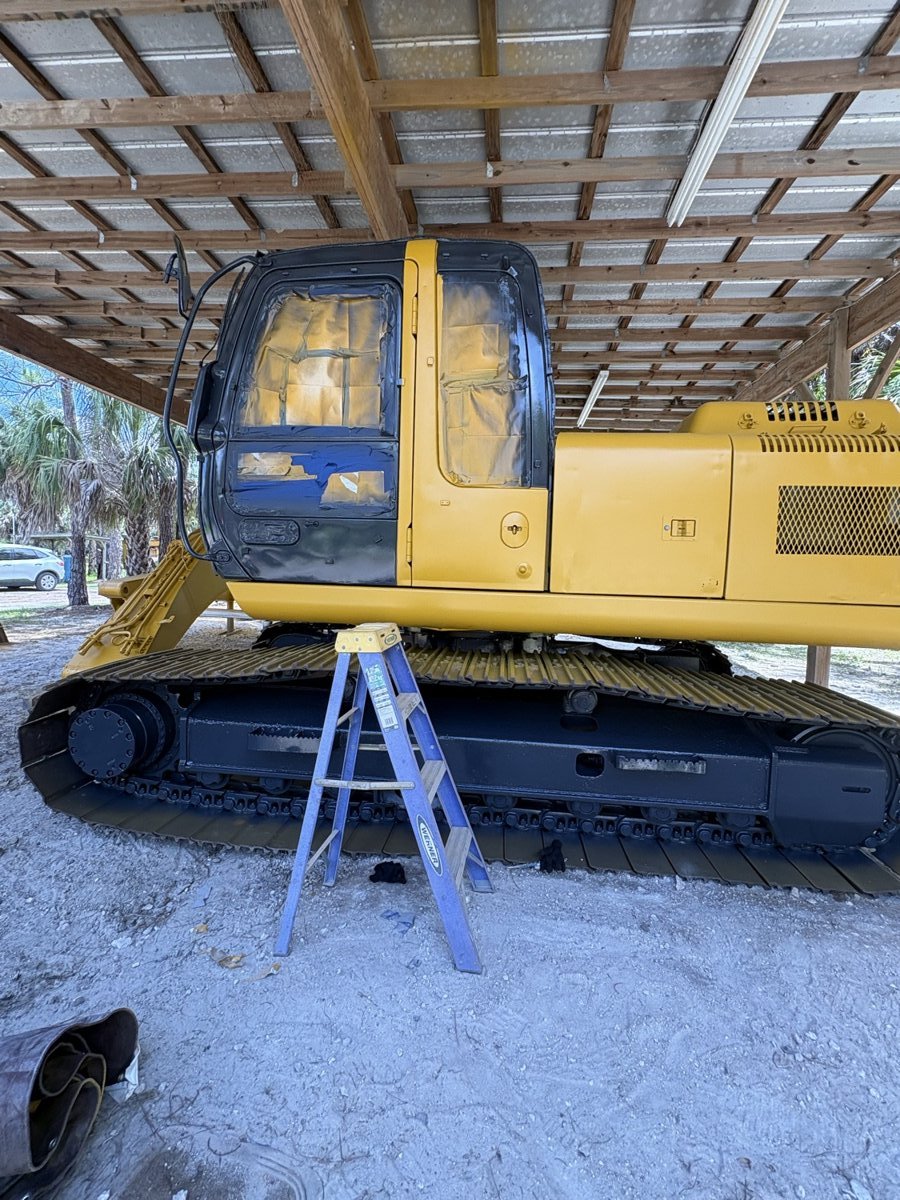
Excavator masked and prepped for blasting under a carport
Service Area · San Carlos Park, FL

Media Blasting at Home in San Carlos Park, Florida

San Carlos Park is a working neighborhood: mid-century block homes, carports, fenced yards and whatever is parked in the driveway. The truck pulls up to the address, and rust, failed paint and clouded sealer come off where the item already sits.

(239) 227-1768Text us
Mid-century block and stuccoTrailers, trucks, equipmentBoats on trailers, not liftsFree on-site estimate

SWFL Media Blasters works San Carlos Park out of the truck, which suits a neighborhood built around what people keep at home. This is a mid-century grid in south-central Lee County, started in 1953 and filling in ever since, so one street can hold an original block house, a rebuilt one next door, and a fenced yard holding a trailer, a boat and a work truck. Nothing here hangs on a lift, and there is no open acreage to swallow a machine. There is a driveway, a carport, a side yard and a gate, and that is room enough. Rust, failed paint and clouded sealer come off where the item sits, then it gets coated if you want it coated. Text or call (239) 227-1768.

A 1953 grid that has been rebuilt lot by lot

San Carlos Park is an unincorporated community in south-central Lee County, started in 1953 by brothers Jules and Jack Freeman as affordable housing for middle-class families, on land bought from the Koreshan Unity. US 41 forms the western edge, Estero picks up to the south, and the Three Oaks community sits to the east. The land drains west through Mullock Creek toward Estero Bay.

What was platted as modest single-family lots has been filling in and turning over for decades, so the housing stock is genuinely mixed. An original block house with a carport sits beside one that has been gutted and refinished, beside a newer build on an old lot. Yards are fenced. Sheds and carports are working storage rather than decoration. Trailers, work trucks and project vehicles are parked at the house, because the house is where the room is.

That mix is the surface list: painted block and stucco carrying several generations of paint, concrete driveways and walkways, fence of every kind, gates, railings, screen cage frames, shed and carport steel, and everything on wheels. The service area page maps every other town, and Estero, directly south, has a hub of its own.
  • Painted block and stucco
  • Carports, sheds, fences
  • Trailers and work trucks
  • Driveways and walkways
  • Gates, rails, cage frames

Block, stucco and concrete at a San Carlos Park house

A house that has stood since the mid-century has usually been painted several times, and each recoat went over whatever was already on the wall. Eventually the newest layer chalks, blisters at a corner, or lets go in sheets off the sunny elevation, and one more coat over that failure buys a season at best. Blasting takes the stack off and stops at sound masonry, so the next coating has something real to bond to.

Concrete driveways and walkways carry their own list: dropped paint, adhesive, tire marks, a rust stain where the trailer tongue rested all summer, and sealer that clouded over. Screen cage frames and porch railings corrode at the fasteners first and streak down from there. Fence rail, gate posts and shed steel go at the base, where irrigation hits them every morning and never fully dries.

The media follows the surface. Wood and finished material get baking soda. Steel carrying rust or a thick coating gets crushed recycled glass or garnet. When the neighbor's car is parked a few feet off, the wet dustless stream keeps the dust down. Older exterior paint can contain lead, so a test and a proper containment plan come ahead of the strip, not after. Residential blasting covers the house, paver sealer removal covers the drive, and the wall itself is the subject of removing paint from concrete, brick and block.

  • Painted block and stucco
  • Driveways and walkways
  • Cage frames and railings
  • Fence and gate steel
  • Test patch before we commit
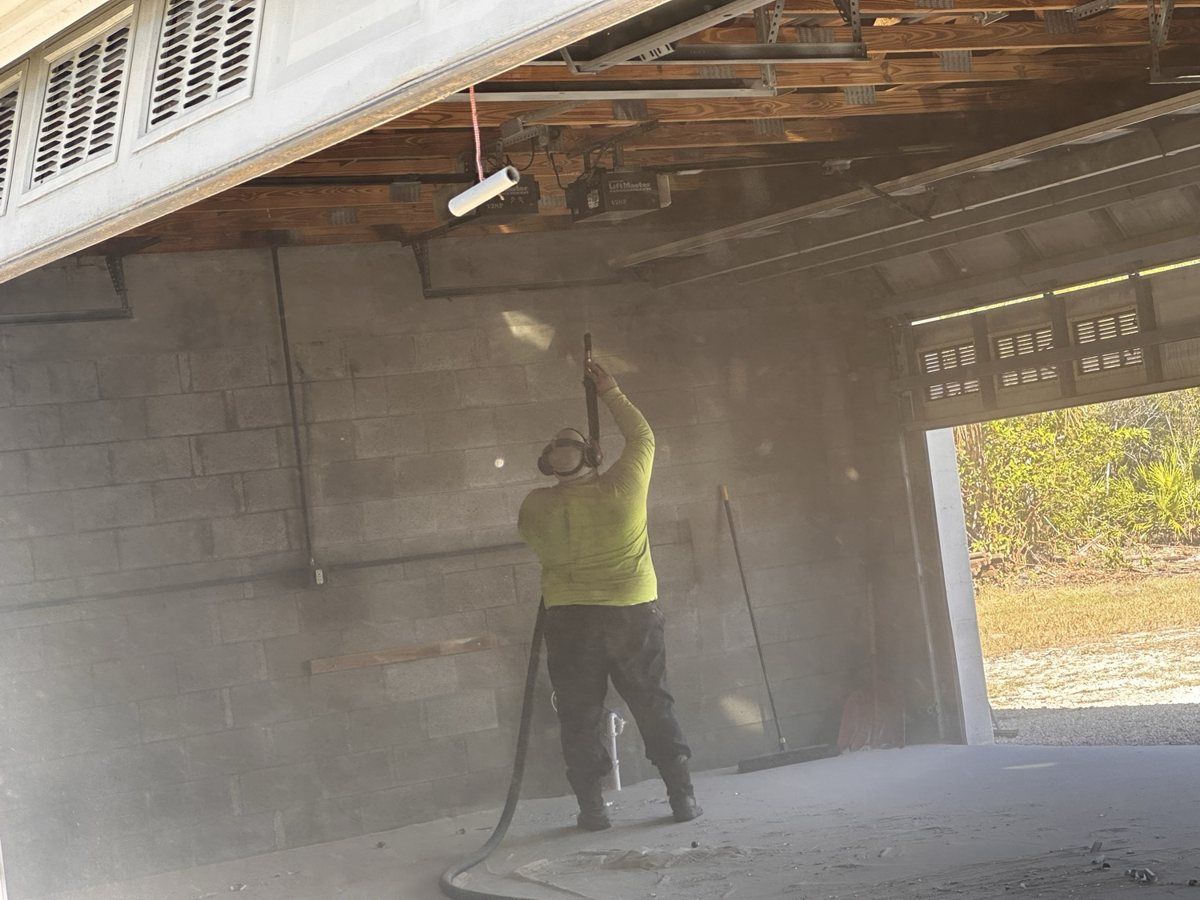
Concrete block wall being media blasted clean, dust visible

The project under the carport, and the truck that works

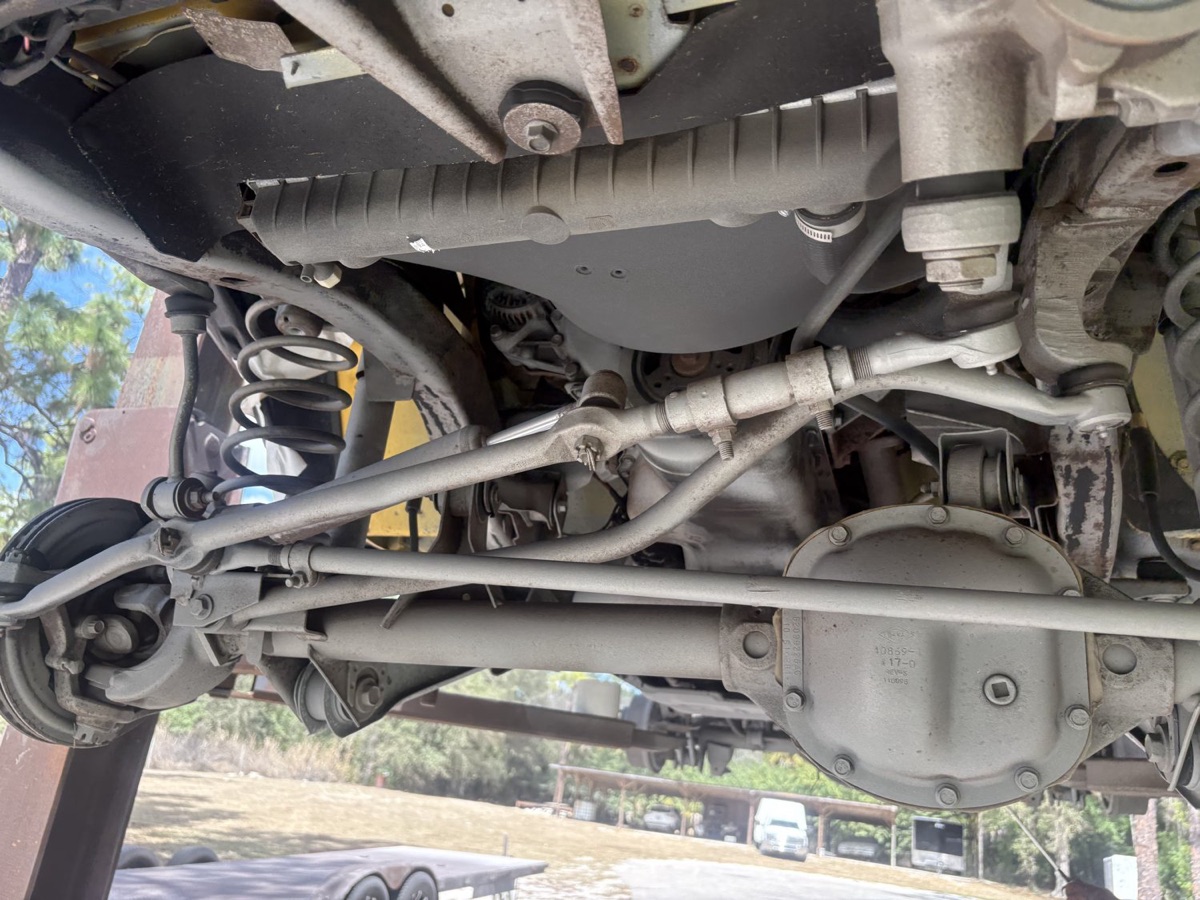
Carports and single-car garages are where San Carlos Park keeps its projects: a chassis on jack stands, a rear end, a pair of lower arms, a dirt bike, a mower deck, a golf cart, a pickup that has been in the family long enough to bubble at the rockers. None of it has to be trailered anywhere, because the rig is fully mobile and sets up beside it.

After that come the vehicles that earn: service vans, pickups, dump and utility trailers parked on grass or shell in full sun. A trailer frame corrodes inside the tube first, out of sight, the fenders crack at their mounts, the wiring goes green at the ground stud, and the ramp gate seizes on its hinge pins. Once the paint and scale are gone you can see which of that is solid and which needs a repair, instead of finding out two seasons after the next coat of paint.

Pressure and media get chosen for the thickness of the metal in front of the nozzle: sheet steel keeps its shape, castings keep their edges. Bare steel does not stay bare long in this climate, so primer can go on before the truck backs out of the driveway, or the parts go back to you clean for your painter or powder coater. Automotive blasting and rust removal are the pillars; for the frame job specifically, read what to expect when a car frame gets blasted.

  • Frames and undercarriages
  • Utility and dump trailers
  • Work trucks and vans
  • Motorcycles, mowers, carts
  • Primed before we leave
Vehicle undercarriage and suspension components after service

Boats here ride a trailer to the ramp

San Carlos Park is inland. Its water leaves westward through Mullock Creek toward Estero Bay, and the boats leave by road. A hull here lives on its trailer in the driveway or under the carport and rides to a ramp for every trip, and it comes home carrying exactly what every other hull on this coast comes home carrying.

Ablative bottom paint stacks up season over season until it cracks and sheds. Warm salt and brackish water grow slime and barnacles that cost speed and fuel. Meanwhile the trailer underneath is rusting at the frame, the fenders, the bunk brackets and every fastener that gets dunked in salt water and then driven home wet.

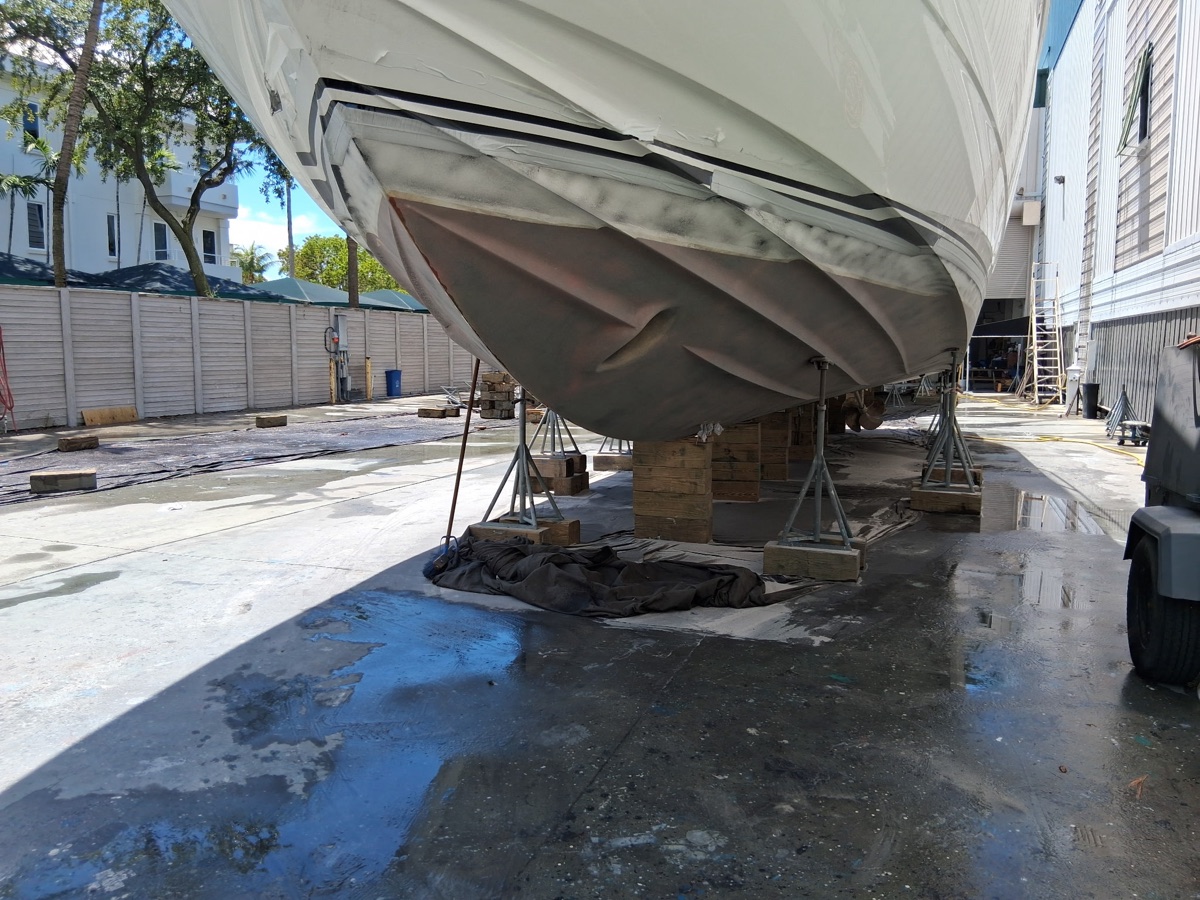
Truthfully, this is the simpler form of a bottom job. The boat is dry, it is already at working height on its bunks, and a driveway leaves more room to move around it than a crowded yard does. The crew masks and drapes, strips paint and growth back to sound gelcoat without burning or gouging it, and handles the trailer, brackets and running gear on the same visit. Marine blasting is the pillar for the trailer and hardware, boat bottom paint removal for the hull, and how often bottom paint needs redoing answers the question everyone asks next.

Boat bottom stripped down, hull up on stands with drop cloths spread underneath in a boatyard

Small operators running the business out of the house

Plenty of San Carlos Park businesses work out of a residential address: a contractor with a couple of trailers, a lawn crew with mowers and a dump body, a mechanic with a bay in the garage, a pressure washing or pool route with a rig on the truck. US 41 runs the western edge of the neighborhood, but the working side of this community is not a plant or a warehouse row. It is equipment parked at home between jobs.

That equipment is what a mobile setup is built for. A mower deck, a skid steer, a compressor, ladder racks on a service body, a dump trailer that has stopped looking like a business card. It gets blasted where it parks, so nothing rides a lowboy and nothing waits in a queue somewhere. Windows, chrome rods and decals get covered, the failed coating and corrosion come off down to clean steel, the spent media is swept up, and primer or a full coating goes on before the truck leaves if that is the plan.

Scheduling around your working week is the usual ask, since the gear has to earn Monday through Friday. Details on commercial blasting, a closer look at fleet and trailer restoration, and what moves a number on the cost factors page.

  • Mowers and small equipment
  • Dump and enclosed trailers
  • Service bodies and racks
  • Compressors and yard gear
  • Scheduled around your week
Where we work

Find us & our service area

Based in Naples and mobile across Southwest Florida — we bring the rig to your home, marina, yard or job site. Call or text (239) 227-1768.

Questions

Good to know

Yes, and most of San Carlos Park is exactly this size. The rig is self contained and arrives on the truck, so what we need is somewhere to park close to the work, room to walk around the item and lay tarps, and a way through the gate if the yard is fenced. A standard driveway and a side yard are plenty. Tell us where the item sits and whether there is a hose bib and an outlet we could use, and the visit gets planned around that.

Usually. Blasting does not care how many coats are stacked up, it lifts them together and stops at sound masonry, which is the only base a new coating can properly bond to. What matters more is the block and stucco underneath, so a test patch goes somewhere out of sight first and you look at it before the wall gets run. Paint on older exteriors can contain lead, so that gets handled with testing and containment rather than knocked loose.

Blasting is how you find out. Once paint, scale and corrosion product are off, sound steel and steel that has been eaten through stop looking alike, and you can make the call on evidence instead of a guess. Frame, crossmembers, fenders, bunk brackets, the tongue and the coupler all get looked at. Plenty of trailers clean up and take a proper coating. Some have a section that needs cutting and welding first, and you will hear that rather than watch us paint over it.

Move what you easily can and we cover the rest. Vehicles, the grill, patio furniture, tools hanging on the wall, anything with a finish you care about, all of that is better out of the way than under plastic. The work area gets sheeted and masked regardless, and near a property line or a screen cage the wet dustless setup keeps dust dropping at the nozzle instead of drifting. Spent media gets cleaned up before we pull out.

Inland Lee County is humid, wet for half the year and hot for the rest, and that is enough on its own. Overnight dew settles on bare metal, morning irrigation keeps the foot of a post or a trailer frame damp, and every rock chip gives corrosion a path sideways under the paint film. Salt in the air from the coast speeds it up; it does not start it. Rust removal covers how far back it usually has to be cut.

Yes. Failed sealer is a film bonded to the surface, not dirt, so washing does not lift it and a fresh coat on top locks the haze in permanently. Blasting removes the film itself along with the growth rooted in the joints, and leaves concrete, brick or stone at its own color, prepped for new joint sand and a new seal. Stripping and prep are our part. The re-seal is either coordinated or handled by your own contractor. Paver sealer removal has the full picture.

Text or call (239) 227-1768, say what needs stripping and where it sits, and send a photo if you have one handy. The number gets settled in person though, because condition is what moves it: how many layers, how deep the corrosion went, how much masking the lot needs, and whether a coating follows the strip. On-site looks are free. Cost factors lays out what we are weighing when we get there.

Explore more

Related services

Get started

Trailer steel, a carport project or a chalked block wall in San Carlos Park?

One mobile rig handles the driveway, the side yard and the carport at your own address, then hands it back bare or coated. Call or text (239) 227-1768 for a free on-site estimate.

(239) 227-1768Text us
Call Text us