SWFL Media Blasters
Mobile media blasting & sandblasting — we come to youNaples & all of Southwest Florida
Mon–Sat 8a–6p(239) 227-1768
Crew blasting a boat hull on-site with a mobile rig
Marine Blasting · Marco Island, FL

Mobile Marine Blasting for Marco Island Boats and Hardware

Marco Island has salt water on every side, and everything that touches it pays for it: bottoms, running gear, trailers, davits and lift steel. We bring the blast rig to the boat, whether it hangs on a lift behind the house or sits on stands at a yard.

(239) 227-1768Text us
Hulls, gear and lift steelWe come to the boatMedia matched to the hullFree on-site estimate
SWFL Media Blasters handles the marine side on Marco Island: hulls, running gear, trailers, aluminum, davits and the lift steel hanging over the canal. There is no inland here. The Marco River runs the north edge, Smokehouse Bay and Factory Bay sit in the middle of the island, the Gulf is on the west, and the canal system reaches back into the neighborhoods, so salt gets at everything from all sides. Boats that stay in the water year round pile up growth and layer after layer of bottom paint. Steel over salt water rusts from the fastener out. The rig is fully mobile, so it comes to your Marco Island driveway, your lift or the yard where the boat is hauled. Call or text (239) 227-1768.

Salt on every side of Marco Island

Marco Island is a barrier island with the Gulf on one side, the Marco River and Barfield Bay on the others, and a canal network cut through the middle of it. Caxambas Pass sits at the south end and the causeway carries everything on and off at the north. For a boat owner that is close to ideal. For anything painted, plated or bolted together, it is a slow grinder.

Warm salt water grows slime, grass and barnacles fast, and a bottom that never comes out of the water grows them all year. Ablative paint gets recoated instead of removed until the buildup cracks, sheds and hides whatever the hull is doing underneath it. Above the waterline it is salt air on gelcoat and stainless. On the mixed metal assemblies that hold a boat over a canal, aluminum against stainless against painted steel with salt in every joint, corrosion starts at the fasteners and spreads out from there.

Blasting is how you get back to a known surface. Not painting over it, not scraping at it for another season, but taking it down to sound gelcoat or sound metal so the next coating starts from something real. That is the whole point of marine blasting.

  • Layered bottom paint
  • Growth below the waterline
  • Pitted running gear
  • Rusting trailer frames
  • Corroded lift hardware
Sport fishing boat hull masked off and blasted

What marine blasting covers, and where bottom work fits

Marine blasting is the broad category: anything on or around a boat carrying a coating that has to come off. Topsides and gelcoat, bottoms, transoms and swim platforms, running gear, trim tabs and brackets, tanks and stands, aluminum towers and rails, trailers, davits, lift beams and cradle steel, dock and seawall hardware. Different pieces on the same boat often want different media, and matching them is most of the skill. Crushed recycled glass and garnet cut rust and heavy coatings on steel. Soda and the wet dustless setup handle gelcoat, aluminum and anything thin, where heat and pressure are the real risk.

Bottom paint removal is its own job inside that category and it has its own page. Layered antifouling behaves nothing like a failed topside coating: it is thick, it is soft, it loads up the media, and how far you go depends on whether there is a barrier coat under it worth saving. If the bottom is what brought you here, start with boat bottom paint removal on Marco Island, then read prepping a hull for new antifouling. Stripping also uncovers what the paint was hiding, and blisters or moisture in the laminate have to be dealt with and dried before a new barrier coat goes over them.

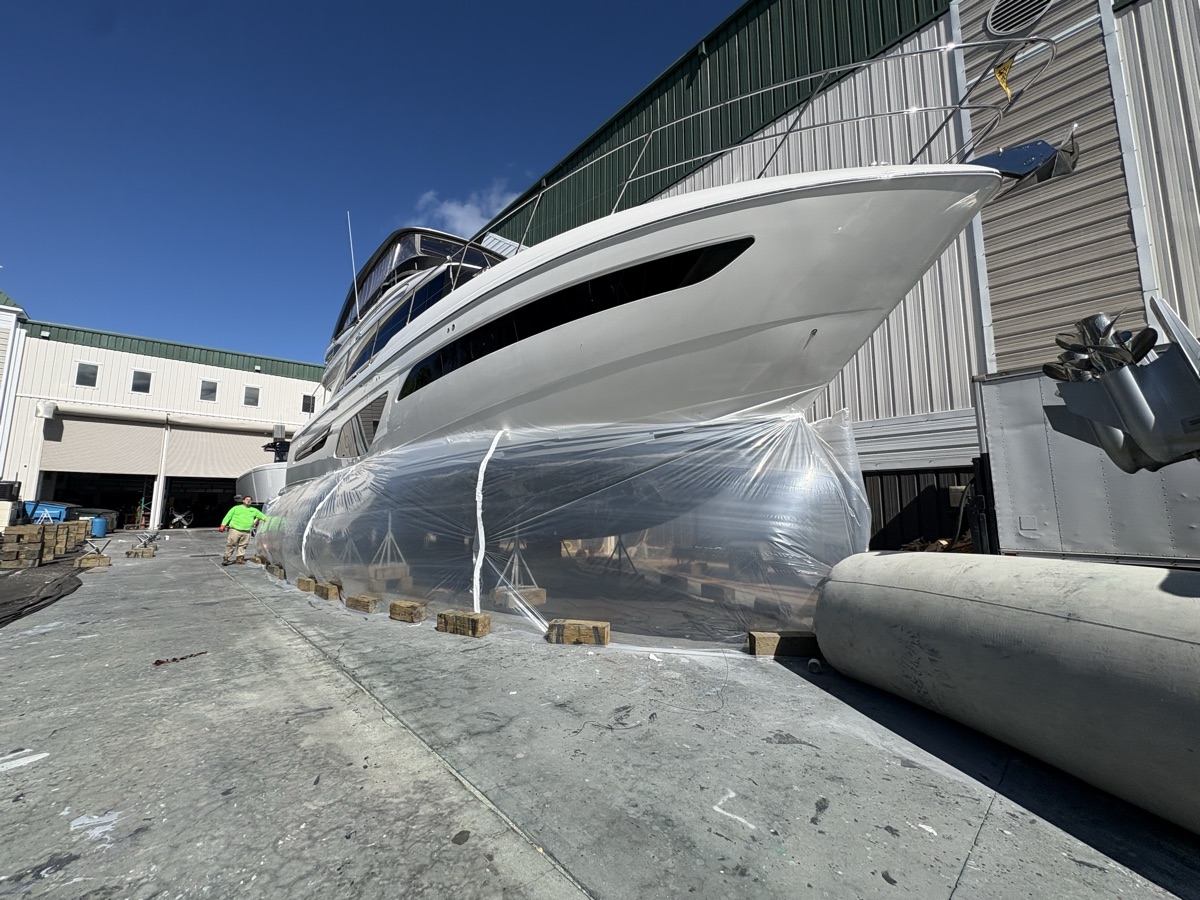
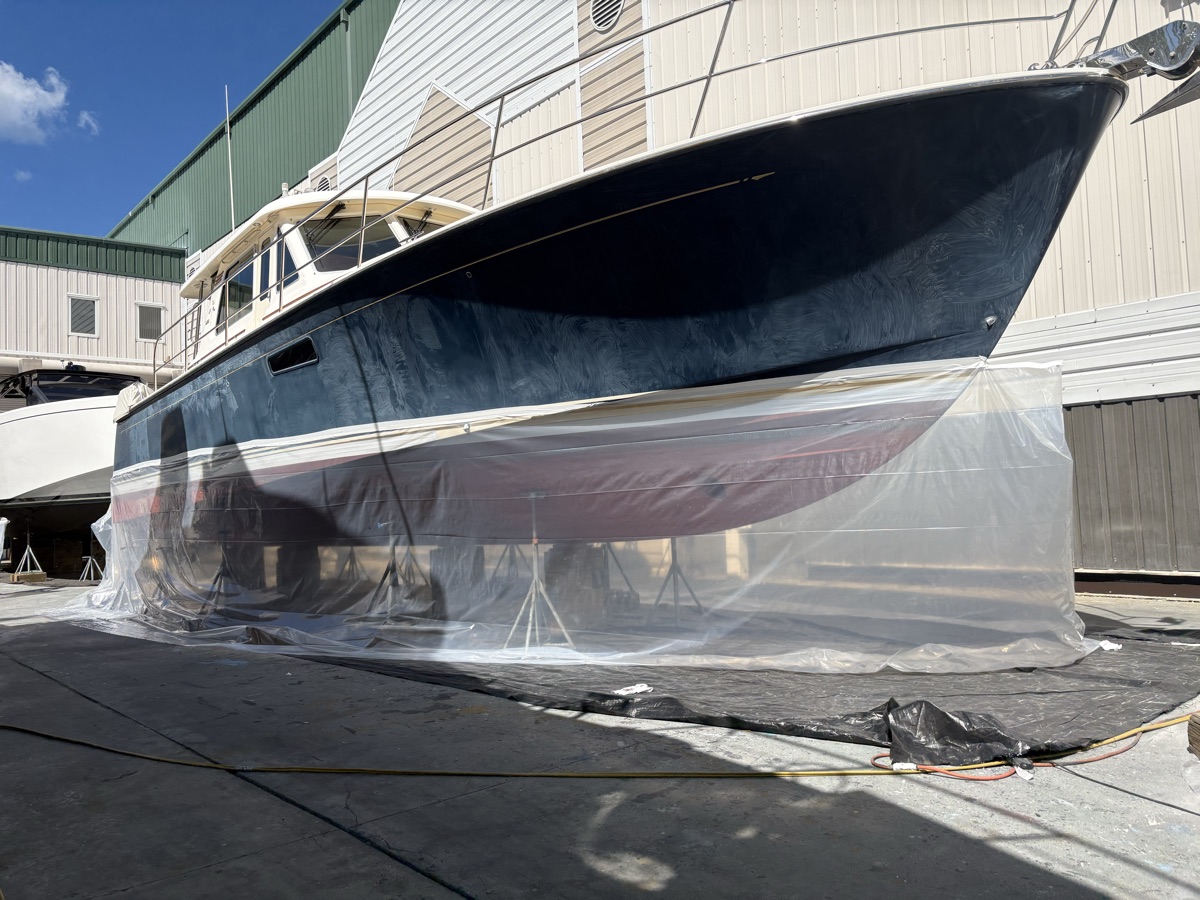
Boat hull masked and draped, prepped for bottom paint removal

Running gear, trailers, davits and lift steel

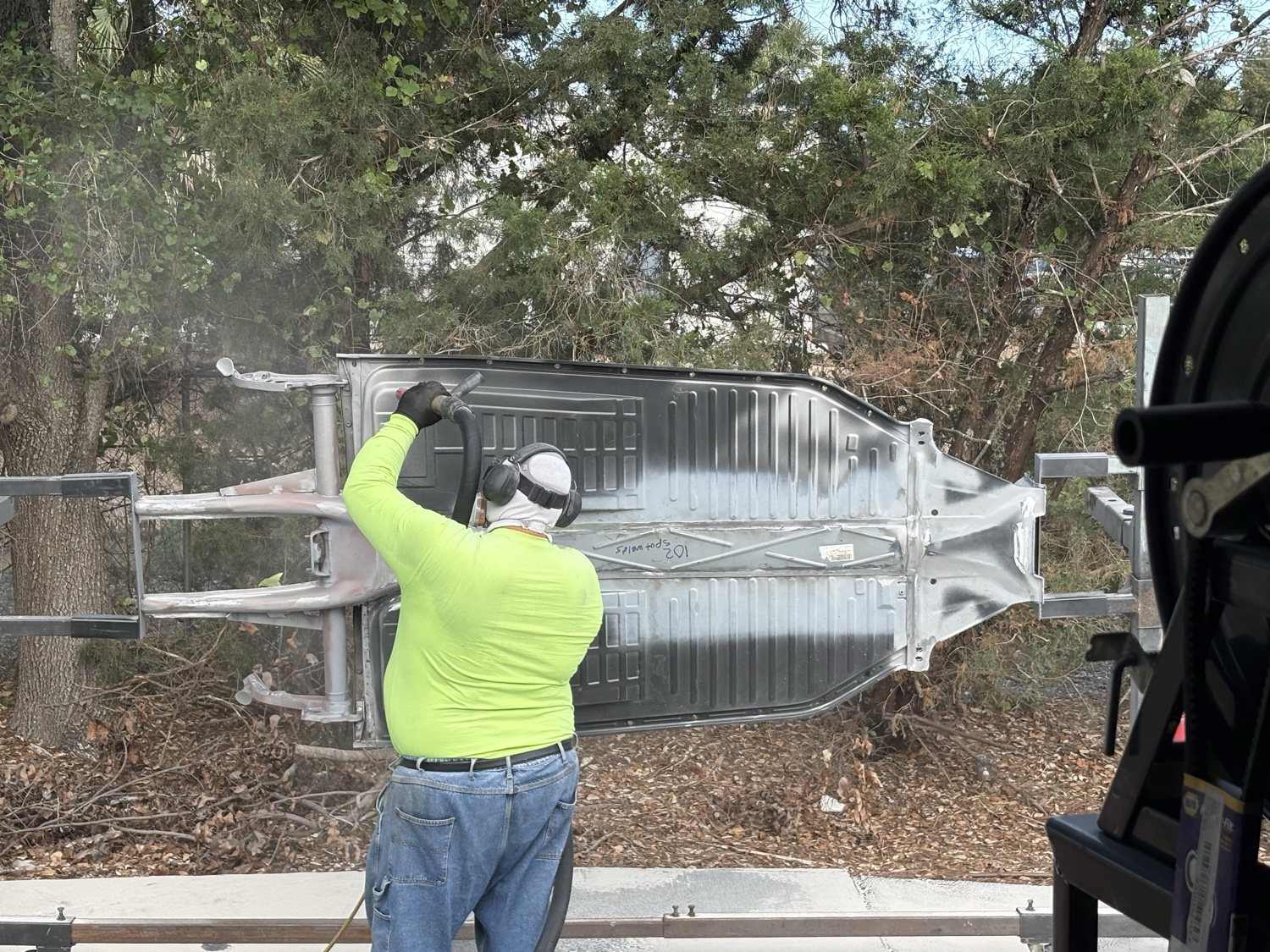
The hull gets the attention and everything else gets ignored until it fails. Props, shafts, struts, rudders and trim tabs come out with growth, old paint and pitting on them, and they take a light hand and a matched media so the surface cleans up without losing material. Outboard brackets, jack plates, hatches and deck hardware clean up the same way.

Trailers live a harder life than the boats they carry. Every launch dunks the frame, the springs, the hangers, the bunk brackets and the wiring in salt water, and coastal trailer steel rots from the inside of the tubing outward. We blast a frame down to metal, and the same setup can cover a utility trailer or a truck undercarriage while we are already there. See rust removal and rust removal on trucks and trailers in coastal Florida.

Then there is the hardware that comes with a canal house: lift beams, cradle steel, walkway framing, davits, railings, ladders and every bracket holding those things up. We work the structural steel and the hardware and stay off the motors and gearboxes. Aluminum sitting in that mix needs a softer media than the steel next to it, which is the point of blasting aluminum versus steel.
  • Props, shafts and struts
  • Trailer frames and springs
  • Davits and lift beams
  • Aluminum towers and rails
  • Railings, ladders, brackets

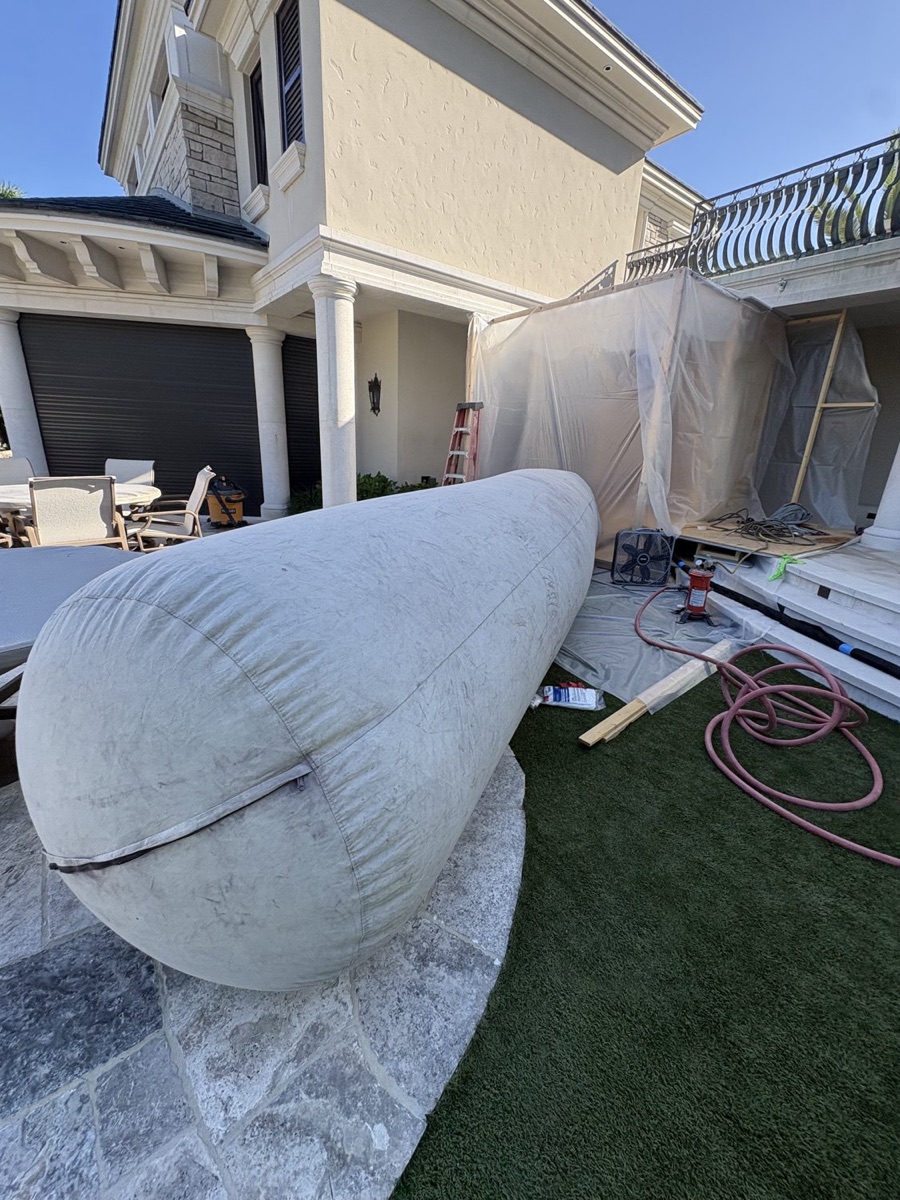
Getting a blast rig into a Marco Island driveway

Marco lots are tight. Setbacks are short, driveways are sized for the house and not for a rig plus a boat on a trailer, and the side yard between the house and the neighbor is often the only way to the back. The boat itself is usually behind the house on a lift over the canal, with a pool cage and a deck between it and the street. All of that is workable. All of it is worth talking through before the day of the job rather than during it.

What we look at on the estimate: where the rig can park and how far it is from there to the work, whether the boat comes down on the lift, stays up, sits on its trailer in the driveway or gets hauled to a yard, how the area gets contained, and what has to be covered. Work over water gets drapes and drop cloths under it so media and coating chips are collected instead of going into the canal, and pool cages, decks, seawalls and neighboring boats get masked. Wet and dustless setups earn their keep on a lot this size, and there is more on that at dustless blasting on Marco Island.

If your building or dock association wants the work described in advance, say so at the estimate and we will put the surfaces, the media and the containment in writing so you have something to hand over.

  • Where the rig parks
  • Lift, driveway or yard
  • Containment over water
  • Cage, deck and dock masking
  • Media collected and hauled
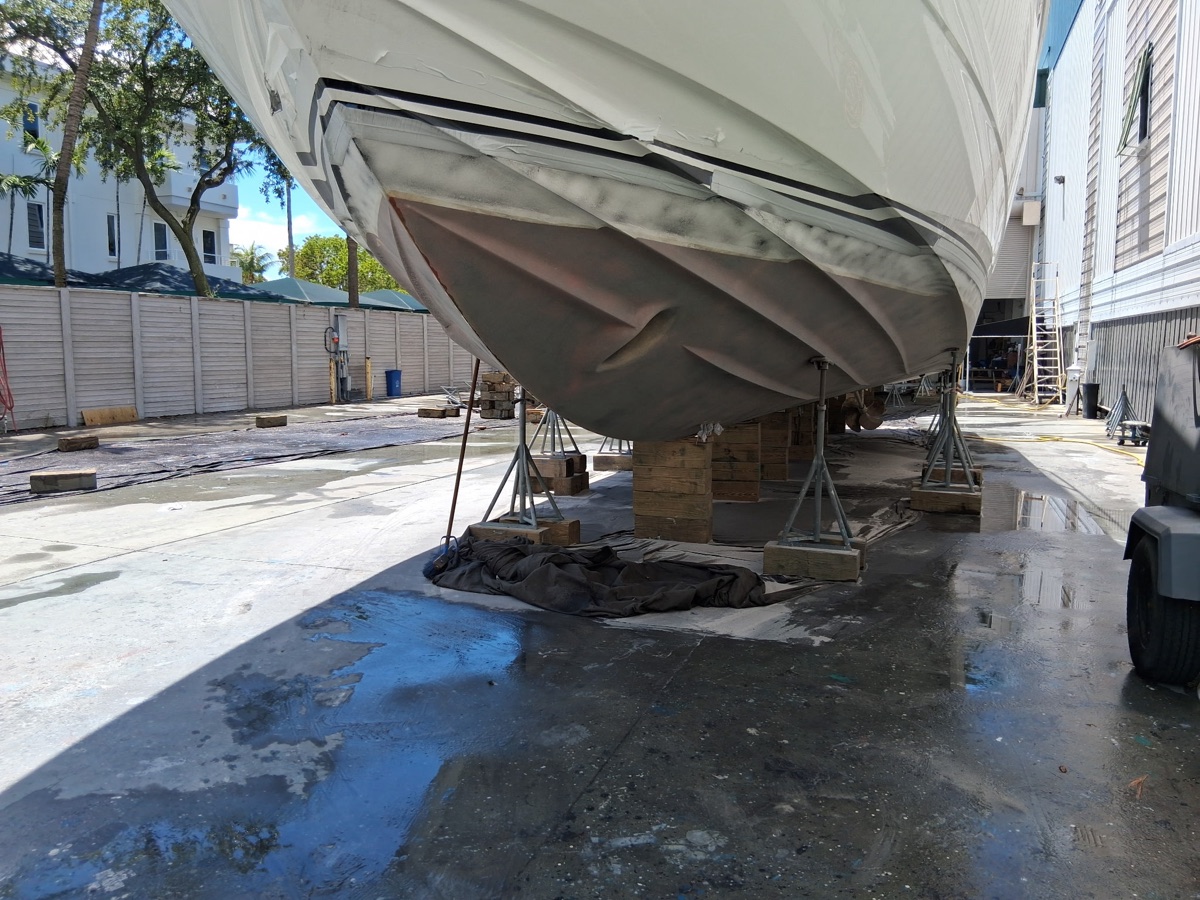
Boat bottom stripped down, hull up on stands with drop cloths spread underneath in a boatyard

Blast it, prep it, coat it before the salt comes back

Nothing stays clean on this island. Bare steel flashes rust in island air quicker than most people expect, and a stripped hull sitting open collects dust, moisture and whatever the weather does next. So the coating is not a separate project to schedule later. It gets planned alongside the blasting, and the window between the two is part of the job.

We can hand the piece back bare and ready for your yard, your painter or your bottom paint crew, or carry it through and coat it ourselves while the surface is still clean. That is what blast it, prep it, coat it means, and the coating half is your call. Profile matters here too. Too smooth and a coating has nothing to hold, too aggressive and a thin product cannot cover the peaks, so the media and the pressure get set around the finish that is going on.

What the estimate weighs on a Marco Island job: the size and type of hull or the piece in front of us, how many layers are on it, how much rust or growth there is, how the site gets accessed and contained, and whether coating follows. We do not quote a boat we have not seen. Call or text (239) 227-1768 for a free on-site look, or see the full Marco Island page and our services.

Motor yacht bottom stripped clean and ready to coat
Where we work

Find us & our service area

Based in Naples and mobile across Southwest Florida — we bring the rig to your home, marina, yard or job site. Call or text (239) 227-1768.

Questions

Good to know

We come to it. The rig is fully mobile, so we work in the driveway, on the trailer, in the side yard, at the lift behind the house, or at the yard where the boat is already hauled out. Tell us where the boat sits and where a truck can park on your street, and we will tell you at the estimate whether it can be worked in place.

No. Bottom paint removal is one job inside marine blasting. The broader category covers topsides and gelcoat, running gear, trailers, aluminum, davits, lift steel and dock hardware. If the bottom is the problem, go straight to boat bottom paint removal on Marco Island, which deals with layered antifouling and barrier coats specifically.

Not when the media and the pressure are matched to it. Hard grit at high pressure is what burns gelcoat and warps thin aluminum. Soda and the wet dustless setup strip without cutting into the surface or building heat. We test a small area first and read it before running the rest of the hull.

Sometimes, and it depends on the lift, the access and what sits underneath. Work over water needs drapes and drop cloths so media and chips get collected rather than dropped in the canal, and there has to be room to move around the hull. If the setup does not allow it, the cleaner answer is on the trailer or at a yard, and we will say which one we would pick.

Yes. Trailer frames, springs, hangers and brackets, davits, lift beams, cradle steel, walkways, railings and ladders all come back to bare metal and can be coated before we leave. We stay off motors and gearboxes and work the structural steel and hardware around them.

Containment. Drapes, tarps and drop cloths go under and around the work, and the deck, cage, seawall and neighboring boats get covered. Wet and dustless setups keep the material from traveling in the first place. What comes off the boat gets collected and hauled out with us rather than left on the seawall.

It comes down to the size and type of the hull or the piece, how many coats are on it, how much rust or growth is there, how the site gets accessed and contained, and whether you want coating after. We look at the boat in person before quoting anything. Call or text (239) 227-1768 for a free on-site estimate anywhere on Marco Island.

Explore more

Related services

Get started

Ready to strip a hull, trailer or lift steel on Marco Island?

The rig comes to the driveway, the lift or the yard, and the mess leaves with us. Call or text (239) 227-1768 for a free on-site estimate anywhere on Marco Island.

(239) 227-1768Text us
Call Text us