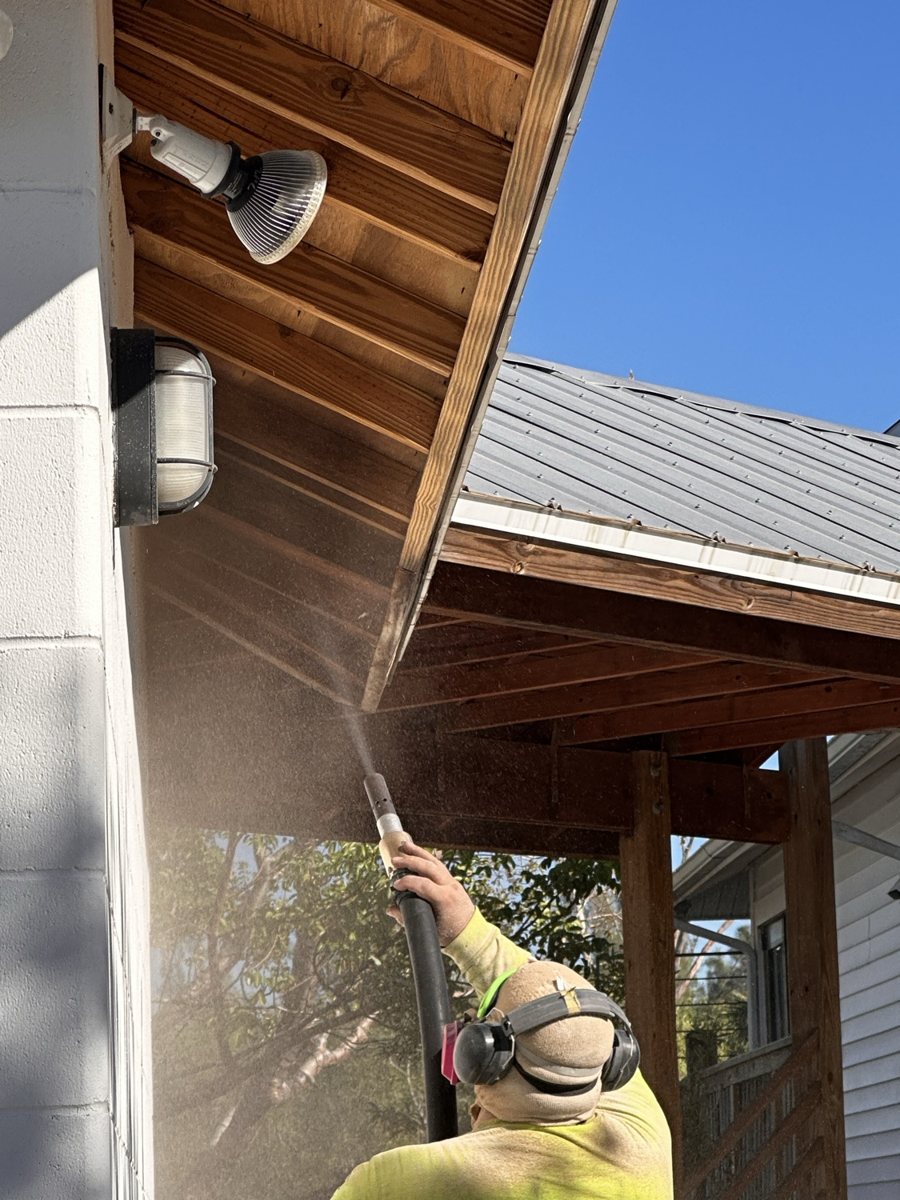
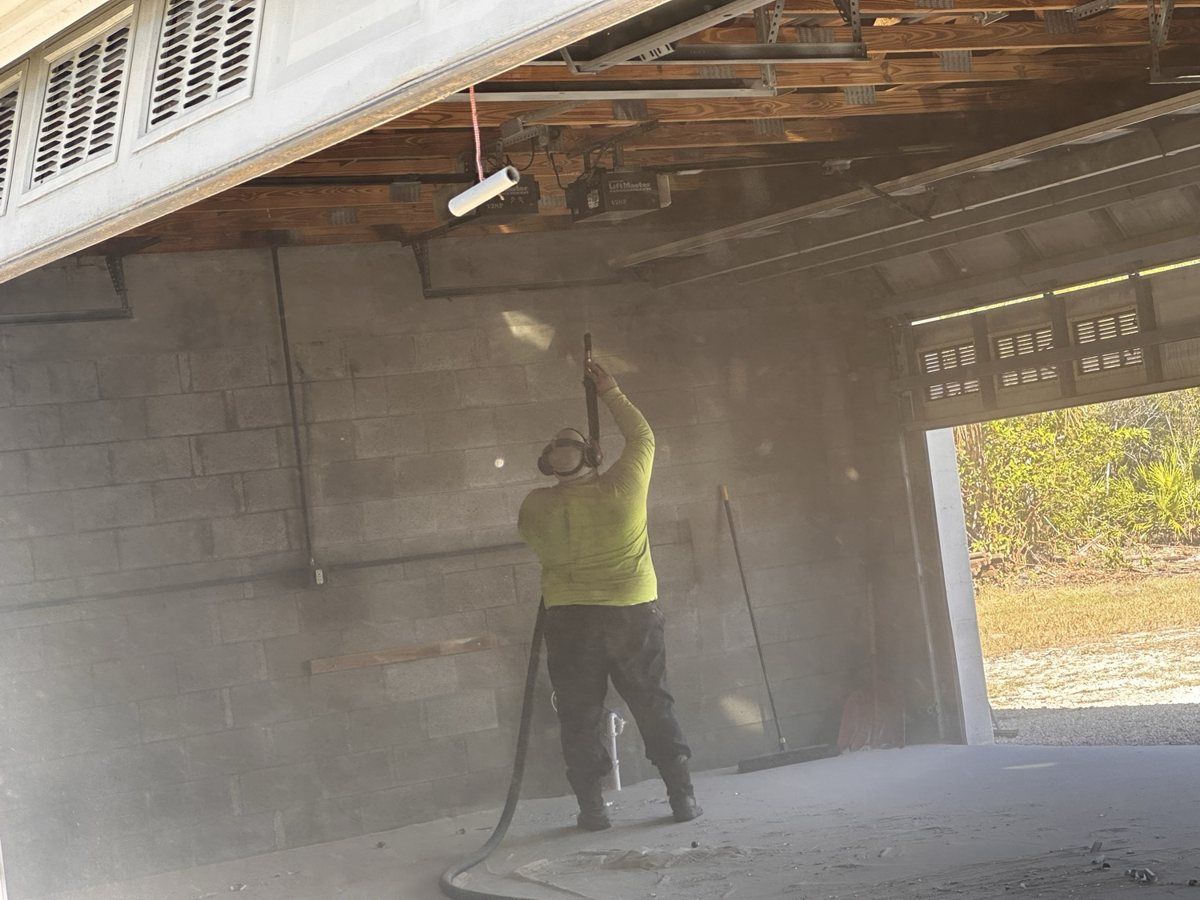
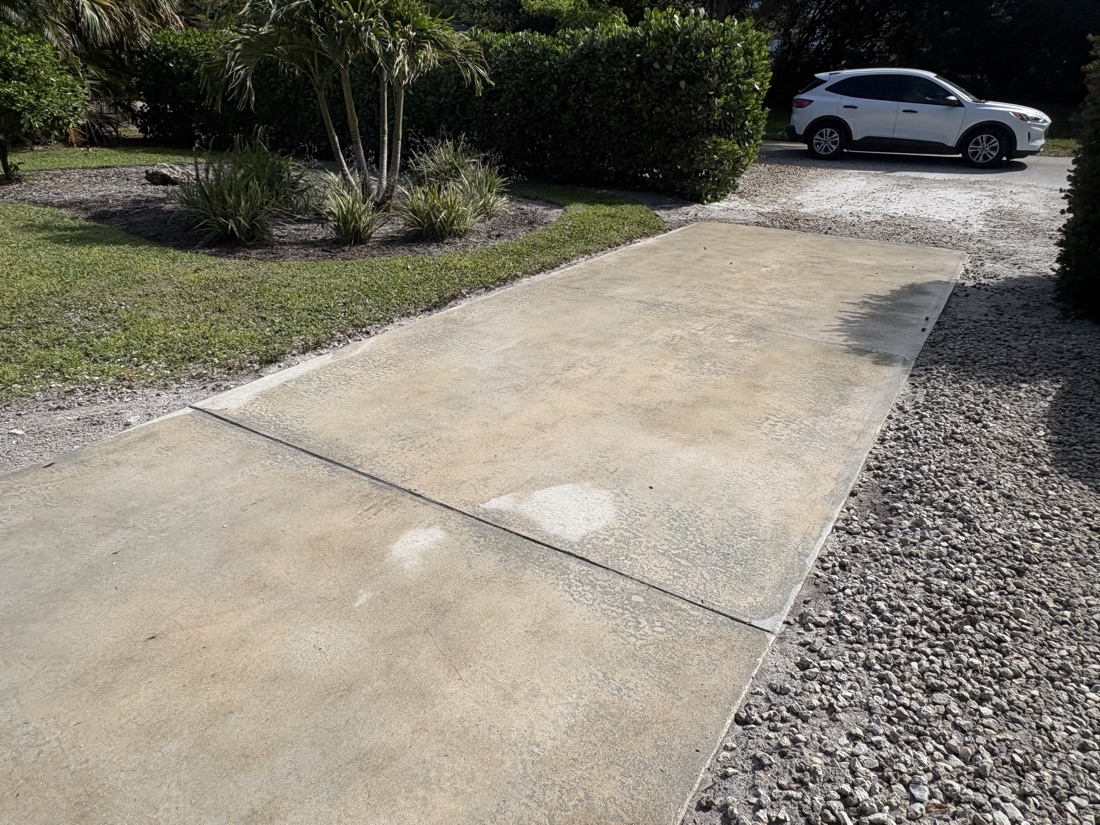
Failed sealer on the paver drive, chalked paint on block, rust weeping from a cage screw. The rig comes to the house, the dust stays contained, and the surface goes back to bare so the next coat has something real to hold.
Bonita Springs built a lot of its newer neighborhoods on pavers, and pavers around here almost always get sealed. The sealer is usually the thing that failed. A few seasons of full sun and afternoon storms later it has ambered, hazed white where moisture worked in underneath, or started lifting in sheets across the parts of the drive that bake all afternoon. Pressure washing does not touch it, because a failed sealer is a plastic film rather than dirt, and re-sealing over the top locks the cloudiness in permanently.
Blasting takes that film off and brings the brick, travertine or shell stone back to its own color and texture. The same pass lifts tire marks, old adhesive, irrigation staining and the grey film on a pool deck that no cleaner has ever fixed. What you get back is a surface an even coat can actually bond to, or a surface you leave bare if you are finished with sealer altogether.
There is a page dedicated to this one job: paver sealer removal in Bonita Springs. The comparison people ask about first is in pressure washing versus media blasting a driveway, and the method itself in how to remove old paver sealer.
Older Bonita sits low and close to the water: the blocks off Old 41 and the streets running back toward Little Hickory Island and the bay. Those houses tend to be smaller and painted block, with metal that has been in salt air a long time and wood that has been out in it longer. The failures there are paint letting go, rust weeping out of fasteners, and finishes that were renewed over the top of older finishes more than once.
The newer side, east toward the interstate and inside the gated communities, is paver heavy and stucco heavy: wider driveways, bigger pool decks, screen cages, outdoor kitchens, and simply more coated square footage per house. Those failures skew toward sealers and coating products that did not survive the exposure rather than toward structural corrosion.
Both get the same plan in outline, remove the failed layer and stop at the substrate, but the media, the pressure and the containment change with the surface in front of us. That is why the estimate happens in person. Quoting off a photo would be guessing at the one variable that decides the whole job.

Concrete block and stucco carry most of the exterior wall area in Bonita Springs, and that wall has usually been painted more than once. When the top layer chalks off on your hand, peels along a parapet, or blisters where moisture pushed out from behind, another coat over a failing one buys a season and hides the problem underneath. Blasting takes the coating off block, stucco, brick and poured concrete and leaves a sound, clean face for whatever system goes on next.
Texture is the honest part of this conversation. Soft block and thin stucco can be cut if the media or the pressure is wrong, and a chewed face cannot be put back afterward. So a test patch goes somewhere out of sight, the setting gets dialed to take the coating and stop, and you see that test before the wall gets run. If a surface should not be blasted at all, we say that rather than trying it and apologizing later.
One thing worth stating plainly on an older house: coatings from earlier decades can contain lead, which is why testing, containment and proper cleanup matter before anyone starts stripping. More on the surface itself in removing paint from concrete, brick and block.

The lanai is the part of a Bonita Springs house that gets used the most and maintained the least. Travertine and paver decking hold a grey biological film that comes back a few weeks after every cleaning. Coping and steps carry old sealer. The tongue and groove ceiling, the beams and the rafter tails over an outdoor kitchen went grey and blotchy years ago. Cage framing and kick plates sit right in the splash zone and take it from both sides.
Blasting resets the deck surface instead of brightening it for a little while, and on the wood we run soda, which lifts finish and weathering without carving into the soft grain the way an aggressive abrasive or a full day of sanding would. Those two jobs often happen on one visit, since the rig is already staged in the backyard.
Pool water, screens and plantings get covered before the first pass, and the enclosure itself decides where work can start and stop. Related reading: restoring a pool deck or lanai by blasting and soda blasting in Bonita Springs.

A Bonita Springs backyard that opens onto a canal or out toward the bay carries a second list entirely. Seawall caps and their coatings. Dock frames, ladders, piling hardware, lift beams and cradle steel. A boat trailer parked along the side of the house with a frame rusting from underneath where nobody looks. Railings, gates and cage framing that starts corroding at the fasteners and works outward from there. Salt reaches every bit of it daily, and corrosion on a coastal lot does not take a season off.
That work happens where the structure stands. The abrasive gets chosen for what it is hitting, so aluminum tube is not dented and stainless does not pick up contamination, and rusted steel gets cut back to sound metal and then protected quickly, because bare steel this close to salt water has a short window. The corrosion side is on rust removal in Bonita Springs.
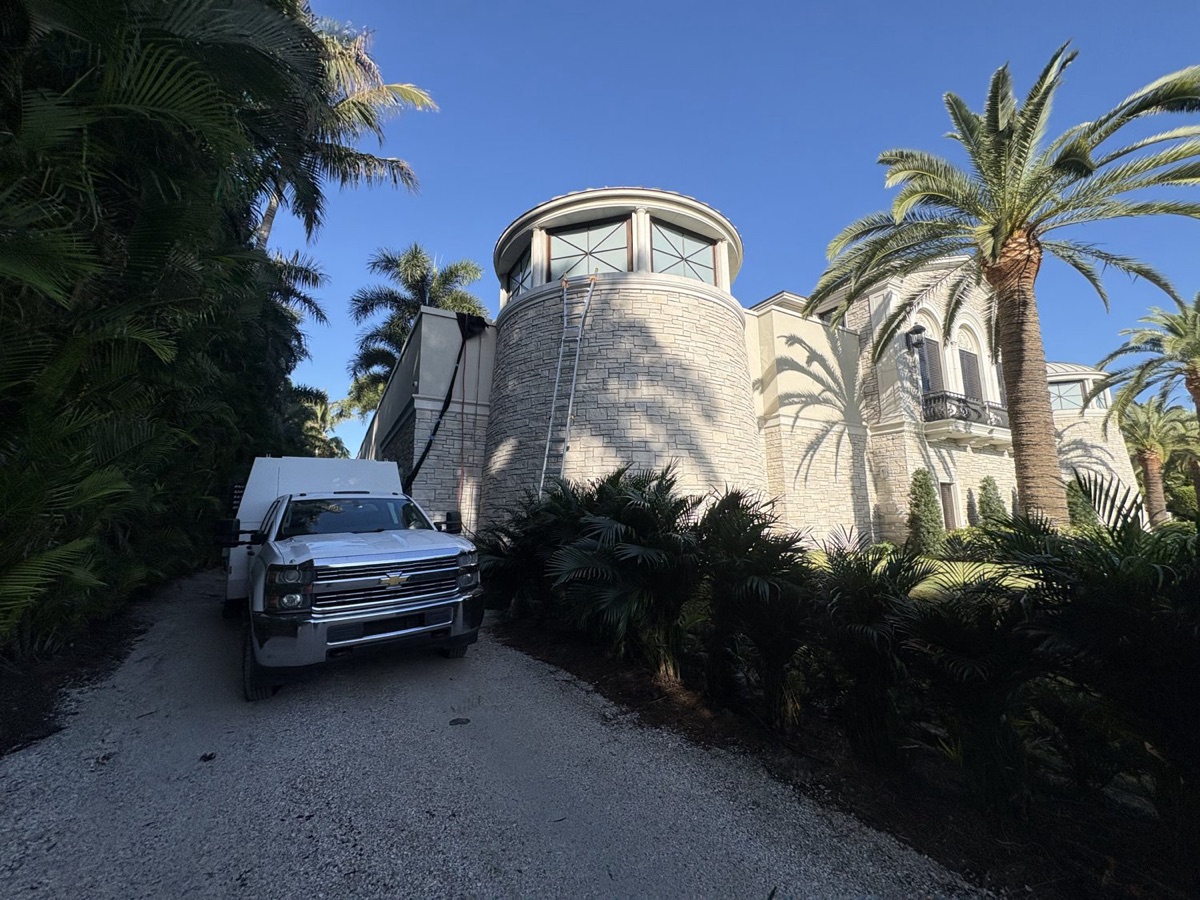
Access is the last piece of the plan. A gated address in Bonita Bay, Pelican Landing or Palmira may call for a vendor pass or an approval step, some associations set contractor hours, and the route to a canal side backyard is often one narrow side yard. Tell us where the truck can stage, whether water and power are available, and how vendor access works. Where dust control is the constraint, see dustless blasting in Bonita Springs, and the town overview lives at Bonita Springs.
Based in Naples and mobile across Southwest Florida — we bring the rig to your home, marina, yard or job site. Call or text (239) 227-1768.
Not when the media and pressure are matched to the stone. The risk is real if they are not, since softer travertine can be etched and a chewed face cannot be undone. So an inconspicuous patch gets tested first, the setting gets dialed to lift the coating and stop at the substrate, and you see that patch before the rest of the driveway or deck gets run. If a surface should not be blasted, we will tell you that up front.
Pressure washing removes dirt, and dirt is not usually the problem here. A sealer that has ambered, hazed or started peeling is a plastic film bonded to the paver, and water pressure will not lift it evenly. You end up with clean cloudy sealer. Blasting removes the film itself and takes the surface back to the paver, which is the only starting point a new sealer coat can bond to properly.
We come to you. The rig is fully mobile and works at the property: driveway, pool deck, lanai, side yard, seawall or dock. Nothing gets loaded up and hauled away. Let us know where the truck can stage, how we reach the back of the house, and whether a hose bib and an outlet are available on site, and we bring the rest. On-site estimates in Bonita Springs are free.
That is the right first question, and it is why the wet and dustless setups exist. They knock dust down at the nozzle instead of letting it drift across the property line. On top of that the work area gets sheeted and screened, the pool, cars, screens and landscaping get covered, and whatever settles gets cleaned up before we pull out. Dry blasting is saved for places that can take it.
Often, yes. Soda blasting lifts old finish, grey weathering and staining off tongue and groove ceilings, beams and rafter tails without tearing at the grain the way an aggressive abrasive would. What comes back is clean wood ready to seal or stain. We look at it in person first, because rot and structural damage are a different problem and no amount of blasting fixes those.
Either way works. Blast it, prep it, coat it is how the business runs, and the coating half is optional. The surface can go back to you bare and ready for your sealer contractor or painter, or we carry it through so protection goes on while everything is still clean. On metal near salt water that second option matters more than most people expect, since bare steel does not stay bare long on this coast.
It comes down to the surface and its condition, how much area there is, how many layers are coming off, how much containment the lot demands, and whether sealing or coating follows. Access counts too, since a canal side backyard behind a gate gets staged differently than an open driveway. We do not quote from a photo alone. Call or text (239) 227-1768 and we will come look at it at no charge.
Driveway, pool deck, painted block, lanai wood or backyard metal, handled at the house with the dust contained. Call or text (239) 227-1768 for a free on-site estimate.
Tell us a little about the job and we'll get right back to you.
Thanks — we'll be in touch shortly to set up your free estimate.