Back-bay water behaves nothing like open Gulf water, and a hull kept on it shows the difference at the waterline first. Marine blasting takes the growth, the stacked paint and the corrosion off without eating the boat underneath.
A boat kept behind Little Hickory Island on Estero Bay lives in a different environment than one running offshore every weekend. The bay is shallow and it warms up, the Imperial River pushes fresh water into the back of it, and the mix of the two is exactly what growth likes. Slime and barnacles build faster in warm brackish water, and a boat that sits more than it runs gives them the time they need.
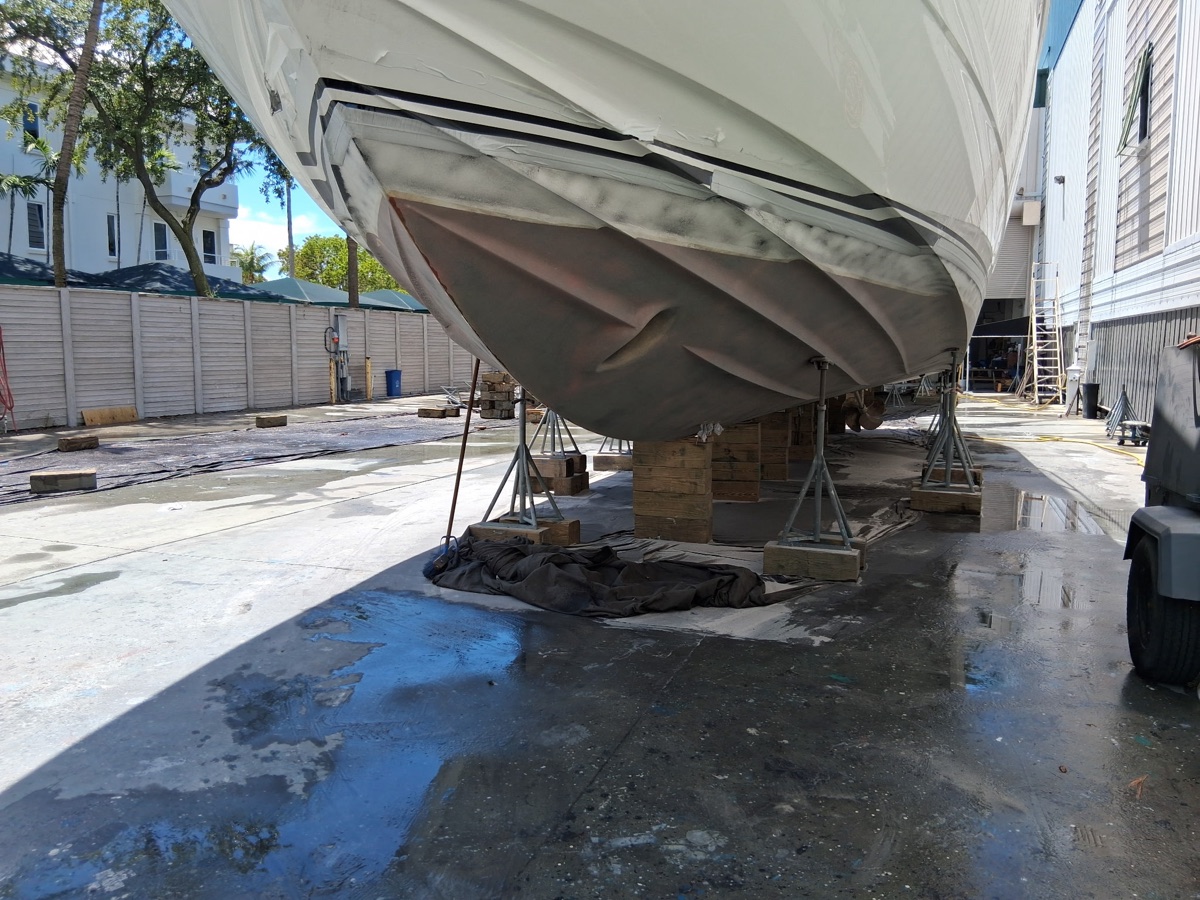
You see it in a sequence. A soft fouling layer first, then hard growth along the running surfaces, then a stubborn stain at the waterline that no amount of scrubbing lifts. Meanwhile the ablative paint underneath keeps getting recoated season after season until the film is thick enough to check and flake, which is the point where new paint stops sticking to anything but old paint.
Marine blasting resets that. Instead of adding another layer over a failing one, the whole stack comes off and you start again on clean, sound gelcoat. Bonita Springs boats that spend their time on the bay tend to reach that point on their own timeline, so the honest answer to when is a look at the hull, not a calendar.
Marine blasting is the broad service: anything on or around a boat that needs coatings, corrosion or growth removed. That includes topsides and hull sides, bare aluminum, steel and outboard brackets, running gear, shafts, struts, trim tabs, hardware, and the trailer or lift that holds the whole thing up.
Bottom paint removal is the specific job inside it, the one where layered antifouling comes off the area below the waterline so a fresh system can go on properly. If that is the piece you actually need, our boat bottom paint removal page goes deeper, and the signs bottom paint needs to come off covers how to tell where yours stands. When new antifouling is going straight back on, prepping a hull for new antifouling explains what the surface has to look like first.
Plenty of boats need both halves in one visit: bottom stripped, then the trailer and the hardware handled while the rig is already set up. Grouping them is cheaper in time than doing them months apart, and it keeps you from staging the boat twice.

Boats are the least forgiving thing we blast, because a hull is a laminate with a thin cosmetic layer over structure that costs real money to repair. The abrasive has to be aggressive enough to break the paint bond and gentle enough to stop at the gelcoat. That is a pressure and media question, not a matter of just going slower.
Baking soda is the soft end, and it suits gelcoat, thin aluminum, outdrives and intricate hardware because it strips a coating without cutting the substrate. Crushed recycled glass and garnet come out for steel, heavy scale and trailer frames where corrosion has real depth. The wet dustless setup earns its keep on the water, since water in the stream keeps the panel cool, drops the dust and knocks paint chips down instead of letting them travel. Soda versus sandblasting a boat hull lays out the tradeoff, and blasting aluminum versus steel covers why the two metals want different treatment.
We test a small area first and check what is under the coating before running the whole hull. If the laminate has previous repair work or soft spots, that shows up in the test patch, and the plan changes right there.

The boat gets all the attention and the steel holding it up gets none, right until something seizes. On a Bonita Springs canal lot the lift sits over salt water every hour of the year: motors, cables, cradles, beams, bunk brackets and fasteners all corroding quietly while the hull above them looks fine. Davits and dock hardware take the same exposure.
Trailers are worse in a different way. Salt gets inside the frame tubes through drains and open ends, so the scale grows outward and the first visible sign is a bubble in the paint over metal that is already thin. Springs, axles, brackets, coupler and fender mounts follow. We blast frames back to clean steel and can prime or coat them before we leave, which matters in this air because bare metal here does not wait politely.
If corrosion is the whole reason you are calling, our rust removal page covers the approach, and rust removal on trucks and trailers in coastal Florida gets specific about what salt does to a frame.
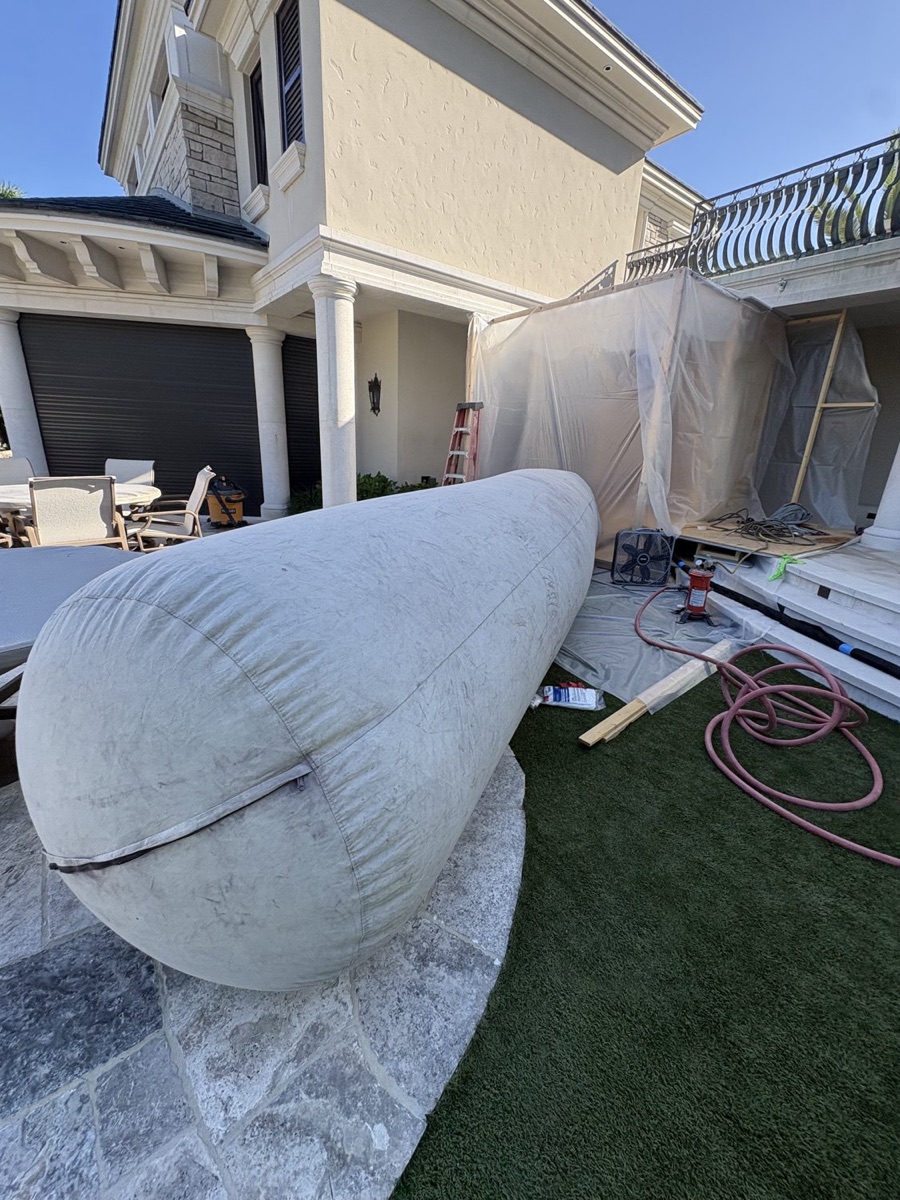
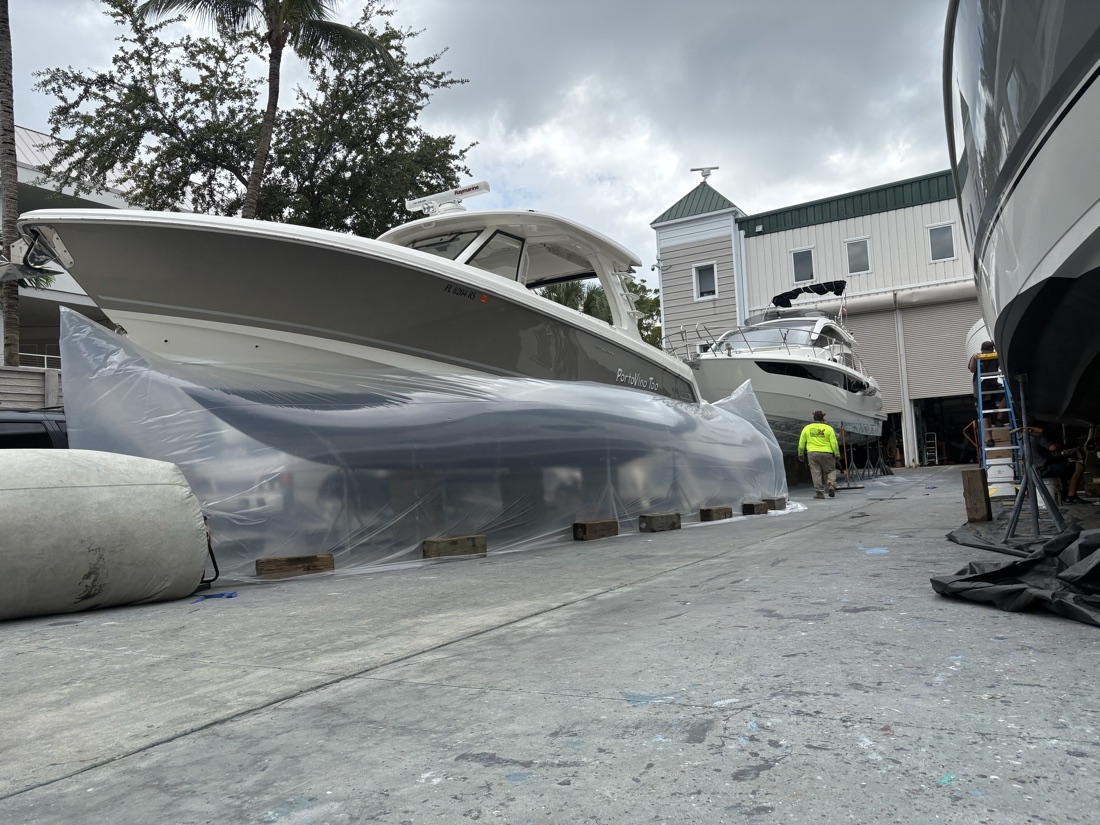
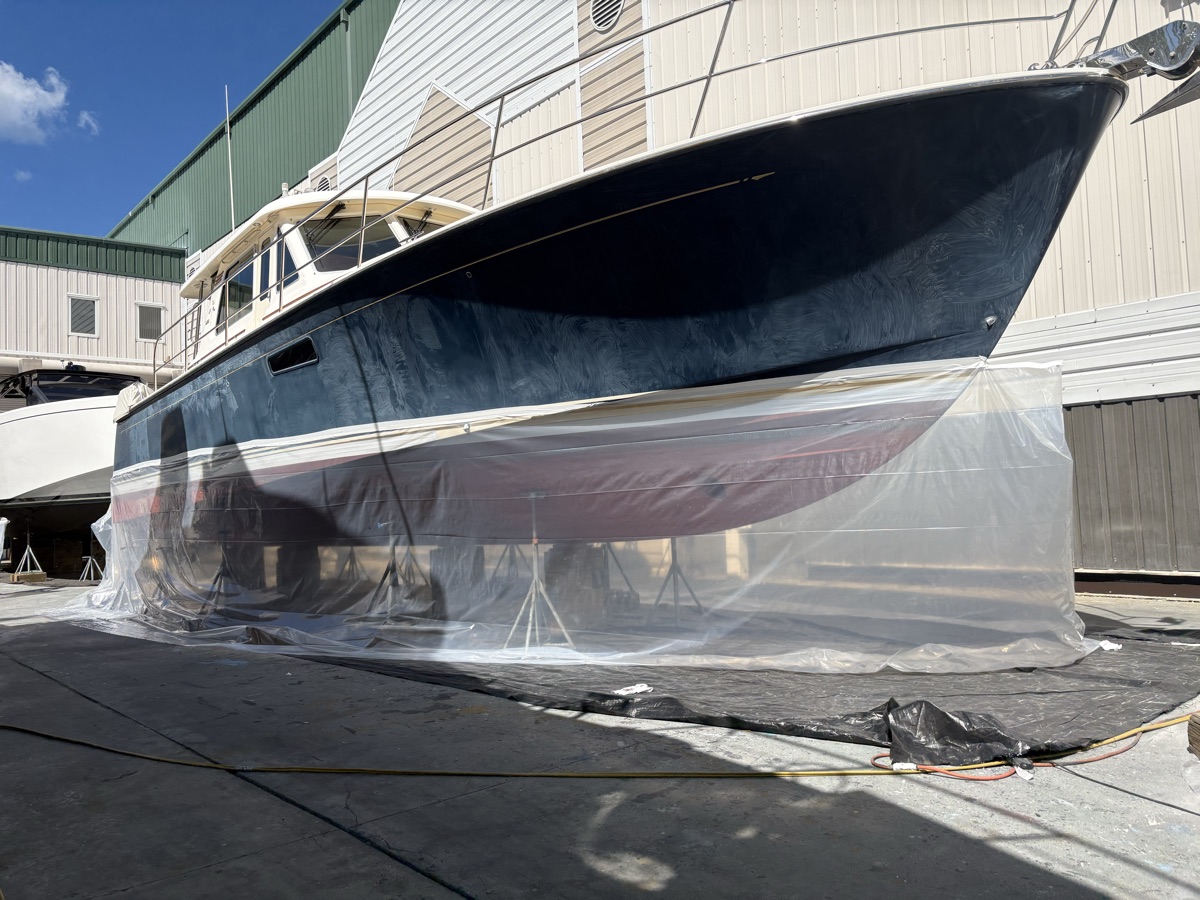
Where the boat sits decides how the day runs. On a canal or bay-front lot in Bonita Springs the work is in the backyard with open water right there, so containment gets planned before anything else: drapes and masking around the hull, drop cloths under it, and the wet dustless setup so media and chips drop where we can collect them rather than going in the canal. In a gated community, give us the gate procedure and any association hours up front so the truck is not stuck at the entrance.
On a trailer in the driveway it is simpler, though tight lots and mature landscaping near the Imperial River and the older streets off Old 41 still shape where the rig parks. In a yard or dry storage, the facility usually has its own rules about containment, tarping and cleanup, and we work to whatever they hand us. We are licensed and insured and will put the surfaces, media and containment plan in writing if a yard or a board asks.
We need access, room to stage, a path to the hull, water and power. Cost depends on hull length, how many layers are coming off, what shape the gelcoat is in underneath, access and containment, and whether coating follows. Estimates on site are free. Call or text (239) 227-1768, or see the rest of what we do around Bonita Springs and how the same work runs on our Naples marine blasting page.
Based in Naples and mobile across Southwest Florida — we bring the rig to your home, marina, yard or job site. Call or text (239) 227-1768.
We come to the boat. The rig is self contained and sets up in the backyard, the driveway or a yard slot, so the boat does not have to be hauled somewhere just to be stripped. What we need to know first is how the boat is supported, how close the water is, and whether a truck can get to it. If a lift or stands make the bottom unreachable, we will tell you that on the estimate rather than on the day.
Bottom paint removal is one job inside marine blasting. Marine blasting covers hull sides, aluminum, steel, running gear, hardware, trailers and lift components as well. Bottom paint removal is specifically the layered antifouling below the waterline coming off so a new system can go on clean. Many boats need both in the same visit. See boat bottom paint removal for the narrower version.
Not when the media and pressure are right, and that is the entire skill of hull work. Soda and wet dustless sit at the gentle end of the range specifically so coatings release before the gelcoat gives up anything. We test a small area, look at what is under the paint, then run the hull. If we find soft laminate or previous repairs, we adjust or stop and tell you what we are seeing.
Containment comes first on a waterfront lot. The hull gets draped and masked, drop cloths go underneath, and we run the wet setup so spent media and chips fall instead of drifting. We plan where rebound lands before the first pass and we collect what comes off rather than leaving it in the grass. On a windy day we will reposition or reschedule rather than blast toward open water.
Yes, with the right media. Aluminum is soft and thin sheet warps if it gets hot, so it gets soda or a wet dustless approach rather than an aggressive cutting abrasive. Bare aluminum also wants a specific profile if it is going to be coated afterward. Blasting aluminum versus steel covers the difference in more detail.
Yes. Shafts, struts, rudders, trim tabs, brackets, outboard mounts and through hull hardware all get the same treatment as the hull, matched to the metal they are made of. Small intricate pieces usually get soda so threads, edges and castings are not chewed. Tell us what is coming off the boat before the day so those items are set out and ready when the rig arrives.
We quote after we look, never before. The number moves with hull length, how many layers of paint are stacked on it, what condition the gelcoat is in underneath, how much hardware and trailer work comes with it, how tight the access and containment are, and whether you want it coated after the strip. On-site estimates are free. Call or text (239) 227-1768 to set one up.
We bring the rig to the canal lot, the driveway or the yard. Call or text (239) 227-1768 for a free on-site estimate in Bonita Springs.
Tell us a little about the job and we'll get right back to you.
Thanks — we'll be in touch shortly to set up your free estimate.