Everything on the island arrived over the causeway, including your equipment. We bring the rig instead, strip the asset where it already sits, and can put the coating on before we leave, so nothing makes the run up Collier Boulevard twice.
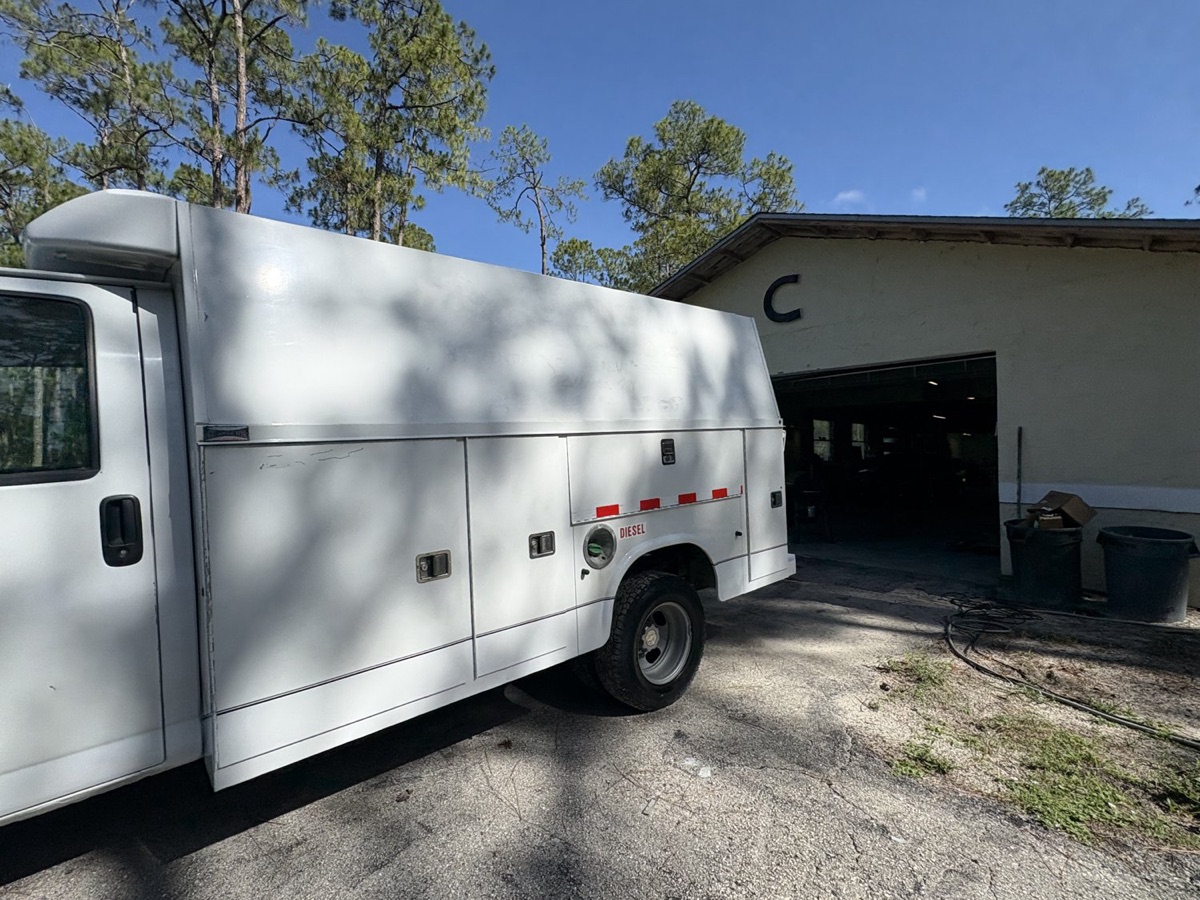
SWFL Media Blasters handles commercial blasting on Marco Island, where the geography changes the math before anyone talks about media. Everything on the island came across the causeway: the excavator behind a site fence, the box truck in a plaza lot, the steel in a stairwell, the lift and davit hardware behind a waterfront property. Sending an asset back off the island for surface work means a trailer both directions, a slot in somebody else's schedule, and equipment earning nothing while it waits its turn. Our rig is mobile, so the work happens where the asset already stands, containment goes up around it, and a coating can follow on the same visit. Licensed and insured, working Collier County since 2015. Call or text (239) 227-1768.
Marco Island has no industrial park, so commercial blasting here looks nothing like it does at an inland yard. The caller is usually a condo or homeowners association, a property manager, a hotel or restaurant, a marina or waterfront business, a contractor working a job on the island, or a service company whose trucks and trailers are based here. The assets follow from that: association steel, hospitality metal, dock and lift structure, machines staged on an active site, and fleet vehicles that run the island and the bridge.
What all of it has in common is occupied property. There is rarely a spare back lot to work in. A stairwell belongs to residents, a parking lot belongs to customers, a dock belongs to somebody's boat, and Collier Boulevard traffic runs past a good share of it. So containment gets settled first, staging second, and the surface work comes after both of those are worked out with whoever manages the property.
The service overview is on the commercial blasting page, and the island itself is covered at Marco Island.
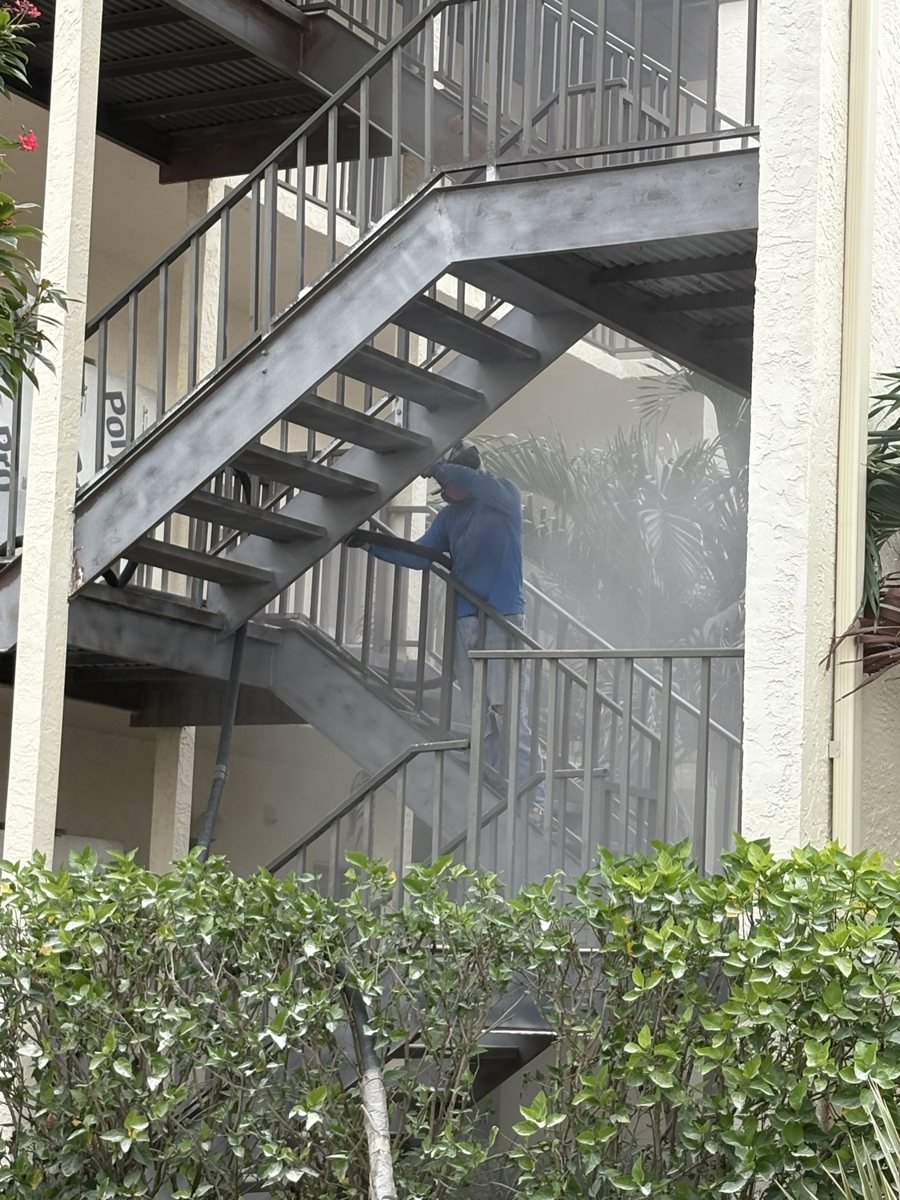
Marco Island is dense with condo buildings and association managed property, and corrosion in those buildings begins in the same places every time: exterior stair stringers and treads, guardrails and handrails, balcony framing, walkway and canopy structure, gates and gate posts, bollards, equipment screens and pool enclosure steel. Anything the island breeze reaches corrodes. Anything the irrigation also soaks corrodes faster than that.
Blasting steel on occupied property is a containment problem before it is a surface problem. The work area gets screened and covered, the rig stages away from where residents and guests walk, and media gets recovered instead of left in the landscaping and the parking lot. Where dust is the deciding factor, the wet setup knocks the cloud down at the nozzle, which is covered on dustless blasting on Marco Island. Heavier sections and old industrial coatings usually call for the dry side of the rack, on sandblasting on Marco Island.
Two questions get settled at the walk through: how much of the steel is still sound under the rust, and what coating is going back on it. Profile follows the coating rather than the other way around. Background is in structural steel prep and surface profile.

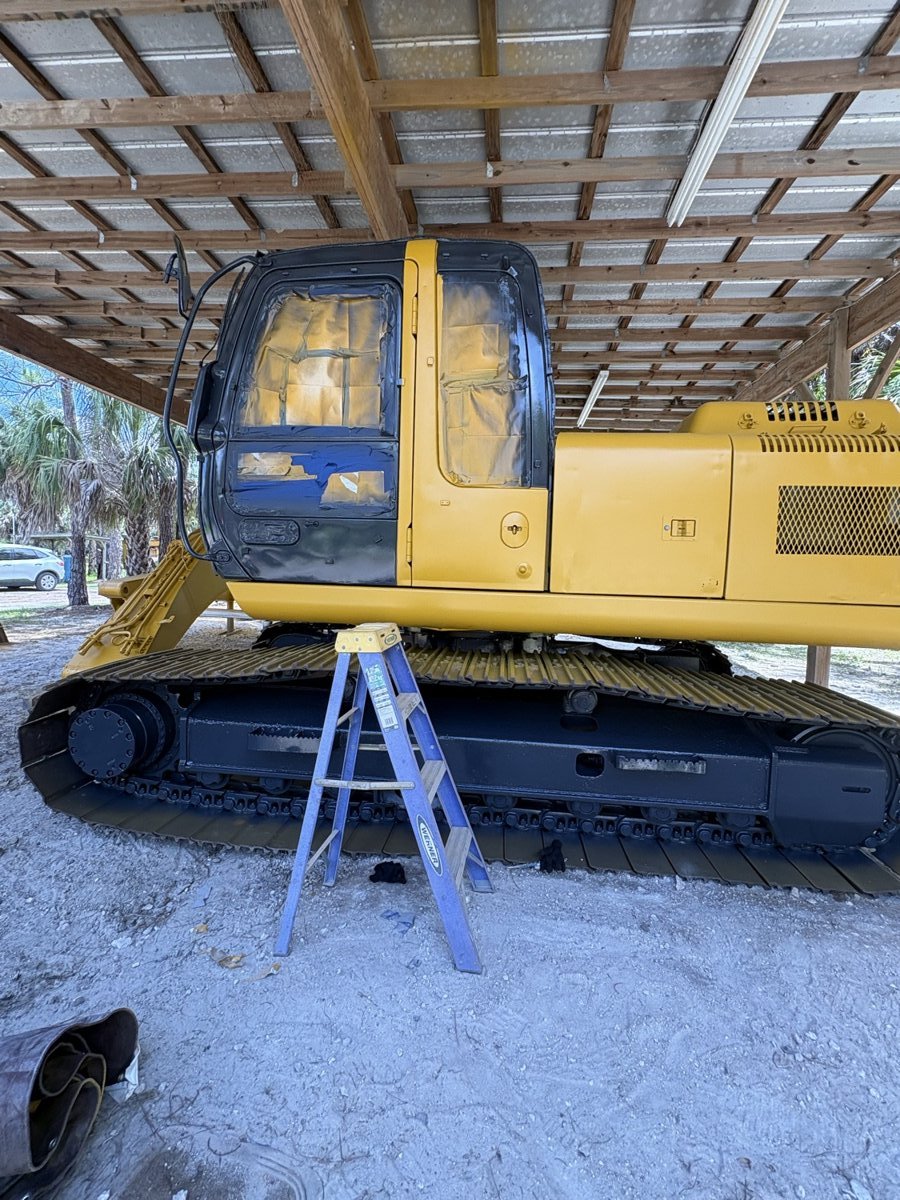
A machine that came over the bridge for a Marco Island job is expensive to send back across it for surface work. Excavators, skid steers, loaders and compactors, plus the attachments hanging off them: buckets, thumbs, forks, breakers and augers. Coatings on that gear do not fail gracefully. Sand and shell abrade the paint, leaking hydraulic film traps grit against the metal, and island air finishes whatever the jobsite started.
Fleet is the same story on wheels. Service bodies, box trucks, dump bodies, landscape rigs, utility and gooseneck trailers, and work vans wearing years of decal adhesive. Trailer frames tend to be the worst of any fleet, since a trailer rides low in the road spray and the underside never gets washed.
The machine or the vehicle gets blasted where it is parked, with containment built around it, and comes back either bare for your painter or carried straight through to a coated finish. The tradeoff is laid out in on-site blasting and equipment downtime and mobile versus shop blasting, with the fleet angle in fleet and trailer restoration.
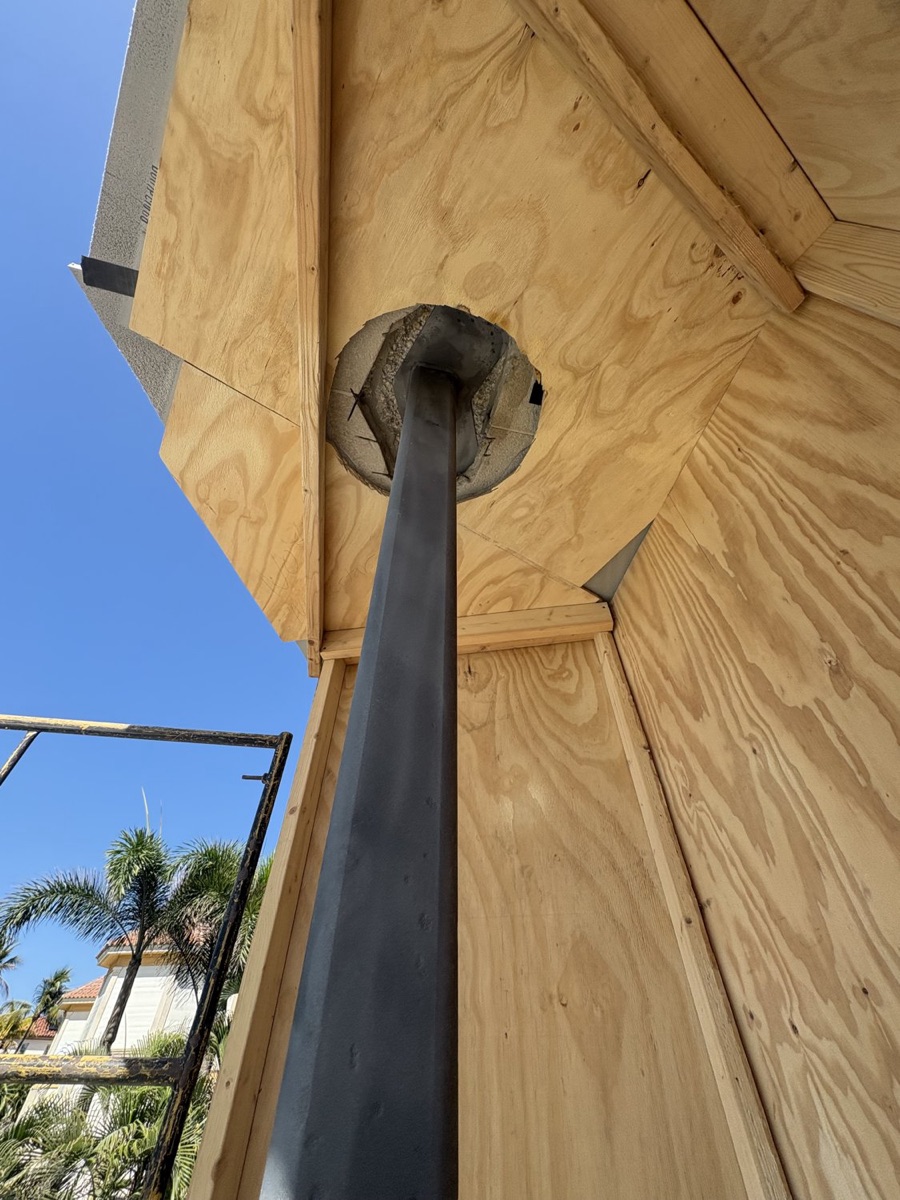
Commercial property on Marco Island runs to the water more often than not. The Marco River, Smokehouse Bay and the canal system put working structure in front of hotels, clubs, marinas and waterfront restaurants: dock frames and gangways, piling hardware, lift beams and cradles, davits, boarding ladders, railings, dock boxes and fuel dock structure. That steel and aluminum lives in spray, and it corrodes on a timetable nobody has to guess at.
Stripping it in place is the entire point. Structure bolted to a seawall is not going anywhere, and a mobile rig means it does not have to. The abrasive gets picked for what it is hitting so aluminum is not dented and stainless does not pick up contamination, and rust gets cut back to sound metal so the next coating has something honest to grip. Corrosion specifics are on rust removal on Marco Island.
Vessels themselves are a separate service with a different process and different constraints, covered at marine blasting on Marco Island. If dust control around a working waterfront is the sticking point, dustless blasting for business explains how that gets handled.
The clock starts the moment a surface comes clean. Salt air and humidity go to work on fresh steel immediately, and a piece blasted and left open across a long weekend is not the same piece on Monday. That is why the strip and the coating get planned as one job here instead of two, and why the coating gets chosen before the first pass rather than after the fact.
Profile is the other half of it. Blasting leaves a peak and valley texture that gives a coating mechanical grip. Too smooth and a high build product has nothing to bite into. Too aggressive and a thin film cannot cover the peaks, so the tips corrode first and the failure starts from underneath while the surface still looks fine on top. Media and pressure therefore get matched to the product going on next, so tell us the system or bring your coatings contractor into the conversation early. More in the industrial coating prep guide.
Scheduling gets the same treatment. Season, tenants, guests, restaurant hours and association access all shape when a rig can be on the property, and early morning or closed day work is ordinary here. Older coatings can also contain lead, which is why testing and proper containment come before anyone pulls a trigger on an aging structure. Blast it, prep it, coat it: on this island the timing between those three decides how long the result holds.

Based in Naples and mobile across Southwest Florida — we bring the rig to your home, marina, yard or job site. Call or text (239) 227-1768.
On site. The rig is fully mobile, so we come to the yard, the lot, the dock or the active job and work the machine, the trailer or the steel where it already sits. Nothing goes on a trailer over the causeway, nothing waits in another shop's queue, and the asset is back in service as soon as we are clear of it. That is the whole reason the mobile model makes sense for island businesses.
Usually yes, with the work area contained and foot traffic routed around it while we are in it. What decides it is how the steel sits, what is under and beside it, and where the rig can stage without blocking residents or guests. Coatings from older decades can contain lead, so testing and proper containment come first on anything with age on it. We walk the property with the manager and say plainly what is workable.
Containment before anything else. The surroundings get screened and covered, the rig stages away from walkways and parking, and media gets recovered rather than left in the landscaping or blown across a neighboring lot. Where dust is the binding constraint we run the wet dustless setup, which suppresses the cloud right at the nozzle. On a tight island property we would rather give up some speed than clean somebody's windshield.
Often, and on Marco Island that is frequently the sensible plan. Early mornings, evenings and closed days mean open parking, an empty walkway and nobody passing the containment. Tell us the windows that work and the schedule gets built around them where the site allows it. Lighting, access and available power sometimes decide it instead, which is part of what the on-site look sorts out.
Either one. Blast it, prep it, coat it is how we are set up, and the coating half is optional. The asset can go back to you bare and ready for your painter or powder coater, or we carry it through so protection goes on while the metal is still clean. Given what island humidity does to fresh steel, the second option takes a real variable out of your schedule.
Whatever the coating specifies. Profile comes out of media choice and pressure, and both get matched to the product going on next, so tell us the system or put us in touch with your coatings contractor. A high build industrial product wants a deeper anchor than a thin finish coat does. There is more detail in structural steel prep and surface profile.
It depends on the size and number of pieces, how heavy the corrosion or coating is, what is underneath it, how much containment the property demands, whether the work runs off hours, and whether coating follows the strip. Access on the island factors in too, since staging space is not a given. We do not quote assets nobody has looked at. Call or text (239) 227-1768 and we will come out and put a real number in front of you at no charge.
We come to the property, contain the work around tenants and guests, and get the asset back in service without a trip over the causeway. Call or text (239) 227-1768 for a free on-site estimate.
Tell us a little about the job and we'll get right back to you.
Thanks — we'll be in touch shortly to set up your free estimate.