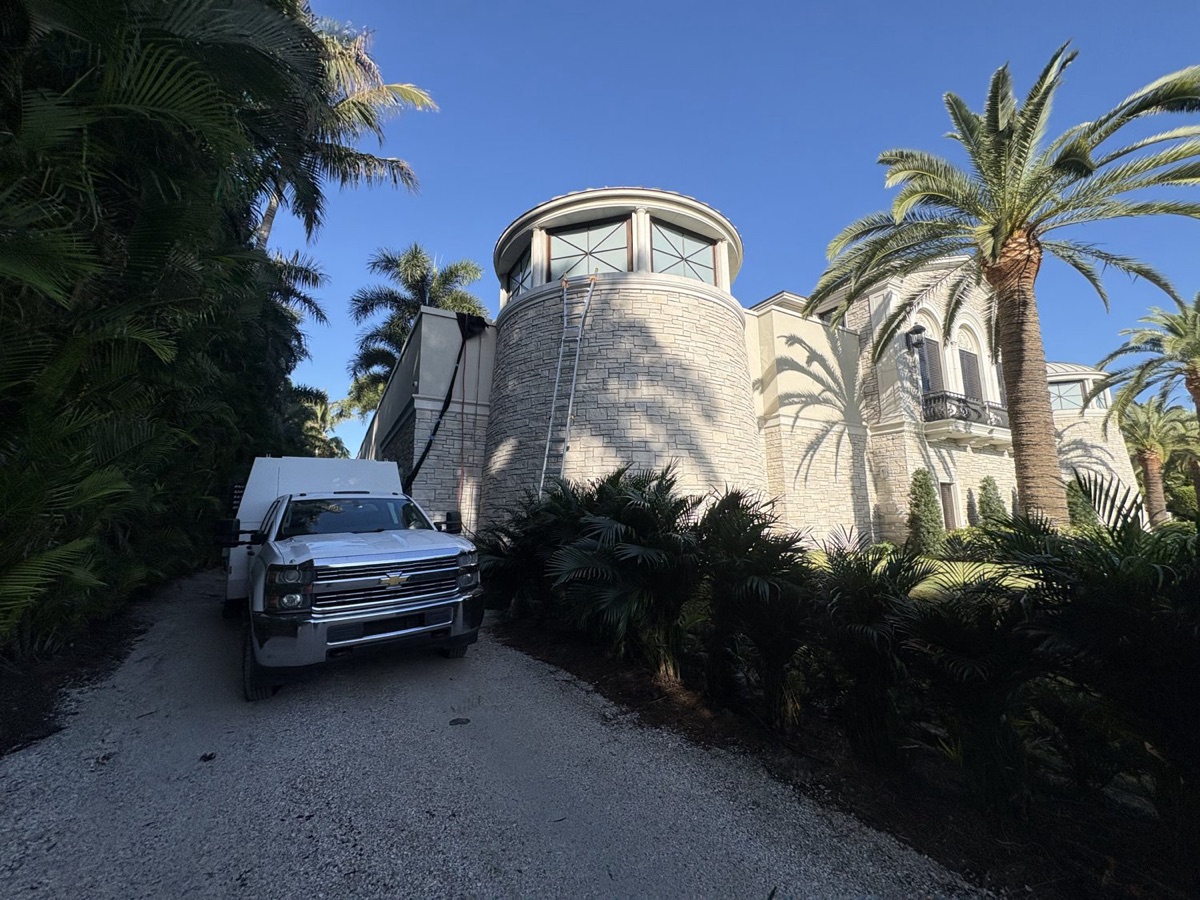
A sealer that has gone white, gone yellow, gone slippery or started peeling in sheets is finished, and a fresh coat on top of it locks the problem in. We take the film off brick pavers, concrete pavers, travertine and shell stone at your house.
SWFL Media Blasters strips failed sealer off driveways, pool decks and lanais on Marco Island and hands the surface back at its own color. Four symptoms send people looking: a milky white haze that no cleaner touches, a film peeling up in sheets or curls, an amber or yellow cast where the sun hits hardest, and a deck that turned slick underfoot. All four mean the coating has broken down, and none of them get fixed from the top. The film has to come off before anything new goes on. We do that at your house, contained, with the mess planned for before the compressor starts. Call or text (239) 227-1768 and we will come look at the surface for free.
The symptom tells you what happened, and it is worth knowing before you spend a weekend on it. Milky white almost always means moisture trapped under a film forming sealer: the surface was sealed while it still held water, or groundwater and irrigation are pushing up through the base, and the water has nowhere to go. Peeling and flaking usually means the coating was built up too thick, or put over a previous coat it never bonded to, or laid over joints that still had growth in them. An amber or yellow cast is the coating itself aging under hard sun. Slippery is a glossy film that has worn unevenly, and around a pool that one stops being cosmetic.
What all four have in common is that the failure is inside the coating, not on it. Marco Island driveways get washed, scrubbed, treated and then re-sealed in that order, and each of those steps works on the wrong layer. Cleaning removes what is sitting on the film. Re-sealing bonds new material to the broken layer instead of to the stone, so the haze is still there, only now it is buried.
Pressure washing gets tried next, and it fails for a different reason: water does not dissolve a cured acrylic or urethane. What it does do is blow joint sand out from between the pavers, chew at soft travertine and shell stone, and force more water into the base, which is often what caused the cloud to begin with. Background: how to remove old paver sealer and pressure washing versus media blasting a driveway.
An island puts everything on the exposed side. The Gulf is west, the Marco River and Smokehouse Bay sit north and east, the canals run behind the houses, and a driveway or pool deck here gets salt on the breeze, full sun most of the year, and a storm most afternoons through the wet season. A coating out in that is being loaded from above the whole time.
It is also being loaded from below, which is the half people miss. Sitting close to sea level near a canal means moisture in the base and a water table that does not stay put. Irrigation and pool splash add more. A film forming sealer is a barrier, so whatever water gets under it has to leave through the joints or not at all, and when it cannot leave it turns the surface white.
Marco Island also has a lot of unshaded hardscape. Short driveways with little tree canopy, west facing pool decks, lanais that catch afternoon glare off the water. Those go first, and they usually go unevenly, which is why a driveway can look fine at the garage and be blown out at the street.

The material decides the approach, and getting that wrong is exactly how a deck gets damaged. Travertine is soft and porous, with natural pitting that holds sealer down inside the holes, so it gets a gentle media and a light touch that lifts coating without opening the stone or dulling a honed face. Shell stone behaves similarly and deserves the same restraint. Clay brick pavers are harder and far more forgiving, and they tend to come back a warm color the owner has not seen in years.
Concrete pavers sit in the middle. They are durable, but the color lives in a thin surface layer, so the work has to stop before the pigment does. Poured and stamped concrete, pool coping and walkways each get their own setting again. We run crushed recycled glass, garnet, baking soda, sand and dustless blasting, and the choice among them is made at your house, on your surface, not from a photo.
So we test a small out of the way patch first, every single time, and you look at it before the rest of the driveway gets run. If a surface should not be blasted at all, we say so rather than try it anyway. See the paver sealer removal pillar and soda blasting for the gentle end of the rack.
Marco Island driveways are short, setbacks are tight, and a big share of the island is built at condo, villa and duplex density where the neighbor's car, screen cage or pool is a few steps from where the rig has to stage. That shapes the job as much as the surface does. Dustless, or wet, blasting knocks the dust down at the nozzle so it drops at the work instead of drifting across a property line, and everything around the work gets masked: pool tile and coping, cage screens, garage doors, stucco, fixtures, planting beds and irrigation heads.
Everything else arrives on the truck. What we need from you is a way in, somewhere to park near the work, and a water source. Collier Boulevard and the causeway approach decide the arrival window rather than whether we come at all. On a long or single access driveway we can work in halves so nobody is fully blocked in, and if your association has quiet hours, contractor rules or a work approval process, tell us at the estimate and we will schedule inside it.
Spent media gets picked up before we leave. That part is not optional on a lot where the next property is that close. The low dust setup itself is explained on dustless blasting on Marco Island.
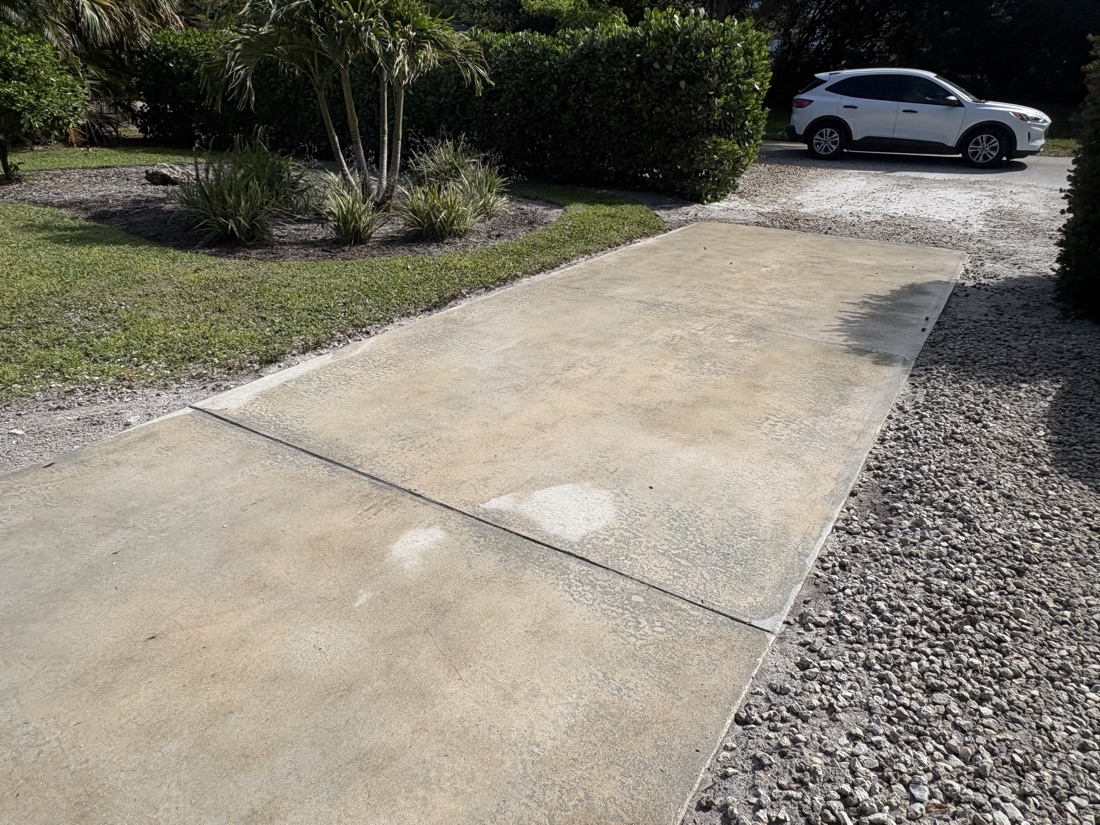
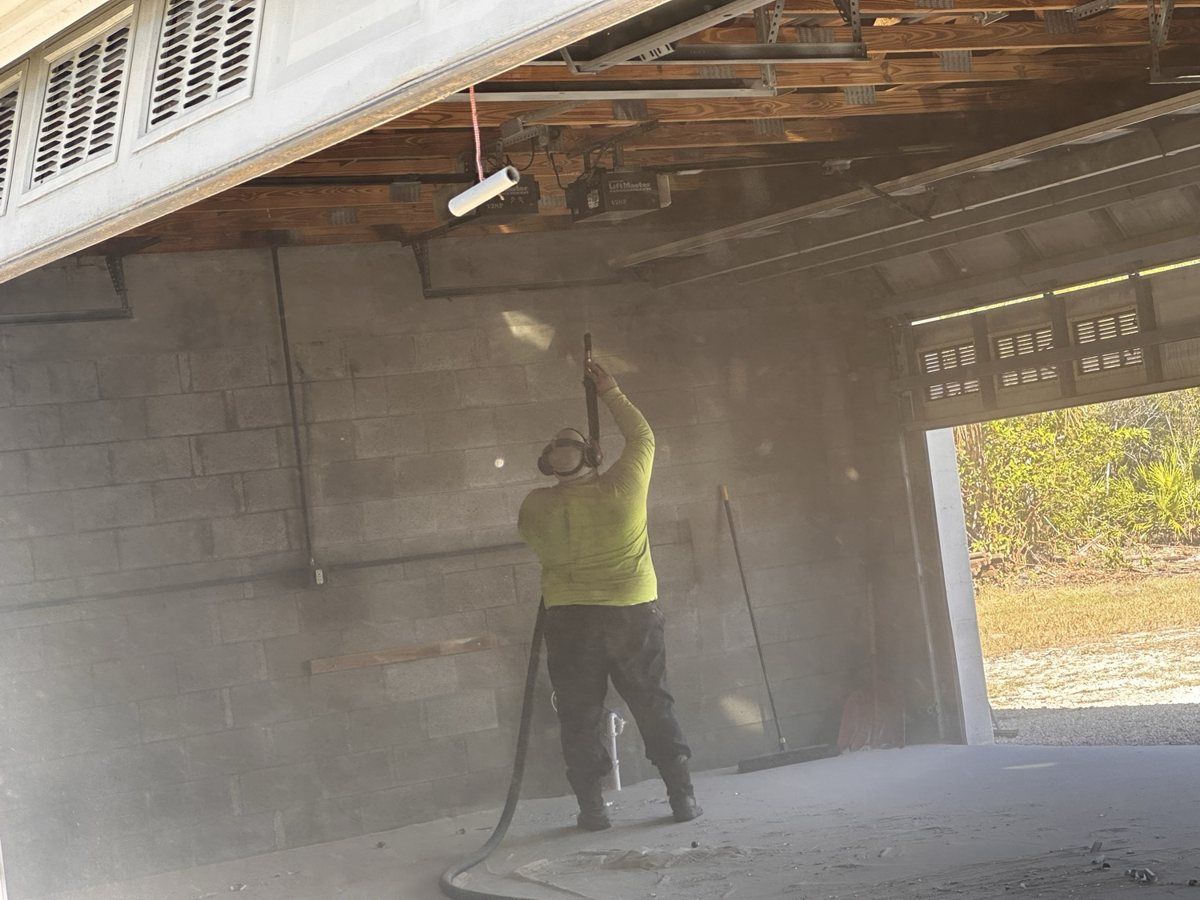
With the film gone, the surface returns to its own color and its texture opens up again instead of living under plastic. Tire marks, dropped paint and overspray, grill and furniture rust staining, irrigation staining and the mold rooted down in the joint lines come off in the same pass. Pool deck haze that no cleaner has ever fixed goes with it.
The joints will give up some sand along the way. That is expected and it is a good outcome, because that sand was holding growth. The correct next step is fresh joint sand on a dry, clean surface, then new sealer applied evenly to bare stone so it bonds to the paver rather than to a dead layer. Getting a surface that dry is easier right after a strip than at any other time.
Stripping and prep are the specialty here. We can hand a Marco Island driveway or deck back bare and ready for your paver contractor, or carry it through to a coated finish ourselves. What the estimate weighs: how much area there is, the material, how many coats have stacked up, how bad the failure is, access and masking, and whether sealing or coating follows. Call or text (239) 227-1768. Related local pages: residential blasting on Marco Island, the Marco Island service list, paver sealer removal in Naples, and restoring a pool deck or lanai.
Based in Naples and mobile across Southwest Florida — we bring the rig to your home, marina, yard or job site. Call or text (239) 227-1768.
Yes, but not from the top down. That milky look is almost always moisture trapped under a film forming sealer, and washing, treating or re-sealing cannot reach it. The failed film has to come off the pavers completely, which also lifts the mold and algae out of the joint lines. What you get back is bare stone at its own color, ready for a fresh, properly applied seal on a dry surface.
Not when the media and pressure are matched to the material. Travertine and shell stone get a gentle setting so the coating lifts without opening the stone or dulling a honed face, and the deck area gets pool tile, coping, cage screens and fixtures masked before anything starts. We test a small hidden area first so you can see the result on your own surface, and if something should not be blasted we tell you rather than find out the hard way.
Pressure washing removes what sits on top of the sealer. It cannot dissolve a cured acrylic or urethane film, and it does real damage on the way: joint sand blown out from between the pavers, soft travertine chewed, and more water driven into the base, which is frequently what caused the cloudiness to start with. Blasting takes the coating itself off along with the growth in the joints.
Stripping and prep are what we specialize in, and we hand the surface back clean, bare and ready for that step. We can carry it through to a coated finish, or work alongside the paver contractor you already use so the re-sand and re-seal happen while the surface is still fresh. Decide at the estimate, because it changes how the day gets scheduled.
That is the right question on a tight island lot, and it is why the wet setup exists. Dustless blasting wets the abrasive right at the nozzle so it falls at the work instead of drifting over a screen cage or onto a car parked a few feet away. We tarp and mask the surrounding area, plan where rebound lands, and pick the spent media up before we go.
Yes. Along with failed sealer we remove dropped paint and overspray, tire marks, grill and patio furniture rust staining, irrigation staining, and the mold and algae rooted in the joints. Painted concrete patios, walkways and pool decks fall in the same category. If something is stuck to the paver, travertine, shell stone or concrete, there is a good chance it can be blasted off.
How much area there is, what the material is, how many coats of sealer have stacked up, how far the failure has gone, how much masking and containment the lot needs, where the rig can stage, and whether you want sealing or coating afterward. That is why we look in person rather than quote from a photo. On-site estimates are free anywhere on the island. Call or text (239) 227-1768.
We are fully mobile, we contain the work on a tight island lot, and we will tell you straight what your surface can take. Call or text (239) 227-1768 for a free on-site estimate.
Tell us a little about the job and we'll get right back to you.
Thanks — we'll be in touch shortly to set up your free estimate.