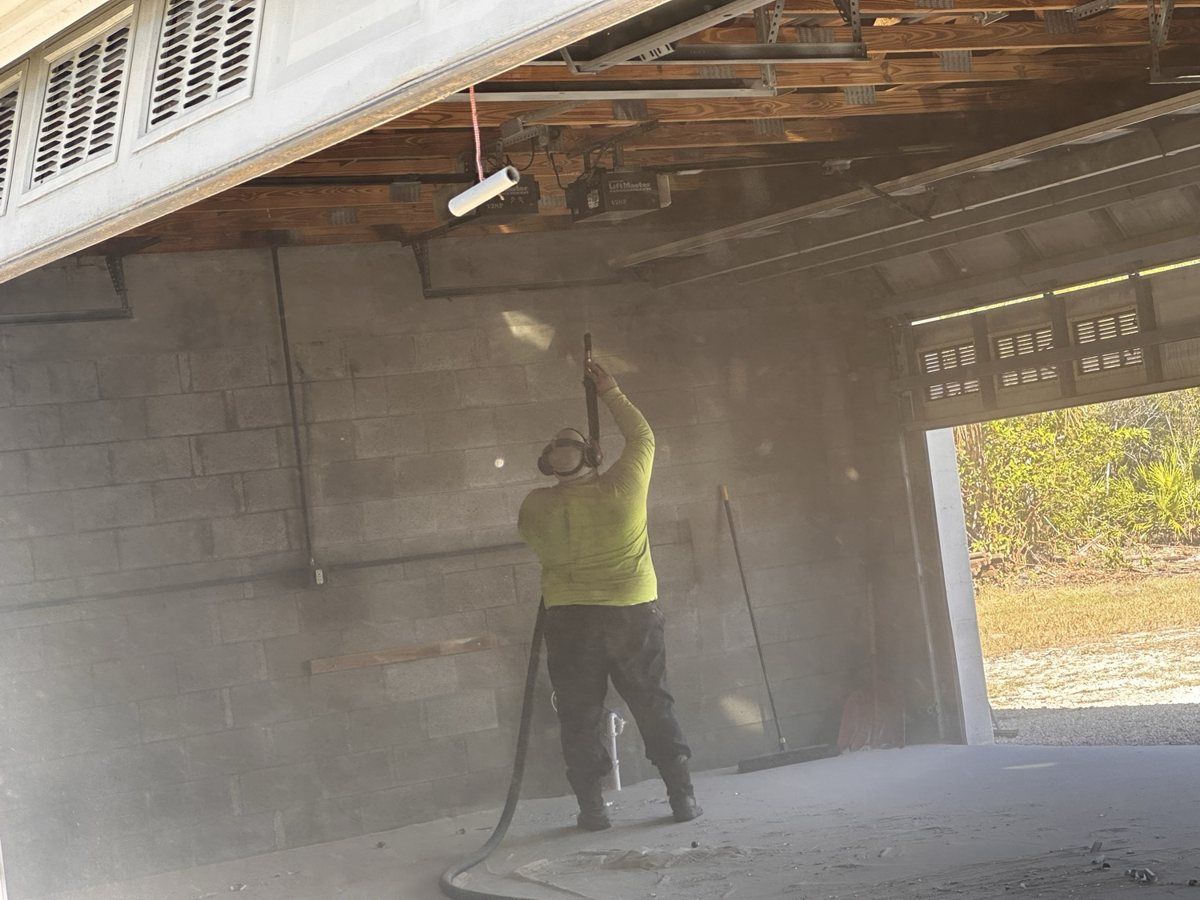
Seawall on one side of the lot, driveway on the other, and salt working on everything in between. We bring the blast rig up to the canal, the yard or the driveway and take failed coatings, bottom paint and rust off where they sit.
SWFL Media Blasters brings the rig up to Port Charlotte because that is where the work is: on the canal, in the yard, in the driveway. Port Charlotte sits on the west bank of the Peace River where it widens into Charlotte Harbor, directly across the water from Punta Gorda, and one of the largest canal networks in Florida runs back through the neighborhoods behind it. Canal lots mean seawalls, docks and lifts, and everything on that list lives in brackish air that never stops working on steel, aluminum, gelcoat and paint. We strip the surface where it stands and coat it if you want it coated. Call or text (239) 227-1768.
Port Charlotte was platted mid-century as a waterfront community and dug accordingly. Fingers of canal reach back from the Peace River and Charlotte Harbor into street after street, so a huge share of lots end at a seawall with a dock, davits or a lift on them, and US 41 runs the spine through the middle of all of it.
That geography decides what fails. Brackish water sits against the seawall and moves with the tide, humid salt air rolls over the backyard, and anything metal near it corrodes on a schedule: lift beams and motors, cables, cradles, davit arms, ladders, cleats, railings, pool cage frames and the hardware pinned into the seawall cap. Below the waterline the boat is doing its own thing, stacking bottom paint and collecting growth. Away from the canal the block houses, driveways and lanais take the sun and the storms instead.
Charlotte County has taken documented hurricane damage in recent years, the same regional story as Punta Gorda across the harbor. Repair and repaint work follows a storm season, and surface prep is the step that gets skipped when everyone is in a hurry. Blasting is what makes that repaint last: strip the failure off, look at the substrate, then coat. The wider region is on our service area page.
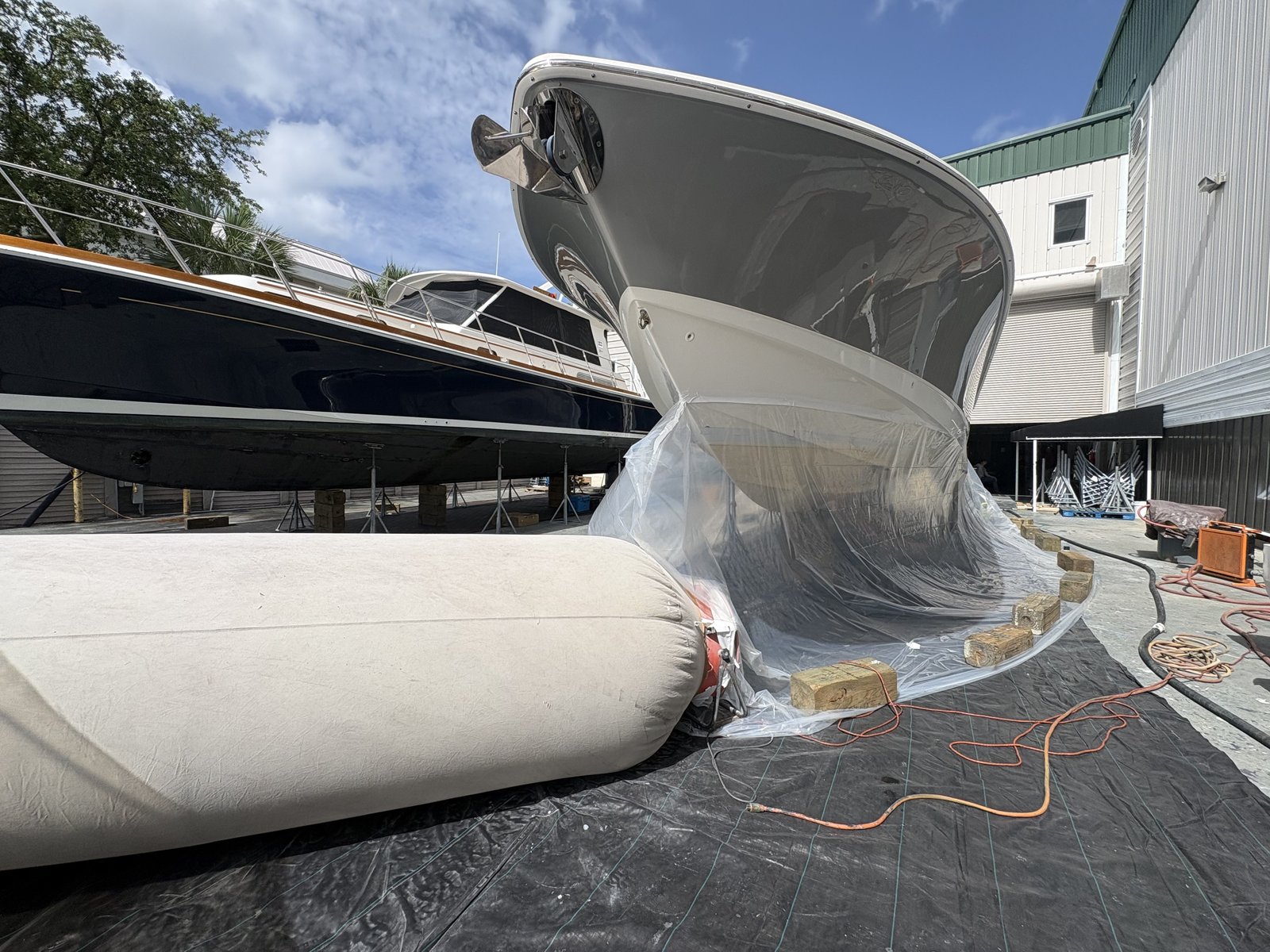
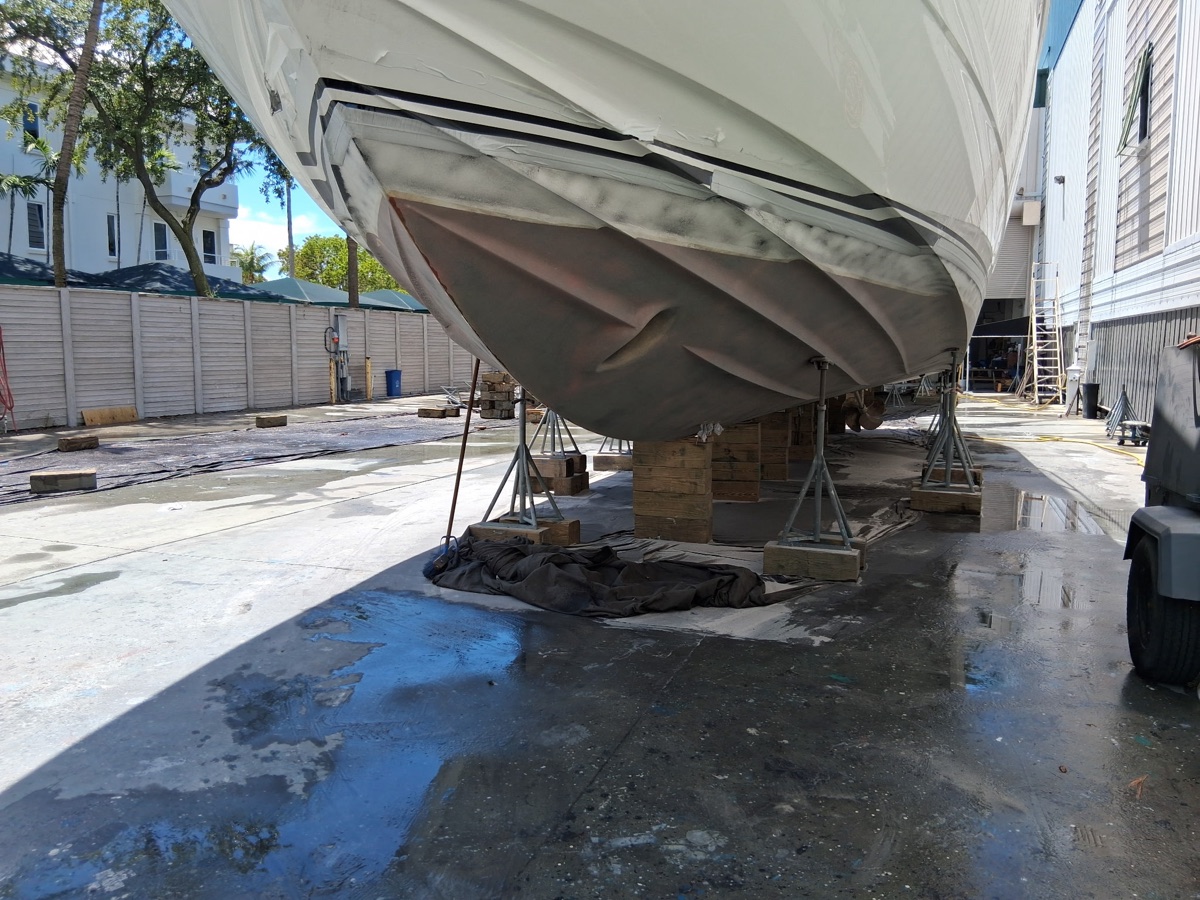
A boat kept on a Port Charlotte canal collects two problems at the same time. Below the waterline, ablative antifouling gets recoated season after season until the build is thick, cracked and shedding in sheets. On top of that, warm brackish water grows slime, barnacles and hard scale that drag the hull and cost speed and fuel economy long before anyone hauls out to look.
Blasting takes the layers and the growth off together in one controlled pass and leaves gelcoat that new antifouling can bond to, instead of another coat going down over a failing one. The skill in it is restraint rather than power: enough energy to cut coating, never enough to burn laminate or chew a thin aluminum transom. Media and pressure get matched to the hull, we test somewhere that will not show, and on a hull carrying older repair work we slow down and tell you what turns up as it uncovers.
Boats here sit in three places, and all three work for us: on the lift behind the house, on the trailer in the driveway, or on stands at a yard. If it is at a yard or a marina, ask what they require of outside contractors for containment and cleanup and pass it along, because it changes how we tarp and where we can stage. See boat bottom paint removal and the same job in Cape Coral, or read prepping a hull for new antifouling.

The hardware holding a boat up is usually further along than the boat. Lift beams and motors, cable sheaves, cradle steel, davit arms, ladders, cleats, piling brackets and seawall fixings corrode without a break on a canal, and almost none of it can be unbolted and taken anywhere. It gets blasted standing where it stands, then primed or coated on the same visit, because bare steel starts flashing fast in this humidity.
The rest of a Port Charlotte backyard piles on from there. Pool cage frames and screen doors chalk and pit. Aluminum railings, gates and posts lose their finish. Pavers and concrete around the deck sit under sealer that has clouded, ambered or started peeling, and painted block and stucco carry more coats than anyone remembers applying.
Setup is what keeps that work clean. We tarp and mask, plan where rebound lands, and run the wet dustless stream near the screens, the pool, the plantings, the neighbor's lot and the water itself so dust drops instead of drifting, then pick up spent media before we pull off the property. Older painted exteriors can carry lead in the coating, so testing and tighter containment come first. More on rust removal, residential blasting, paver sealer removal and restoring a pool deck or lanai.
If the boat is not on a lift, it is on a trailer, and a trailer gets backed into brackish water at the ramp and then parked in full sun without anyone rinsing the inside of the frame tube. Frames scale from the inside out, fenders rot at the mounts, and bunk brackets, rollers and wiring grounds go first. Utility and equipment trailers do the same thing carrying a heavier load.
Past trailers it is work trucks and vans that live in salt air every day, fleet units due for refinishing, and the project cars, motorcycle frames and parts sitting under a Port Charlotte carport or in the garage. Blasting brings all of it back to bare metal so you can see what is solid, what needs a repair and what a coating can honestly protect. Media and pressure get matched to the gauge so thin sheet does not warp and cast parts are not chewed, and because the rig travels, a half-stripped frame never gets towed anywhere.
See automotive blasting, rust on trucks and trailers in coastal Florida, and surface prep before powder coat or paint.
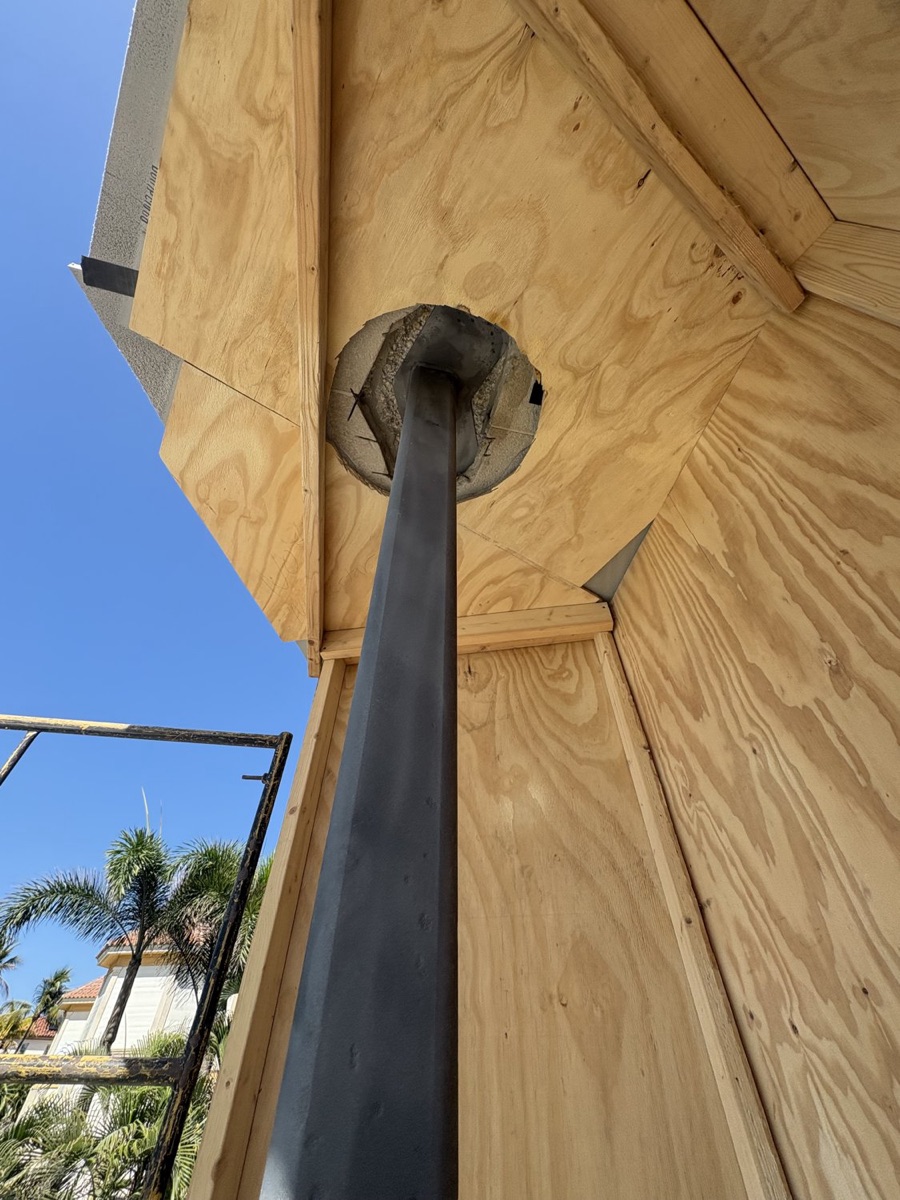
The commercial side of Port Charlotte runs along US 41 and the streets feeding it: marine and dock services on the water, contractor and equipment yards, storage and small industrial buildings, retail and restaurants, plus the condominium associations and property managers looking after buildings that sit in salt air year round. The steel on those properties fails in predictable places. Stair towers, handrails and balcony steel. Canopy frames, columns and beams. Bollards, gates, fencing and light poles. Dumpster enclosures, pool equipment cages and dock frames.
We strip failed coatings and corrosion off that steel on-site, leave the profile an industrial coating needs, and carry it through to the coating if you want it carried through. Equipment is the clearest case for coming to you: a machine that never leaves the yard keeps earning, and prep happens between jobs instead of costing days to transport. Around an occupied building we work to your hours, contain the area, and clean up the media rather than leaving it in the lot.
See commercial blasting, surface profile on structural steel, and the industrial coating prep guide. For the low dust version of any of it near occupied space, start at dustless blasting, and see what moves an estimate on our cost factors page.

Based in Naples and mobile across Southwest Florida — we bring the rig to your home, marina, yard or job site. Call or text (239) 227-1768.
Yes. The rig is fully mobile and self contained, so we work at the property: a canal-side backyard, a driveway, a boatyard, a contractor lot or an active jobsite. Nothing has to be trucked to a shop first. Tell us where the item sits, how we get in, and what room there is to set up beside it, and we plan the visit around that. On-site estimates in Port Charlotte are free.
Both work. We blast hulls on the lift behind the house, on the trailer in the driveway, and up on stands at a yard. If it is going to be at a marina or boatyard, ask them what they require of outside contractors for containment and cleanup and pass that along, because it changes how we tarp and where we can stage. See boat bottom paint removal for how the job runs start to finish.
Not when it is dialed in properly. Heat and excess pressure are what hurt a hull, so gelcoat gets gentler media and the wet setup, the nozzle stays moving, and we test in an area that will not show before committing to the whole bottom. Thin aluminum and hulls carrying older repair work get extra care, and we tell you what we find as it comes uncovered rather than after the fact.
Yes, and they are the smart things to catch early. Lift beams and motors, cradle steel, davit arms, ladders, cleats, piling hardware and seawall fixings corrode continuously on a canal, and most of it cannot be removed anyway. We blast it standing where it stands and can prime or coat it on the same visit, which matters because bare steel begins flashing quickly in this humidity.
Containment plus wet media. We tarp and mask the work zone, plan where rebound lands, and run the dustless setup near the water, the screens, the pool, the plantings, parked vehicles and the property line so the dust drops instead of drifting. Spent media gets collected before we leave. Older coatings get tighter containment because of what can be in them. See dustless blasting.
That is the right order. Fresh coating over a chalked, blistered or rusting layer fails from underneath no matter how good the paint is, and repairs made after wind and water damage often leave a patchwork of old and new finishes. Blasting takes it back to one consistent, sound substrate with a profile the next product can grip, so your painter or coating contractor starts from something honest.
Call or text (239) 227-1768 with what you have and the address, plus photos if you have them. We come look in person, because the surface, the number of layers, how far corrosion has gone, the access and whether you want coating afterward all change the work. On-site estimates are free. We also cover Punta Gorda, Cape Coral and Sanibel.
We bring the rig to your dock, driveway, yard or jobsite, strip it where it sits, and coat it if you want it coated. Call or text (239) 227-1768 for a free on-site estimate.
Tell us a little about the job and we'll get right back to you.
Thanks — we'll be in touch shortly to set up your free estimate.