Baking soda is soft enough to pull a finish off cypress, gelcoat or a cast aluminum fitting and leave what is underneath intact. In a town built on wood ceilings, boats and old brick, that difference is the whole job.
Blast media works on hardness. Crushed glass and garnet are harder than the paint and rust they hit and harder than a good deal of what sits under it, which is why they cut quickly and leave an anchor profile behind. Baking soda sits at the other end of that scale. It is softer than steel, softer than aluminum, softer than cured gelcoat and softer than seasoned wood, and it is friable, so each particle breaks apart on contact and spends its energy sideways across the surface rather than down into it.
What you get is separation without excavation. The coating lets go and the substrate keeps its grain, its detail and its dimensions. Very little profile is left behind, which is exactly right on a ceiling board and a limitation in front of certain coatings. Soda is water soluble as well, so whatever is not vacuumed or swept up can be rinsed away, and it does not embed itself in soft material the way a hard grit sometimes will.
The tradeoff is worth saying out loud. Soda is slow against thick built up coatings and it does not cut rust or mill scale. If a Naples gate has already scaled under its paint, we would rather bring sandblasting in Naples to it and do the job properly the first time.
Tongue and groove ceilings are everywhere in this town: on lanais, in entries, under porch overhangs and all through the older houses west of US 41. Pine and cypress take a beautiful finish and then lose it. Varnish clouds and flakes, paint yellows, humidity and mildew work into the boards, and at some point somebody rolls another coat over the whole thing. Sanding a ceiling like that means overhead work, torn grain, rounded edges on every bead and molding, and days of it.
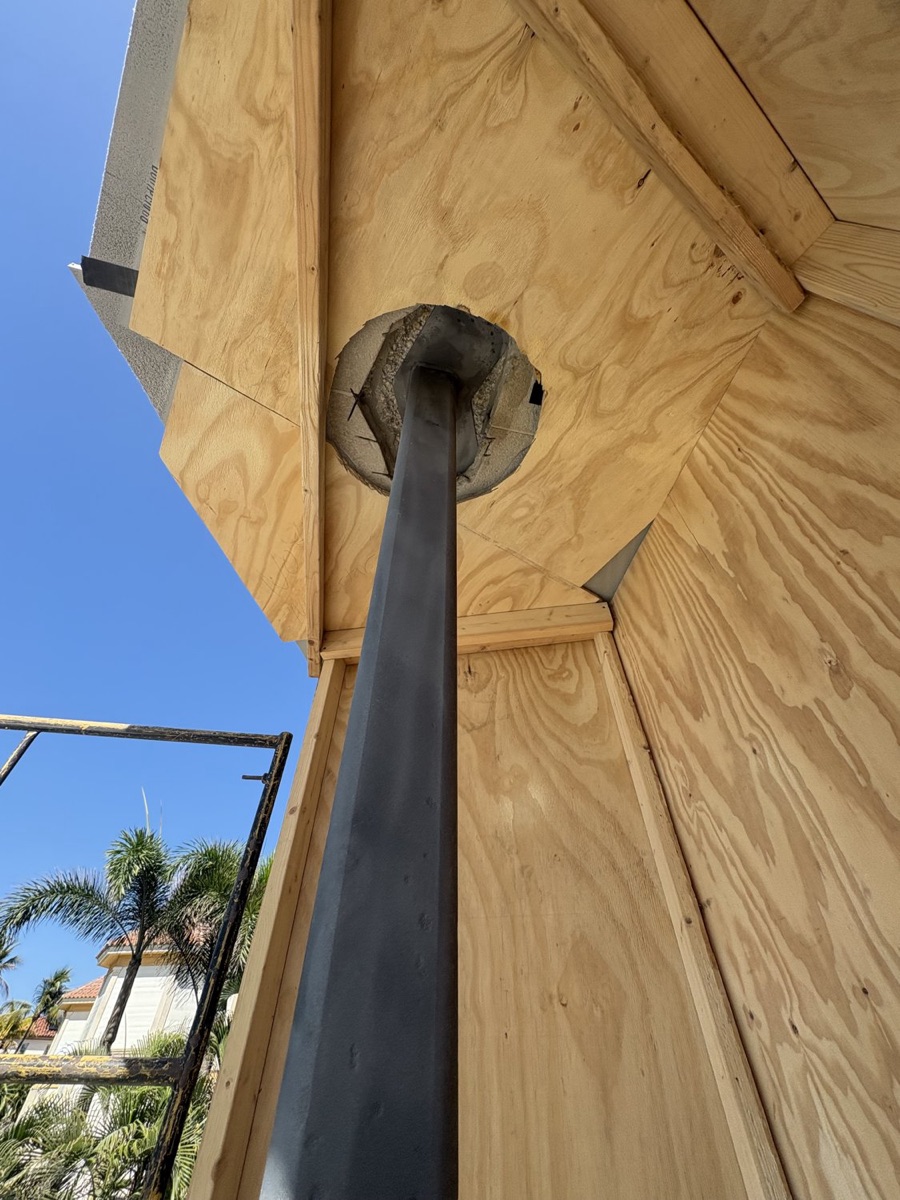
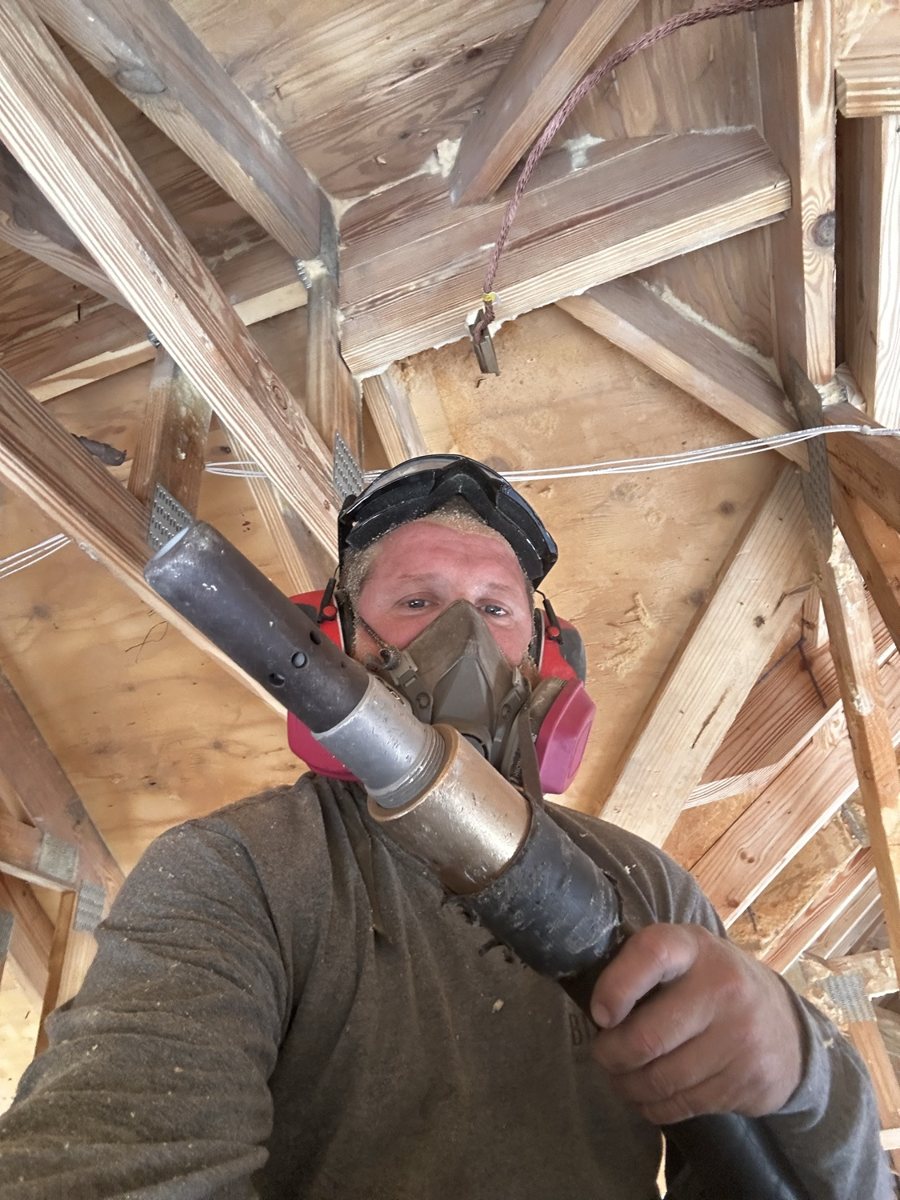
Soda takes the finish off and leaves the wood. It follows the profile into the grooves, the bead detail and the inside corners where a sander cannot lie flat, and it does that without carving out the soft summer grain and leaving the hard grain standing proud. Beams, rafters, brackets, porch columns, doors and interior trim all respond the same way. Old Naples still has plenty of wood heavy houses where a stripped and refinished ceiling is the single biggest change you can make to a room.
Interior and lanai work gets contained: floors and furniture covered, openings sealed, screens and pool surfaces protected, and the spent soda swept, vacuumed and hauled out with us. More on the house side at residential blasting, and on where blasting is and is not the right idea in is media blasting safe for my surface.

Naples keeps a lot of boats close to home: on lifts behind the canal houses in Royal Harbor and Aqualane Shores, at the yards along the Gordon River, on trailers in garages all over the city. Above the waterline that means gelcoat, boot stripes, lettering and tired topside paint, and gelcoat is thin. Soda strips what is on it without cutting into it or heating it, which is why it earns its place on topsides, hatches, hardtops and consoles. Bottom paint is a different animal and usually wants a faster cutting media, which is covered on boat bottom paint removal and in soda versus sandblasting a boat hull.
Aluminum is the other reason soda lives on the truck. Thin panels, pontoon rails, T top tubing, outboard brackets, hurricane shutters and cage framing distort when they take too much heat and too much pressure from a hard grit. Soda does not pit them and does not warp them.
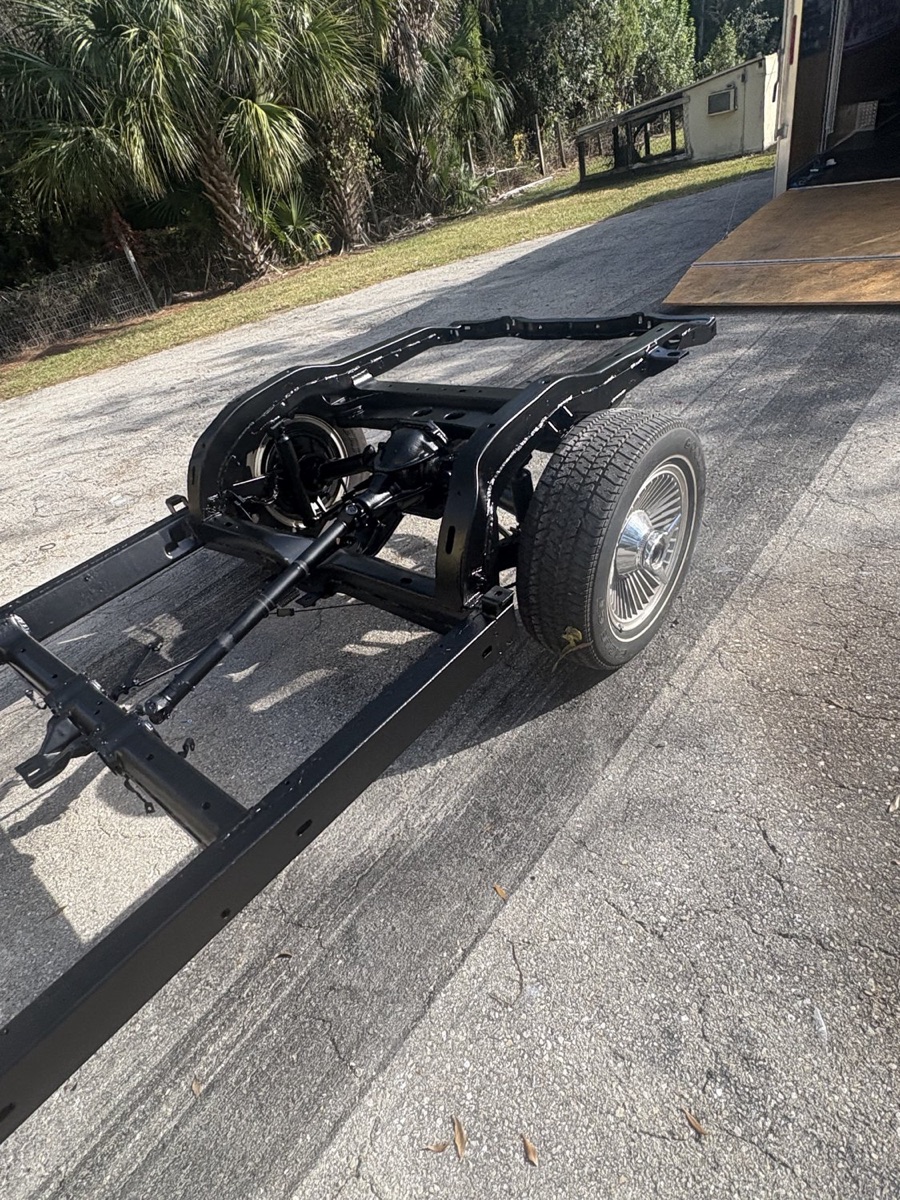
Then there is everything with detail in it: carburetors and manifolds, brackets and housings, antique hardware, hinges, scrollwork on a gate, cast light fixtures and railing finials. Hard media rounds edges and blurs cast texture. Soda cleans the piece and leaves the detail the foundry put there. See automotive blasting and marine blasting.

Soda is a stripper, not a cutter. It releases coatings. It does not take off rust, mill scale or pitting, and it will not chew through a thick industrial coating in any sensible amount of time. Put it on a scaled gate, a trailer frame, a structural column, an excavator or an old steel stairwell and you will stand there watching it lose. That work belongs to crushed recycled glass or garnet, which cut hard and fast and leave the anchor profile the next coating needs to bite into. See rust removal and sandblasting.
Profile is the second limit. Because soda barely textures a surface, some coatings and powder finishes have nothing to hold on to. If a part is going out for powder coating or a high build industrial product, say so before we start and we will pick the media around the finish instead of the other way around.
Soda also leaves a mild alkaline residue, and it is a salt, so it gets rinsed and the plant beds and turf nearby get covered and watered down. Porous brick, mortar and stone hold that residue longer than metal does, so those surfaces get a proper rinse before anything goes over them. Straight comparisons live in choosing the right blast media and dustless versus sand versus soda.

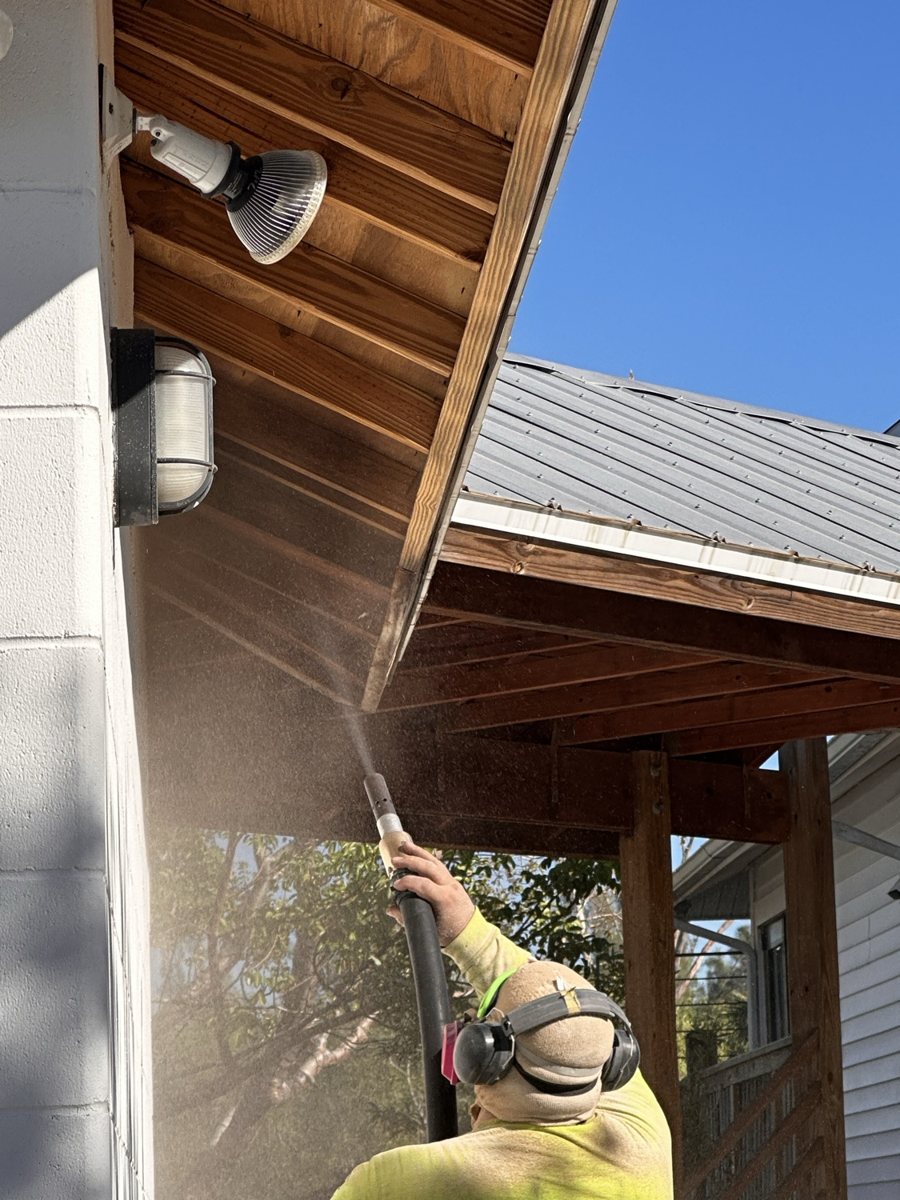
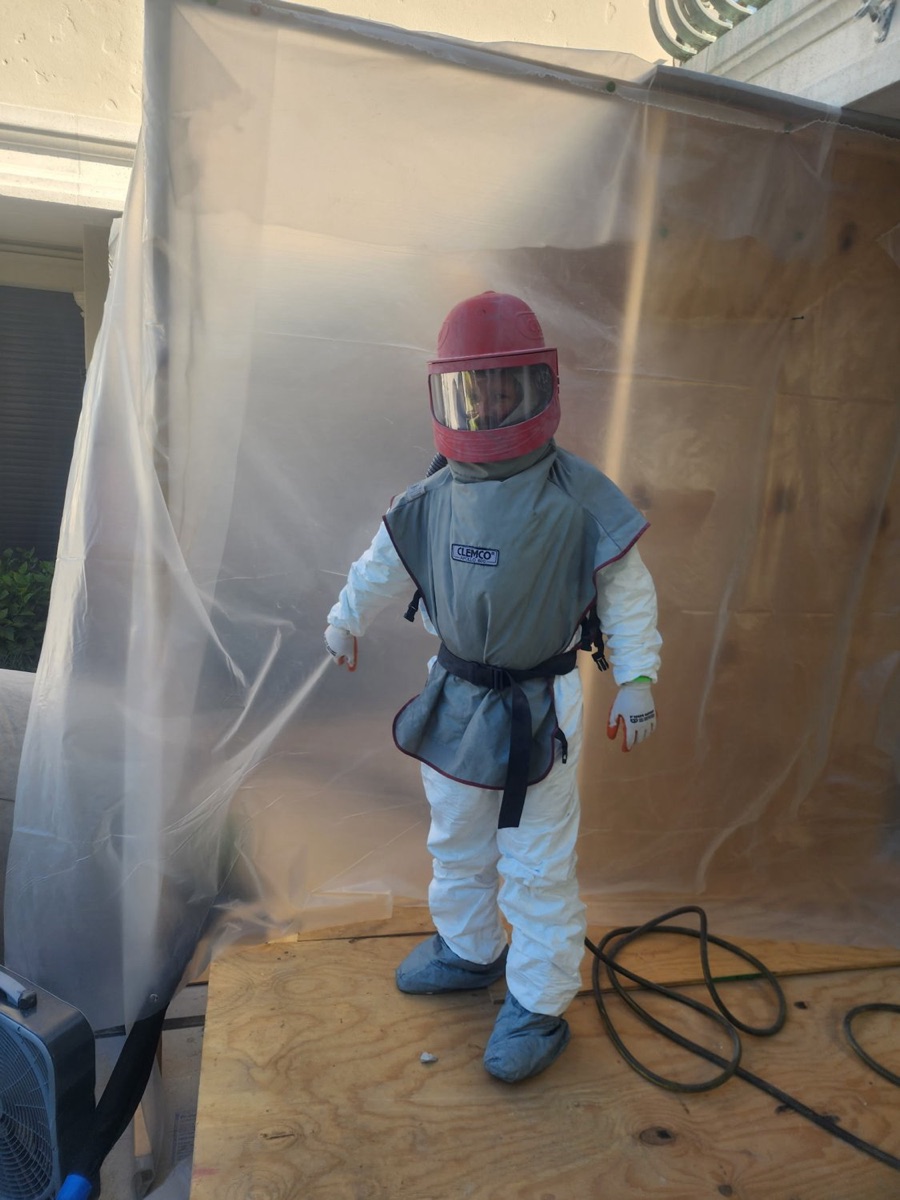
Soda breaks down into a fine powder and fine powder travels, so containment is most of the setup on a tight Naples lot. Tarps and plastic go up. Cars, pool cages, screens, landscaping and windows get covered. We can run the media wet to knock the cloud down where the neighbor's driveway is right there. When we pull out, the spent media and the coating that came off with it leave too. Older finishes can contain lead, which is exactly why testing and proper containment matter before anyone starts stripping trim, a railing or an old structure.
After the strip, the clock starts. Bare wood and bare metal do not stay that way in this climate, and a stripped surface left open picks up moisture and traffic. Blast it, prep it, coat it is the whole idea, and the coating half is optional. We can hand it back bare and ready for your painter, finisher or varnish crew, or carry it through and put the protection on while the surface is still clean.
What the estimate weighs: how big the surface is, what it is made of, how many layers are on it, how tight the access is, how much containment the site needs, and whether coating follows. Call or text (239) 227-1768. See also dustless blasting in Naples, paver sealer removal in Naples and the main Naples page.
Based in Naples and mobile across Southwest Florida — we bring the rig to your home, marina, yard or job site. Call or text (239) 227-1768.
It should not. Soda is softer than seasoned wood, so it lifts the finish and leaves the board. It does not tear the grain the way an aggressive media can, and it does not round over bead detail and molding edges the way a sander does. We still test an out of the way section first and read the result before running a whole ceiling, because every board and every old finish behaves a little differently.
Not really, and that is the honest answer. Soda releases coatings. It does not cut hardened rust, mill scale or pitting. If there is rust under the paint on a gate, a railing or a trailer, crushed recycled glass or garnet is the right media and we would switch to it. See rust removal or sandblasting in Naples.
Above the waterline, yes. Gelcoat, topsides, hatches, hardtops, consoles and aluminum all take soda well, because it strips without cutting or heating the surface. Bottom paint is usually a different job with a different media, since layered antifouling is thick and stubborn. Start with boat bottom paint removal in Naples if the bottom is what you are looking at.
It is water soluble, which helps, but it is still a salt and we treat it that way. Plant beds, turf, pool surfaces, screens and cars get covered before we start, the area gets rinsed when we finish, and we can run the media wet so the cloud does not travel. Spent media and the coating that came off with it leave the property with us.
We come to you. The rig is fully mobile, so we set up in the driveway, on the lanai, in the garage, at the dock or wherever the piece already sits anywhere in Naples. Nothing gets crated up and shipped out, which is usually the difference between a project that happens and one that keeps getting pushed.
Not immediately, but do not sit on it. Bare wood and bare metal in this climate pick up moisture and dirt quickly. Soda also leaves a mild alkaline residue that gets rinsed off before coating, and it leaves very little anchor profile, so tell us what finish is going on and we will pick the media and the prep around it. We can coat it for you or hand it back ready for your painter.
It depends on how big the surface is, what it is made of, how many layers of finish are on it, how tight the access is, how much containment the site needs and whether you want coating afterward. We do not quote a ceiling or a hull we have not looked at. Call or text (239) 227-1768 and we will come look, anywhere in Naples. On-site estimates are free.
Tell us what the surface is and we will tell you straight whether soda is right for it. Call or text (239) 227-1768 for a free on-site estimate anywhere in Naples.
Tell us a little about the job and we'll get right back to you.
Thanks — we'll be in touch shortly to set up your free estimate.