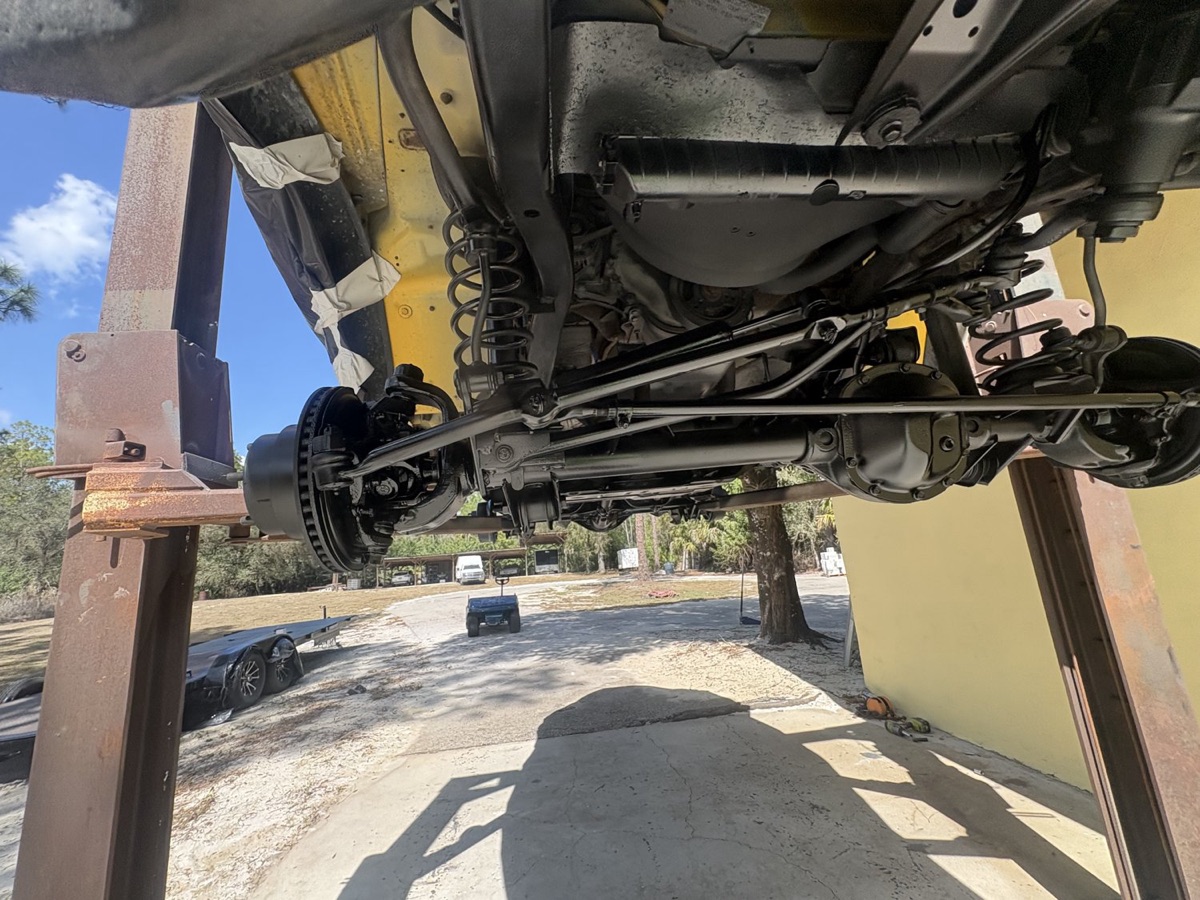
The project never has to leave the property. The compressor, the pot and the containment roll into an Estero garage or driveway, the coating and scale come off, and the steel goes back to you bare or protected before we pack up.
SWFL Media Blasters blasts vehicles and vehicle parts at Estero addresses, and the useful place to begin is the end. What the metal is becoming decides how it gets stripped: bare and dry for a body shop, profiled for powder coat, primed before it ever sees humidity again. Once that is settled the rest is logistics, and mobile solves those. We bring the rig to the garage, the carport or the driveway, cut the coating and scale off, and show you what the steel underneath is genuinely worth building on. Estero sits close enough to the bay that the answer is often different from what the paint suggested. Call or text (239) 227-1768.
Stripping is not the goal. The goal is a surface the next finish will hold onto for years, and that finish sets the prep. A frame headed for powder coat wants a real anchor profile, which means a cutting media and a specific finish left behind. A panel headed for a body shop wants clean bare metal without heat, distortion or a profile so coarse the filler and primer have to fight it. A part you want back looking original wants the softest thing that will release the coating.
Timing belongs in the same conversation. Bare steel does not stay bare in this climate, and an Estero garage is not a climate-controlled one. Freshly blasted metal will start to flash rust while it sits, and a light haze of new oxide under a fresh coating is exactly how good work fails early. So we plan the handoff before the first pass: who is coating it, when, and whether the piece needs primer from us to bridge the gap.
Say what the plan is when you call, even if the plan is a shrug. Half a restoration schedule gets built around what is discovered under the paint anyway. Background on the service is at automotive blasting, and surface prep before powder coat or paint covers the profile question in detail.
The reason mobile matters is simple arithmetic. A non-running project car means a tow out and a tow back before anything has been accomplished, and the loose-parts version is worse, because brackets and small hardware get boxed, hauled, mixed up and hunted for weeks later. Nothing leaves your property here. We work in garages, carports, driveways, side yards and open pole buildings.
Estero adds its own step to the plan. Behind a gate, vendor entry gets arranged ahead of the date, and associations differ on scheduling windows and where a work truck can stage, so tell us what applies at your address and we will build the visit around it. Paver drives and close neighbors are the norm in the master-planned neighborhoods here, which is where containment and the wet setup earn their keep: the work area gets sheeted, rebound stays inside it, cars and screens and plantings get covered, and spent media gets swept up and hauled off rather than washed into the paver joints.
What we need from you is modest: room to work around the piece, a path from where the truck can park to where the piece sits, and water and power at the address where those exist. Licensed and insured, and we can send the association whatever it asks for before the day. The town page is Estero.
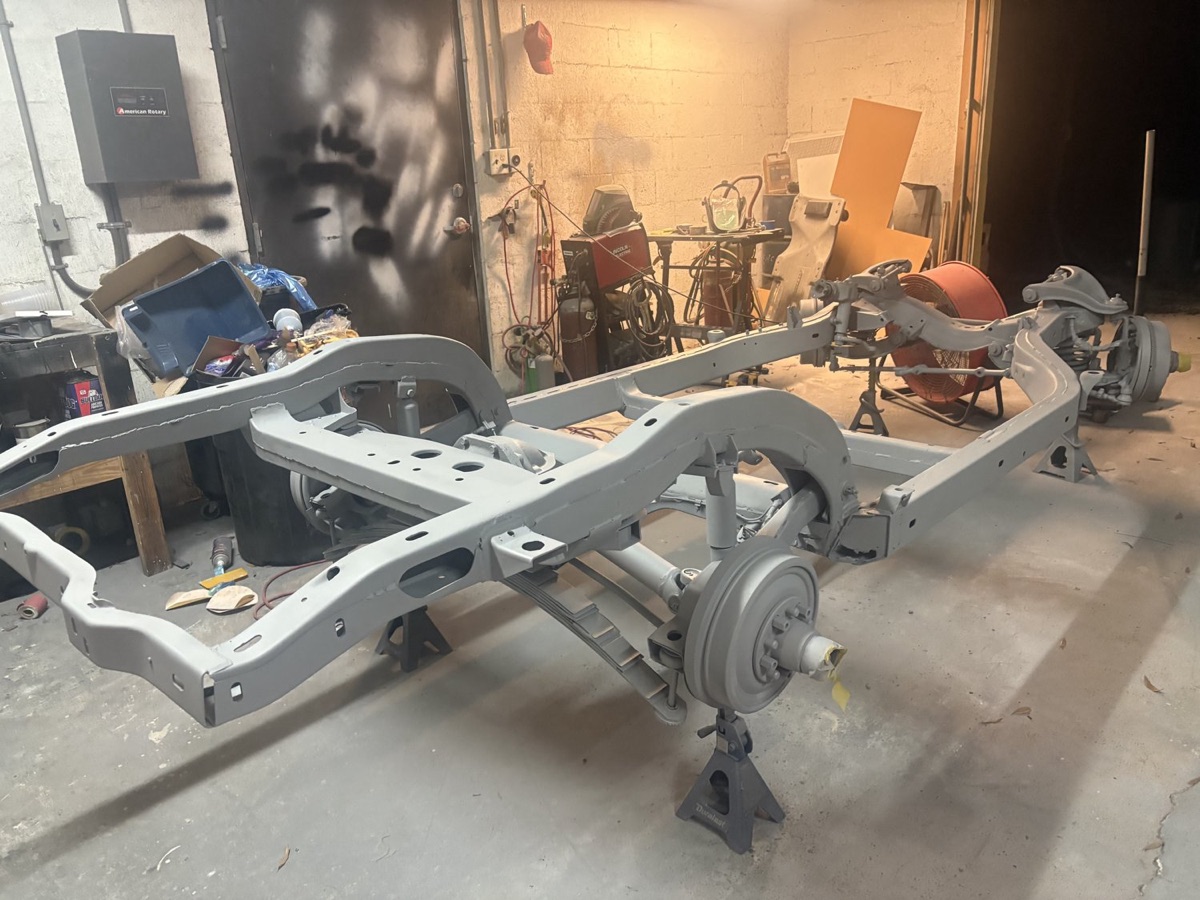
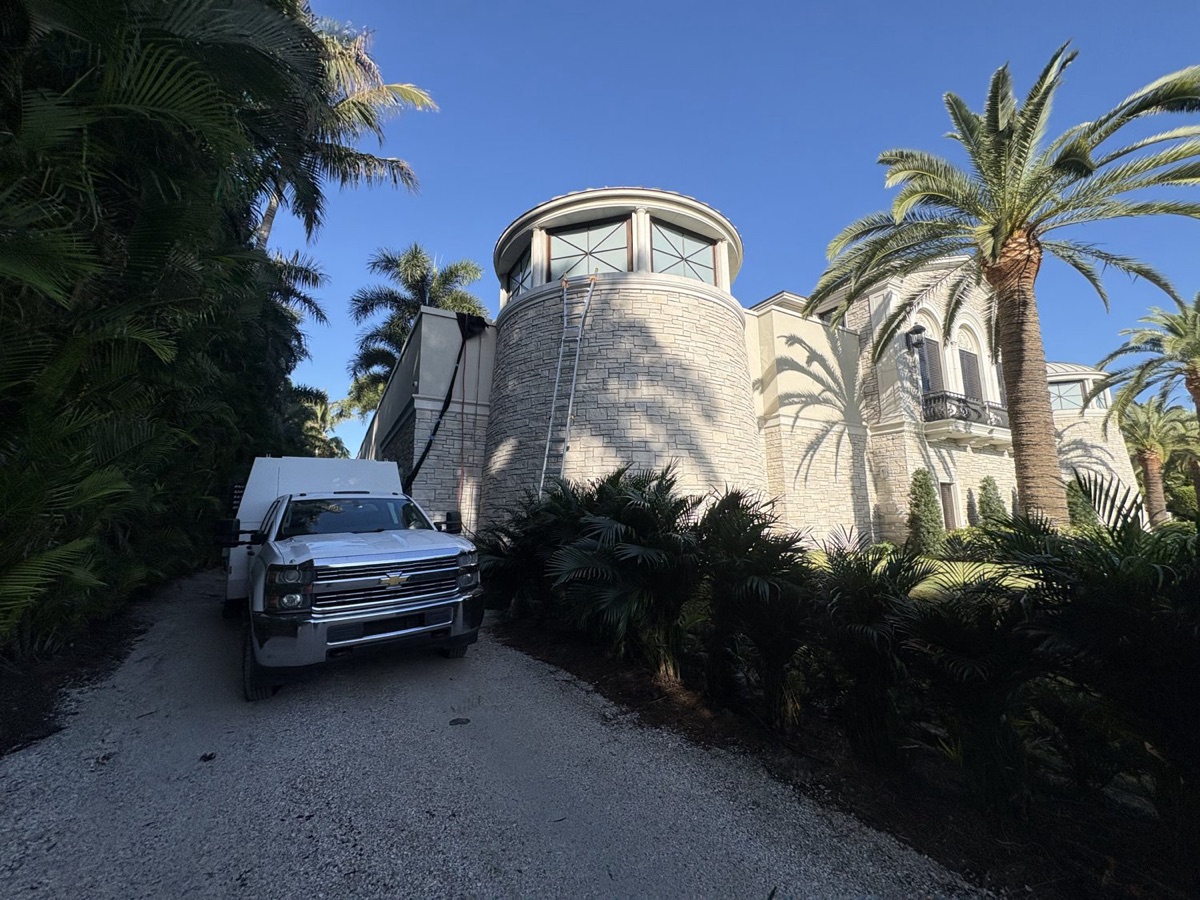
Estero sits inland of the bay with the river running through it, and damp salt air moves well past the water line. A vehicle here does not have to be launched, splashed or driven on a beach to corrode. Humid air settles on the underside overnight, wicks into lap joints and seams, and stays there through the morning. The parts nobody inspects are the parts that go first.
The pattern repeats across vehicles. Frame rails and crossmembers hold moisture where two pieces of steel overlap. Shock mounts, brackets and fasteners scale until the edges soften and the heads round off. Factory undercoating cracks, then traps water against bare steel and hides what it is doing for years. Body panels report the news last: a bubble at a rocker, a wheel arch or a lower door skin is usually the visible end of something that started underneath a long time before.
Blasting is how the guessing stops. With the coating and scale gone, sound metal and pitted metal look nothing alike, and the repair gets planned from what is actually there rather than from what a flashlight suggested. Corrosion beyond vehicles is on rust removal in Estero, and rust on trucks and trailers in coastal Florida explains why it moves quickly on this coast.

Running a single setting across a whole car is how sheet metal gets ruined. Media, pressure, standoff and angle are chosen for the piece in front of the nozzle, and on one project they can change several times before the day is over.
Crushed recycled glass is the general purpose cutter for old paint, primer, undercoating and moderate rust on frames and heavy steel. Garnet hits harder and comes out when scale is thick and the section is beefy enough to take it. Baking soda handles the delicate end: trim, castings, intricate assemblies, threads, badges and thin decorative parts where the detail has to survive and no aggressive profile is wanted. The wet and dustless setup runs cool and knocks the dust down at the nozzle, which is what thin panels, aluminum and a driveway with neighbors close by all call for.
Warping is a heat and technique problem before it is a media problem. Pressure comes down, the angle opens up, the nozzle keeps moving and never parks in one spot. If a panel is already thin, wavy or carrying filler, you hear that before we commit to it rather than after. For a period car, blasting versus chemical stripping lays out the trade offs, and the soft end of the rack is covered on soda blasting in Estero.
Trailer steel takes the worst of it in a town with water access. The routine is brutal by design: back the frame into the water at a ramp, pull it out dripping, tow it home and park it in the Florida sun. Water sits inside tube crossmembers where nothing drains and nothing dries, so the frame corrodes from the inside while the outside still looks painted. Boats running the Estero River and the back bay come home on trailers that have done this a few hundred times.
The hardware fails alongside the frame. Bunk brackets, rollers, fenders, hubs, u-bolts, winch stands, safety chains and light mounts corrode from two faces at once. Rolling paint over that buys a season. Taking the frame back to clean steel and coating it properly is a far smaller undertaking than the fabrication that shows up when a crossmember finally lets go on the way to the ramp.
Tow vehicles live the same life on the same ramps, which is why the truck usually needs attention around the time the trailer does. Cart and small utility vehicle frames run the same script at a smaller scale, since powder coat on a cart lets go at welds, edges and fasteners first and then works outward from there. If the boat riding on the trailer needs work too, see marine blasting in Estero, or compare notes with automotive blasting in Bonita Springs.
Based in Naples and mobile across Southwest Florida — we bring the rig to your home, marina, yard or job site. Call or text (239) 227-1768.
Yes. The operation is fully mobile out of Naples, and the rig travels to the property rather than the vehicle traveling to a shop. Garages, carports, driveways, side yards and pole buildings all work. That is what makes a non-running project car realistic to strip at all. What we need is room to work around the piece, a path from the truck to it, and, if you are behind a gate, a heads up about how vendor access is handled so entry gets arranged before the date.
No, though how far apart it is changes the day. Loose parts on a bench or sawhorses are the cleanest version, since every face is reachable and nothing needs masking off from anything. A frame with the body still on it, or an undercarriage with the driveline in place, is normal work that simply takes more masking, and there are angles a nozzle cannot reach while the assembly is together. Tell us the state of the project when you call and the plan gets built for it.
Not when pressure, media and technique match the metal. Distortion on thin sheet comes from heat and from holding the nozzle in one spot, so panels get lower pressure, a softer media, a wider angle and constant movement, while frames and brackets get the aggressive setup. The wet dustless option runs cooler still. If a panel is already thin, wavy or loaded with filler, we will tell you what we are looking at before starting on it.
You find out now instead of after a paint job. Blasting hides nothing and fills nothing, so scale that was concealing a perforation comes off with everything else. That is information worth having: the right next call is a welder or fabricator, not a coating. We would rather show you the spot while you are standing next to the piece than let it surface under a fresh finish a year from now.
Either way works, and the choice is made at the estimate rather than afterward. Bare and ready is right when a body shop, painter or powder coater is waiting on the piece and can take it promptly. Primer or coating from us is right when the metal would otherwise sit in a humid garage in Estero, because bare steel starts flash rusting once the blasting stops. Blast it, prep it, coat it is the whole sentence, and the last part is optional.
Yes, and they get different treatment from a truck frame. Powder coat on a cart frame usually starts releasing at welds, edges and fasteners, and the frame strips down cleanly for recoating. Aluminum is a different animal from steel under a nozzle, so it gets a softer media and less pressure to avoid work hardening and distortion. See blasting aluminum versus steel for how the two behave.
It depends on the piece and its size, how many coatings are stacked on it, how far rust and scale have gone, how much masking and containment the location needs, and whether primer or a finish follows. A bare frame on stands and a full undercarriage with the body still attached are not the same job. Nobody can quote that honestly from a photo, so we look in person. See what moves an estimate, then call or text (239) 227-1768 for a free on-site look.
We bring the rig to you, strip it to clean metal, and tell you straight what the steel underneath is worth. Call or text (239) 227-1768 for a free on-site estimate.
Tell us a little about the job and we'll get right back to you.
Thanks — we'll be in touch shortly to set up your free estimate.