SWFL Media Blasters
Mobile media blasting & sandblasting — we come to youNaples & all of Southwest Florida
Mon–Sat 8a–6p(239) 227-1768
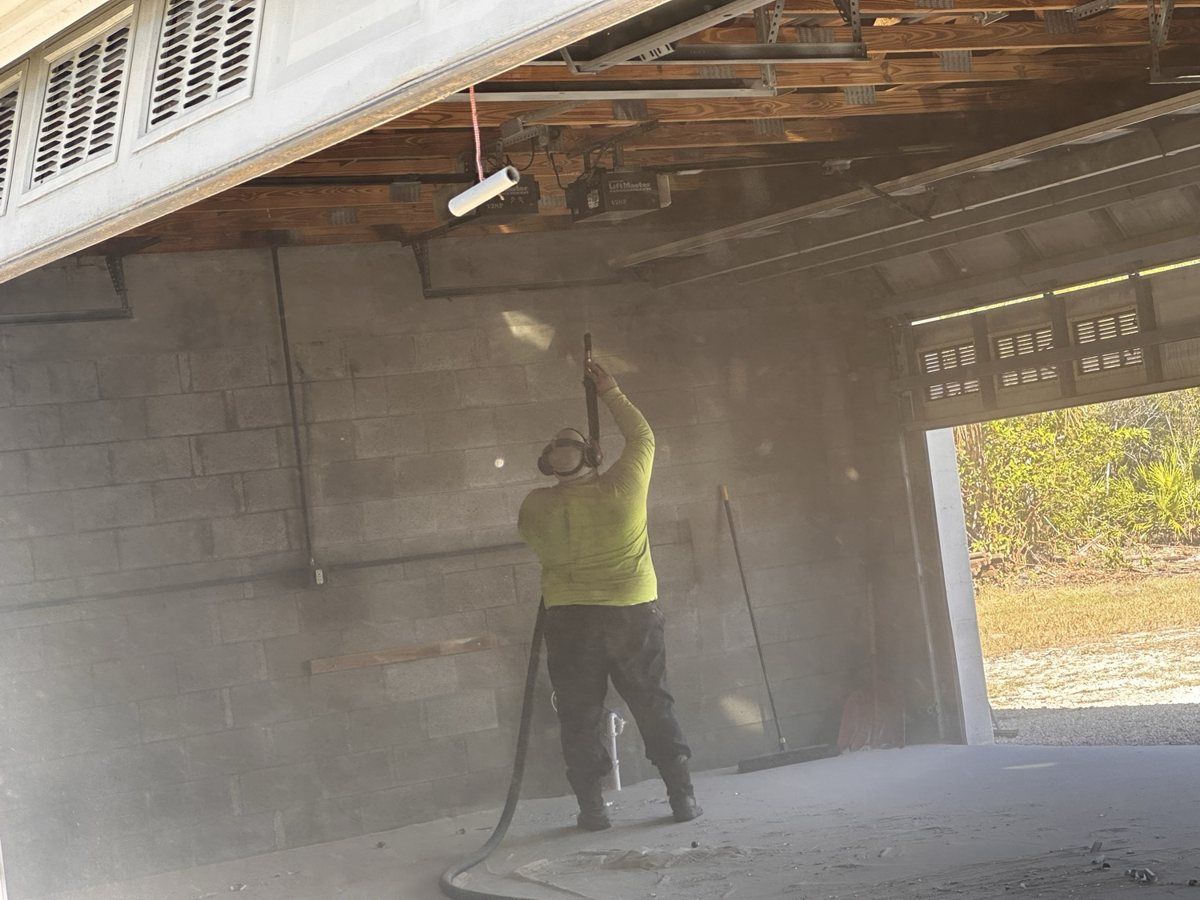
Concrete block wall being media blasted clean, dust visible
Paver Sealer Removal · Estero, FL

Blasting Failed Sealer Off Estero Pavers, Decks and Lanais

Estero homes are young and their pavers are sealed, so the layer that failed is almost always the sealer itself. We blast the film off driveways, lanais and pool decks inside the community, and hand the stone back at whatever color it actually is.

(239) 227-1768Text us
Drives, lanais, pool decksBlasted at your addressContained inside the cageFree on-site estimate

SWFL Media Blasters blasts spent sealer off the pavers and travertine at Estero addresses, from the motor court out front to the pool deck behind the cage. Estero built out mostly from the 1990s forward, and the outdoor package came with the house: a paver drive with a matching walk, a lanai under screen, a deck around the pool, all of it sealed at some point and topped up since. That film is what fails here, not the brick. It hazes white, ambers at the edges, peels off the half that bakes all afternoon, or turns slick underfoot around the pool. Nothing laid on top of it fixes it. We take it off where it sits. Call or text (239) 227-1768 for a free on-site estimate.

In Estero the sealer failed, not the pavers

Estero is new construction by regional standards, and that shapes the diagnosis before anyone looks at the surface. Along an older waterfront street the work tends to be getting down through paint and coatings laid on over decades. Here the driveway is brick or concrete paver, the lanai and pool deck are paver or travertine, and the only thing sitting on top of them is sealer, applied when the house was new and refreshed every few seasons since.

So what you have is a film failure. It shows as a milky white haze where moisture got trapped underneath, a yellow or amber cast on older product, sheets lifting off the sun side of the drive, a slick surface around the pool, or dark growth in the joints that returns a few weeks after every cleaning. The brick and stone under all of that is usually sound.

The catch is that a film-forming sealer cannot be repaired from the top. New sealer grabs the broken film rather than the stone, and a pressure washer will not dissolve a cured coating. Taking it off is the reset. The service in general lives on paver sealer removal, and the town overview on the Estero page.

  • Milky white haze
  • Ambered, yellowed film
  • Sheets lifting in the sun
  • Slick around the pool
  • Growth back in the joints

The drive, the lanai and the pool deck fail differently

Three surfaces, three exposures, and they rarely give out together. The driveway and motor court take full afternoon sun, tire heat, steering scrub at the turn and whatever drips out of a car. That is where sealer goes brittle first and starts releasing in sheets, usually across the unshaded half while the shaded half still looks passable.

The pool deck lives a different life. It gets splashed constantly, it sits partly in the shade of the cage, and people walk it barefoot, so a sealer that has gone chalky or slick is a safety problem before it is an appearance problem. Travertine and shell stone are common on Estero decks, and both are soft and pitted, which means old sealer is down in the holes rather than sitting flat on top.

The lanai between them collects furniture rust rings, grill grease, planter stains and roof runoff along the drip line. Each of those tells the crew something about how deep the strip needs to go, and the material sets the ceiling on how hard anyone can work. The deep version of the material and sealer story is in the paver and travertine restoration guide, and decks specifically in restoring a pool deck or lanai by blasting.

  • Sun-baked drive and motor court
  • Slick or chalky pool deck
  • Pitted travertine and shell stone
  • Furniture rust and grill grease
  • Drip line staining
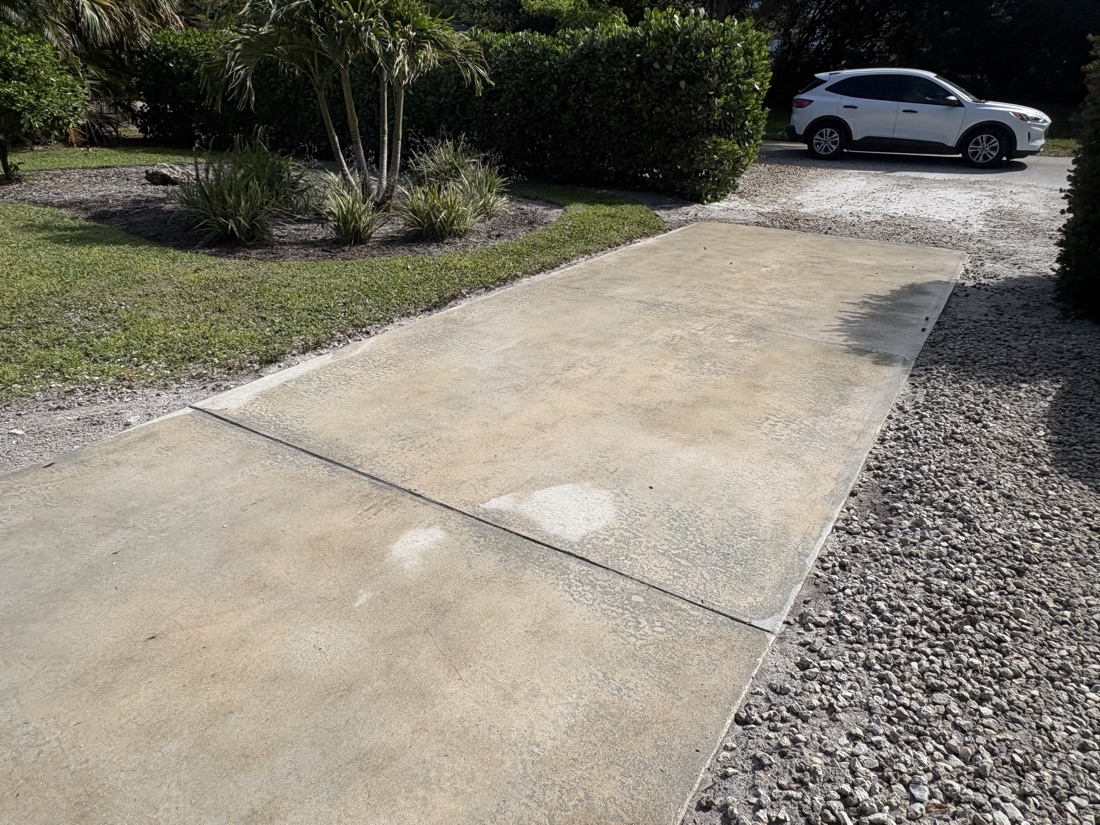
Concrete driveway surface in Southwest Florida

Getting a rig through the gate and inside the cage

Almost every Estero address is behind a gate, so the visit gets planned before the date. Tell us the community, which entrance you want us at, and how your association handles vendor access, then leave our name with the gate or text over a code before the day. If there is a service gate the association prefers, that is the one we use. Where the association needs exterior work spelled out on paper before it begins, mention that at the estimate and we will draft the sheet: surfaces, media, containment.

Staging on the lot is the next question. Some lots offer a long paver drive with room to spare. Others give us a short motor court with a wall on one side and a planting bed on the other, and pool deck work means feeding hose and gear through a cage door rather than across an open yard. Either way the pool and its tile, the coping, screens, cage frame, glass, planting beds, the outdoor kitchen and the cars get masked before the first pass.

On streets where the houses sit close, drift decides the setup, so the wet and dustless streams run to drop dust right where it is made rather than letting it cross the property line. Spent media and joint debris get cleaned up before we pull out. See dustless blasting in Estero and residential blasting in Estero.
  • Vendor access arranged first
  • Pool tile and coping masked
  • Screens and cage frame covered
  • Gear fed through the cage door
  • Wet setup on tight lots
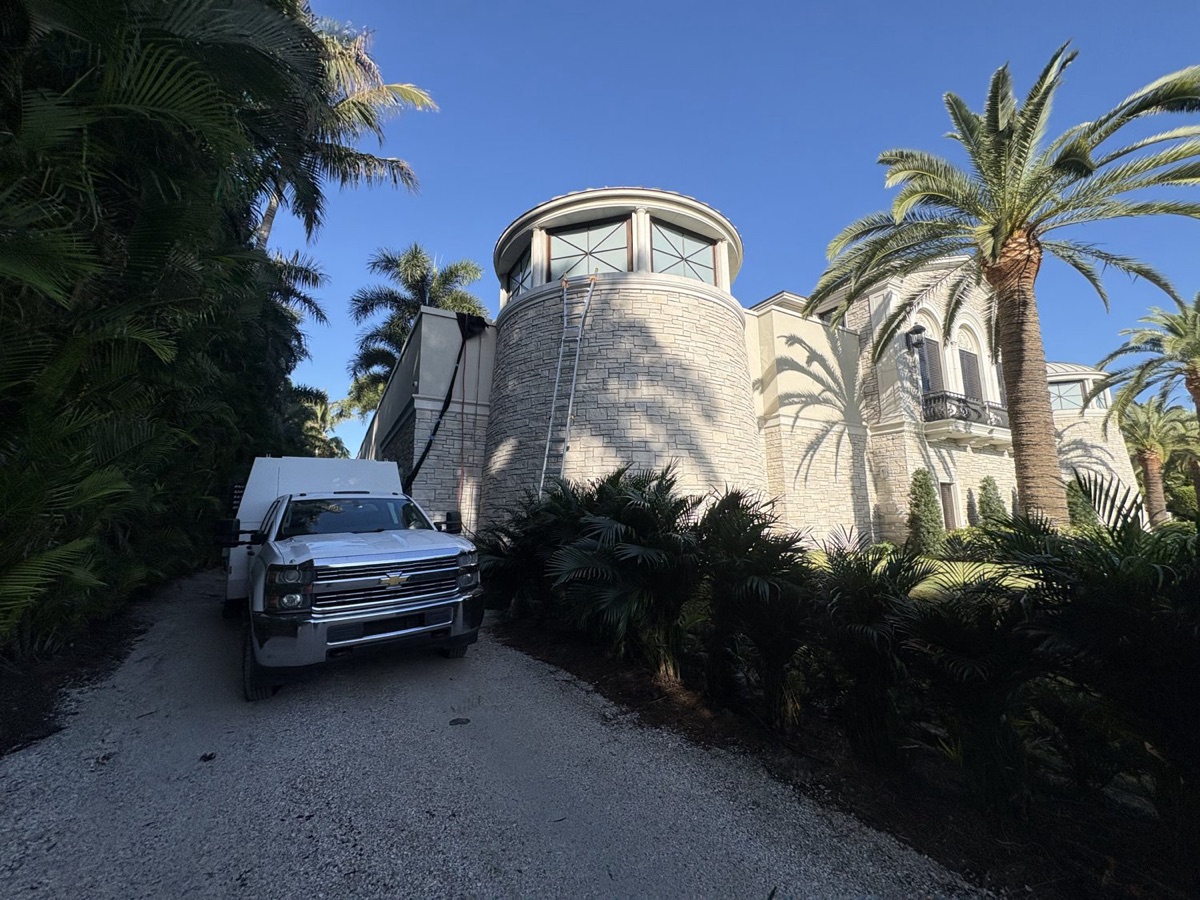
Mobile blasting service truck parked in the driveway of a Southwest Florida home

What an Estero driveway looks like once the film is off

Bare, and back to whatever color the stone actually is. That is the part owners are least prepared for, because clay brick under years of ambered acrylic is warmer than the surface they have been looking at, and travertine comes back matte and open rather than glossy. The texture is open again too, which is precisely what a new sealer needs to key into.

Joint sand comes out as the film does. Expect it, and do not treat it as a problem, because that sand was holding mold and algae down in it. Fresh joint sand goes in next, then sealer on a surface that is clean, sound and dry. Dry matters in this climate, since sealing a deck that still holds moisture is how the white haze started the first time.

Our part is the strip and the prep. The pavers go back to you bare and ready for your own paver contractor to sand and seal, or we line up that re-sand and re-seal with a contractor on your behalf. Either way the sealing is its own trade and its own visit. While the rig is staged, dropped paint, overspray, tire marks, irrigation staining and rust bloom off furniture or a planter come off the same way. The nearest town version of this page is paver sealer removal in Bonita Springs.

  • Bare stone at true color
  • Open texture for new sealer
  • Fresh joint sand next
  • Dry before anything seals
  • Re-seal by your contractor or coordinated

The rest of the outdoor package, same visit

The paver drive is rarely the only item on the list once somebody walks the property with you. The screen enclosure frame is streaking rust down the kick plate from a fastener. The entry gate and the rails have chalked and started to pit. The tongue and groove ceiling over the outdoor kitchen has weathered out unevenly and is about to get a fresh finish rolled straight over the damage.

All of that can be handled while the rig is already staged, which is the practical argument for grouping it into one visit rather than three. Media changes surface by surface: crushed recycled glass or garnet for corroded steel, baking soda for wood, aluminum and finished material, the wet dustless stream near screens and plantings. Each new surface gets a trial spot in a corner nobody looks at, and you see it before the rest is run. Anything that should not be blasted gets called out before the hose leaves the truck.

Cage frames and rails are covered at rust removal in Estero, the soft media at soda blasting in Estero, and what moves an estimate at cost factors.

Where we work

Find us & our service area

Based in Naples and mobile across Southwest Florida — we bring the rig to your home, marina, yard or job site. Call or text (239) 227-1768.

Questions

Good to know

Dirt washes off. A failed film does not. If the surface is milky or hazy in patches, ambered at the edges, lifting in sheets, flaking underfoot or slick when wet, that is the sealer breaking down, and cleaning it just leaves you with clean cloudy sealer. Another tell is haze that returns within weeks of every wash. We look at it in person and say plainly whether you have a cleaning problem or a stripping problem.

Yes. Most of Estero sits behind one, so this gets sorted before the date rather than at the callbox. Give us the community name, which entrance to use and how your association clears vendors, then leave our name at the gate or text a code. Associations that ask for exterior work to be described beforehand get a short written sheet from us, the surfaces, the media and the containment, ready for you to submit.

Often, yes. A film-forming product that has chalked, worn unevenly or built up coat on coat can get genuinely slick once it is wet, and adding another layer usually makes it worse. Stripping the film takes the deck back to the stone's own texture, which is what gave it grip to begin with. If you re-seal afterward, the product class and how it goes down both matter, and that is worth settling with whoever does the sealing.

Yes, and usually better than expected. Clay brick comes back warmer than the version buried under an ambered film, travertine reads matte and open instead of glossy, and concrete pavers show their real tone again. What you will not get back is the wet look, because that was the coating. If you want that appearance, it comes from the new sealer going onto a clean dry surface so it bonds instead of hazing.

It gets covered, never drained. So do the tile, the coping, the cage frame, the screens, the outdoor kitchen and anything planted close to the work. Near water and screens the wet dustless setup is the usual choice, since the water in the stream pulls dust down where it is made instead of sending it across the deck. Spent media and joint debris get cleaned up before we leave, and the deck gets rinsed down.

You can, and it is the first thing most people try. It does not work, because the new coat bonds to the broken film rather than to the stone, so the haze, the trapped moisture and the growth stay exactly where they are with something fresh sitting on top. Now there are two layers to remove instead of one. Removing old paver sealer walks through why the shortcut fails.

Not for a number. Photos help us understand the surface before we come out and we like getting them, but the things that actually move the work are the material, how many layers of sealer are stacked up, how far the failure has gone, staging and access on your lot, how much masking the pool and cage need, and whether a re-seal is being coordinated after the strip. On-site estimates in Estero are free. Cost factors lists what we are weighing.

Explore more

Related services

Get started

Hazed sealer on the drive or the pool deck in Estero?

We come through the gate, mask the pool and the cage, and take the failed film off your pavers or travertine at your own address. Call or text (239) 227-1768 for a free on-site estimate.

(239) 227-1768Text us
Call Text us