Ave Maria is a young town in eastern Collier County: new paver drives, new cage frames and railings sitting in open inland sun, and working farm and ranch steel on every side of it. The rig sets up at the house or beside the machine and takes the failed layer off right there.
SWFL Media Blasters treats Ave Maria like any other address in Collier County: the truck comes to you, so the surface stays where it is. This is a planned town in eastern Collier, well east of Naples, built new on purpose rather than grown out of an older grid, and that shapes what fails and why. Nothing here has been sitting neglected for decades. What the town has instead is a great deal of paver drive, screen cage frame, railing and gate under full inland sun and afternoon rain, plus the tractors, trailers, implements and pump steel of the farm and ranch country on every side of it. We take the failed layer off, then coat it or hand it back bare, your choice. Ready to talk it through? Call or text (239) 227-1768.
Ave Maria is an unincorporated planned community and census-designated place in eastern Collier County, founded in 2005 by Ave Maria Development, a partnership of Barron Collier Companies and the Ave Maria Foundation led by Tom Monaghan. Ave Maria University welcomed students to its permanent campus in 2007. The town runs across roughly 5,000 acres, is managed by the Ave Maria Stewardship Community District, takes its main access off Oil Well Road, and is built around a town center with the parish church, the Oratory, as the centerpiece. Housing is condominiums, attached villas and single-family homes, not open acreage.
Because the whole place is young, the maintenance story is not decades of neglect stacked into five coats of paint. It is a shorter list, and a specific one. Sealer on a paver drive clouds and peels on its own schedule regardless of how new the house is. Aluminum cage frames and railings chalk and lose their finish in unshaded sun. Irrigation water leaves mineral staining on concrete and rust bloom wherever it hits steel morning after morning. Summer storms drive water into every fastener and weld.
Then there is what sits past the last row of houses. This is working farm and ranch country, and agricultural steel ages the way it always has: implements, gates, pumps, pipe, trailers and tractors that live outdoors and earn their keep. The full list of towns lives on the service area page. For the acreage version of inland Collier, where lots run large and the equipment lives at home, read Golden Gate Estates.
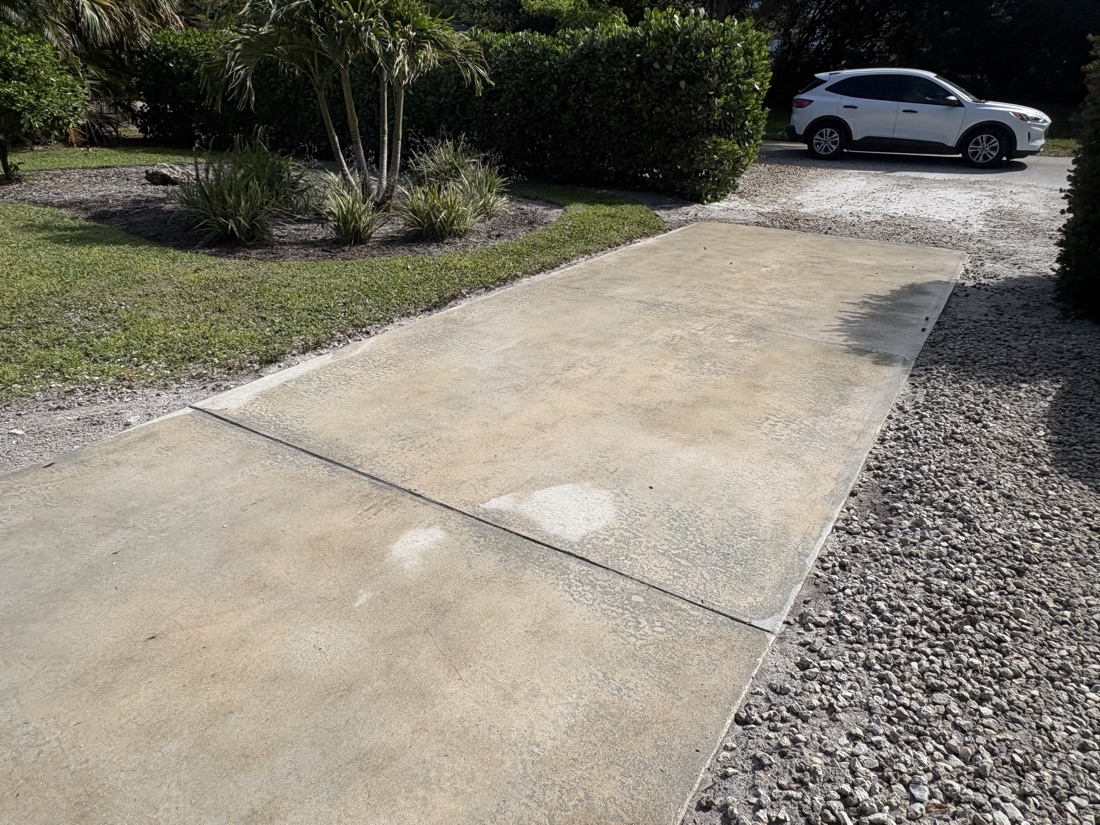
On a house this new, the surfaces that give out first are hardscape and light metal. Paver driveways, walkways, lanai floors and pool decks are sealed from the start, and film-forming sealer is the first thing to fail: it whitens, blotches, peels in sheets, and holds moisture underneath instead of letting it out. A second coat over a failing film is a short cover-up that ends up looking worse than the problem it hid. Blasting removes the whole film, so what is underneath is honest again and can be re-sanded and re-sealed properly.
Around the outdoor living space sits the metal: pool cage frames and screen channel, railings, entry gates, fence panels, light posts, and the block and stucco of the house wherever a coating has begun to chalk. No two of those take the same media or pressure. Finished aluminum, wood and other delicate material get baking soda, because it is soft enough to leave the substrate alone. Near screens, pool water, plantings and the neighbor's property, the crew runs the wet dustless stream so dust falls at the nozzle rather than travelling.
A test patch comes first, on a spot that will not show, and you see the result before the rest of the surface is touched. Residential blasting is the pillar for the house; paver sealer removal is the one for the drive. Why sealer clouds in the first place is covered in removing old paver sealer, and pool decks and lanais get their own walkthrough in restoring a pool deck or lanai.
A walkable town runs on golf carts, and a cart lives outdoors, takes weather from every direction and has a steel frame under all that plastic. Frames, brackets, roll structures, wheels, and the trailer that hauls the cart around all corrode at the same places: fasteners, welds, ground points and anywhere water sits after a storm. None of it is difficult work, and all of it is easier when the cart never has to leave the garage it is parked in.
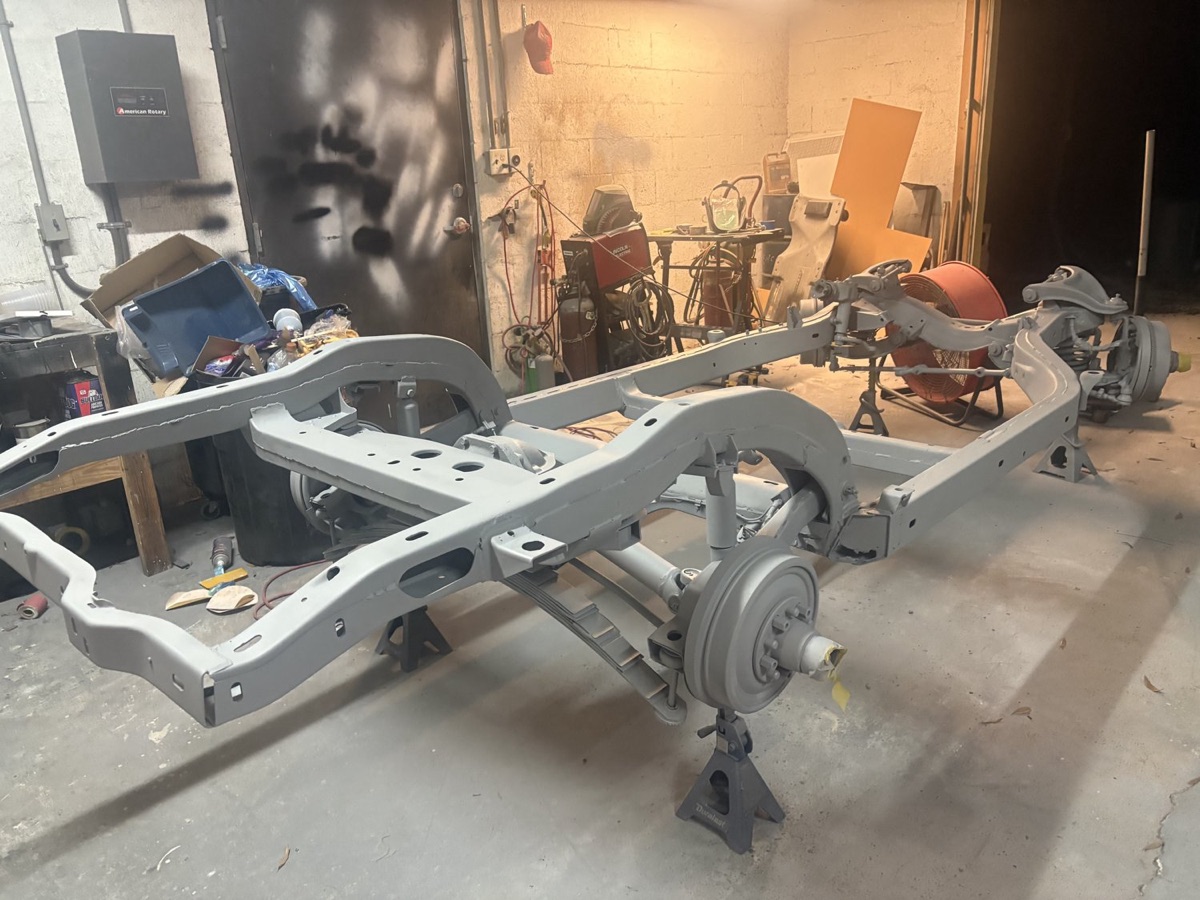
Past that it is the usual garage inventory: a project truck or car on stands, a bare chassis, a rear axle, suspension arms, a motorcycle, a pile of wheels and brackets waiting on paint or powder coat. The crew reads the metal before choosing anything. Thin sheet gets a lighter touch so it keeps its shape, castings get a media that will not chew them, and a part too delicate for abrasive gets soda.
Blasting is how you find out what is actually solid before paint hides it again. Utility and equipment trailers get the same treatment, since a frame tube corrodes from the inside out, where nobody looks, and fenders work loose at their mounts. The automotive blasting pillar carries the detail. Two reads before a frame job: what to expect when a car frame gets blasted, then surface prep before powder coat or paint.

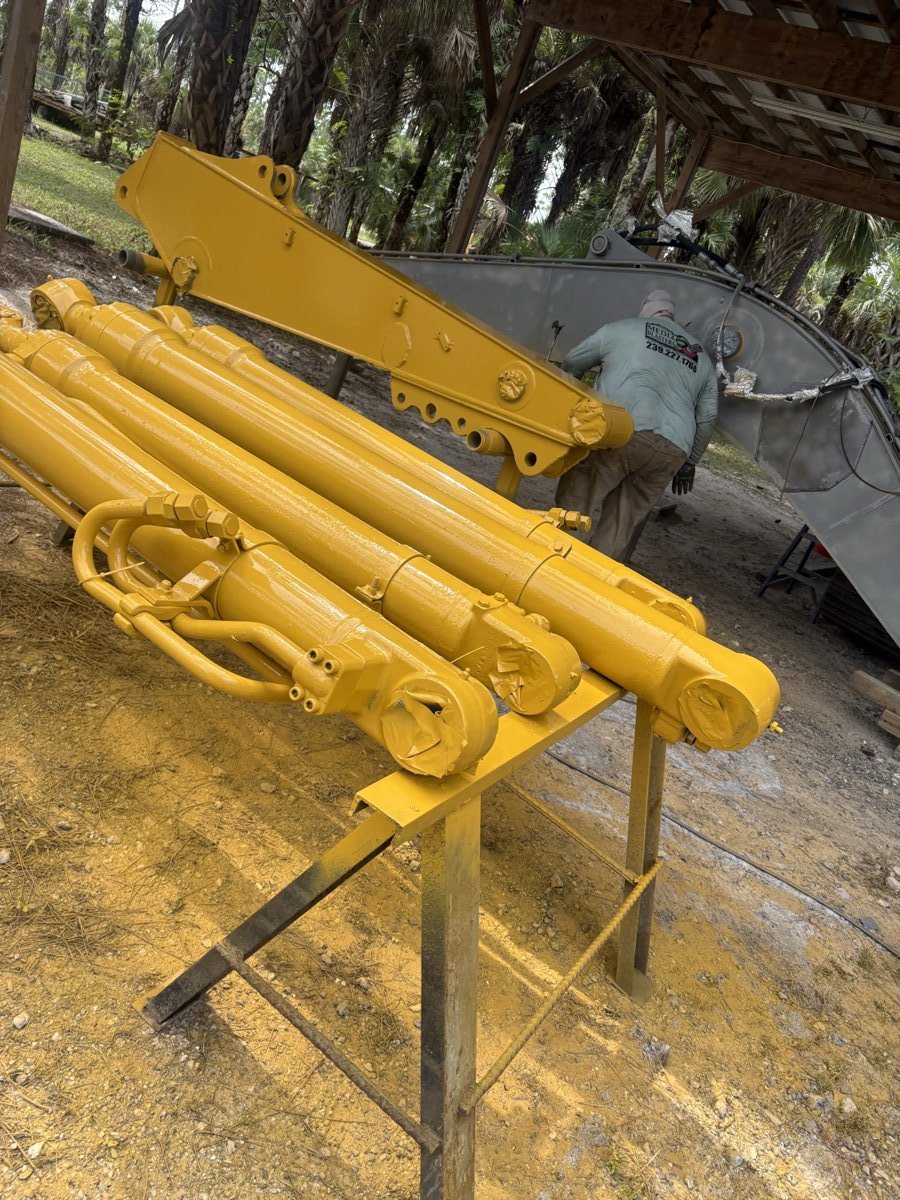
Ave Maria sits in agricultural country, and ag equipment is the clearest argument there is for a mobile rig. Haul a tractor, a loader, a mower deck, a sprayer or an implement to a shop to get it prepped and the machine spends days on a lowboy earning nothing. The crew sets up beside it in the field or the barn lot instead: glass, rod chrome and decals get masked, then the failed coating and the corrosion under it come off down to sound metal.
Corrosion on working equipment has favorite places. Weld seams. Bucket lips and blade edges. Pin bosses. The belly of a frame where mud and clippings cake on and stay damp. Every rock chip. A pressure washer rinses the surface and leaves all of that alone, because it cannot lift corrosion that has already worked in under the paint. Crushed recycled glass and garnet do lift it, taking scale and tired enamel off together and leaving the steel with a tooth the next coating can hold onto.
The same goes for the commercial side of a town still building out: gates and gate posts, fence and rail, pump and well housings, pipe and rack steel, canopy and stair frames, storefront and property maintenance metal. Whether a coating follows the blast is a decision for the estimate, not for after the metal is bare. Commercial blasting and rust removal cover the work itself; why on-site blasting protects equipment uptime covers the reason to do it in place. Lehigh Acres, the inland grid on the Lee County side, has a page of its own.

Nobody in Ave Maria keeps a boat on a lift behind the house, because there is no salt water behind the house to keep it on. Marine work out here is trailer work. The boat sits in the driveway, in the garage or along the side of the house between runs to a ramp, and each run leaves salt or brackish water on the hull, the running gear, the trailer frame and every bracket that went in with it.
The bottom still takes the same punishment as any hull on the coast. Antifouling builds up season after season until it cracks and lets go in flakes, and a boat that spends real time in warm water still comes home with growth on it and pays for it in speed and fuel. What makes a trailered boat the easier version is access: the boat is dry, it sits at bunk height with nothing to lift, and a driveway usually offers more elbow room than a packed boatyard.
The crew masks and drapes, lifts paint and growth in one controlled pass without burning or gouging the gelcoat underneath, and leaves a bottom that fresh antifouling will bond to. The trailer usually needs more help than the boat does, and it can be handled the same visit. Marine blasting covers the trailer, the running gear and the hardware; the hull itself is boat bottom paint removal. How often does it need doing? This walks through it, and the cost factors page covers what moves an estimate.
Based in Naples and mobile across Southwest Florida — we bring the rig to your home, marina, yard or job site. Call or text (239) 227-1768.
Yes. Everything needed to do the job rides on the truck, so the work happens at the property: driveway, garage, lanai, equipment yard, fence line or an active jobsite past the edge of town. Nothing gets loaded up and hauled to a shop first. Describe what you have, where it sits, how the truck gets in and how much room there is around it, and the visit is planned to fit. There is no charge for an on-site estimate in Ave Maria.
Sealer fails on its own timeline, not the house's. Film-forming products sit on top of the pavers, and inland sun, afternoon storms and daily irrigation water work on that film constantly until it whitens, blotches or peels. Age of the home has very little to do with it. Recoating over a failing film locks the problem in, which is why the failed layer comes off first. Paver sealer removal covers the strip.
Not if the media matches the metal. A painted aluminum railing or a cage frame gets baking soda or the wet dustless stream at low pressure, nozzle moving the whole time, because those finishes bruise under anything harder. Rusted steel gets crushed recycled glass or garnet, which would be the wrong choice on the aluminum. Before the whole surface is touched, a small patch somewhere out of sight gets done first and you look at it. Soda blasting explains the gentle end of the range.
That is the reason a mobile rig exists. Tractors, loaders, mower decks, sprayers, attachments, trailers and work trucks get prepped in the yard they sit in, which keeps them off a lowboy and out of a shop queue. Glass, rod chrome and anything that must stay untouched are masked, the coating and corrosion come off to sound metal, spent media is collected, and primer or a coating can go on before the truck leaves if you want it to.
It is contained work. Tarps and masking go down first, the crew works out where rebound is going to land, and near screens, pool water, plantings, vehicles and the property line the wet dustless setup keeps dust falling at the nozzle instead of drifting across the yard. Spent media is collected before the truck pulls out. At the estimate, say what sits close by and what you care about most, and the containment plan is built around it. Dustless blasting explains the wet method.
Not as a rule. The truck arrives set up to run, which matters on a jobsite or out toward the ag land, where the closest spigot can be a long walk from the machine. Where there is convenient water or power and you are happy for us to use it, mention it at the estimate and it goes in the plan. Where there is none, the visit is planned around that.
Call or text (239) 227-1768 with the address and a description of what needs stripping, and photos if you have them. Then someone comes and looks, because the number depends on things a photo cannot show: how many layers are on the surface, how deep the corrosion has gone, how the truck gets to the work and whether you want a coating afterward. That look is free. Before anyone arrives, the cost factors page explains what moves the number.
Driveway, lanai or equipment yard, the rig sets up there, takes the failed layer off in place, and coats the bare surface if you want it coated. Call or text (239) 227-1768 for a free on-site estimate.
Tell us a little about the job and we'll get right back to you.
Thanks — we'll be in touch shortly to set up your free estimate.