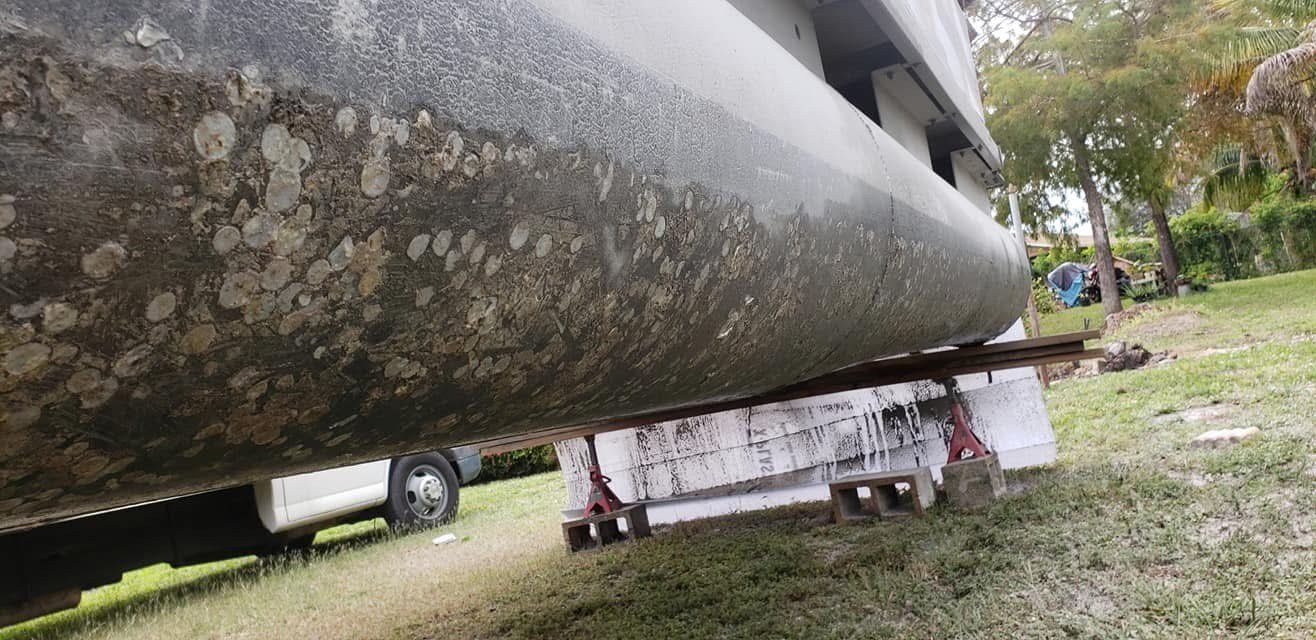
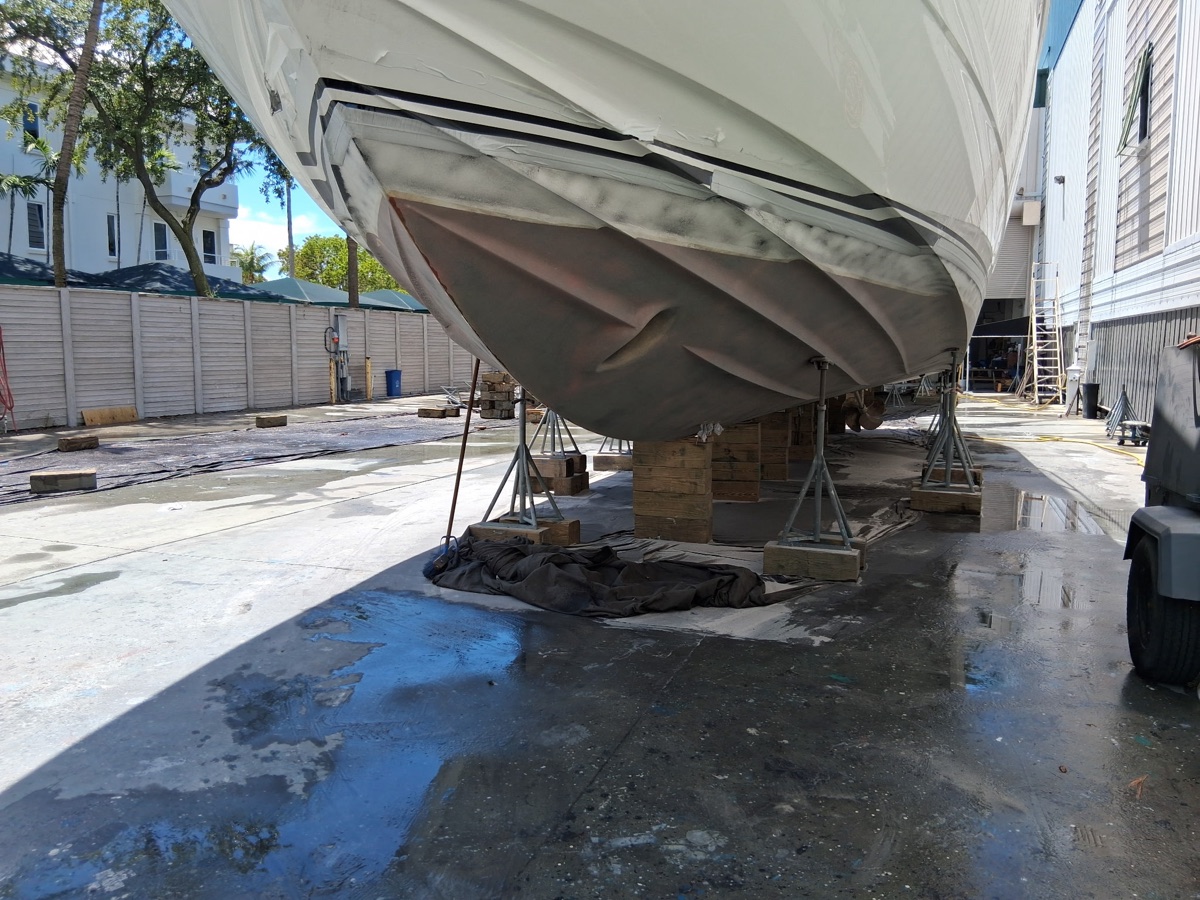
Years of antifouling can come off in one controlled pass instead of a week of sanding. We work the hull where it already sits, at a boatyard, on a lift behind the house, or on its trailer in the driveway, and hand it back ready for barrier coat.
Bottom paint is a consumable, and eventually the stack of it becomes the problem instead of the solution. SWFL Media Blasters removes layered antifouling from boats in Bonita Springs the way it should be done: media matched to the hull, pressure dialed in on a test spot, and the paint taken off without carving into the gelcoat that is holding your laminate dry. Boats here live in warm brackish water between the Imperial River, the back bay and Estero Bay, which grows fouling fast and tempts owners into one more coat over the last one. We work at the yard, the lift or your driveway. Call or text (239) 227-1768.
Warm water year round is the whole story. The Imperial River runs brackish through Bonita Springs on its way to Estero Bay, the canals off it stay warm and slow, and Gulf access through the passes puts salt water on the hull the rest of the time. Barnacles, slime and weed have no off season here, which is exactly why ablative paint gets used up faster than the label implies.
The natural response is another coat before the season. Then another. There is nothing wrong with that until the buildup starts working against itself: the newest paint is only as sound as the oldest layer under it, and once the bottom of the stack lets go, everything above it goes with it. That is when a hull that was just painted starts fouling early again.
Trailered boats are on the same track with a twist. A boat that gets dunked, run, and parked in the driveway between trips carries salt into the trailer frame as well as the hull, which is a separate conversation on the rust removal page. On the water, the general marine side of what we do is on the marine blasting in Bonita Springs page.

You can usually read it off the hull before anyone tells you. The bottom looks cracked and alligatored, like dried mud. Old colors show through in patches where the top coats have released. Fresh paint peels away in sheets or flakes rather than wearing down evenly. Around the waterline and the boot stripe the edges have built up thick enough to feel like a ridge.
The performance side shows up too. Growth comes back sooner after each haul, the boat feels lazy getting on plane, and fuel burn creeps up. On a fiberglass hull that has carried paint through a lot of Bonita Springs summers, blistering in the gelcoat is another signal worth having looked at before more coating goes on top and traps moisture where it already is.
The judgement call is simple in principle. If the existing system is sound, recoat and keep going. If it is failing against itself, adding another layer is buying a foundation you already know is loose. Signs bottom paint needs removal and how often bottom paint gets redone both go further into where that line sits.
Every owner asks the same question first, and it is the right question: will this hurt my gelcoat. It does not have to, because the entire job depends on a difference in hardness. Antifouling is soft. Gelcoat is not. The work is about removing the soft material and stopping at the surface underneath, which is a matter of media choice, pressure, angle and distance rather than brute force.
We run crushed recycled glass or garnet where the buildup is thick, hard and layered. Baking soda is the gentler option for thinner coatings or where the surface calls for a soft touch. Wet dustless blasting is often the right answer on a hull because it cuts multi-season buildup while holding heat down and keeping the yard clean, which matters when other people's boats are parked nearby.
Either way it starts on a test patch somewhere out of sight. We dial the setup, look at the result, adjust, and only then work the hull in controlled passes. Running gear, transducers, through hulls, boot stripe and lettering get masked before anything happens. If you want the media comparison in more depth, soda versus sandblasting on a boat hull covers the trade-offs.
Boats here do not all live in one place, so there is no single setup. Some come out at a yard or a dry storage facility. Plenty ride a lift behind a house on a canal off the Imperial River or over toward Little Hickory Island and the Bonita Beach side. Others show up on a trailer in the driveway of a house well inland of the water.
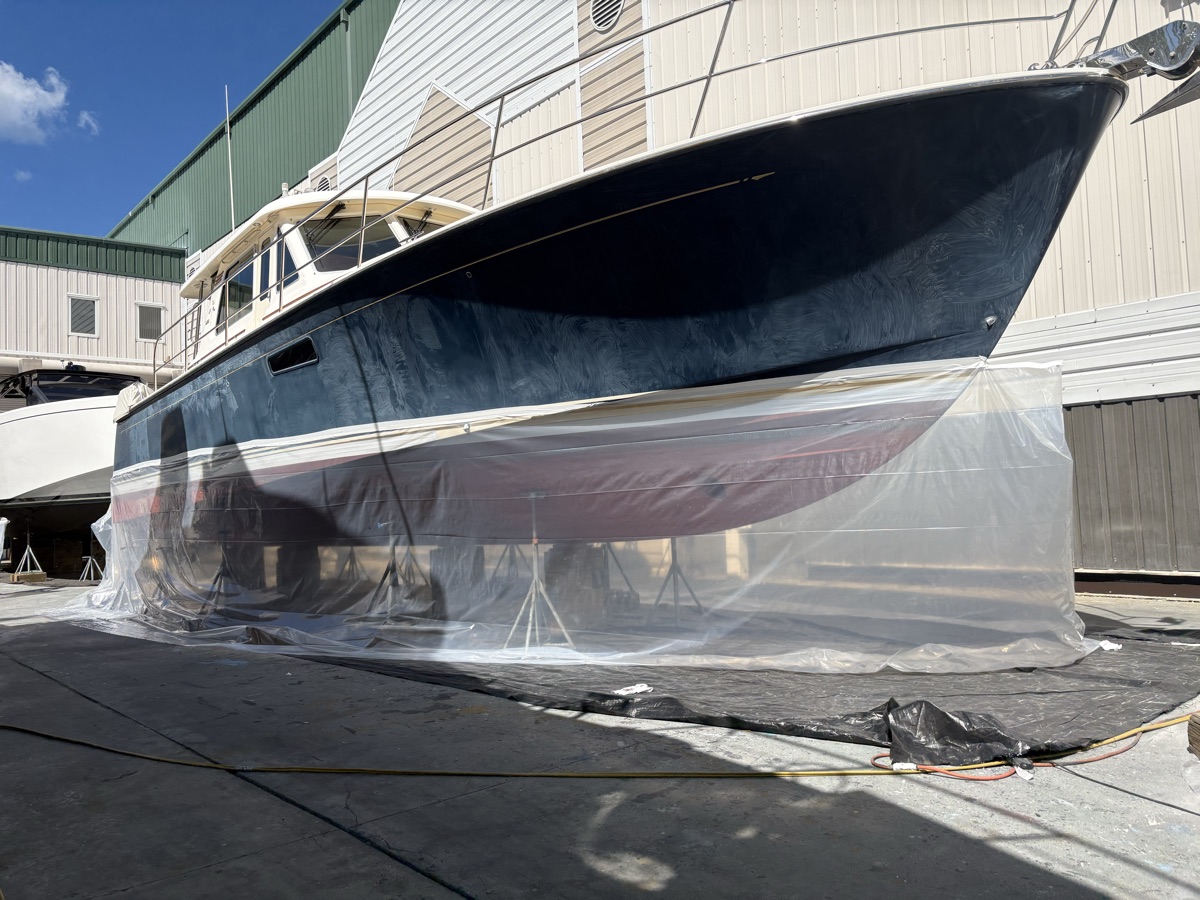
Wherever the boat is, the rig travels to it. What the job needs is straightforward: the hull blocked, on stands, or on its trailer with enough clearance to work the bottom, room to get the truck and hose reasonably close, and a clear understanding of the ground underneath so containment can be laid out properly. Sheeting and drop cloths go down before the first pass so the spent media and paint come up with them.
If the boat is at a yard or a storage facility, tell us who runs it and what their contractor rules are. Yards commonly want insurance on file, specific work areas, and their own timing, and it is easier to sort that out during the estimate than on the morning of the job. Everything else we bring into town is on the Bonita Springs page.

A stripped bottom is not a finished bottom. Once the paint is gone, two things matter: what the substrate looks like now that you can see it, and how dry it is before anything goes back on. Blasting exposes the truth of a hull, so blisters, previous repairs and soft spots are visible instead of buried under coating. That is a gift even when it is unwelcome news, because it is far cheaper to address before a fresh system goes over the top.
Moisture is the other half. Fiberglass that has lived under paint holds water, and a barrier coat applied over a wet laminate seals the problem in rather than out. That is the same adhesion logic that governs metal work, where a coating over trapped moisture or flash rust fails from below. Whoever paints it, a Bonita Springs yard or your own painter, will have a drying window they want, and the schedule should respect it. Prepping a hull for new antifouling walks through that sequence.
From there you choose. Take it back bare and let your yard handle barrier coat and paint, or have us carry it through, since coating is half of what this company does. On price, hull length, how many layers are stacked on, how hard they are, the shape of the running gear, access at the yard or the dock and whether coating follows all move the number. Our cost guide and the bottom paint removal cost article explain those factors honestly, and then we look at the boat in person. That look is free. The full start-to-finish walkthrough now lives in the definitive guide to bottom paint removal.
Based in Naples and mobile across Southwest Florida — we bring the rig to your home, marina, yard or job site. Call or text (239) 227-1768.
We come to the boat. Everything needed rides on the truck, so the work happens at your boatyard, dry storage rack, lift or driveway anywhere around Bonita Springs. The hull needs to be out of the water and blocked, on stands or on its trailer, with clearance to work the bottom. If it is at a yard or storage facility, let us know who runs it and what their contractor requirements are so that gets handled before job day.
Not when the setup is matched to the hull. Bottom paint is much softer than gelcoat, and the whole method is built on that difference: remove the soft layers, stop at the hard surface underneath. We start on a test patch out of sight, dial in media and pressure, check the result, and then work in controlled passes. Aggressive media at the wrong pressure is what damages hulls, which is exactly why the test patch is not optional.
Look at the failure pattern. Cracked and alligatored paint, old colors showing through, new coats releasing in sheets, a thick ridge at the boot stripe and growth returning earlier each season all point to a stack that is failing against itself. When the bottom layer lets go, everything above it goes too, so another coat is money spent on a loose foundation. If it is genuinely sound, recoating is the cheaper answer and we will say so.
They get masked and protected before anything is pressurized, along with the boot stripe, lettering and anything else you do not want touched. Point out every item of concern during the estimate, including anything that has been repaired or is more fragile than it looks. It is a short conversation that prevents the expensive kind of surprise.
Crushed recycled glass or garnet where the buildup is thick and hard, baking soda where the surface is delicate or the layers are thin, and wet dustless blasting where holding heat down and keeping the yard clean matter most. Hull work often lands on the wet dustless side for exactly those reasons. The final call gets made in front of your boat, not over the phone.
Yes. Antifouling coatings are designed to discourage growth, which means older systems can contain biocides and copper compounds you do not want scattered around a boatyard or a backyard. That is a containment and cleanup issue, and it is one of the better reasons to have a professional handle it rather than sanding it yourself. We sheet the ground, control the work area and collect what comes off.
Either one. Plenty of owners have us strip it and hand it back bare, dry and consistent so their yard or painter carries it through barrier coat and new antifouling. Others want the whole thing handled in one relationship, and we can prep and coat it. Decide at the estimate so the schedule and the drying window get built correctly. Compare with how the same job runs in Naples.
Tell us the boat, the length and where it sits, and we will come look. Free on-site estimate, call or text (239) 227-1768.
Tell us a little about the job and we'll get right back to you.
Thanks — we'll be in touch shortly to set up your free estimate.