Baking soda grains shatter on contact, and a grain that shatters cannot dig. That single property is why it gets picked for gelcoat, wood and aluminum, and why it goes back on the truck when the problem is rust.
SWFL Media Blasters brings soda blasting to Fort Myers addresses, and the useful place to begin is with the jobs it should not be given. Sodium bicarbonate is soft. Each particle bursts apart when it hits, and the coating above it gets lifted loose while the material below is left alone. Gelcoat, aluminum, brick, old wood, castings and smoke-blackened framing are exactly what that suits. Pitted steel and heavy industrial coatings are exactly what it does not, and pretending otherwise wastes your afternoon. So the media decision gets made beside the piece, not over the phone. Call or text (239) 227-1768 for a free on-site estimate.
Corrosion that has eaten pits into steel is beyond a soft media. Soda will brighten the surface, the piece will look improved for a day, and the pitting will still be there, packed with the same rust it started with, because nothing hard enough to reach into it ever touched the metal. Mill scale is the same story, and so are the thick, layered coating systems on structural steel and the built-up antifouling on a boat bottom: too much hard material for a grain that turns to powder on impact.
The second limitation is quieter and trips more people up. Soda does not roughen. A stripped surface comes back smooth, with none of the tooth that a hard abrasive leaves behind, and some finishes need that tooth to hang on. When the next coat depends on mechanical bite, the strip has to be followed by a profiling pass with glass or garnet. That is a conversation for the estimate, with the part in front of us, not a surprise after a coating peels.
None of this means the job cannot be done; it means a different media does it. Rusted gates, rails, trailer frames and fence steel are the subject of rust removal in Fort Myers. Heavy steel, concrete and anything that has to come back with a measured profile is dry abrasive work. And a hull with seasons of bottom paint on it gets its own treatment, described on bottom paint removal in Fort Myers.
Fort Myers is where Lee County does business, and some of that business involves food: dining rooms in the downtown river district, kitchens up and down Cleveland Avenue, commissary and packaging space in the warehouse rows between Metro Parkway and Colonial Boulevard. Baking soda is a food ingredient. It is non toxic, it dissolves in water, and it is the one blast media that makes sense in a room where the next question is always contamination.
Bicarbonate is also mildly alkaline, which means it takes grease and carbon with it while it lifts the paint. Exhaust hoods, fryer housings, mixers, bakery racks, cart frames and shop machinery come clean of years of cooked-on residue without a hard abrasive being forced into bearings, seals and oil galleries. On equipment that is still assembled, that is the line between cleaning it and wrecking it.
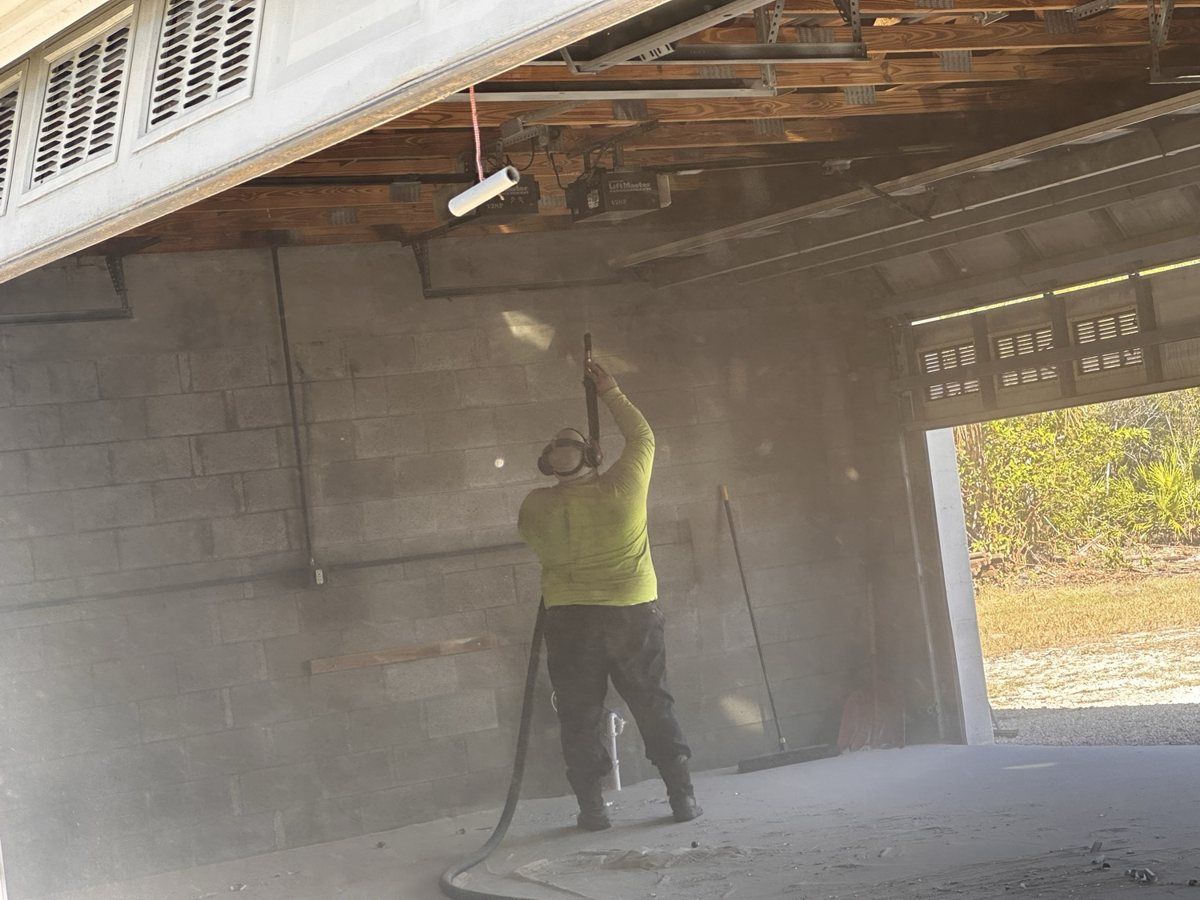
Fire damage is the other side of the same media. Smoke and char bind into wood framing, block and concrete, and the smell goes into the material rather than resting on top of it. Soda cuts the soot back to clean substrate and carries a good part of the odor out with it, since bicarbonate neutralizes as it cleans. Send a few photos of what burned and you will get a straight answer about whether blasting is the right move for that structure.

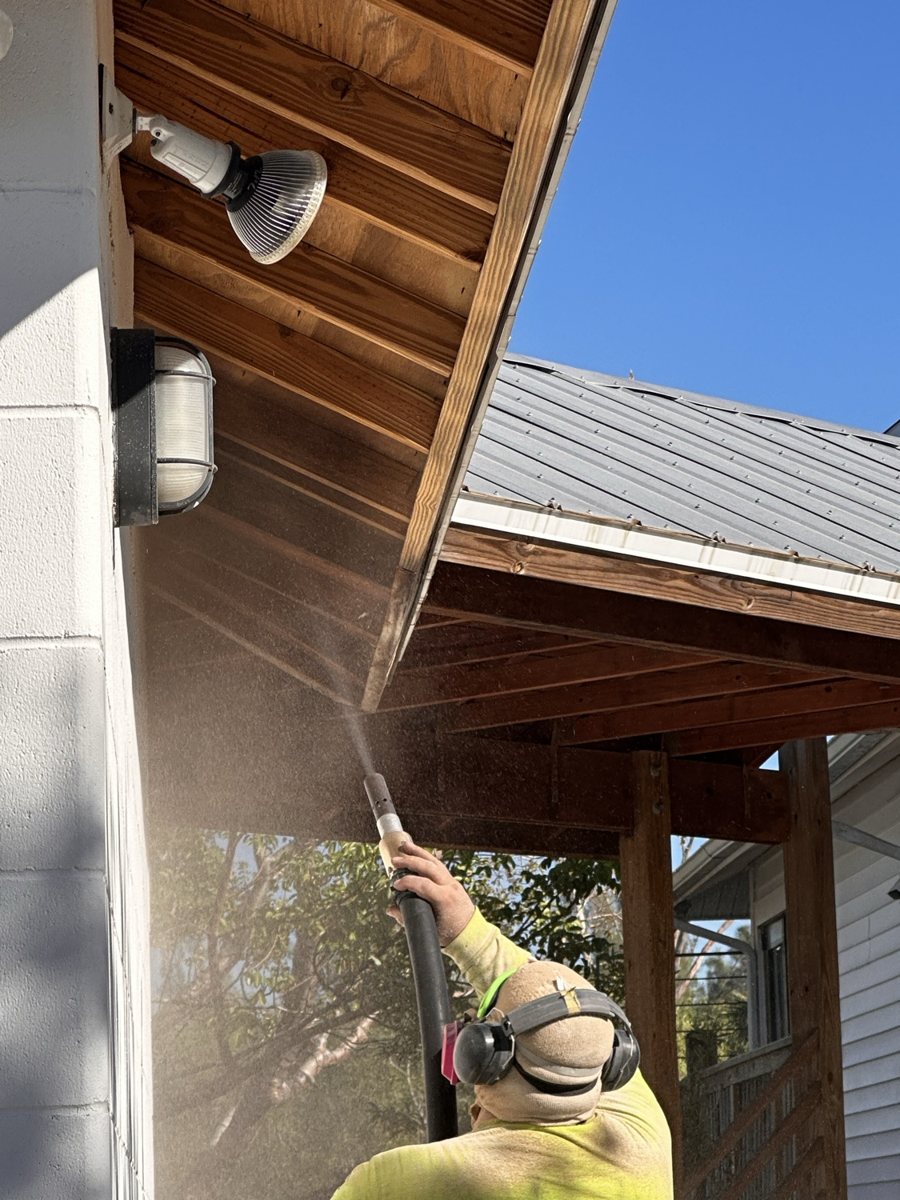
The streets near the river hold the oldest houses in Fort Myers, and old houses come with materials that would cost a fortune to replace. Around McGregor Boulevard, near the Edison and Ford Winter Estates and through the river district you find brick, exposed cypress ceilings, eaves and rafter tails, porch beams, wrought detail and cast hardware, most of it painted at some point by somebody who meant well. What needs fixing on that list is the finish. The thing under the finish is worth keeping intact.
Out toward Daniels Parkway and Gateway the delicate surfaces are aluminum instead of wood: door and window frames, enclosure extrusion, rails, gates, column wraps and light fixtures. Thin aluminum keeps its wall thickness under a media that fractures rather than cuts, and because soda does not build heat the way a hard abrasive does, thin sections stay flat instead of warping.
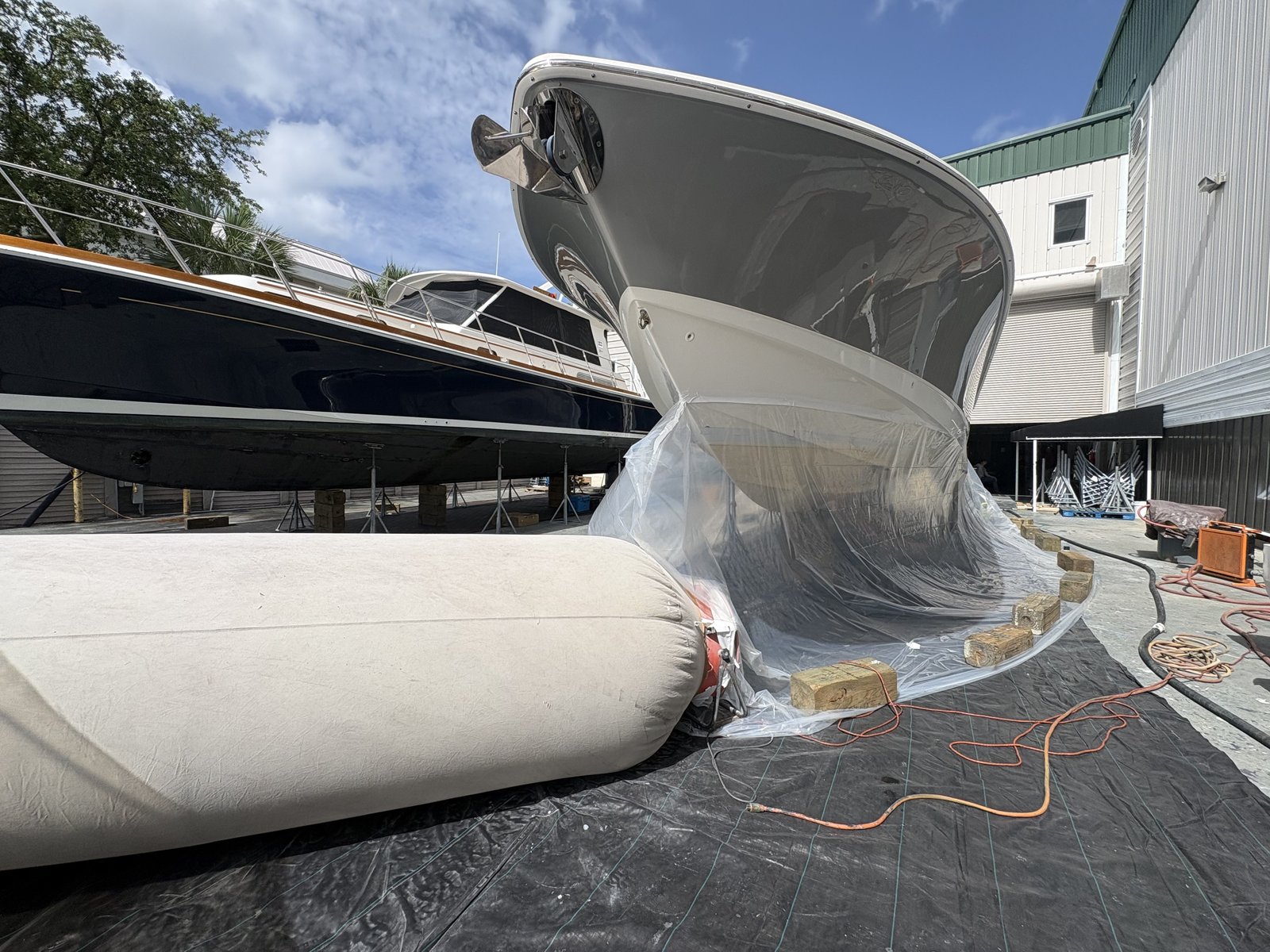
Boats and shop projects round it out. Gelcoat topsides, transoms, engine cowlings, hatches and deck hardware on hulls in dry storage along the river all want a soft touch, as do engine castings, carburetor bodies, brackets and any part whose stamped lettering a wire wheel takes off in one pass. Those jobs sit under marine blasting in Fort Myers and automotive blasting in Fort Myers, and blasting aluminum versus steel explains why the two metals never share a setting.
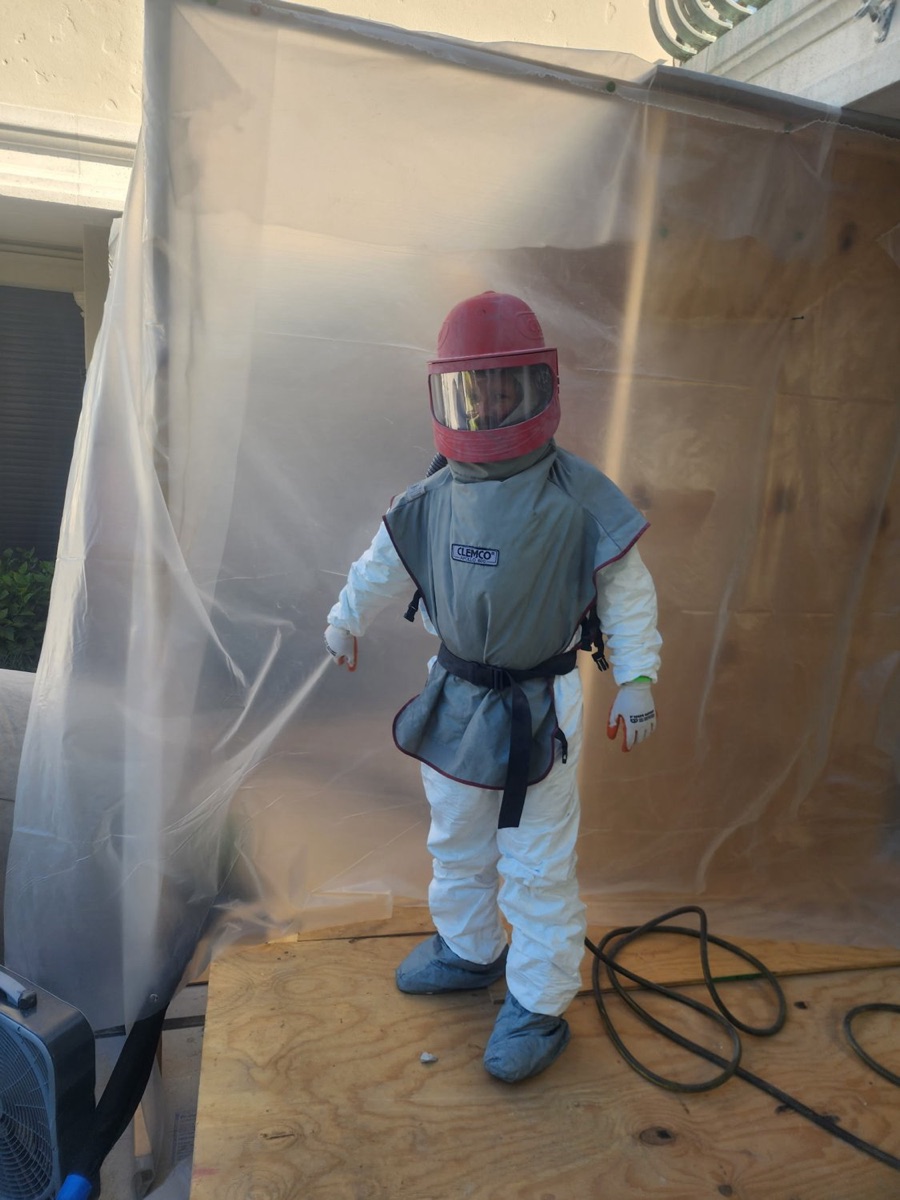
Because soda dissolves, the leftovers do not become a permanent feature of the property. Hard media that drifts ends up in paver joints, screen tracks and window channels and keeps turning up for months; soda washes out of them with a hose. That is a genuine advantage around a finished home, and it is also the reason people underestimate the cleanup, because dissolved is not the same as gone. The residue is alkaline, and it has to be rinsed off deliberately.
The things that react badly to an alkaline film get protected before the first pass: pool water most of all, since bicarbonate will push the chemistry around, then planting beds, turf and anything with a finish you care about. How the rest of a house visit gets staged, from the test spot to the neighbor's driveway, belongs to residential blasting in Fort Myers; what this page owns is what happens after the last pass, which is the wash. Every stripped surface gets rinsed, and the rinse water is directed away from the beds and the pool rather than left to find its own way.
The rinse also protects the next coating. Any bicarbonate left on a stripped surface acts as a bond breaker, so a part headed for paint, sealer or powder coat gets washed clean and allowed to dry fully before anything goes on. One more thing to know: soda throws a very fine dust that drifts further than a heavier media does. Where drift across a fence line or into an open shop bay is the real constraint, the water suppressed rig is the better call, and dustless blasting in Fort Myers explains that setup.

Glass and garnet are dense, sharp-edged and hard, and they remove coatings by carving. Scale and thick paint systems need that. A cypress porch ceiling or a gelcoat transom is ruined by it. Soda is friable: the particle gives way instead of the surface, the impact runs sideways under the coating and lifts it, and the material keeps its dimensions. Every strength and every weakness of the media traces back to that one fact.
What you get back, then, is the same object with a different history: the finish gone, the shape and the thickness untouched. Wood keeps its grain flat rather than raised where the soft growth eroded first. Aluminum keeps its wall. A casting keeps its numbers and its part marks. From there the third word of the slogan (blast, prep, coat) is optional. The piece can go home bare for your own painter or woodworker, or it can get its coating from us before it leaves the driveway.
Still deciding between media? The trade offs are set out side by side in dustless versus sand versus soda. For a second opinion, choosing the right blast media walks through the decision from the surface's point of view, while the profile question is answered in surface prep before powder coat or paint. The method without the town lives on the soda blasting pillar, the town without the method on the Fort Myers page, and the factors that push a soda estimate around are itemized under cost factors.
Based in Naples and mobile across Southwest Florida — we bring the rig to your home, marina, yard or job site. Call or text (239) 227-1768.
Surface film, yes. Real corrosion, no, and it is better to hear that up front. A soda grain breaks up when it hits, so it can lift paint off metal and clean light oxidation, but rust that has bitten down into steel needs a grain that stays whole long enough to cut. If corrosion is why you are calling, the pot gets loaded with crushed recycled glass or garnet instead, and you get the explanation at the piece. Rust removal in Fort Myers is the page for that.
What the grain does at the moment of impact. Glass and garnet hold their shape, dig in, and leave a texture behind, which is what a heavy coating system wants under it. A soda particle collapses. The energy goes out sideways beneath the coating instead of downward into the material, so wood, gelcoat, aluminum and castings lose their finish and keep their dimensions. That is the entire difference, and every other trade off follows from it.
Yes, and it is among the things the media is best suited to. Smoke and char lock into framing, block and concrete after a fire, and the smell lives in the material rather than on top of it. Soda takes the soot back to clean substrate and knocks down a good part of the odor along the way, because bicarbonate neutralizes as it cleans. Send photos of what the fire reached and we will tell you straight whether blasting is the right move for that structure or whether something else should happen first.
Yes. Because bicarbonate is mildly alkaline it dissolves grease, oil and carbon while it lifts paint, which is why it earns its keep on exhaust hoods, fryer housings, shop equipment, engine blocks and machinery that has been running dirty for years. It also does that on equipment that is still bolted together, without packing a hard abrasive into bearings, seals and oil galleries, which is the mistake that turns a cleaning job into a rebuild.
The residue dissolves, so it hoses out of paver joints and window tracks instead of living there, but dissolved and harmless are not the same word. Bicarbonate is alkaline, which is a problem for pool chemistry and for plant beds, so the pool gets covered, the beds and turf get sheeted, and everything gets rinsed once the passes are done, with the rinse water steered away from the things we just protected. Tell us what sits around the piece and the wrap goes on before the first grain flies.
It depends on what the finish needs to hold on to. Soda leaves a smooth surface with no tooth, so a coating that relies on mechanical anchor will need a profiling pass with a harder media after the strip. A coating that bonds chemically to a clean, degreased surface may need nothing more than the rinse and a dry day. Say what is going on the piece before we schedule and the prep gets planned to match; surface prep before powder coat or paint goes deeper.
Text or call (239) 227-1768 and describe the piece: what it is, what is on it, roughly how big it is and where in Fort Myers it sits. The look is free and happens at the piece. What shapes the estimate is the condition of the surface, the number of finishes stacked on it, how much wrapping the surroundings need, whether a profiling pass or a coating follows, and the fact that soda works more slowly than a cutting media, so two parts of equal size can come out with different numbers. What moves an estimate has the full list.
The soft media comes to the address, the coating or the soot comes off, and the rinse down is part of the visit. Call or text (239) 227-1768 for a free on-site estimate.
Tell us a little about the job and we'll get right back to you.
Thanks — we'll be in touch shortly to set up your free estimate.